




How to Safely Dispose of Citric Acid
Proper disposal of citric acid is important to ensure environmental protection, safety, and regulatory compliance. Whether used in food processing, laboratories, cleaning products, or industrial applications, handling disposal correctly protects both human health and the environment.
Understanding citric acid disposal becomes essential when you consider the compound's widespread use across multiple industries. From beverage manufacturing to household cleaning, this versatile organic acid demands appropriate end-of-life management despite its biodegradable nature and GRAS status.
This guide examines the critical aspects of citric acid disposal, including regulatory requirements, safety protocols, and practical disposal strategies for different settings and quantities.


In this article, we’ll review:
1. Why Proper Disposal Matters
2. How to Dispose of Citric Acid
Why Proper Disposal Matters
Citric acid disposal carries implications that extend beyond routine waste management practices. Understanding these considerations helps you recognize why proper handling protocols exist for this commonly used organic acid.
Environmental Protection
Environmental considerations for citric acid focus on managing temporary impacts from concentrated solutions:
-
While citric acid is biodegradable and naturally occurring, concentrated solutions can temporarily affect local pH levels in soil and water systems. Proper disposal prevents potential short-term environmental impacts and ensures responsible chemical management.
-
High concentrations in aquatic systems can temporarily alter pH conditions, though citric acid breaks down rapidly through microbial action in natural environments and wastewater treatment systems.
-
Soil systems readily metabolize citric acid, but concentrated applications can temporarily affect soil pH and nutrient availability until natural degradation processes are complete.
-
Proper disposal prevents unnecessary pH fluctuations in municipal wastewater treatment systems, maintaining optimal conditions for biological treatment processes.
Health & Safety
Human health considerations make citric acid disposal a workplace safety priority:
-
Concentrated citric acid solutions can cause serious eye irritation and skin irritation. Proper disposal practices minimize exposure risks during handling and prevent accidental contact that could lead to chemical burns or respiratory irritation.
-
Incorrect disposal may increase exposure risks to humans, potentially leading to symptoms such as discomfort, irritation, or respiratory issues if people come into contact with improperly disposed materials.
-
Inhalation of citric acid dust during disposal activities can cause respiratory discomfort and throat irritation, especially in poorly ventilated areas where particles can accumulate.
-
Skin and eye contact with concentrated citric acid solutions can result in irritation and discomfort, making proper protective equipment essential during disposal procedures.
Legal Compliance
The regulatory framework surrounding citric acid disposal varies by jurisdiction and waste characteristics:
-
Even though citric acid is GRAS (Generally Recognized as Safe) for food use, industrial and laboratory quantities may be subject to local waste disposal regulations, requiring compliance to avoid violations and ensure responsible waste management.
-
Regulatory agencies may classify citric acid waste based on its concentration and local guidelines, requiring proper disposal practices to maintain environmental standards.
-
State environmental agencies often establish pH discharge limits for wastewater, which concentrated citric acid solutions must meet before disposal.
-
Local regulations frequently include specific requirements based on municipal treatment capabilities, requiring pH adjustment and proper documentation procedures.
-
Violations can result in environmental fines and potential cleanup costs, particularly when improper disposal affects public wastewater treatment operations.
How to Dispose of Citric Acid
Effective citric acid disposal starts with understanding your specific waste characteristics and matching them to appropriate disposal pathways while meeting all applicable regulatory requirements.
Check Regulations
Regulatory compliance research forms the foundation of any successful disposal plan:
Review local and state waste disposal regulations for organic acids, particularly for concentrated solutions or large quantities. Municipal wastewater treatment facilities have varying capacities for handling acidic waste, making verification essential.
Check pH discharge limits for your area, as citric acid solutions have a pH of approximately 1.8 in 5% solution. Most jurisdictions require pH adjustment to the neutral range (typically 6-8) before discharge to municipal systems.
Verify if your facility requires special permits for acid waste disposal. Industrial facilities may need discharge permits specifying concentration limits and documentation requirements for organic acid waste.
Understanding these regulatory requirements before disposal prevents compliance problems and ensures you can handle citric acid safely and legally according to concentration levels and local environmental protection standards.
Follow Neutralization Protocols
Chemical treatment requirements for citric acid vary based on concentration and disposal pathway:
Dilute solutions (<10%): May often be neutralized with sodium bicarbonate (baking soda) to bring pH to the 6-8 range before disposal. Add sodium bicarbonate gradually while monitoring pH to avoid excessive foaming from carbon dioxide gas production.
Concentrated solutions: Should be slowly diluted with large amounts of water, then neutralized with appropriate bases under controlled conditions. For complete neutralization of citric acid, you need three equivalents of a strong base like sodium hydroxide (NaOH) due to citric acid being a triprotic acid.
Monitor pH: Use pH strips or a meter to ensure proper neutralization before disposal. This verification confirms that the material meets discharge requirements and prevents pH-related problems in wastewater treatment systems.
Neutralization should occur in well-ventilated areas due to carbon dioxide gas evolution during the reaction between citric acid and bases. Never seal containers during active neutralization to prevent pressure buildup.
Use Designated Waste Disposal Methods
Appropriate disposal pathways depend on concentration, quantity, and local regulations.
Non-Hazardous Waste Classification
Lower concentration citric acid often qualifies for simplified disposal approaches:
Small quantities of diluted, neutralized citric acid solutions may be acceptable for drain disposal in many areas, as citric acid is biodegradable and food-safe. Always verify local wastewater treatment plant guidelines first, as acids may only be neutralized and poured into sanitary sewers if the neutralized mixture is not toxic.
Food-grade disposal: Food-grade citric acid waste from food processing may often be disposed of through normal food waste channels after appropriate dilution and neutralization. Beverage and food manufacturers typically handle citric acid waste through existing process wastewater systems.
Homebrew/Small scale: For very small quantities (homebrewing or household amounts), neutralization followed by drain disposal may be acceptable in some areas, but always verify local guidelines first. Residential users should contact municipal authorities to confirm acceptable disposal methods.
Storage before disposal should use clearly labeled containers that prevent contamination and allow proper identification of contents, concentration levels, and any special handling requirements.
Hazardous Waste Classification
Higher concentrations or large volumes require specialized management approaches:
Industrial quantities: Large volumes or concentrated solutions should be collected by certified waste disposal services or processed through industrial wastewater treatment systems with proper pH adjustment. These facilities have the capacity and equipment to handle acidic waste safely.
Laboratory waste: Collect in appropriate acid-resistant containers, label clearly, and dispose of through institutional chemical waste programs. Many universities classify citric acid as an organic acid waste requiring collection through hazardous waste programs.
Storage before disposal: Use clearly labeled containers that prevent contamination and allow proper identification of contents, concentration levels, and any special handling requirements. Containers should be acid-resistant and properly sealed.
Understand Biodegradable Advantage
Unlike many chemicals, citric acid offers environmental benefits during disposal:
Natural biodegradability: Citric acid breaks down readily in wastewater treatment systems and soil environments through microbial metabolism. Microorganisms use citric acid as a carbon source, converting it to carbon dioxide and water.
Environmental acceptance: This biodegradability makes disposal generally easier and more environmentally acceptable than synthetic chemicals. Citric acid doesn't accumulate in ecosystems or create persistent environmental contamination.
Treatment system compatibility: Municipal wastewater treatment plants readily handle neutralized citric acid through their biological treatment processes, making it compatible with existing infrastructure.
Never Mix Chemicals
Chemical compatibility issues can create hazardous situations during disposal:
Avoid mixing citric acid with strong bases, oxidizers (including sulfuric and nitric acid), or other chemicals that could cause violent reactions, heat generation, or toxic gas production. Reactions between citric acid and strong bases generate significant heat that can cause splashing or container failure.
Keep separate from incompatible materials during storage and disposal. Even chemicals that appear harmless can interact with citric acid to create more hazardous conditions or unexpected reaction products.
Carbonate reactions: Avoid mixing with carbonates and bicarbonates without proper ventilation, as the reaction produces carbon dioxide gas that can create pressure in sealed containers.
Follow PPE Guidelines
Worker protection during citric acid disposal requires appropriate equipment selection and use:
- Always wear chemical-resistant gloves, safety goggles, and protective clothing when handling concentrated citric acid for disposal. Nitrile or latex gloves provide adequate protection for most citric acid handling operations.
- Ensure adequate ventilation when neutralizing or diluting to avoid inhaling vapors or carbon dioxide gas produced during neutralization reactions. Work in well-ventilated areas or use local exhaust ventilation when handling concentrated solutions.
- Have eyewash facilities available when working with concentrated solutions. Eye contact with concentrated citric acid requires immediate irrigation, making eyewash stations essential safety equipment.
- Use respiratory protection if adequate ventilation isn't available, particularly when handling powder forms that may generate airborne particles during transfer or disposal operations.
Special Considerations for Citric Acid
Different applications and settings require specific disposal approaches:
Institutional Guidelines
Many universities and research institutions classify citric acid as organic acid waste requiring collection through hazardous waste programs, regardless of its food-safe status. These institutions maintain centralized waste collection systems that consolidate citric acid from multiple laboratories for proper disposal.
Research facilities should follow institutional environmental health and safety protocols, which typically specify container types, labeling requirements, and collection schedules for organic acid waste.
Food Industry Disposal
Food-grade citric acid waste can often be handled through normal food processing waste streams, but concentrated solutions may still require neutralization. Beverage and food manufacturers typically process citric acid waste through existing wastewater treatment systems designed for food industry discharge.
Large food processing facilities should verify that their industrial wastewater discharge permits accommodate citric acid concentrations in process waste streams.
Cleaning Product Waste
Citric acid-based cleaning solutions should be diluted and neutralized before disposal, especially if mixed with other cleaning agents. The combination of citric acid with other cleaning chemicals can create complex waste streams requiring additional characterization.
Household cleaning product waste containing citric acid typically qualifies for drain disposal after dilution, though users should verify local guidelines for household chemical waste.
Emergency Spills
Small spills can be neutralized with sodium bicarbonate, but proper procedures prevent hazardous reactions:
For caustic spills, citric acid would be a suitable neutralizing agent, demonstrating the compound's value in emergency response situations. Never mix directly in concentrated form. Always dilute citric acid in separate containers first, then add neutralizing agents gradually while monitoring pH and temperature.
Ventilation requirements: Ensure adequate air circulation during spill cleanup and neutralization to disperse carbon dioxide gas produced during neutralization reactions.
Transport Classification
Citric acid is "Not Regulated" for transportation under DOT regulations, simplifying logistics for waste disposal. This non-regulated status means citric acid waste doesn't require special transportation documentation or hazardous materials placarding.
However, waste haulers should still follow proper container labeling and documentation practices to ensure safe handling throughout the disposal process.
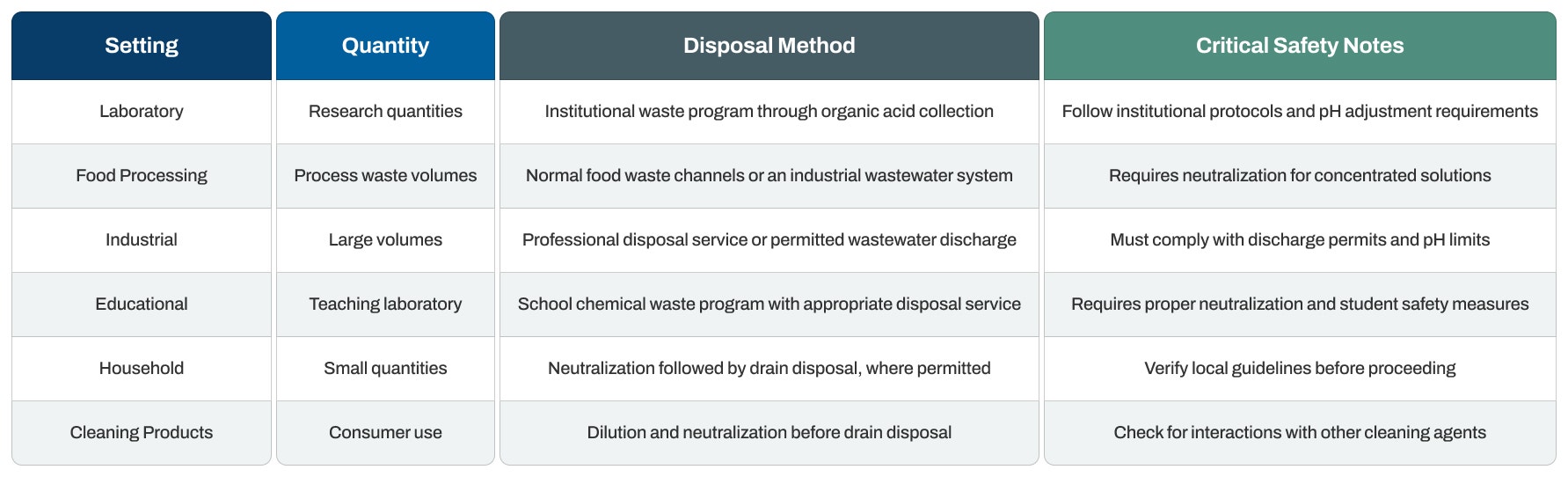
Quick Reference: Disposal Methods and Safety Requirements
Final Note
Citric acid disposal requires attention to concentration levels, pH management, and regulatory compliance, though its biodegradable nature and GRAS status simplify many disposal scenarios. By understanding federal and local requirements, using proper neutralization methods when necessary, working with appropriate disposal services for large quantities, and maintaining suitable personal protective equipment throughout the process, you can ensure both safe and compliant citric acid disposal.
When you're uncertain about any aspect of citric acid disposal procedures, always consult with qualified Environmental Health and Safety professionals or contact local wastewater treatment authorities for guidance tailored to your specific situation and local environmental requirements.
For safe, regulatory-compliant disposal of citric acid and expert guidance, contact local environmental services or waste management companies. Always consult Safety Data Sheets (SDS) for specific handling and disposal information, and follow institutional or company waste management protocols for chemical disposal.
For more detailed guidance, explore our Resource Library
Our Customer Care team is also available for more information and documentation, including chemical Safety Data Sheets.
Need Citric Acid You Can Trust?
If you are looking for high-quality citric acid for your lab, product line, or research facility, be sure to visit our store to explore our trusted selection and request a quote.
As your trusted partner in chemical supply, Lab Alley is always striving to meet the growing demands of our customers. We want you to be able to access all of your chemical needs in one place, along with streamlined online ordering and fast shipping.
Due to popular demand from our valued clientele, Lab Alley's citric acid is available in a range of purities and packaging options to suit various commercial, laboratory, and personal needs.