




Types of Specially Denatured Ethanol: A Complete Guide to SDA Formulations
Specially Denatured Alcohol (SDA) is ethanol rendered unfit for beverage use through the addition of specific TTB-approved denaturants under 27 CFR Part 21. SDA exists in various formulations designated by numerical codes (SDA 1, SDA 3-A, SDA 40-B, etc.), each containing different denaturants and concentrations for specific industrial applications.
Why do different formulations matter? Different SDA types address specific industrial and regulatory requirements. The TTB defines each formula in 27 CFR Part 21 Subpart D with precise denaturant types and quantities. Denaturant compatibility varies by formulation, with some suitable for topical products (SDA 40-B, SDA 38-B) while others are restricted to industrial processes only (SDA 1, SDA 3-A). Using the wrong formulation means contaminated products, regulatory violations, or both.
Several key factors determine which type to choose: denaturant type and concentration, TTB-authorized end-uses, permit requirements, denaturant compatibility with product formulation, regulatory compliance requirements, and manufacturing process compatibility.
In this article, we’ll explore:
- Common SDA Formulations
-
Denaturant Types
-
Applications Based on Type
-
Regulatory Classifications
-
Certifications & Standards
-
How to Choose the Right Type
Common SDA Formulations
Walk into a chemical supplier and ask for denatured alcohol, and you'll immediately face questions about which formula you need. The distinctions matter because each type targets specific applications with particular denaturant profiles and regulatory authorizations.
SDA 40-B
SDA 40-B dominates cosmetics and personal care for good reason. The formula contains just 1/16 oz denatonium benzoate N.F. and 1/8 gallon tert-butyl alcohol per 100 gallons of ethanol, producing virtually no odor while maintaining excellent skin compatibility.
Studies show that tert-butyl alcohol has low toxicity in topical applications. This minimal denaturant loading satisfies federal denaturing requirements without interfering with fragrance profiles, product aesthetics, or skin feel. Perfumes, facial toners, hair sprays, deodorants, hand sanitizers, and countless personal care products rely on SDA 40-B.
Available in both 200 proof (100%) and 190 proof (95%) with Kosher and Halal certification. The 200 proof version provides maximum concentration for anhydrous applications. The 190 proof option offers cost-effective performance for formulations where 4.4% water content doesn't interfere. Cost runs higher than industrial formulations, but cosmetic manufacturers accept the premium for denaturants that won't ruin their products.
SDA 38-B
SDA 38-B takes a unique approach by using 10 pounds of essential oils from an approved TTB list per 100 gallons of alcohol as denaturants. This turns regulatory requirements into product benefits. The essential oil becomes a functional ingredient rather than something formulators work around.
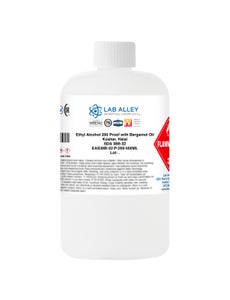
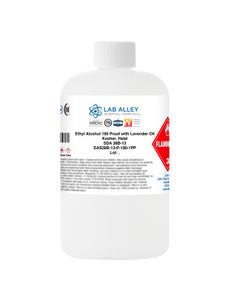
Three variants dominate commercial availability. SDA 38B-32 uses bergamot (bergaptene-free) at 200 proof with Kosher and Halal certification, providing citrus notes without photosensitivity concerns for daytime products. SDA 38B-56 uses eucalyptus oil at 200 proof with Kosher and Halal certification, delivering medicinal aromatics perfect for hand sanitizers and therapeutic products. SDA 38B-13 uses lavender oil at 190 proof (95%) with Kosher and Halal certification, offering calming aromatics for facial toners and wellness products.
Natural and aromatherapy-focused brands particularly value SDA 38-B because the denaturant enhances rather than detracts from product positioning. A lavender hand sanitizer or eucalyptus disinfectant incorporates the denaturant as the primary fragrance component.
SDA 3-C
SDA 3-C uses 5 gallons of isopropyl alcohol per 100 gallons of ethanol. Available in 200 proof (100%) with Kosher and Halal certification, this formulation serves both industrial applications and certain cosmetic manufacturing processes.
The isopropyl alcohol denaturant provides that familiar rubbing alcohol character. For industrial processes like coatings, solvents, and pharmaceutical processing, where odor doesn't matter, SDA 3-C offers effective denaturing at a reasonable cost. For cosmetic manufacturing processes where alcohol serves as a processing aid that gets removed, SDA 3-C makes economic sense.
Critical restriction: you cannot use SDA 3-C to make Reagent alcohol. Laboratories needing Reagent alcohol must use SDA 3-A instead, despite the similar formulations.
Other Formulations
Beyond these versatile options, numerous specialized formulations serve specific purposes.
-
SDA 1 offers multiple denaturant choices (methyl alcohol combinations, ketones, or nitropropane) for solvents, coatings, and fuels.
-
SDA 3-A uses cyclohexane or methyl alcohol for laboratory reagents, coatings, and is the required formulation for Reagent alcohol.
-
SDA 23-A and SDA 23-H contain acetone U.S.P. for pharmaceuticals, personal care, and disinfectants.
-
SDA 30 uses high methanol content for industrial coatings and solvents only.
-
SDA 35-A uses ethyl acetate for food-related applications like candy glazes.
-
SDA 40-C contains 3 gallons of tert-butyl alcohol, but only for pressurized containers like aerosols.
-
SDA 28-A with gasoline denaturants is restricted to fuel uses only.
Denaturant Types
Denaturants determine where formulations can legally and practically be used.
Methyl Alcohol (Methanol): Appears in SDA 1 (4 gal), SDA 3-A (5 gal), and SDA 30 (10 gal) per 100 gallons. Cheap and effective but toxic, restricting these formulas to industrial uses with no human contact.
Isopropyl Alcohol: Denatures SDA 3-C at 5 gallons per 100 gallons. Familiar rubbing alcohol smell works for some applications, but limits use in fragranced cosmetics.
Denatonium Benzoate N.F.: Appears in SDA 1 (1/8 oz) and SDA 40-B (1/16 oz). Incredibly bitter substance discourages consumption at tiny concentrations without toxicity concerns. N.F. designation ensures pharmaceutical-grade quality.
tert-Butyl Alcohol: Cosmetics industry favorite appearing in SDA 40-B (1/8 gal) and SDA 40-C (3 gal). Minimal odor and low toxicity in topical applications make it ideal for personal care.
Acetone U.S.P.: Denatures SDA 23-A and SDA 23-H at 8 gallons per 100 gallons. Pharmaceutical-grade quality suitable for healthcare products, though a distinctive odor limits fragrance applications.
Methyl Isobutyl Ketone: Appears in SDA 1 (1 gal) and SDA 23-H (1.5 gal), providing denaturing plus solvent properties for industrial uses.
Ethyl Acetate: Uniquely denatures SDA 35-A at 4.25-5 gallons per 100 gallons. Acceptable safety profile for food-related uses like candy glazes.
Essential Oils: SDA 38-B uses 10 pounds from the approved list, including bergamot, eucalyptus, lavender, menthol, camphor, pine oil, thymol, and peppermint. Generally safe for topical use and enhances product positioning.
Other Denaturants: Cyclohexane, gasoline, rubber hydrocarbon solvent, toluene, heptane, hexane serve specialized industrial formulations.
Applications Based on Type
Pharmaceuticals
External pharmaceuticals, antiseptics, and liniments use SDA 23-A, SDA 23-H, SDA 38-B, or SDA 40-B with denaturants safe for topical application. Rubbing alcohol manufacturers commonly choose SDA 23-H. Pharmaceutical processing operations use SDA 1, SDA 3-A, SDA 3-C, or SDA 30 as process solvents where alcohol doesn't appear in final products.
Cosmetics & Personal Care
Perfumes and colognes almost exclusively use SDA 40-B for neutral character or SDA 38-B when essential oils complement fragrance. Facial toners rely on SDA 40-B or SDA 38-B with lavender/eucalyptus. Hand sanitizers choose SDA 40-B for unscented formulations or SDA 38-B for aromatherapeutic benefits. Hair sprays use SDA 40-B for pump bottles, SDA 40-C for aerosols. Deodorants follow the same pattern: SDA 40-B for non-aerosol, SDA 40-C for aerosol formats.
Cleaning & Disinfection
Hand sanitizers and disinfecting wipes contacting skin use SDA 40-B, SDA 23-A, SDA 23-H, or SDA 38-B. Surface disinfectants can use SDA 1, SDA 3-A, SDA 3-C, SDA 23-A, SDA 30, or SDA 40-B, depending on whether workers handle products regularly. Industrial cleaners use cheaper formulations where human contact doesn't occur.
Industrial Manufacturing
Coatings, paints, varnishes, and inks use SDA 1, SDA 3-A, SDA 23-A, or SDA 30. Industrial solvents employ SDA 1, SDA 2-B, SDA 3-A, or SDA 3-C. Plastics and chemical processing use SDA 2-B, SDA 3-A, or SDA 3-C, depending on process requirements.
Laboratory Use
Laboratories use SDA 3-A or SDA 3-C for general work and reagent preparation. SDA 3-C cannot be used for Reagent alcohol; laboratories must use SDA 3-A for that specific application.
Fuels
Automobiles, airplanes, rockets, and heating fuels can use SDA 1, SDA 3-A, SDA 3-C, or SDA 28-A (fuel uses only).
Food-Related
Candy glazes, certain food processing, and vinegar production may use SDA 35-A or other specifically approved formulations under strict TTB limitations.
Regulatory Classifications
Formula Requirements
Alcohol denatured only per 27 CFR Part 21 Subpart D formulas qualify as SDA. TTB defines each with precise denaturant types and quantities. No substitutions or variations without approval. Minimum 185 proof required unless specified otherwise.
Authorized Uses
Each formula has a specific three-digit code defining legal uses published in 27 CFR Part 21. Using SDA for unauthorized purposes means excise taxes owed plus penalties. Intended use must appear on the authorized list.
Permits Required
An Industrial Alcohol User Permit (Form 5150.9) or Dealer's Permit (Form 5100.1) is required before purchasing SDA. The application specifies which formulas are used for which purposes. Processing takes months, so plan. Operating without permits risks facility closure, fines, and criminal prosecution.
Formula Approval
TTB Form 5150.19 may be required depending on product and use, ensuring specific formulations and processes comply.
Special Conditions
SDA 2-B requires closed/continuous system operation. SDA 3-C cannot be used for Reagent alcohol. SDA 40-C is only for pressurized containers. These restrictions are non-negotiable and violations trigger penalties.
Analytical Tolerance
TTB applies plus or minus 5% tolerance when testing samples. Protects legitimate users from technical violations while maintaining control.
Substitute Denaturants
Request TTB approval for alternative denaturants when standard formulations don't work. Submit application with specifications, analytical methods, and samples. Approval not guaranteed; TTB evaluates whether the substitute provides equivalent denaturing while protecting revenue.
Certifications & Standards
U.S.P./N.F. Standards
Denaturants designated U.S.P. or N.F. must meet United States Pharmacopeia or National Formulary specifications with specific edition requirements. SDA 23-A and SDA 23-H require acetone U.S.P., not regular acetone. SDA 40-B requires denatonium benzoate N.F., not generic versions.
These standards define purity, testing methods, and quality criteria. Certificates of analysis should document compliance. Regulatory inspections verify denaturant quality, making proper documentation essential.
Kosher/Halal Certification
Religious dietary requirements extend to cosmetics and pharmaceuticals, including ethanol used in production. Kosher certification verifies Jewish dietary law compliance. Halal certification confirms Islamic standards.
Market access for products targeting these segments depends on certified ethanol. SDA 40-B, SDA 38-B, and SDA 3-C are available with both certifications, expanding the customer base.
Formula Variations
TTB may authorize variations from specifications for national defense or valid reasons if revenue is not jeopardized. Exceptions are rare and require formal approval. Don't assume variations are acceptable without explicit TTB authorization.
How to Choose the Right Type
Match to Authorized Uses: Review 27 CFR Part 21 Subpart D authorized uses list with three-digit codes for your application. If your use appears on a formula's list, that formula qualifies. If not listed, petition TTB for authorization or find a different approach.
Obtain Proper Permits: Secure Form 5150.9 (user) or Form 5100.1 (dealer) before purchasing. The application requires specifying formulas and uses. Start early, as processing takes time.
Check Denaturant Compatibility: For cosmetics, evaluate odor (SDA 40-B has virtually none), skin safety (tert-butyl alcohol and essential oils are safe for topical use; methanol is not), and whether the denaturant adds value (SDA 38-B essential oils can enhance products).
For industrial applications, verify denaturants won't chemically interfere, create unwanted odor/color/aesthetics, or cause equipment/disposal issues.
Select Appropriate Proof: 200 proof provides maximum concentration for anhydrous applications. 190 proof offers cost-effective performance where 4.4% water doesn't interfere.
Submit Formula Approval: File Form 5150.19 if required for specific use. Check TTB guidance on what needs additional approval.
Review Special Conditions: Verify closed system, packaging, or usage restrictions don't conflict with operations. Equipment modifications to accommodate restrictions may cost more than selecting a different formulation.
Consider Tax Implications: Federal excise tax at $13.50 per proof gallon adds substantial cost to tax-paid ethanol. Denatured alcohol avoids taxes, providing major savings. For a manufacturer using 1,000 gallons of 190 proof annually, savings exceed $25,000. Permit compliance costs are minor compared to tax benefits.
Verify Supplier Qualifications: Choose suppliers with TTB permits, certificates of analysis, Kosher and Halal certification when needed, and experience serving your industry.
Key Takeaways
Specially Denatured Alcohol exists in over 30 formulations, each with specific denaturants, concentrations, and permitted uses defined by TTB. For cosmetics and personal care, SDA 40-B dominates with minimal odor and excellent skin compatibility, available in 200 proof and 190 proof with Kosher and Halal certification. SDA 38-B offers essential oil denaturants (bergamot, eucalyptus, lavender) that enhance products, all with Kosher and Halal certification. SDA 3-C provides industrial versatility in 200 proof with Kosher and Halal certification.
TTB permits are required before purchasing any SDA. Authorized uses are specifically defined with three-digit codes in 27 CFR Part 21. The major advantage is avoiding excise taxes at $13.50 per proof gallon, saving tens of thousands annually for volume users.
Proof levels: 200 proof for maximum concentration and anhydrous applications; 190 proof for cost-effective performance where water content is acceptable. Kosher and Halal certification expands market access for consumer products.
Match SDA choice to authorized uses, obtain required permits, verify denaturant compatibility, confirm process can handle special conditions, and work with qualified suppliers providing proper documentation and certification.
For more detailed guidance, explore our Resource Library.
Our Customer Care team is also available for more information and documentation, including chemical Safety Data Sheets.
Find Specially Denatured Ethanol You Can Trust
If you are looking for high-quality, specially denatured ethanol for your lab, product line, or research facility, be sure to visit our store to explore our trusted selection and request a quote.
As your trusted partner in chemical supply, Lab Alley is always striving to meet the growing demands of our customers. We want you to be able to access all of your chemical needs in one place, along with streamlined online ordering and fast shipping.
Due to popular demand from our valued clientele, Lab Alley's specially denatured ethanol is available in a range of purities and packaging options to suit various commercial, laboratory, and personal needs.