





n-Hexane Overview: Properties, Applications, Safety & Sourcing Guide
n-Hexane is a colorless, highly flammable liquid hydrocarbon with a gasoline-like odor. This straight-chain alkane consists of six carbon atoms and serves as a non-polar solvent in industrial extraction processes, laboratory applications, and manufacturing operations.
Soybean processing plants extract oil using n-hexane that dissolves lipids from crushed seeds, then evaporates for recovery and reuse. Chemistry laboratories dissolve non-polar compounds in n-hexane for chromatography separations and organic synthesis. Manufacturing facilities degrease metal parts with n-hexane, which cuts through oils and greases, leaving clean surfaces. Printing operations formulate inks with n-hexane as a carrier solvent that evaporates after application.
The paradox of n-hexane centers on effectiveness versus danger. Few solvents extract oils as efficiently or evaporate as completely, making n-hexane economically essential for edible oil production. Yet those same properties create severe fire hazards and serious health risks. The extremely low flash point of -22°C means vapors ignite from sparks invisible to the naked eye at temperatures far below freezing. The excellent lipid solubility of the extracts of cooking oils also dissolves protective nerve coatings, causing permanent peripheral neuropathy with chronic exposure.
Professional handling demands understanding risks that distinguish n-hexane from safer solvents. Peripheral nerve damage develops insidiously over months of exposure below regulatory limits. Fire and explosion hazards require constant vigilance since room temperature vastly exceeds ignition thresholds. Proper ventilation, explosion-proof equipment, and medical surveillance become mandatory rather than optional for operations using n-hexane regularly.


Properties of n-Hexane
Six carbon atoms arranged in a straight chain create a hydrocarbon with properties that make it simultaneously valuable and hazardous across industrial and laboratory settings.
Key Facts About n-Hexane
-
Compound Name: n-Hexane
-
Synonyms: Hexane, Normal hexane, Skellysolve B, Hexyl hydride, Dipropyl
-
Chemical Formula: C₆H₁₄ or CH₃(CH₂)₄CH₃
-
CAS Number: 110-54-3
-
RTECS Number: MN9275000
-
Molecular Weight: 86.18 g/mol
-
Appearance: Clear, colorless liquid with a gasoline-like or petroleum-like odor
Physical Characteristics
Density measures 0.655-0.660 g/cm³ at 20°C, significantly lighter than water with a specific gravity of 0.66. This low density means n-hexane floats on water surfaces, spreading fires rapidly across aqueous environments rather than sinking safely below. Emergency responders must account for this behavior during spill containment.
The boiling point spans 68-69°C (154-156°F), close to water's boiling point but low enough to cause rapid evaporation at room temperature. This volatility enables solvent recovery through simple distillation but continuously generates flammable vapor clouds during use. Freezing occurs at -95°C (-139°F), well below temperatures encountered in any commercial operation.
Flash point measurements between -26°C to -22°C (-15°F to -8°F) in a closed cup create extreme fire danger. Most solvents require heating before ignition becomes possible. n-Hexane forms explosive vapor mixtures at temperatures commonly found in walk-in freezers. Summer outdoor temperatures, room temperature storage, and even cold winter days all exceed this critical threshold by enormous margins. NFPA Class IB flammable liquid classification reflects this extraordinary fire risk. Autoignition temperature reaches 225°C (437°F), the point where vapors spontaneously combust without external flame.
Dissolution Behavior and Viscosity
Practically insoluble in water at only 0.0013 g/100 mL at 25°C, n-hexane is highly hydrophobic. This minimal water solubility prevents aqueous extraction methods but enables separation of n-hexane from water-containing materials. Miscible with ethanol, ether, chloroform, and other organic solvents provides formulation flexibility when working with complex organic systems.
Excellent solvent properties for oils, fats, waxes, and greases drive commercial applications. Vegetable oils from soybeans, peanuts, and corn dissolve readily in n-hexane. Petroleum greases, mineral oils, and waxy materials all yield to n-hexane's dissolving power. This non-polar solvent selectivity allows the extraction of lipophilic compounds while leaving polar materials behind.
Viscosity of 0.313 mPa·s at 20°C creates extremely thin, water-like flow. This low viscosity enables rapid penetration into porous materials during extraction and quick drainage during cleaning operations. The refractive index of 1.375 at 20°C provides optical identification.
n-Hexane is a synthetic, colorless, and highly volatile liquid widely used across industrial and laboratory applications. In its pure form, it appears as a clear fluid with a mild petroleum-like odor and low viscosity, making it effective for rapid evaporation and efficient extraction processes. The compound functions as a non-polar solvent in industries such as chemical manufacturing, adhesives, coatings, and food processing, particularly for oil extraction from plant materials. It supports degreasing, cleaning, and formulation processes by dissolving fats, oils, and waxes with high efficiency. Due to its flammability and neurotoxic risks with prolonged exposure, proper handling and ventilation remain essential in all use cases. U.S. laboratories and manufacturers sourcing n-hexane by grade and purity contact Lab Alley at 512-668-9918 for product selection and ordering support.
Volatility and Vapor Behavior
Vapor pressure reaches 151 mmHg at 25°C, indicating highly volatile character. Open containers continuously release vapors that spread throughout work areas. This high vapor pressure enables low-temperature evaporation but creates persistent inhalation exposure and fire hazards.
Vapors heavier than air sink to floor level, accumulating in low areas, pits, basements, and confined spaces. Ignition sources far from original containers can trigger fires that race back to source vessels. Ventilation systems must account for this downward vapor movement, positioning exhaust intakes near floor level rather than ceiling height. Forms explosive mixtures with air between 1.1% and 7.5% concentration by volume. This wide explosive range means numerous vapor concentrations support combustion.
Chemical Stability and Incompatibilities
Stable under normal storage conditions allows extended shelf life when containers remain sealed and protected from heat. Does not polymerize eliminates concerns about viscosity increases or solidification during storage. However, this stability only applies under controlled conditions.
Incompatible with strong oxidizing agents, including nitric acid, peroxides, and permanganates, it creates violent reaction hazards. These oxidizers can ignite n-hexane or cause explosive decomposition. Physical separation during storage prevents catastrophic mixing. May react violently with halogens and strong acids under certain conditions. Static discharge can ignite vapors, representing a critical safety concern. Grounding and bonding all containers during transfers prevents static buildup from reaching spark-producing levels.
n-Hexane Grades and Purities
Purity specifications ranging from industrial-grade mixtures through ultra-pure analytical grades serve applications from bulk oil extraction through sensitive instrumental analysis.
ACS Reagent Grade
High purity reaching ≥98.5% n-hexane meets American Chemical Society specifications for analytical chemistry, chromatography, spectroscopy, and laboratory synthesis. Detailed certificates of analysis document impurity profiles. Low residue on evaporation prevents contamination of extracted compounds.
HPLC Grade (High-Performance Liquid Chromatography)
Ultra-high purity at ≥95% n-hexane with controlled isomer content enables HPLC mobile phases, UV/fluorescence spectroscopy, and high-sensitivity analytical work. Low UV absorbance prevents interference with detector signals. Extremely low water content avoids phase separation in mixed solvent systems. Filtered and packaged to prevent particulate contamination.
Spectrophotometric/UV Grade
High optical purity specifically for UV-Vis spectroscopy applications ensures very low absorbance in the UV range. Minimal interfering substances prevent background signals from obscuring analytical measurements.
Laboratory Grade/Technical Grade
Purity spanning 95-98% n-hexane may contain hexane isomers but costs less than ACS/HPLC grades. Extractions, general laboratory use, industrial cleaning, and degreasing applications tolerate isomer content without performance loss.
Industrial Grade
Lower purity with mixed hexane isomers provides the most cost-effective option for oil extraction, industrial cleaning, and manufacturing processes. May contain significant amounts of other hydrocarbons beyond hexane isomers.
95% n-Hexane (Common Commercial Grade)
Contains a minimum 95% n-hexane with other hexane isomers representing a common commercial specification. Edible oil extraction, seed processing, and food industry extractions predominantly use this grade. Food-grade certification available when documentation proves compliance with FDA residual solvent limits.
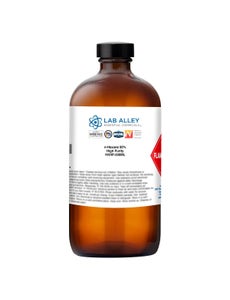
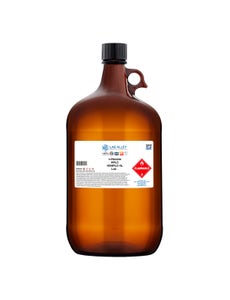
n-Hexane from Lab Alley is available as a high-purity, clear, colorless liquid meeting ACS and reagent-grade standards, suitable for laboratory, industrial, and manufacturing applications. Packaging ranges from small laboratory containers to bulk drums and totes to support extraction, cleaning, and large-scale production needs.
Common Uses & Applications
n-Hexane's non-polar solvent characteristics, rapid evaporation, and relatively low cost create demand across laboratory, food processing, and industrial sectors despite serious health and safety concerns.
Laboratory & Research Applications
Non-polar solvent for organic synthesis and reactions dissolves compounds that resist water or alcohol solubility. Extraction solvent for oils, fats, and lipids pulls these materials from biological tissues, plant materials, and food samples. Chromatography mobile phase applications span thin-layer chromatography, column chromatography, and HPLC separations. Recrystallization solvent provides controlled precipitation of purified compounds. Cleaning laboratory glassware removes organic residues that resist aqueous detergents.
Food & Edible Oil Industry Applications
Extraction of vegetable oils from seeds, including soybeans, peanuts, corn, cottonseed, and canola, represents n-hexane's largest commercial application. Crushed seeds contact n-hexane that dissolves oils, followed by evaporation, recovering the solvent for reuse. Oleoresin extraction from spices and herbs concentrates flavor compounds. Food-grade hexane meeting FDA specifications is required, with residual hexane in extracted oils limited to 25 ppm maximum. Extensive evaporation and stripping operations remove n-hexane before oils reach consumers.
Industrial Manufacturing Applications
Degreasing and cleaning agent for metal parts and machinery cuts through petroleum greases and oils. Adhesive and glue formulations, including contact cements and rubber cement, dissolve polymers in n-hexane that evaporates, leaving adhesive films. Solvent in printing inks provides appropriate viscosity and drying characteristics. Textile manufacturing and leather processing use n-hexane for fiber treatment and degreasing. Pharmaceutical intermediate extraction isolates organic compounds during drug synthesis. Polymer and plastic production employs n-hexane as a polymerization solvent.
Extraction & Specialty Processing Applications
Extraction of oils from botanical materials beyond food crops includes industrial seed oils and specialty natural products. Purification of pharmaceutical intermediates separates desired compounds from reaction mixtures. Wax and paraffin extraction from crude petroleum and plant materials dissolve these compounds selectively. Cannabis and hemp oil extraction for industrial applications uses n-hexane's efficiency, though consumer products increasingly demand solventless extraction.
Automotive & Chemical Synthesis Applications
Engine cleaning and degreasing remove carbonaceous deposits and oil residues. Parts washing and preparation before painting or assembly uses n-hexane's penetrating power. The reaction medium for moisture-sensitive reactions provides an anhydrous environment. Polymerization solvent creates appropriate conditions for controlled polymer formation. Chemical intermediate production starts with n-hexane as the process solvent.
Fight Your Kidney Stone with This Natural Product Hack
Fight kidney stones. Discover how citric acid naturally prevents stone formation.

Is Lactic Acid Bad? A Look at the Health Science
Is lactic acid bad for you? Debunking myths and revealing its vital role in your body & beyond.
Hospitality Without Hitchhikers: Boric Acid’s Role in Bed Bug Prevention
Protect your hospitality business. Boric acid is key to preventing bed bug infestations.
Harnessing Silica Sulfuric Acid to Enhance Concrete Durability
Enhance concrete longevity. Silica sulfuric acid improves strength and chemical resistance.
Safety Information
n-Hexane presents dual hazards requiring equal attention: extreme flammability demanding constant fire prevention, and cumulative neurotoxicity causing permanent nerve damage from chronic exposure.
Hazards & Precautions
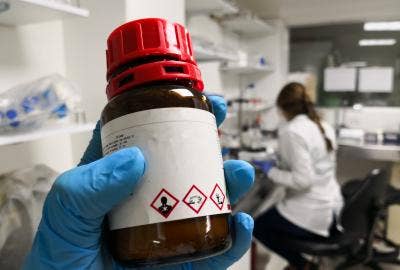
Extreme Flammability: Flash point -22°C (-8°F) creates an extreme fire and explosion hazard at all normal temperatures. Vapors form explosive mixtures with air across a wide concentration range. Vapors heavier than air travel to distant ignition sources. Static discharge during pouring generates ignition sparks. Container rupture in fires creates projectile hazards.
Health Effects - Inhalation: PRIMARY ROUTE OF EXPOSURE during normal operations. Acute effects include dizziness, drowsiness, headache, nausea, and central nervous system depression. High concentrations cause unconsciousness and respiratory failure. CRITICAL: Chronic exposure causes peripheral neuropathy manifesting as numbness, tingling, weakness in hands and feet, progressing to arms and legs. This nerve damage develops slowly over weeks to months, often becoming permanent even after exposure ends.
Health Effects - Skin: Causes drying, cracking, and dermatitis with repeated contact. Absorbed through skin in significant amounts, contributing to systemic toxicity.
Health Effects - Eyes: Causes severe irritation, redness, and pain. Vapors irritate eyes at concentrations well below those causing obvious respiratory symptoms.
Health Effects - Ingestion: Causes gastrointestinal irritation, nausea, vomiting, and CNS depression. ASPIRATION HAZARD: If swallowed material enters the lungs, chemical pneumonitis develops, causing severe respiratory damage potentially fatal. Never induce vomiting after ingestion.
Chronic Health Effects: Prolonged or repeated inhalation causes peripheral neuropathy. Reproductive toxicity concerns stem from testicular effects observed in animal studies. May affect fertility in males. Target organs include the nervous system, the respiratory system, skin, eyes, liver, kidneys, and reproductive system.
Personal Protective Equipment (PPE)
Chemical safety goggles or a face shield are required. Splash-proof goggles prevent liquid contact. Chemical-resistant gloves required with butyl rubber, nitrile (>0.35mm thickness), or Viton are recommended. Neoprene and PVC show limited resistance. A lab coat or chemical-resistant apron prevents clothing contamination. Remove contaminated clothing immediately.
CRITICAL respiratory protection requirement: Use NIOSH-approved organic vapor respirator (half-face with organic vapor cartridges) when vapors exceed PEL. Supplied-air respirator or SCBA required for high concentrations or confined spaces. Work in well-ventilated areas or use fume hoods. Chemical safety shower and eyewash station must be immediately available.
Storage Guidelines
Store in an approved flammable liquid storage cabinet or dedicated flammable liquid storage room meeting OSHA and NFPA standards. Keep in a cool, dry, well-ventilated area away from heat, sparks, flames, and all ignition sources. Ground and bond containers during transfer, preventing static discharge. Store away from oxidizing agents, acids, and incompatible materials. Keep containers tightly closed, preventing evaporation.
Store in explosion-proof areas with spark-proof ventilation, lighting, and equipment. Eliminate all ignition sources. Use non-sparking tools and equipment. Prevent vapor accumulation in low areas through continuous ventilation. Post "No Smoking" and "Flammable" signs prominently.
Emergency Procedures
Fire: Evacuate the area immediately. Use dry chemical, CO₂, alcohol-resistant foam, or Halon extinguishers. Water proves ineffective for extinguishing, but cools containers. Fight fire from maximum distance.
Spill: Eliminate all ignition sources immediately. Evacuate non-essential personnel. Ventilate the area thoroughly. Contain spill. Absorb with vermiculite, sand, or other non-combustible absorbent. Prevent entry into sewers or waterways. Never flush down the drain.
Exposure - Eyes: Flush immediately with water for at least 15 minutes. Seek immediate medical attention.
Exposure - Skin: Remove contaminated clothing immediately. Wash skin with soap and water for at least 15 minutes. Launder contaminated clothing before reuse.
Exposure - Inhalation: Move the person to fresh air immediately. If breathing is difficult, provide oxygen. Seek immediate medical attention. Inform medical personnel of potential neurotoxic exposure.
Exposure - Ingestion: DO NOT INDUCE VOMITING due to aspiration hazard. Rinse mouth with water. Seek immediate medical attention.
Regulatory & Classification
n-Hexane faces stringent regulation reflecting extreme flammability and neurotoxicity concerns, with exposure limits varying dramatically between agencies.
OSHA Classification
Class IB Flammable Liquid triggers comprehensive workplace safety requirements. PEL (Permissible Exposure Limit) TWA of 500 ppm (1,800 mg/m³) for an 8-hour time-weighted average represents the legal workplace limit. Regulated as a hazardous substance under 29 CFR 1910.1200, requiring safety data sheets, container labeling, and employee training.
NIOSH Recommendations
REL (Recommended Exposure Limit) TWA of 50 ppm (180 mg/m³) for 10-hour TWA stands ten times lower than OSHA PEL, reflecting neurotoxicity concerns that the OSHA limit doesn't adequately address. IDLH (Immediately Dangerous to Life or Health) of 1,100 ppm defines concentrations requiring immediate evacuation. Listed as a potential occupational carcinogen based on animal studies. NIOSH recommends minimizing exposure due to the risk of peripheral neuropathy.
ACGIH Recommendations
TLV-TWA of 50 ppm for 8-hour time-weighted average matches NIOSH recommendations. Skin notation indicates absorption through skin in toxicologically significant amounts. Neurotoxicity warning specifically addresses peripheral neuropathy concerns. Professional industrial hygienists typically design controls targeting ACGIH limits rather than relying on higher OSHA PELs.
DOT Classification
UN 1208, Hazard Class 3 (Flammable Liquid), Packing Group II (Medium Danger) designates n-hexane for shipping purposes. Proper shipping name appears as "Hexanes" or "n-Hexane." Flammable Liquid labels required. Placard required for bulk shipments. Hazmat shipping fees apply to all quantities.
EPA Regulations
Listed hazardous substance under CERCLA (Superfund) with Reportable Quantity (RQ) of 5,000 lbs. Spills exceeding this quantity require immediate notification. SARA Title III Section 313 designates n-hexane as a toxic chemical. The CAA (Clean Air Act) lists n-hexane as a Hazardous Air Pollutant. RCRA hazardous waste code D001 (ignitable waste) applies to n-hexane waste.
FDA Status and Environmental Considerations
Approved for use as an extraction solvent in food processing under specific conditions. Residual hexane in extracted oils must not exceed 25 ppm. Not permitted as a direct food additive. VOC status means n-hexane contributes to ground-level ozone formation. Biodegradable under aerobic conditions with a half-life of 3-7 days in air. Should not be discharged into waterways. Incineration represents the preferred disposal method.

How to Safely Dispose of Sulfuric Acid
Sulfuric acid is one of the most common acidifying reagents and sulfur sources, essential across multiple industries. At the same time, it is also a toxic and highly hazardous chemical reagent, requiring safe handling and disposal by trained personnel.
How To Use Nitric Acid Safely
Nitric acid is a corrosive chemical and harmful to humans. Its contact with skin and eyes can cause serious burns. Affected skin will require flushing with soap and lukewarm water for at least 30 minutes.
Acetone Safety: Proper Storage and Disposal Methods
Acetone is a staple chemical solvent in most laboratories. It is also perhaps one of the most recognizable chemicals to the layperson, best known as the pungent solvent comprising nail polish remover.
How to Use Potassium Iodide Safely and Where to Buy it Online
Potassium Iodide Powder, also known as Potassium Salt of Hydriodic Acid, Iodic Acid Potassium Salt, Potassium Monoiodide, and Knollide, has the chemical formula KI. It appears as a white crystalline powder, odorless, and is soluble in water at ambient conditions.
Medicinal Oils Derived From Plants
You can order food-grade ethanol, extraction-grade ethanol, ACS-grade ethanol, FCC-grade ethanol, USP grade ethanol, HPLC-grade ethanol and kosher ethanol from Lab Alley. Perform ethanol (EtOH) extraction at ultra-low temperatures for the best yields.
Ethanol extraction is a cost-effective way to use ethanol as an industrial solvent to produce high-quality botanical extracts from large volumes of medicinal herbs or plants.
n-Hexane Grades and Pack Sizes
Available Grades & Purities
ACS Reagent Grade at ≥98.5% purity serves analytical work with documented specifications. HPLC Grade at ≥95% with controlled isomer content suits chromatography applications. Spectrophotometric/UV Grade provides high optical purity for spectroscopic measurements. Laboratory Grade/Technical Grade at 95-98% handles extractions and general laboratory use economically. Industrial Grade with lower purity suits manufacturing and cleaning. Food Grade at 95%+ enables edible oil extraction with FDA compliance documentation. Certificates of analysis available for all grades.
Pack Sizes & Bulk Availability
Lab Alley offers n-hexane in sizes ranging from 500mL laboratory bottles to 55-gallon drums. Common pack sizes include 500mL, 1L, 4L, 1 gallon, 4 gallon case packs, 5 gallons, and 55 gallon drums. Bulk quantities, including 275-gallon totes and tanker loads, are available by special order. All sizes comply with DOT flammable liquid shipping requirements.
Regulatory Requirements
HAZMAT shipping fees apply to all sizes due to extreme flammability classification. DOT Class 3 Flammable Liquid regulations require proper labeling, packaging, and shipping documentation. Must be shipped via approved carriers with hazmat certification. Storage requires approved flammable liquid storage cabinets meeting NFPA standards. Workplace use requires compliance with OSHA flammable liquid standards, including bonding and grounding, explosion-proof equipment, and adequate ventilation. Employee training required on hazards and safe handling. Medical surveillance recommended for workers with routine exposure. Food-grade hexane requires additional FDA compliance documentation.
FAQs
What makes n-hexane different from other hexane isomers?
Why does NIOSH recommend 50 ppm exposure limit while OSHA allows 500 ppm?
Can n-hexane cause permanent nerve damage even at low exposure levels?
How should n-hexane be stored to prevent fires and explosions?
What are the FDA requirements for residual n-hexane in food products?
The FDA tolerates a maximum of 25 ppm residual hexane in vegetable oils extracted using n-hexane. This limit protects consumers from exposure while recognizing that complete removal proves economically impossible. Food processors must validate hexane removal through extensive evaporation, steam stripping, and deodorization processes. Testing protocols verify finished oils meet specifications before sale. Product labels don't mention hexane extraction since properly processed oils contain residues far below detection thresholds. "Expeller pressed" or "cold pressed" oils avoid hexane entirely, commanding premium prices. Industrial food operations must maintain detailed records documenting hexane usage and removal validation for FDA inspection.