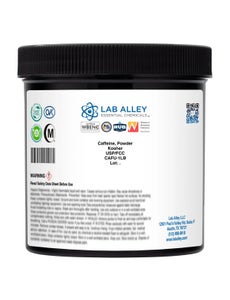






Types of Caffeine: Understanding Hydration States, Grades, and Forms
Caffeine (1,3,7-Trimethylxanthine) is a naturally occurring central nervous system stimulant of the methylxanthine class with chemical formula C8H10N4O2 (anhydrous) or C8H10N4O2·H2O (monohydrate) and molecular weight 194.19 g/mol (anhydrous) or 212.21 g/mol (monohydrate).
From the energy drink in your refrigerator to prescription migraine medications, caffeine appears in countless products. What many people don't realize is that caffeine exists in multiple forms, each designed for specific manufacturing processes and regulatory requirements.
Why do different types exist? The hydration state affects molecular weight and water content, with anhydrous being the most common for pharmaceutical and food use due to higher concentration. Purity grades determine regulatory compliance, with USP/BP/EP required for pharmaceutical active ingredients and FCC/Food grade for food and beverage applications. Source type (natural versus synthetic) impacts marketing claims and sustainability certifications, with natural caffeine enabling "plant-derived" labeling. Physical forms affect dissolution rates, flow properties, and dust generation, with fine powders offering better dissolution for dietary supplements and granular forms providing improved flow for industrial-scale production.
Choosing correctly is important. Pick the wrong purity grade for pharmaceutical manufacturing and you've violated cGMP requirements. Select an inappropriate physical form and you've compromised tablet dissolution or created dust hazards. Understanding these distinctions ensures regulatory compliance, optimal product performance, and manufacturing efficiency.
Key selection factors include: application type (pharmaceutical versus food versus dietary supplement versus cosmetic), regulatory compliance requirements, hydration needs, natural versus synthetic labeling preferences, physical form requirements (dissolution versus flow properties), sustainability certification needs, and cost considerations.


In this article, we’ll explore:
-
Hydration States
-
Purity Grades & Standards
-
Source Types
-
Physical Forms
-
Applications by Type
-
Regulatory & Safety Classifications
-
How to Choose the Right Type
-
Storage & Handling
Hydration States
Caffeine exists in two hydration states that differ in water content and molecular weight. The choice between them affects formulation calculations and storage requirements.
Caffeine Anhydrous
Caffeine anhydrous carries the chemical formula C8H10N4O2 with a molecular weight of 194.19 g/mol. The term "anhydrous" means free of water molecules, distinguishing it from the hydrated form.
This white to almost white crystalline powder melts at 234-239°C. The absence of water molecules makes anhydrous caffeine more concentrated than the monohydrate form, which matters when calculating dosages and formulation weights.
Pharmaceutical and food manufacturers overwhelmingly prefer anhydrous caffeine as their standard form. The higher concentration per unit weight allows for smaller tablet sizes and more accurate low-dose formulations. Moisture sensitivity in pharmaceutical manufacturing also favors starting with a material already free of water.
Cost-effectiveness drives another advantage. When you're buying caffeine by weight, the anhydrous form delivers more active ingredient per kilogram than the hydrated version. For large-scale production, this difference becomes economically significant.
Available in USP, BP, EP, FCC, and Food grades. Can be processed into various physical forms, including standard powder, fine powder, and granular formats.
Caffeine Monohydrate
Caffeine monohydrate has the formula C8H10N4O2·H2O with a molecular weight of 212.21 g/mol. Each caffeine molecule binds with one water molecule, increasing the total molecular weight compared to anhydrous.
The monohydrate form is efflorescent in air, meaning it loses water upon exposure to the atmosphere. This characteristic makes storage more challenging than anhydrous caffeine since the water content gradually decreases in typical warehouse conditions.
Water content specifications allow not more than 8.5% per the FCC standards for the hydrous form. This built-in variability requires careful attention in formulation calculations. A batch stored longer may have lower water content than freshly manufactured material.
Use of monohydrate has declined as anhydrous caffeine became standard. Today, monohydrate appears primarily in legacy formulations where changing the hydration state would require regulatory reapproval, or in specialized applications where the water of hydration serves a specific purpose.
Less commonly available than anhydrous. Some suppliers no longer stock monohydrate due to limited demand.
Purity Grades & Standards
Purity grade determines which applications can legally use the caffeine. Each grade targets specific regulatory frameworks.
USP Grade (United States Pharmacopeia)
USP grade caffeine meets United States Pharmacopeia-National Formulary monograph requirements. The assay specification demands 98.5-101.0% C8H10N4O2 calculated on an anhydrous basis, ensuring consistent potency batch to batch.
Loss on drying must not exceed 0.5%, confirming the anhydrous character. Residue on ignition stays below 0.1%, limiting inorganic impurities. These tight specifications ensure pharmaceutical manufacturers can formulate with confidence.
Manufacturing occurs under current Good Manufacturing Practices (cGMP) per 21 CFR Parts 210 and 211 in FDA-registered facilities subject to regular inspection. This regulatory oversight distinguishes pharmaceutical-grade materials from food or industrial grades.
Certificate of Analysis documentation accompanies each batch, detailing test results for all USP monograph parameters. This paperwork supports FDA audits and quality control programs required in drug manufacturing.
Pharmaceutical companies formulating over-the-counter medications, prescription drugs, and analgesic combinations use USP grade exclusively. FDA regulations effectively require pharmacopeial standards for active pharmaceutical ingredients, leaving no room for substitutes.
Premium pricing reflects cGMP manufacturing costs, extensive testing, regulatory compliance, and comprehensive documentation.
BP Grade (British Pharmacopoeia)
BP grade meets British Pharmacopoeia specifications with assay requirements of 98.5-101.0% on an anhydrous basis. Loss on drying stays at or below 0.5%. Residue on ignition remains under 0.1%. Acidity must not exceed 0.2 mL of 0.01M sodium hydroxide.
International pharmaceutical manufacturers producing for the UK and Commonwealth markets require BP grade for regulatory approval. The specifications closely parallel USP requirements with minor differences in testing methodology.
Multinational pharmaceutical companies often maintain dual USP/BP certification for their caffeine to serve both North American and international markets without separate inventory.
EP Grade (European Pharmacopoeia/Ph. Eur.)
EP grade caffeine meets European Pharmacopeia specifications. The assay requires 98.5-101.5% calculated on dried substance. After drying, the melting range must fall between 234-239°C. Heavy metals (as Pb) stay below 0.001%.
Pharmaceutical and cosmetic manufacturers selling into the European Union markets need EP certification for regulatory compliance. The specifications are harmonized across EU member states, simplifying cross-border manufacturing.
Companies producing in Europe or exporting to EU countries rely on EP grade to satisfy regulatory authorities in multiple countries with a single certification.
FCC Grade (Food Chemicals Codex)
FCC grade satisfies Food Chemicals Codex specifications for food additive use. The assay demands 98.5-101.0% C8H10N4O2 on an anhydrous basis. Lead content must not exceed 1 mg/kg. The melting range for anhydrous material falls between 235-237.5°C.
Water content specifications differ by form: 0.5% maximum for anhydrous, 8.5% maximum for hydrous. Testing confirms that other alkaloids produce no precipitate and readily carbonizable substances pass testing.
The food and beverage industry uses FCC grade as a flavoring agent, providing the characteristic bitter note in energy drinks, colas, and other caffeinated beverages. FCC certification demonstrates food safety compliance to FDA inspectors and quality auditors.
Manufacturing may occur under food-grade GMP requirements rather than pharmaceutical cGMP. This reduces costs compared to USP grade while maintaining food safety standards.
Food Grade
Food-grade caffeine delivers high purity suitable for direct incorporation into food products. It complies with FDA regulations for food additives with specifications similar to FCC grade.
Energy drink manufacturers, soft drink companies, energy bar producers, and candy makers use food-grade caffeine. The certification supports "natural flavor" or "added caffeine" labeling on consumer packages.
Regulatory requirements are less stringent than pharmaceutical standards but more demanding than industrial grades. This middle ground provides food safety assurance at a moderate cost.
Pharmaceutical Grade
Pharmaceutical grade represents active pharmaceutical ingredient (API) quality manufactured according to ICH Q7 Good Manufacturing Practice guidelines for Active Pharmaceutical Ingredients.
High purity with strict impurity limits ensures safety and efficacy in drug products. Individual organic impurities stay below 0.10%, and total organic impurities remain under 0.10%. Sulfated ash doesn't exceed 0.1%.
Over-the-counter medications, prescription drugs, headache and migraine treatments, and analgesic formulations all require Pharmaceutical grade. The FDA considers caffeine an approved active ingredient in OTC drug products, triggering pharmaceutical-grade requirements.
This is the highest quality tier available, with pricing reflecting the extensive quality control, testing, and regulatory compliance involved.
Source Types
Caffeine can be extracted from plants or synthesized chemically. Both types have identical molecular structures and pharmacological effects, but marketing and sustainability considerations drive different choices.
Natural Caffeine
Natural caffeine is extracted 100% from vegetable sources, primarily green coffee beans or tea leaves. Extraction processes isolate caffeine while removing other plant compounds, yielding pure caffeine that meets EP/USP standards for natural caffeine.
Available physical forms include standard powder, fine powder, and granular options. Natural caffeine can carry sustainability certifications like UTZ, Rainforest Alliance, Colombian origin, or Fair Trade, appealing to environmentally conscious brands.
Products marketed as "natural" or "plant-derived" require natural caffeine to support label claims. Consumer surveys show segments willing to pay premium prices for natural ingredients, making the higher cost economically viable for some brands.
The extraction process costs more than chemical synthesis, and the supply depends on the agricultural production of coffee and tea. This creates price variability and potential supply disruptions that synthetic sources avoid.
Clean-label brands, natural energy drinks, organic supplements, and products targeting health-conscious consumers preferentially use natural caffeine despite the premium cost.
Synthetic Caffeine
Synthetic caffeine is chemically synthesized from precursor compounds in controlled manufacturing facilities. The resulting molecule has an identical chemical structure to natural caffeine at the atomic level.
Chemists cannot distinguish synthetic from natural caffeine through chemical analysis. Both have the same melting point, solubility, and pharmacological effects. The human body processes them identically.
Manufacturing consistency represents a key advantage. Chemical synthesis produces a uniform purity batch after batch without variations from agricultural growing conditions, harvest timing, or extraction efficiency. Quality control proves easier and more predictable.
Cost-effectiveness makes synthetic caffeine the standard for most commercial products. Large-scale chemical synthesis costs less than plant extraction, and supply doesn't fluctuate with coffee or tea harvests.
Pharmaceutical manufacturers, most dietary supplement brands, and commercial food and beverage companies use synthetic caffeine. The consistent quality, reliable supply, and lower cost outweigh any marketing advantages of natural sourcing.
Physical Forms
Physical form affects how caffeine is handled in manufacturing equipment and how it dissolves in final products.
Standard Powder Form
Standard powder form appears as white to almost white crystalline powder with free-flowing properties. Particle size follows standard granulation specifications for good handling without being so fine that it creates dust problems.
This represents the most common physical form across applications. Standard powder works in tablet compression, capsule filling, beverage dissolution, and most other manufacturing processes without special handling.
Cost runs lowest among physical forms since no additional processing beyond basic crystallization occurs. Manufacturing equipment handles standard powder reliably.
Fine Powder Form
Fine powder has a smaller particle size than standard powder, similar to powdered sugar consistency. The reduced particle size increases surface area, improving dissolution speed.
Dietary supplement manufacturers formulating fast-acting tablets or capsules benefit from faster dissolution. Pharmaceutical companies use fine powder when a rapid onset matters for therapeutic effect.
Better mixing properties help achieve uniform distribution when caffeine represents a small percentage of total formulation weight. This matters in low-dose products where consistency between tablets is critical.
Dust generation increases with finer particles, requiring better containment during manufacturing. Worker exposure controls and dust collection systems become more important.
Fine Powder Form S
Fine Powder Form S represents a special ultra-fine variant with an even smaller particle size than standard fine powder. Enhanced solubility characteristics support specialized pharmaceutical formulations requiring immediate dissolution.
Limited availability and premium pricing restrict this form to applications where the enhanced properties justify the cost. Most manufacturers find standard fine powder adequate.
Standard Granular Form
Standard granular form features a larger granule size than powder forms. The increased particle size dramatically improves flow properties through hoppers, feeders, and automated processing equipment.
Reduced dust generation protects workers and reduces product loss. Manufacturing environments stay cleaner and require less frequent equipment cleaning.
Industrial-scale food and beverage production facilities prefer granular forms when dissolution time isn't critical. The handling advantages streamline high-volume automated processes.
Fine Granular Form C
Fine granular form C provides compact fine granules with controlled particle size distribution. This specialized form balances good flow properties with reasonable dissolution speed.
Tablet compression and capsule filling operations benefit from the controlled granulation. The material feeds uniformly into tablet presses, producing consistent tablet weights.
Applications requiring both manufacturing efficiency and product performance often specify fine granular form C as a compromise between powders and coarser granules.
Compressed/Compacted Form
Compressed or compacted caffeine comes as free-flowing granules or pellets created by compressing powder under pressure. This densification improves handling characteristics substantially.
Reduced dust exposure protects manufacturing workers from inhalation. Enclosed processing systems can operate with less sophisticated dust control.
Automated manufacturing processes run more reliably with compacted forms. Fewer jams, clogs, and feed irregularities mean higher uptime and production efficiency.
The additional processing step adds cost compared to powder forms. High-volume automated facilities justify this premium through improved manufacturing efficiency.
Applications by Type
Pharmaceuticals (USP/BP/EP Grades)
Over-the-counter medications use caffeine for drowsiness treatment and alertness enhancement. Products like NoDoz and Vivarin list caffeine as the primary active ingredient.
Headache and migraine medications combine caffeine with analgesics. Excedrin Migraine, for example, includes caffeine because it enhances pain relief effectiveness. Studies show caffeine increases analgesic absorption and potentiates pain-blocking mechanisms.
Prescription medications occasionally incorporate caffeine for specific therapeutic purposes. Ergotamine-caffeine combinations treat migraines. Some prescription stimulants include caffeine.
Pharmaceutical excipients sometimes employ caffeine in formulations where it serves as both an active ingredient and a processing aid.
Food & Beverage Industry (FCC/Food Grade)
Energy drinks represent the largest food application. Red Bull, Monster, and countless competitors rely on caffeine for their stimulant effects. Formulations typically range from 80-300 mg per serving.
Soft drinks, including Coca-Cola, Pepsi, Mountain Dew, and other colas, incorporate caffeine for flavor and a mild stimulant effect. The bitter note caffeine provides balances sweetness.
Energy bars and sports nutrition products add caffeine to support athletic performance and endurance. Pre-workout and intra-workout products commonly include 100-200 mg.
Candies and chocolates sometimes include added caffeine beyond what naturally occurs in chocolate. Energy candy brands market enhanced alertness.
Decaffeinated coffee and tea production creates a market for reintroducing controlled caffeine levels. Manufacturers can precisely target desired caffeine content.
Functional foods, including caffeinated water, caffeinated snacks, and caffeinated breakfast products, continue expanding caffeine into new categories.
Dietary Supplements (USP/Food Grade)
Pre-workout supplements combine caffeine with other ingredients targeting exercise performance. Formulations typically include 150-350 mg per serving.
Fat burners and metabolism boosters rely on caffeine's thermogenic effects. Combined with other stimulants, caffeine theoretically enhances fat oxidation and energy expenditure.
Energy supplements provide straightforward caffeine delivery without the calories of energy drinks. Capsules and tablets offer convenience and precise dosing.
Performance enhancement products for gaming, studying, and demanding work use caffeine to support alertness and focus.
Nootropic formulations combine caffeine with compounds like L-theanine to enhance cognitive function while reducing jitters.
Cosmetics & Personal Care (Pharmaceutical Grade)
Anti-aging creams incorporate caffeine for its purported antioxidant effects and skin-tightening properties.
Eye creams use caffeine to reduce puffiness by constricting blood vessels and reducing fluid accumulation under the eyes.
Cellulite treatments apply caffeine topically based on theories that it promotes fat cell breakdown. Evidence remains limited, but consumer demand persists.
Skin firming products formulated with caffeine stimulate circulation when applied topically. Some research suggests improved microcirculation in treated areas.
Regulatory & Safety Considerations
FDA Status
Caffeine holds a Generally Recognized As Safe (GRAS) status for food use based on decades of safe consumption. This recognition allows food manufacturers to add caffeine within reasonable limits without pre-market approval.
The FDA also approves caffeine as an active ingredient in OTC drug products. Monograph regulations specify allowable doses, labeling requirements, and manufacturing standards.
DOT Classification
The Department of Transportation classifies caffeine as UN1544, Alkaloid, solid, n.o.s. (caffeine), Class 6.1, Packing Group III. This classification designates it as a toxic substance for shipping purposes, triggering specific handling and documentation requirements.
Shipping restrictions limit the largest individual container via UPS/FedEx Ground to 12 kg. UPS Air service allows only 500 g maximum. FedEx Air does not accept caffeine shipments at all.
These restrictions complicate logistics for caffeine users. Ground shipping takes longer, and air shipment options are severely limited or prohibited.
GHS Classification
The Globally Harmonized System classifies caffeine as H302: Harmful if swallowed. This hazard classification requires specific label statements and handling precautions.
Proper labeling must include hazard pictograms, signal words, hazard statements, and precautionary statements per GHS requirements.
Certifications & Compliance
Kosher Certification
Kosher-certified caffeine meets Jewish dietary requirements. Products targeting kosher consumers or manufactured in kosher facilities require certified ingredients.
Kosher certification covers both natural and synthetic caffeine, though natural sourcing may simplify the certification process.
Halal Certification
Halal-certified caffeine complies with Islamic dietary standards. Products sold in Muslim-majority countries or targeting Muslim consumers often require halal certification.
Both natural and synthetic sources can achieve halal certification with appropriate documentation and oversight.
Non-GMO
Natural caffeine extracted from non-GMO coffee or tea sources can carry non-GMO certification. This appeals to consumers avoiding genetically modified organisms.
Clean-label products increasingly demand non-GMO certification to align with consumer preferences and brand positioning.
Organic Certification
Natural caffeine extracted from organic coffee or tea sources can obtain USDA Organic or equivalent certifications. Organic certification requires verified organic agriculture throughout the supply chain.
Organic energy drinks, organic supplements, and organic food products require organic-certified caffeine to maintain their organic status.
Sustainability Certifications
UTZ Certified, Rainforest Alliance, Colombian origin sustainable agriculture, and Fair Trade options exist for natural caffeine. These certifications document environmentally and socially responsible sourcing.
Brands emphasizing sustainability and ethical sourcing use certified caffeine to support marketing claims and corporate values.
How to Choose the Right Type
For Pharmaceutical Products
Use USP/BP/EP Grade. Regulatory compliance is critical and non-negotiable. FDA requirements demand pharmacopeial standards for active pharmaceutical ingredients. The highest purity standards ensure patient safety and product efficacy.
For Food and Beverage Products
Use FCC/Food Grade. Food-safe certification satisfies FDA food additive regulations. Flavoring applications benefit from consistent purity without pharmaceutical-grade costs.
For Natural/Clean Label Products
Use Natural Caffeine when "natural" or "plant-derived" labeling drives consumer appeal. Sustainability certifications support environmental and social responsibility claims. The premium cost often proves justifiable through higher retail pricing.
For Cost-Effectiveness and Large-Scale Production
Use Synthetic Caffeine when consistent quality, reliable supply, and tight cost control matter most. The identical pharmacological effect at a lower cost makes synthetic the standard choice for most commercial applications.
For Anhydrous vs. Monohydrate
Use Anhydrous for standard pharmaceutical and food applications where maximum concentration per unit weight is desired and moisture sensitivity is a concern. This represents the industry standard.
Use Monohydrate only for specific legacy formulations requiring hydrated form or specialized applications where the water of hydration serves a purpose.
For Physical Forms
Use Fine Powder when better dissolution matters for dietary supplements, fast-acting pharmaceuticals, or applications where rapid release is critical.
Use Granular forms for improved flow properties in industrial-scale production, automated processing, and applications where reduced dust generation protects workers.
Use Compacted forms for reduced dust exposure and automated manufacturing processes running high volumes where handling efficiency justifies the processing cost premium.
Key Takeaways
Caffeine exists in multiple forms, including two hydration states (anhydrous and monohydrate), numerous purity grades (USP, BP, EP, FCC, Food, Pharmaceutical), two source types (natural and synthetic), and various physical forms (powder, granular, compacted). Anhydrous caffeine dominates pharmaceutical and food applications due to higher concentration and better storage stability. Monohydrate sees limited use in specialized applications.
USP/BP/EP grades serve pharmaceutical manufacturing under cGMP requirements with comprehensive documentation. FCC/Food grades satisfy food and beverage applications under FDA food additive regulations. Natural caffeine enables "plant-derived" labeling claims and sustainability certification. Synthetic caffeine delivers consistent quality at a lower cost for most commercial applications.
Physical forms balance dissolution speed against handling efficiency. Fine powders dissolve faster for supplements and pharmaceuticals. Granular forms flow better for industrial automation. Compacted forms reduce dust exposure in high-volume manufacturing.
Choose based on regulatory requirements (pharmaceutical versus food), marketing positioning (natural versus synthetic), manufacturing needs (dissolution versus flow properties), and cost targets. Work with qualified suppliers providing appropriate grade certifications, Certificates of Analysis, and manufacturing documentation matching your application requirements.
Store in tightly sealed, moisture-resistant containers at stable room temperature. Use appropriate PPE during handling. Follow DOT shipping restrictions for ground and air transport.
For more detailed guidance, explore our Resource Library.
Our Customer Care team is also available for more information and documentation, including chemical Safety Data Sheets.
Find Caffeine You Can Trust
If you are looking for high-quality caffeine for your lab, product line, or research facility, be sure to visit our store to explore our trusted selection and request a quote.
As your trusted partner in chemical supply, Lab Alley is always striving to meet the growing demands of our customers. We want you to be able to access all of your chemical needs in one place, along with streamlined online ordering and fast shipping.
Due to popular demand from our valued clientele, Lab Alley's caffeine is available in a range of purities and packaging options to suit various commercial, laboratory, and personal needs.