





Types of Ethanol: Understanding Grades, Forms, and Applications
Ethanol (C₂H₅OH), also known as ethyl alcohol, is a colorless, volatile alcohol produced through fermentation of carbohydrates or synthetic processes. You'll find this versatile compound everywhere from the vodka in your liquor cabinet to the gasoline in your car, from hospital hand sanitizers to the vanilla extract in your pantry.
What makes ethanol so adaptable? The answer lies in how it's produced, purified, and formulated. Different grades vary in purity level, water content, added denaturants, and concentration, which is measured in proof. These variations determine whether ethanol ends up in pharmaceuticals, beverages, industrial solvents, or fuel tanks.
Choosing the right type matters enormously. Use food-grade ethanol in manufacturing, and you've broken federal law. Pick denatured alcohol for a beverage application, and you've created a poisonous product. Understanding the distinctions between types ensures operations are compliant, products are safe, and businesses run smoothly.
Several key factors guide selection: purity requirements, proof or concentration needs, regulatory compliance (TTB, FDA, USP, FCC), whether denaturants are acceptable, the intended end-use, tax considerations, and safety requirements.
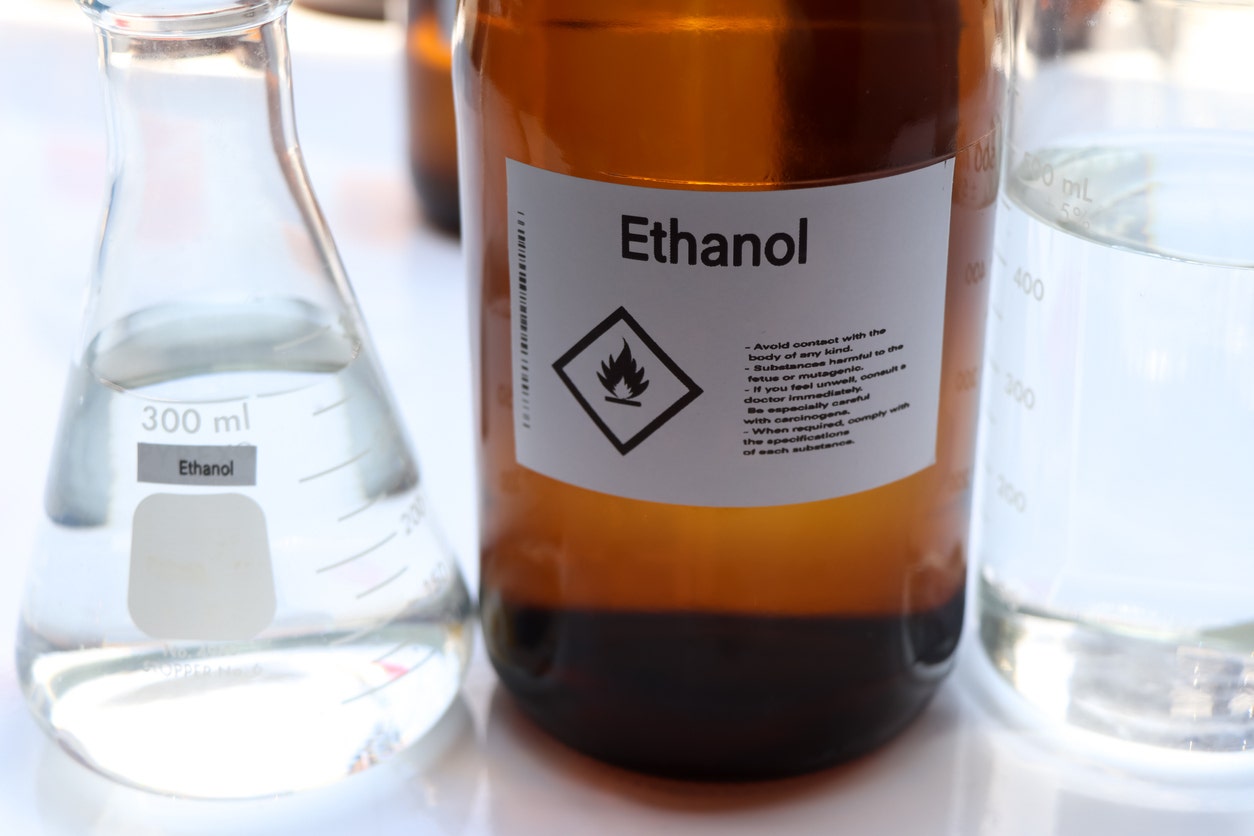
In this article, we’ll explore:
- Common Grades & Purities of Ethanol
-
Certifications & Standards
-
Chemical Forms & Variants
-
Applications Based on Type
-
Regulatory Classifications
-
How to Choose the Right Type of Ethanol
Common Grades & Purities of Ethanol
Walk into a chemical supplier and ask for ethanol, and you'll face an immediate question: What grade? The distinctions matter because each grade targets specific industries with particular purity needs and regulatory requirements.
Food Grade (FCC)
Food-grade ethanol carries GRAS (Generally Recognized as Safe) status from the FDA, making it legal for food extraction, botanical processing, flavoring, and food manufacturing. Testing verifies the absence of methanol, heavy metals, and microbial contamination that would make food unsafe.
Available between 190 and 200 proof with tight impurity limits, this grade efficiently extracts flavors from vanilla beans, pulls essential oils from herbs, and preserves certain food products. The high alcohol content dissolves aromatic compounds that water alone can't touch.
Food processors rely on this grade because nothing else legally works. Industrial ethanol in food products violates FDA regulations. Denatured alcohol introduces toxins. Only properly certified food-grade ethanol belongs in anything people eat or drink as food.
Pharmaceutical Grade (USP)
Pharmaceutical-grade ethanol meets United States Pharmacopeia standards, restricting impurities to 0.5% maximum by weight. Specifications limit individual contaminants to parts per million or billion.
Hospitals use this grade in antiseptics for surgical prep, hand sanitizers for healthcare workers, and injectable medications where patient safety demands absolute purity. Drug manufacturers incorporate it as a solvent in liquid medications and tinctures.
Extensive documentation accompanies pharmaceutical-grade ethanol. Certificates of analysis detail every tested parameter. Chain of custody records track material from production through end use, supporting FDA inspections and quality control.
Beverage Alcohol
Beverage alcohol sits in a regulatory category all its own, overseen by the Alcohol and Tobacco Tax and Trade Bureau (TTB) rather than the FDA. Ranging from 30 to 190 proof (15-95% alcohol by volume), this category includes vodka, whiskey, rum, gin, and other spirits for human consumption.
Producing beverage alcohol requires a Distilled Spirits Plant (DSP) permit from TTB. Each product formula needs approval. Federal excise taxes apply at $13.50 per proof gallon, though small producers get reduced rates under Craft Beverage Modernization Act provisions.
Never confuse beverage alcohol with other ethanol grades. Using industrial or denatured ethanol for beverage production violates federal law, risking facility closure, substantial fines, and criminal prosecution.
Industrial/Technical Grade
Industrial-grade ethanol strips away the costly purification steps required for food or pharmaceutical use while maintaining chemical functionality. Slightly higher impurity levels don't matter when making paint, formulating adhesives, or synthesizing other chemicals.
Manufacturers of coatings, cleaning products, cosmetics, and industrial chemicals choose this grade because it delivers solvent performance at a reasonable cost. Volume users save substantially compared to higher grades. When processing thousands of gallons monthly, the price difference adds up significantly.
Reagent/ACS Grade
Reagent-grade ethanol achieves ultra-high purity meeting American Chemical Society standards for analytical and research applications. Impurities that barely register in other grades can ruin experimental results or analytical measurements.
Analytical chemistry depends on reagent-grade ethanol for chromatography, spectroscopy, and other measurement techniques where contaminants create false readings. Molecular biology uses it for DNA precipitation and protein extraction, where lower grades interfere with delicate procedures.
Certificates of analysis specify exact impurity levels for each batch, allowing scientists to account for potential interference. Premium pricing reflects extensive purification and testing requirements.
Fuel Grade
Fuel-grade ethanol takes a completely different path from beverage or pharmaceutical grades. Produced specifically for blending with gasoline, this anhydrous ethanol (99.5%+ purity) emphasizes water removal over other purity concerns. Even small amounts of water cause phase separation in gasoline blends.
Production facilities ferment corn or other feedstocks, distill to concentrate ethanol, then dehydrate using molecular sieves that selectively remove water below 0.5%. E10 fuel (10% ethanol) dominates U.S. gasoline markets. E15 (15% ethanol) offers slightly higher renewable content. E85 (51-83% ethanol) serves flex-fuel vehicles.
Certifications & Standards
Beyond grade designations, various certifications signal compliance with industry-specific requirements.
GRAS Certification
GRAS status (Generally Recognized as Safe) from the FDA allows ethanol use in food applications. Decades of safe use and extensive toxicology data support this designation, distinguishing food-grade ethanol from industrial chemicals requiring lengthy approval processes.
USP/FCC Standards
United States Pharmacopeia standards define pharmaceutical-grade requirements. Food Chemicals Codex specifications govern food-grade quality. Both compendia detail acceptable impurity limits, testing methods, and quality criteria.
TTB Approval
TTB governs all beverage alcohol production and distribution. Approval requires facility permits, product formula approvals, and label approvals verifying compliance with format and content rules. Operating without proper TTB approvals risks severe penalties.
Kosher/Halal Certification
Religious dietary requirements extend to food and pharmaceutical products, including ethanol used in their production. Kosher certification verifies compliance with Jewish dietary law. Halal certification confirms Islamic dietary standards. Market access depends on certification when targeting these consumer segments.
Organic Certification
USDA organic certification requires ethanol production from certified organic feedstocks like organic corn or sugarcane. Organic food manufacturers must source certified organic ethanol to maintain their products' organic status.
ASTM Standards
ASTM D4806 specifies denatured fuel ethanol quality. These technical standards define chemical composition, physical properties, and testing methods, ensuring reliable engine performance. Fuel distributors test incoming ethanol against these standards before blending it with gasoline.
EPA Compliance
EPA's Renewable Fuel Standard (RFS) mandates minimum renewable fuel volumes in transportation fuel supplies. Ethanol producers register with the EPA, demonstrating their fuel qualifies as renewable under program definitions. Compliance generates Renewable Identification Numbers (RINs) that track renewable fuel through the distribution system.
Chemical Forms & Variants
Beyond grades and certifications, ethanol appears in various chemical forms differing in concentration, purity, and denaturant content.
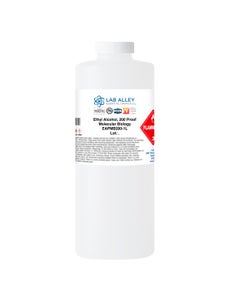
Absolute Ethanol (200 Proof)
Absolute or anhydrous ethanol contains 99.5-100% ethyl alcohol with minimal water. Achieving this requires specialized dehydration beyond distillation's theoretical limit around 95.6%, typically using molecular sieves that selectively absorb water molecules.
Laboratory procedures like DNA precipitation require anhydrous conditions. Pharmaceutical formulations sometimes need absolute ethanol. However, absolute ethanol aggressively absorbs atmospheric moisture due to its hygroscopic properties. Cost runs higher than 190 proof due to additional dehydration processing.
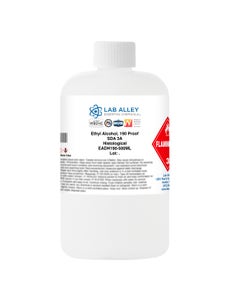
190 Proof Ethanol (95%)
This azeotropic mixture (95.6% ethanol, 4.4% water) represents the practical limit of distillation. Widely used across food, pharmaceutical, and industrial applications, 190 proof provides near-anhydrous performance for most purposes.
More stable than absolute ethanol due to small water content reducing hygroscopic behavior, 190 proof ethanol maintains concentration better during storage and handling. Cost-effectiveness makes this the default choice when applications don't specifically require absolute ethanol.
140-180 Proof Ethanol
Lower concentrations (70-90% ethanol) serve applications where substantial water content helps performance. Disinfection particularly benefits from moderate concentrations because water slows evaporation, extending contact time, and helps ethanol penetrate microbial cell walls.
Hand sanitizers typically contain 70% ethanol (140 proof), optimizing antimicrobial effectiveness. Surface disinfectants use similar concentrations. Beverage applications span this range from liqueurs around 30-40 proof to standard spirits at 80 proof and higher.
Denatured Alcohol - SDA (Specially Denatured Alcohol)
Specially Denatured Alcohol adds specific denaturants approved by TTB for particular industrial uses. These additives make ethanol unfit for drinking while remaining suitable for manufacturing. SDA 3A uses methanol as a denaturant. SDA 3C employs isopropanol denaturant. SDA 40B contains multiple denaturants for uses including perfumes and cosmetics.
Purchasing and using SDA requires TTB permits. The permit system tracks usage, preventing diversion to beverage production while allowing legitimate industrial users tax-free access to undrinkable ethanol.
Denatured Alcohol - CDA (Completely Denatured Alcohol)
Completely Denatured Alcohol contains denaturants, rendering it completely unfit for consumption with no purchase permits required. Common formulations include CDA 12A, 18, 19, 20, and 35.
Cleaning products, industrial solvents, and fuel additives commonly use CDA. No permit requirements simplify purchasing and recordkeeping. Tax-free status provides significant cost advantages. However, denaturants limit applications where they would contaminate products or contact humans.
Fuel Ethanol
Fuel ethanol represents anhydrous ethanol (99.5%+) produced specifically for gasoline blending. Water content must stay below 0.5% to prevent phase separation. Blending creates E10 (10% ethanol), E15 (15% ethanol), E85 (51-83% ethanol), and E100 (pure ethanol) fuels.
Beverage Ethanol
Beverage ethanol covers potable alcohol from 30-190 proof, including neutral spirits, vodka, whiskey, rum, gin, and other distilled spirits. Production follows strict TTB oversight from fermentation through bottling. Each spirit category follows defined production standards.
Applications Based on Type
Different ethanol types serve distinct applications. Matching form to function ensures performance while maintaining compliance.
Food & Beverage Production
Food-grade ethanol extracts flavors from vanilla beans by dissolving vanillin and supporting compounds. Herbal extracts concentrate beneficial compounds from plants. Essential oils dissolve in ethanol for culinary flavoring applications. Alcoholic beverage production represents the largest ethanol application in food.
Pharmaceuticals & Healthcare
Pharmaceutical applications include antiseptics for surgical skin preparation, hand sanitizers for healthcare workers, tinctures delivering medicinal compounds, and liquid medications using ethanol as a solvent. Medical equipment sterilization employs ethanol for surface disinfection.
Industrial Manufacturing
Industrial ethanol dissolves resins and polymers in paint and coating formulations. Cleaning products leverage ethanol's degreasing ability. Cosmetics and personal care products incorporate ethanol in perfumes, hair sprays, and countless formulations. Chemical synthesis uses ethanol as a reactant or solvent.
Fuel Applications
Transportation fuel represents an enormous ethanol demand. E10 fuel provides an octane boost and oxygenate content, promoting cleaner combustion while reducing petroleum consumption. E15 offers higher renewable content for compatible vehicles. E85 serves flex-fuel vehicles.
Laboratory & Research
Research laboratories depend on reagent-grade ethanol for analytical chemistry procedures, molecular biology applications like DNA precipitation, and quality control testing supporting pharmaceutical or medical device manufacturing.
Cleaning & Disinfection
Healthcare facilities use 70-90% ethanol for surface disinfection. Food service operations sanitize food-contact surfaces with ethanol solutions. Industrial cleaning leverages ethanol's dissolving power for removing oils, greases, and residues.
Regulatory Classifications
Different regulatory frameworks govern ethanol based on its intended use.
TTB-Regulated Beverage Alcohol
The Federal Alcohol Administration Act subjects beverage alcohol to TTB oversight. Production requires DSP permits. Federal excise tax applies at $13.50 per proof gallon. Formula approvals verify products meet standards. Label approvals ensure compliance.
Non-Beverage Tax-Paid Ethanol
Industrial ethanol with taxes paid can be used in manufacturing without special permits. However, tax-paid ethanol costs substantially more due to the included excise taxes.
Tax-Free Denatured Alcohol
Denatured alcohol formulations avoid excise taxes because denaturants make them unfit for consumption. SDA formulations require permits for purchase and use. CDA formulations need no permits. Both regulations fall under 27 CFR Part 21.
Industrial Use Permit Alcohol
Qualified industrial users, including laboratories, hospitals, and universities, can obtain TTB industrial use permits allowing tax-free access to undenatured ethanol. Permit requirements include demonstrating legitimate need and maintaining detailed usage records.
Fuel Ethanol
EPA regulations govern fuel ethanol rather than TTB oversight. The Renewable Fuel Standard mandates minimum renewable fuel volumes. Producers register with the EPA and generate Renewable Identification Numbers documenting renewable fuel production.
How to Choose the Right Type of Ethanol
Selecting appropriate ethanol demands careful evaluation of requirements, regulations, and practical considerations.
Match Grade to Intended Use
Food applications absolutely require food-grade (FCC) ethanol with GRAS certification. Pharmaceutical applications demand USP-grade materials meeting pharmacopeial standards. Beverage production requires beverage-grade ethanol produced under TTB oversight. Industrial applications accept technical-grade ethanol. Fuel applications need fuel-grade ethanol meeting ASTM specifications.
Verify Regulatory Compliance
Confirm suppliers hold appropriate permits. Food-grade ethanol needs GRAS certification documented in writing. Pharmaceutical-grade requires USP certification with certificates of analysis. Fuel ethanol needs EPA registration and ASTM compliance certification.
Select Appropriate Proof/Concentration
Higher proofs (190-200) deliver maximum extraction efficiency and solvent power. Lower concentrations (140-180 proof) optimize disinfection applications. The 70% concentration provides ideal antimicrobial performance. Beverage proofs depend on the product category.
Consider Tax Implications
Federal excise tax at $13.50 per proof gallon adds substantial cost to tax-paid ethanol. Denatured alcohol avoids excise taxes, providing major savings for legitimate industrial users. Evaluate whether permit compliance costs justify tax savings.
Evaluate Denaturant Compatibility
Different SDA formulations serve different purposes. SDA 3A with methanol denaturant works for general industrial solvents. SDA 3C with isopropanol denaturant suits cosmetics better. Consider whether denaturants will contaminate products, cause reactions, or create safety issues.
Review Supplier Qualifications
Verify suppliers hold required TTB permits. Request certificates of analysis documenting product specifications. Check for quality management systems like ISO certification or GMP compliance. Contact references or place trial orders before major commitments.
Assess Storage and Handling Requirements
Ethanol ships as hazardous material with associated costs. Storage requires approved flammable liquid cabinets, fire suppression systems, and ignition source control. Ensure existing equipment handles ethanol safely.
Key Takeaways
Ethanol exists in multiple grades targeting specific industries: food-grade for extraction, pharmaceutical-grade for medical standards, beverage-grade under TTB oversight, industrial-grade for manufacturing, and fuel-grade for vehicles.
Various certifications signal compliance: GRAS for food, USP for pharmaceuticals, FCC for food additives, organic for organic products, ASTM for fuel quality, and EPA for renewable fuel programs.
Proof levels range from 140 to 200, each suited for different applications. Higher proofs maximize extraction and solvent power. Moderate concentrations optimize disinfection.
Denatured alcohol provides tax savings when denaturants don't interfere with applications. SDA formulations serve specific industrial uses with permits. CDA offers unrestricted purchase for general purposes.
Successful selection matches grade, proof, and denaturant status to application requirements while satisfying regulatory obligations. Working with qualified suppliers who provide proper documentation ensures compliance and quality.
For more detailed guidance, explore our Resource Library.
Our Customer Care team is also available for more information and documentation, including chemical Safety Data Sheets.
Find Ethanol You Can Trust
If you are looking for high-quality ethanol for your lab, product line, or research facility, be sure to visit our store to explore our trusted selection and request a quote.
As your trusted partner in chemical supply, Lab Alley is always striving to meet the growing demands of our customers. We want you to be able to access all of your chemical needs in one place, along with streamlined online ordering and fast shipping.
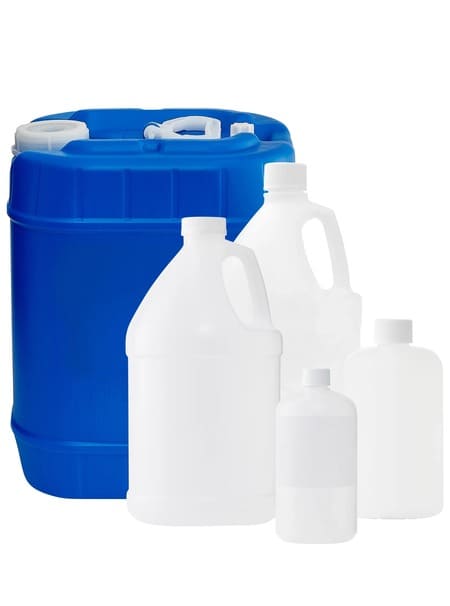
Due to popular demand from our valued clientele, Lab Alley's ethanol is available in a range of purities and packaging options to suit various commercial, laboratory, and personal needs.