Types of Sodium Hypochlorite: Understanding Concentrations, Grades, and Applications
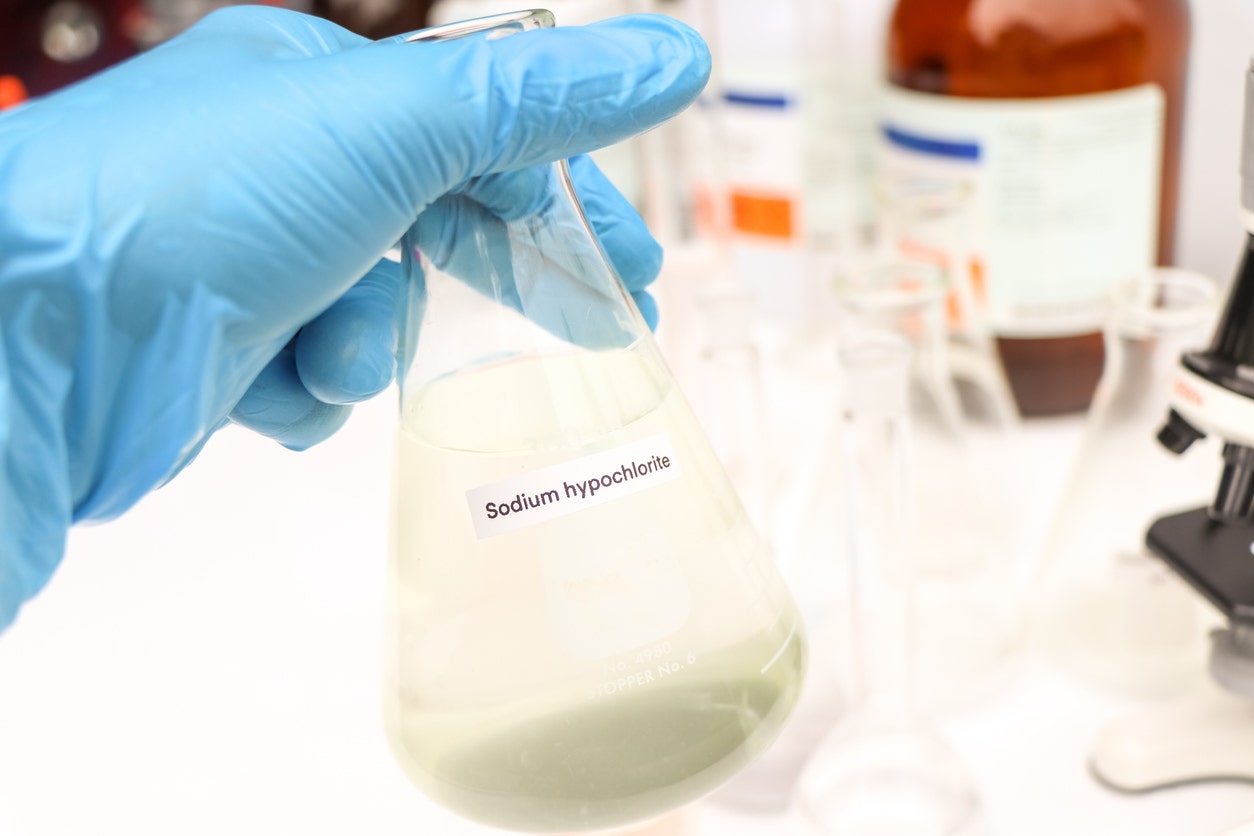
Sodium hypochlorite (NaOCl) is an inorganic chlorine compound commercially available as an aqueous solution widely recognized as liquid bleach. This powerful oxidizing, disinfecting, and bleaching agent appears in household cleaning products, municipal water treatment facilities, food processing operations, and laboratory research settings.
The compound differentiates primarily by available chlorine concentration (expressed as weight percent), grade specification, and intended regulatory use. Understanding which type suits your needs prevents regulatory violations, ensures effective disinfection, and maintains safety.
Concentration profoundly impacts performance and requirements. Low-concentration solutions around 5% suit general surface disinfection, laboratory work, and food contact surface sanitizing. High-strength solutions around 12.5% are the industry standard for municipal water treatment, industrial biocide applications, and large-scale disinfection. Higher concentrations degrade faster, release more chlorine vapors, corrode materials more aggressively, and require stricter handling and storage protocols.
Selection hinges on: available chlorine concentration, grade specification (technical, food grade, NSF/ANSI 60), intended application, regulatory compliance requirements, dilution needs, storage conditions, and certifications (EPA registration, NSF, GRAS status).
This article examines:
-
Common Concentrations
-
Grades and Purity Levels
-
Physical Forms
-
Chemical Variants
-
Applications Based on Type
-
Regulatory Classifications
-
Certifications and Standards
-
Safety and Handling Considerations
-
How to Choose the Right Type
-
Grades and Pack Sizes
Common Concentrations
Sodium hypochlorite comes in two primary commercial concentrations, each suited to different applications.
5% Solution
The 5% solution contains approximately 5% available chlorine by weight. It's a clear to pale yellow liquid with the characteristic chlorine odor most people recognize from household bleach.
This concentration is the go-to for general surface disinfection, laboratory decontamination, and food processing sanitization, diluted to no more than 200 ppm for food contact surfaces per 21 CFR 178.1010. It's easier to handle than higher-strength options: vapor release stays manageable with standard ventilation, dilution math is straightforward, and it degrades more slowly under equivalent storage conditions.
12.5% Solution
The 12.5% solution contains approximately 12.5% available chlorine by weight. Its straw-yellow color and strong chlorine odor reflect the elevated concentration.
This is the industry standard for municipal drinking water treatment, industrial biocide applications, and large-scale disinfection. The higher concentration reduces storage volume and freight costs, but it also demands more careful dilution protocols, more aggressive PPE, and closer attention to storage conditions.
It degrades faster than the 5% solution, especially under heat or light exposure. NSF/ANSI 60-certified versions are required for potable water treatment; uncertified formulations aren't legally permitted regardless of apparent purity.
Grades and Purity Levels
Technical Grade
Technical grade is for general-purpose industrial use where food-contact or drinking water certification isn't required, such as textile bleaching, pulp and paper processing, and general sanitation. Quality control focuses on available chlorine content and functional performance rather than trace contaminant analysis. Documentation requirements are minimal compared to certified grades.
Food Grade
Food-grade formulations are free from stabilizers, fragrances, and surfactants, making them safe for food processing environments. Federal regulations permit their use for sanitizing food contact surfaces and equipment per 21 CFR 178.1010. They're used in produce processing, dairy operations, brewing, and food manufacturing.
Unlike household bleach (which often contains additives for shelf life and odor), food grade products are additive-free, which also means shorter shelf life. Inventory management is key.
NSF/ANSI 60 Certified (Potable Water Grade)
This is the most stringent grade, required for all municipal drinking water treatment under the Safe Drinking Water Act. Certification involves routine audits, lot-level testing, and strict limits on contaminants, particularly bromate, which can form during chlorination when bromide ions are present in source water. Water utilities face enforcement for using uncertified materials regardless of quality.
Reagent Grade
Reagent grade provides high purity for laboratory and analytical applications. Each shipment includes a Certificate of Analysis with documented available chlorine concentration, supporting accurate dosing calculations, method validation, and interlaboratory reproducibility.
Physical Forms
Aqueous Solution (All Concentrations)
Sodium hypochlorite is sold exclusively as an aqueous solution at commercial concentrations. It mixes completely with water, generating minimal heat during dilution. Solutions above roughly 5% available chlorine become increasingly corrosive, narrowing material compatibility. HDPE and fiberglass hold up well; most metals and many plastics don't.
Solid Dihydrate (NaOCl·2H2O, Specialty/Limited Use)
A stable crystalline solid form exists as sodium hypochlorite dihydrate, producible under controlled lab conditions. It doesn't appear in standard commercial distribution and has no routine industrial use. Practical applications universally rely on aqueous solutions.
Chemical Variants
Standard (Unstabilized) Sodium Hypochlorite
Standard commercial formulations are aqueous NaOCl solutions without added stabilizers, typically buffered with sodium hydroxide to maintain an alkaline pH above 11, which slows decomposition. Under proper storage, shelf life is approximately one month. Heat, light, and trace transition metals (iron, nickel, copper) all accelerate breakdown.
Food-Grade / Additive-Free Sodium Hypochlorite
As described in the Grades section, these formulations skip stabilizers, fragrances, and surfactants to meet food-contact requirements. Shorter shelf life is the trade-off for regulatory acceptability. Always verify available chlorine concentration before use.
Dakin's Solution
Dakin's Solution is a dilute, pH-buffered formulation containing roughly 0.025 to 0.5% NaOCl, stabilized with sodium bicarbonate or boric acid. It's used as a topical antiseptic in wound care, compounded in pharmacy or clinical settings rather than distributed as a standard commercial product. Endodontic irrigation during root canal procedures uses similar dilute formulations at 0.5 to 5.25%, depending on protocol.
On-Site Generated (Electrolytic) Sodium Hypochlorite
Point-of-use electrolysis systems produce sodium hypochlorite from salt solution on demand. Governed by NSF/ANSI/CAN 61 for drinking water applications, these systems eliminate the transportation and storage risks of concentrated commercial bleach. Water utilities are increasingly adopting them for both safety and economic reasons. Capital and maintenance costs are higher than passive storage, but overall economics favor on-site generation at larger, high-demand facilities.
Applications by Type
Municipal and Potable Water Treatment: NSF/ANSI 60-certified 12.5% solutions are the standard for drinking water chlorination. Typical dosing ranges from 1 to 5 mg/L depending on source water quality and distribution system characteristics.
Wastewater Treatment: High-strength solutions disinfect wastewater effluent before environmental discharge, often followed by dechlorination to prevent residual chlorine from entering receiving waters.
Food Processing and Sanitation: Food-grade solutions diluted to no more than 200 ppm available chlorine sanitize food contact surfaces and equipment per 21 CFR 178.1010. Produce washing, dairy sanitation, and brewery disinfection all rely on these formulations at carefully controlled end-use concentrations.
Industrial Biocide Applications: Technical-grade solutions control bacteria, slime, and algae in cooling water systems, power plants, and pulp and paper mills. Automated systems maintain target residuals while minimizing chemical use. Blowdown may require dechlorination depending on environmental permits.
Healthcare and Wound Care: Dilute Dakin's Solution (0.025 to 0.5%) irrigates wounds, removes debris, and reduces microbial burden. Root canal procedures use slightly higher concentrations (0.5 to 5.25%) to dissolve organic tissue and disinfect the canal system.
Laboratory and Research: The 5% solution is the standard disinfection and decontamination reagent for biological and chemical labs. Reagent grade is preferred where solution strength consistency matters for experimental reproducibility.
General Sanitation and Disinfection: EPA-registered products with pathogen-specific label claims have been efficacy-tested under standardized conditions. Following label directions for dilution ratios and contact times ensures both regulatory compliance and effective disinfection.
Swimming Pool and Recreational Water Treatment: Commercial-strength solutions provide both shock chlorination and routine maintenance. Automated feeders keep residual chlorine levels stable despite fluctuating bather load and environmental conditions.
Regulatory & Safety Classifications
EPA Registration (FIFRA): Products marketed with disinfectant or antimicrobial claims are regulated as pesticides under FIFRA and must carry an EPA Registration Number. Registration requires efficacy testing and label review to confirm claimed pathogen kill rates and appropriate use directions.
FDA / 21 CFR 178.1010: Food contact surface sanitizing is permitted at no more than 200 ppm available chlorine in the final use solution. Sodium hypochlorite holds GRAS status for food processing sanitizer use at appropriate dilutions.
NSF/ANSI 60 / Safe Drinking Water Act: Potable water treatment requires NSF/ANSI/CAN 60-certified sodium hypochlorite. EPA drinking water regulations also set maximum contaminant levels for disinfection byproducts, including bromate and chlorate. Annual testing and facility audits maintain certification.
DOT Hazmat Classification: Higher-concentration solutions are classified as corrosive liquids under 49 CFR. Proper labeling, packaging, placarding, and driver training requirements apply depending on concentration and shipping quantity.
OSHA Hazard Communication (29 CFR 1910.1200): Sodium hypochlorite is classified as both corrosive and oxidizer at all concentrations. Compliant Safety Data Sheets, hazard labeling, and employee training covering safe handling and emergency response are all mandatory.
Certifications and Standards
-
NSF/ANSI/CAN 60 Certification: Mandatory for drinking water treatment. Verifies the product won't contribute contaminants above health-based limits at maximum recommended dosages.
-
EPA Registration Number: Required for any product making disinfectant or antimicrobial claims.
-
Certificate of Analysis (COA): Documents available chlorine, pH, specific gravity, appearance, and lot-specific compliance. Essential for quality assurance.
-
GMP Compliance: Applicable to food-grade and water treatment-grade production facilities to ensure consistent product quality.
-
Kosher / Halal Certification: Available from select producers for food processing applications requiring certified ingredients.
-
GRAS Status: FDA designation for food contact surface sanitizing at appropriate use concentrations, supported by decades of safe use history.
Safety and Handling Considerations
Corrosivity: Sodium hypochlorite is corrosive to skin, eyes, and mucous membranes, especially above 5%. Wear chemical-resistant gloves, safety goggles, and face shields when handling industrial-strength solutions. Accidental contact should be flushed immediately with copious water; eye exposures require emergency eyewash access within seconds.
Oxidizing Properties: The strong oxidizing character creates dangerous incompatibilities. Contact with acids releases toxic chlorine gas. Ammonia compounds produce hazardous chloramines. Never mix with other cleaning products, and use dedicated containers and equipment to avoid cross-contamination.
Decomposition and Stability: Heat above roughly 40°C, light exposure, low pH (below 11), and trace transition metals all accelerate breakdown. Keeping pH above 11 with sodium hydroxide, using dark storage containers, and maintaining temperature-controlled storage all extend shelf life.
Storage Requirements: Store in cool, dark conditions away from direct sunlight and incompatible materials. HDPE and fiberglass containers are the right choice; most metals corrode rapidly. Keep separated from acids, flammables, and ammonia-based products. Under proper conditions, shelf life is approximately one month. Higher concentrations degrade faster.
Vapor and Inhalation Hazard: Heat and agitation release chlorine vapors. Ensure adequate ventilation, especially in enclosed spaces. Mixing with incompatibles can generate acutely hazardous chlorine or chloramine gas. Have emergency response procedures in place and consider gas detection equipment in areas with large storage volumes.
How to Choose the Right Type
Match concentration to application. Use 5% for laboratory work, general disinfection, and food contact surface sanitizing. Use 12.5% for water treatment, industrial biocide applications, and large-scale operations.
Select the appropriate grade. NSF/ANSI 60-certified for potable water. Food-grade for food processing. Technical grade for industrial applications. Reagent grade for analytical lab work.
Review regulatory requirements. Verify your selected grade satisfies EPA, FDA, NSF, or other applicable standards before purchasing. Regulatory violations carry enforcement consequences regardless of intent.
Consider dilution requirements. The 12.5% solution requires careful dilution protocols and is less forgiving of handling errors. Factor in your team's training and experience level.
Account for shelf life. Sodium hypochlorite degrades regardless of concentration or grade, and higher concentrations degrade faster, especially in poor storage conditions. Order quantities that align with your usage rate.
Verify supplier documentation. Always confirm that Certificates of Analysis and Safety Data Sheets are available for each lot. This is non-negotiable for quality assurance and regulatory compliance.
Grades and Pack Sizes
Lab Alley offers Sodium Hypochlorite Solution in both concentrations:
-
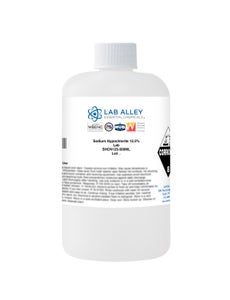
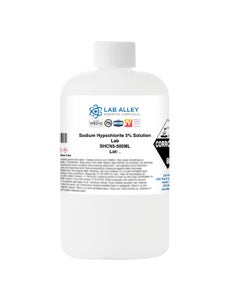
Sodium Hypochlorite 5% Solution: Available in 500 mL, 1 L, 1 GAL, 4 L, 5 GAL, 20 L, 55 GAL, 275 GAL, Case, and Pallet.
-
Sodium Hypochlorite 12.5% Solution: Available in 500 mL, 1 L, 1 GAL, 4 L, 5 GAL, 20 L, 55 GAL, 275 GAL, Case, and Pallet.
Key Takeaways
Sodium hypochlorite comes down to two variables: concentration and grade. The 5% solution handles general disinfection, lab work, and food contact sanitizing. The 12.5% solution is built for water treatment, industrial biocide use, and large-scale operations. Technical grade covers non-regulated industrial applications; food grade meets 21 CFR 178.1010 requirements; NSF/ANSI 60 is mandatory for drinking water; reagent grade serves the lab.
Higher concentrations mean greater corrosivity, faster degradation, and stricter handling requirements. Never mix with acids, ammonia, or other cleaning products. Store in HDPE containers in a cool, dark location with adequate ventilation.
For more detailed guidance, explore our Resource Library.
Our Customer Care team is also available for more information and documentation, including chemical Safety Data Sheets.
Find Sodium Hypochlorite You Can Trust
If you are looking for high-quality sodium hypochlorite for your lab, product line, or research facility, be sure to visit our store to explore our trusted selection and request a quote.
As your trusted partner in chemical supply, Lab Alley is always striving to meet the growing demands of our customers. We want you to be able to access all of your chemical needs in one place, along with streamlined online ordering and fast shipping.
Due to popular demand from our valued clientele, Lab Alley's sodium hypochlorite is available in a range of purities and packaging options to suit various commercial, laboratory, and personal needs.