





How to Safely Dispose of Formaldehyde
Proper disposal of formaldehyde is essential to prevent environmental damage, health risks, and regulatory violations. As a known human carcinogen with significant toxicity, formaldehyde requires strict handling protocols across all applications, from laboratories and medical facilities to educational institutions and industrial settings.
Understanding formaldehyde disposal becomes crucial when you consider its classification as both hazardous waste (U122) and a known carcinogen. Unlike many chemicals, where dilution reduces hazards, formaldehyde maintains its toxic and carcinogenic properties regardless of concentration, making proper disposal critical for anyone who works with this compound.
This guide examines the critical aspects of formaldehyde disposal, including regulatory requirements, safety protocols, and practical disposal strategies for different settings and quantities.


In this article, we’ll review:
1. Why Proper Disposal of Formaldehyde Matters
2. How to Dispose of Formaldehyde
Why Proper Disposal Matters
Formaldehyde disposal carries severe implications that extend well beyond routine chemical waste management. Understanding these consequences helps you recognize why environmental and health agencies have established stringent guidelines for this known carcinogen.
Environmental Protection
Environmental damage from formaldehyde occurs through multiple pathways, each creating lasting harm to ecosystems:
-
Water and soil contamination: Improper disposal of formaldehyde can contaminate soil, groundwater, and surface water, posing serious risks to aquatic life and ecosystems due to its toxicity.
-
Aquatic toxicity: Formaldehyde is highly toxic to fish, aquatic invertebrates, and microorganisms at relatively low concentrations, disrupting aquatic ecosystems and affecting species survival.
-
Bioaccumulation potential: The compound's potential for bioaccumulation in the food chain means contamination can magnify through successive trophic levels, affecting organisms far from the original disposal site.
-
Persistent contamination: While formaldehyde does eventually degrade, improper disposal can create contamination plumes that persist in groundwater for extended periods, requiring expensive remediation efforts.
Health & Safety
Human health considerations make formaldehyde disposal a critical workplace and public safety priority:
-
Known human carcinogen: Formaldehyde is classified as a known human carcinogen by the EPA, OSHA, and other regulatory agencies, with long-term exposure linked to nasopharyngeal cancer, leukemia, and other malignancies.
-
Toxic vapor release: The compound releases toxic vapors readily at room temperature, creating immediate exposure risks during handling and disposal operations.
-
Respiratory irritation: Incorrect disposal may expose people to harmful effects such as severe respiratory irritation, breathing difficulties, and potential permanent lung damage from acute or chronic exposure.
-
Eye damage: Formaldehyde vapors and liquid contact can cause serious eye damage, including corneal injury, with even brief exposures potentially resulting in lasting vision impairment.
-
Skin sensitization: Repeated skin contact causes allergic sensitization in many individuals, leading to dermatitis that worsens with subsequent exposures even at very low concentrations.
-
Increased cancer risk: Long-term exposure increases cancer risk from repeated or chronic contact with formaldehyde vapors or solutions.
Legal Compliance
The regulatory framework surrounding formaldehyde disposal creates strict enforceable obligations with significant penalties for violations:
-
RCRA hazardous waste classification: Regulatory agencies such as the EPA classify formaldehyde as hazardous waste with the waste number U122 under the Resource Conservation and Recovery Act (RCRA), triggering comprehensive handling and disposal requirements.
-
Carcinogen designation: OSHA classifies formaldehyde as a known human carcinogen, requiring adherence to strict disposal guidelines to avoid legal penalties and environmental harm that exceed standard hazardous waste protocols.
-
OSHA workplace standards: Formaldehyde is subject to a specific OSHA standard (29 CFR 1910.1048) that includes detailed requirements for exposure monitoring, medical surveillance, and waste handling procedures.
-
Transportation regulations: DOT classifies formaldehyde solutions as hazardous materials requiring proper shipping papers, packaging, labeling, and emergency response information during transport to disposal facilities.
-
Penalties for violations: Non-compliance can result in substantial fines, cleanup costs, facility closure orders, and potential criminal prosecution for willful violations causing environmental harm or health effects.
How to Dispose of Formaldehyde
Effective formaldehyde disposal requires understanding your specific waste characteristics and strictly following protocols designed to protect both human health and environmental systems while meeting all regulatory requirements.
Check Regulations
Regulatory compliance research must be your first step before attempting any formaldehyde disposal activities:
- Review local, state, and federal hazardous waste disposal regulations for aldehydes, such as formaldehyde. EPA regulations under RCRA classify formaldehyde as U122 waste, requiring the most stringent waste management controls.
- Follow specific laws regarding the storage, transportation, and disposal of carcinogenic chemicals. Many states impose additional restrictions beyond federal requirements and may require specific documentation procedures.
- Understand DOT requirements for formaldehyde solutions, which are classified based on concentration and flashpoint for transportation purposes.
Follow Neutralization Protocols (if applicable)
Chemical treatment of formaldehyde waste is highly restricted and should only be attempted under specific controlled conditions:
-
Small quantities of dilute formaldehyde solutions may be neutralized under controlled laboratory conditions using appropriate reducing agents or oxidizing treatments. However, this is only permissible when conducted by trained personnel with proper safety equipment and ventilation.
-
Neutralization should only be performed by trained personnel with specific expertise in aldehyde chemistry, proper safety equipment, including fume hoods, and a comprehensive understanding of reaction mechanisms and potential hazards.
-
Concentrated formaldehyde solutions require specialized handling and cannot be safely neutralized without professional equipment, dedicated facilities, and appropriate waste treatment infrastructure.
-
Many jurisdictions prohibit formaldehyde neutralization for disposal purposes or require pre-approval and specific protocols. Verify that neutralization is legally permitted before attempting any treatment.
-
Post-treatment testing is required to verify complete reaction and absence of residual formaldehyde before disposal. Treatment residues still require hazardous waste disposal in most cases.
Use Designated Waste Disposal Methods
Non-Hazardous Waste Classification
Formaldehyde is never classified as non-hazardous waste regardless of concentration or form. Do not dispose of it down the drain or in regular trash under any circumstances. Federal and local regulations explicitly forbid formaldehyde discharge to sewer systems due to its toxicity and potential to harm wastewater treatment processes.
Hazardous Waste Classification
-
Store formaldehyde in tightly sealed, appropriately labeled containers designed for hazardous chemicals. Use containers constructed of materials that resist formaldehyde corrosion, typically high-density polyethylene or glass.
-
Keep in well-ventilated, cool, and secure areas away from direct sunlight and heat sources. Label all containers clearly with "HAZARDOUS WASTE," waste code U122, contents identification, accumulation start date, and cancer hazard warnings.
-
Arrange for disposal through certified hazardous waste disposal services that specialize in aldehyde compounds. Verify that contractors hold appropriate permits and can provide proper waste manifests documenting final disposal.
-
Do not attempt to evaporate or incinerate formaldehyde without proper facility controls and emission treatment systems. Atmospheric release violates air quality regulations and creates severe health hazards.
-
Biological specimens preserved in formaldehyde require special disposal protocols, as they are contaminated with a carcinogen and must be treated as hazardous chemical waste.
Never Mix Chemicals
Chemical incompatibility with formaldehyde creates severe hazards that can result in fires, explosions, or toxic releases:
-
Avoid combining formaldehyde with other chemicals, as it can produce dangerous reactions, including the formation of explosive compounds when mixed with strong oxidizing agents (nitric acid, perchloric acid, hydrogen peroxide), toxic gases from reactions with strong acids or bases, and carcinogenic byproducts when combined with phenols or aromatic amines.
-
Formaldehyde can undergo spontaneous polymerization under certain conditions, particularly when contaminated with other chemicals, producing heat and pressure that can rupture containers.
-
Store formaldehyde waste in dedicated areas away from all other chemical waste streams. Maintain clear separation from acids, bases, oxidizers, and organic chemicals. Use dedicated collection containers that have never contained incompatible materials.
Follow PPE Guidelines
Worker protection during formaldehyde disposal requires comprehensive personal protective equipment and strict safety protocols:
-
Always wear chemical-resistant gloves specifically rated for formaldehyde exposure, safety goggles or face shields to protect against splashes, and protective clothing, including lab coats or chemical-resistant suits that cover all exposed skin.
-
Use proper ventilation or fume hoods to prevent inhalation exposure to carcinogenic vapors whenever possible. When adequate ventilation cannot be maintained, use appropriate respiratory protection, including organic vapor cartridge respirators for low concentrations or supplied-air respirators for higher concentrations.
-
Maintain emergency eyewash stations and safety showers within immediate access of formaldehyde handling areas. Keep appropriate spill cleanup materials readily available.
-
Provide comprehensive training on formaldehyde hazards, including carcinogenic properties, acute toxicity, and proper disposal procedures for all personnel involved in disposal activities.
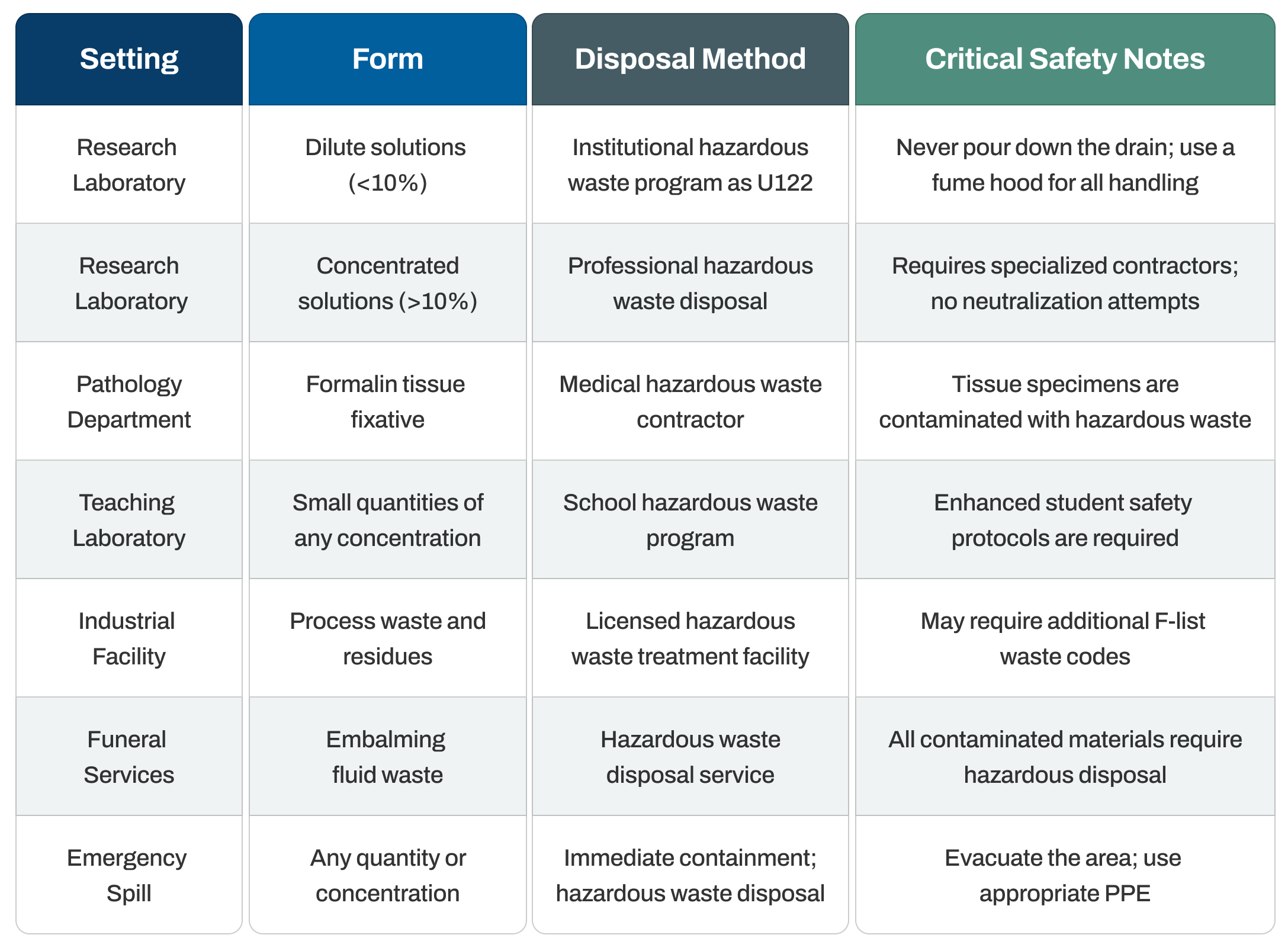
Quick Reference: Disposal Methods and Safety Requirements
Final Note
Formaldehyde disposal requires exceptional care due to its classification as both a hazardous waste and a known human carcinogen. The compound's toxicity, environmental persistence, and health effects necessitate strict adherence to disposal protocols that safeguard workers, the public, and the environment.
Never compromise on formaldehyde disposal procedures. The carcinogenic nature of this compound means that exposure risks extend far beyond immediate acute effects, potentially causing cancer and other serious health conditions years after exposure occurs. When uncertain about any aspect of formaldehyde disposal, always consult with qualified Environmental Health and Safety professionals or contact certified waste management services with specific experience in handling carcinogenic materials.
For safe, regulatory-compliant disposal of formaldehyde and expert guidance, contact licensed hazardous waste management companies with demonstrated expertise in the disposal of carcinogenic chemicals. Lab Alley provides Safety Data Sheets (SDS) with every order, offering critical information on the handling and disposal of chemicals, such as formaldehyde, in accordance with legal and safety standards.
Explore our Resource Library for more information.
Our Customer Care team is also available for more information and documentation, including chemical Safety Data Sheets.
Need Formaldehyde You Can Trust?
If you are looking for high-quality formaldehyde for your lab, product line, or research facility, be sure to visit our store to explore our trusted selection and request a quote.
As your trusted partner in chemical supply, Lab Alley is always striving to meet the growing demands of our customers. We want you to be able to access all of your chemical needs in one place, along with streamlined online ordering and fast shipping.
Due to popular demand from our valued clientele, Lab Alley's formaldehyde is available in a range of purities and packaging options to suit various commercial, laboratory, and personal needs.