




How to Safely Dispose of Propylene Glycol: Environmental and Safety Guidelines
Responsible disposal of propylene glycol serves an important function in environmental stewardship, workplace safety, and meeting regulatory standards. This versatile compound appears in food and pharmaceutical applications, antifreeze and heat transfer fluids, cosmetics and personal care products, industrial processes, and deicing operations, making proper disposal knowledge essential for professionals across numerous sectors.
Propylene glycol disposal presents unique challenges based on waste characterization requirements, contamination status, and biochemical oxygen demand impacts. Understanding appropriate disposal techniques protects aquatic ecosystems from oxygen depletion while ensuring compliance with federal and state regulatory frameworks.
This guide examines propylene glycol disposal fundamentals, addressing waste characterization protocols, regulatory obligations, recycling opportunities, and handling procedures appropriate for different product grades and application contexts.


In this article, we’ll review:
1. Why Proper Disposal Matters
2. How to Dispose of Propylene Glycol
3. Special Considerations for Propylene Glycol
Why Proper Disposal Matters
Propylene glycol disposal carries significant implications that reach beyond routine waste handling. Understanding these consequences clarifies why environmental agencies and facilities have established specific protocols for managing this biodegradable compound.
Environmental Protection
Environmental considerations from propylene glycol occur when disposal practices ignore the compound's behavior during degradation:
-
While propylene glycol is readily biodegradable and degrades within days under aerobic and anaerobic conditions, it exhibits a high biochemical oxygen demand (BOD) during degradation in surface waters. Improper disposal of concentrated propylene glycol can cause oxygen depletion in aquatic ecosystems, stressing fish and other aquatic organisms.
-
The rapid biodegradation process itself creates environmental challenges. As microorganisms consume propylene glycol, they use large quantities of dissolved oxygen from surrounding waters, potentially creating conditions harmful to aquatic species before degradation is complete.
-
Propylene glycol does not bioaccumulate and is rapidly degraded by microorganisms in soil, water, and wastewater treatment systems. This favorable environmental profile makes it less persistent than many industrial chemicals.
-
Despite its biodegradability, concentrated releases can overwhelm natural systems and wastewater treatment facilities. The high BOD loading from bulk disposal exceeds the oxygen replenishment capacity of receiving waters.
-
Appropriate disposal prevents these environmental impacts and supports responsible chemical management that protects aquatic ecosystem health during the natural degradation process.
Health & Safety
Human health and safety factors in propylene glycol disposal remain relatively modest compared to many industrial chemicals:
-
Propylene glycol has low acute toxicity with oral LD50 values of 18,000 to 25,000 mg/kg in various animal species and dermal LD50 of approximately 20,800 mg/kg in rabbits. These values indicate minimal toxicity through common exposure routes.
-
The compound is essentially non-irritating to skin and mildly irritating to the eyes. Contact with pure propylene glycol rarely causes serious effects, though prolonged eye contact may require flushing.
-
Propylene glycol is Generally Recognized as Safe (GRAS) by the FDA for food use and is significantly less toxic than ethylene glycol, its chemical cousin. This favorable toxicity profile supports its widespread use in consumer products.
-
Despite low toxicity, ingestion of large amounts can cause central nervous system depression, lactic acidosis, and hyperosmolality. Children and pets face greater risks from accidental ingestion due to their smaller body sizes.
-
Proper disposal minimizes accidental ingestion risks, particularly for children and pets who might encounter improperly discarded antifreeze or other propylene glycol-containing products.
Legal Compliance
The regulatory structure governing propylene glycol disposal creates responsibilities based on contamination status and waste characterization:
-
Pure, unused propylene glycol is not classified as hazardous waste under EPA RCRA regulations. This non-hazardous classification simplifies disposal for food-grade, pharmaceutical-grade, and USP-grade materials when uncontaminated.
-
Used or contaminated propylene glycol may become hazardous waste if it exhibits characteristic hazardous properties or contains regulated contaminants. Waste characterization determines applicable disposal requirements.
-
Propylene glycol antifreeze contaminated with heavy metals, including lead, chromium, and cadmium, from engine or HVAC system use may be classified as hazardous waste requiring special disposal through licensed contractors.
-
Some states have universal waste programs for antifreeze disposal that simplify handling requirements. These programs provide streamlined collection and recycling pathways for automotive and HVAC antifreeze.
-
Industrial facilities discharging propylene glycol to wastewater systems must comply with pretreatment standards and discharge permit limits for BOD and chemical oxygen demand (COD). Violations can result in penalties and permit suspensions.
-
Documentation requirements vary based on waste classification, contamination status, and disposal method, making proper waste characterization essential for legal compliance.
How to Dispose of Propylene Glycol
Effective propylene glycol disposal begins with proper waste characterization and matching waste to appropriate disposal methods while meeting all regulatory requirements.
Characterize the Waste
Waste characterization forms the foundation of compliant propylene glycol disposal and determines applicable regulations.
Determine whether the propylene glycol is pure and unused or used and contaminated from industrial processes, automotive antifreeze applications, HVAC systems, or deicing operations. This classification fundamentally affects disposal options and regulatory requirements.
Pure propylene glycol, including food-grade, pharmaceutical-grade, and USP-grade formulations, is not classified as hazardous waste when uncontaminated. These materials qualify for simplified disposal pathways.
Propylene glycol used in automotive or HVAC applications must be tested for heavy metal contamination to determine if it exhibits RCRA toxicity characteristics. Corrosion of metal system components can release lead, chromium, cadmium, and other regulated metals, triggering hazardous waste classification.
Document waste source, concentration, potential contaminants, and pH for proper classification. Characterization records support disposal decisions and demonstrate regulatory compliance.
Review applicable RCRA regulations (40 CFR Part 261) and state-specific requirements. Some states maintain more stringent standards or specialized programs for the management of antifreeze waste.
Check Applicable Regulations
Regulatory compliance verification establishes the groundwork for legally sound disposal operations.
Verify federal EPA regulations governing chemical waste disposal and RCRA waste characterization requirements. Understand how these frameworks apply to your specific propylene glycol waste type and contamination status.
Examine state environmental agency requirements, which may include universal waste programs for antifreeze. States, including Ohio, have specific programs simplifying antifreeze collection, transport, and recycling.
Review industrial wastewater pretreatment requirements and discharge permit limits for BOD and COD. Municipal wastewater authorities set specific parameters that industrial dischargers must meet.
Research local wastewater discharge ordinances. Municipal regulations often contain authorization requirements or prohibitions for chemical waste disposal through sewer systems.
Consult the Safety Data Sheet (SDS) information for product-specific disposal recommendations. Manufacturers provide guidance based on product formulation and intended use.
Verify if your facility requires industrial pretreatment permits or wastewater discharge authorizations. Many industrial facilities need permits specifically addressing chemical discharge to municipal systems.
Never Pour Down Drains
Drain disposal of propylene glycol requires explicit authorization and compliance with discharge limits:
-
Pure propylene glycol in small quantities may be acceptable for drain disposal in some jurisdictions, but authorization from the wastewater treatment plant is required before initiating any sewer discharge program.
-
Contact municipal wastewater authorities directly to confirm acceptability, concentration limits, and flow restrictions. Never assume drain disposal is acceptable without written authorization.
-
High concentrations can overwhelm wastewater treatment systems due to high BOD contributions. Biological treatment processes can handle dilute propylene glycol, but concentrated solutions exceed treatment capacity and cause oxygen depletion.
-
Used antifreeze containing propylene glycol contaminated with heavy metals cannot be disposed down drains under any circumstances. Contaminated materials require segregated handling through specialized disposal contractors.
-
Industrial quantities require wastewater pretreatment or disposal through licensed waste contractors. Facilities generating bulk propylene glycol waste typically cannot discharge directly to municipal systems without extensive pretreatment.
Use Designated Waste Disposal Methods
Appropriate disposal routes align with waste characteristics, contamination status, and regulatory classification.
Pure and Unused Propylene Glycol: Small quantities can be managed as non-hazardous chemical waste through municipal programs or licensed contractors. Label containers clearly with contents and store in designated chemical waste areas.
Large quantities should be recycled or sent to permitted disposal facilities. Contact specialty chemical recyclers who may accept clean propylene glycol for reprocessing, particularly food-grade or pharmaceutical-grade materials.
Used Automotive and HVAC Antifreeze: Collect in compatible containers made from high-density polyethylene (HDPE). Use dedicated containers to prevent cross-contamination with other waste streams.
Do not mix with ethylene glycol antifreeze or other waste streams. Mixed antifreeze reduces recycling value and complicates waste characterization, potentially triggering hazardous waste classification.
Dispose of through automotive recycling programs, antifreeze recyclers, or hazardous waste contractors if contaminated. Many automotive service facilities and recycling centers accept used antifreeze for recycling through established collection networks.
Test used antifreeze for heavy metal contamination before disposal. Characterization testing determines whether the material qualifies as non-hazardous recyclable waste or requires hazardous waste management.
Industrial Quantities: Use bulk chemical waste collection services or antifreeze recycling facilities. Licensed waste contractors can handle drum quantities or bulk pickups from manufacturing and industrial operations.
Consider on-site recycling through filtration or distillation for large-volume users. Industrial facilities using propylene glycol in closed-loop systems can implement recycling equipment that extends fluid life and reduces waste generation.
Follow DOT transportation regulations for waste shipment. While propylene glycol is not a DOT-regulated hazardous material, proper packaging and documentation support safe transport.
Maintain waste manifests and disposal certificates. Industrial operations require documentation demonstrating proper waste characterization and disposal method selection.
Deicing Fluid Waste: Airport and industrial deicing operations should use specialized deicing fluid recyclers or wastewater treatment with BOD and COD reduction capabilities.
Some facilities use anaerobic treatment systems specifically designed for propylene glycol-contaminated wastewater. These biological treatment systems handle high organic loading while minimizing oxygen consumption in receiving waters.
Implement containment and collection systems that capture deicing runoff. Prevent environmental releases by directing all deicing operations to treatment systems rather than allowing direct discharge to storm drains or surface waters.
Monitor groundwater near deicing areas for contamination. Regular sampling verifies that containment systems function properly and detects any subsurface migration.
Laboratory and Research Quantities: Collect through institutional chemical waste programs with proper labeling. Use containers compatible with propylene glycol and secure with appropriate closures.
Store in designated chemical waste areas away from incompatible materials. Maintain separation from active laboratory operations to prevent accidental contamination or exposure.
Arrange pickup through the environmental health and safety departments. Academic and research institutions typically provide dedicated collection services with regular pickup schedules.
Label containers with chemical name, concentration, accumulation date, and responsible party information. Complete labeling supports institutional waste tracking and regulatory compliance.
Approved Disposal Methods
Several disposal methods provide compliant pathways for propylene glycol waste based on characterization and contamination status.
Recycling and Recovery: Used propylene glycol antifreeze can be recycled through filtration, distillation, or vacuum distillation processes. This is the preferred method for automotive and HVAC applications generating large volumes.
Recycling equipment removes particulates, metals, and degradation products, restoring fluid properties for reuse. Many commercial recyclers operate regional facilities accepting used antifreeze from multiple sources.
Do not mix with ethylene glycol or other contaminants. Maintaining segregation preserves recycling value and allows efficient processing. Mixed waste streams typically require more expensive disposal methods.
Industrial heat transfer systems can implement on-site recycling programs. Closed-loop filtration extends fluid life and reduces disposal frequency, lowering both costs and environmental impacts.
Wastewater Treatment (With Authorization): Dilute aqueous propylene glycol solutions may be discharged to sanitary sewers with prior written authorization from the wastewater treatment plant.
Authorization typically specifies maximum concentrations, daily discharge volumes, and monitoring requirements. Facilities must maintain records demonstrating compliance with authorized parameters.
Industrial facilities may require on-site pretreatment to reduce BOD and COD before discharge. Treatment options include biological systems, chemical oxidation, or equalization tanks that allow controlled discharge rates.
Municipal wastewater treatment plants effectively degrade propylene glycol through biological processes. However, facilities must manage discharge rates to prevent overwhelming treatment capacity.
Incineration: Propylene glycol can be incinerated at licensed waste-to-energy facilities or hazardous waste incinerators. High-temperature combustion destroys organic compounds, producing carbon dioxide and water.
This method is appropriate for contaminated waste that cannot be recycled. Heavy metal contamination or mixture with incompatible materials often necessitates incineration rather than recycling.
Verify facility permits before arranging incineration. Licensed incinerators maintain appropriate air permits and pollution control equipment to manage combustion byproducts.
Licensed Waste Facility: Non-recyclable propylene glycol waste can be disposed of at permitted solid waste or hazardous waste facilities, depending on classification.
Facilities must be permitted to accept the specific waste type. Verify acceptance criteria, including contamination limits and physical form requirements.
This option works well for small quantities, contaminated materials unsuitable for recycling, or situations where recycling infrastructure is unavailable.
Never Mix Chemicals
Chemical compatibility concerns influence safe disposal practices and preserve recycling value.
Avoid mixing propylene glycol waste with ethylene glycol, other glycols, used oil, solvents, or incompatible chemicals. Mixing antifreeze types reduces recycling value and may create hazardous waste requiring more expensive disposal.
Keep separate from strong oxidizing agents during storage and disposal. Although propylene glycol is relatively stable, segregation prevents reactions and maintains waste characterization accuracy.
Use dedicated collection containers and prevent cross-contamination. Clearly label containers to identify contents and prevent accidental mixing by other personnel.
Maintain storage areas organized by waste type. Physical separation reduces the risk of inadvertent mixing that complicates disposal and increases costs.
Follow PPE Guidelines
Worker protection during propylene glycol disposal requires appropriate personal protective equipment:
-
Always wear nitrile or chemical-resistant gloves when handling bulk quantities. Gloves prevent dermal contact during waste transfers and container handling.
-
Use safety goggles to protect eyes from splashes. Eye protection is essential during all handling operations including waste transfers and container filling.
-
Don protective clothing when transferring or consolidating propylene glycol waste. Laboratory coats or coveralls prevent contamination of personal clothing.
-
Ensure adequate ventilation when transferring or handling concentrated solutions. Work in well-ventilated areas to minimize any potential vapor exposure.
-
Have eyewash stations and safety showers available for industrial operations. Emergency decontamination equipment must be accessible within 10 seconds of work areas.
Special Considerations for Propylene Glycol
Propylene glycol disposal involves unique factors based on product grade, contamination status, and application type.
Food and Pharmaceutical Grade
Food-grade and USP-grade propylene glycol are GRAS substances with minimal disposal restrictions when pure and uncontaminated.
Small quantities can be managed as non-hazardous waste through standard chemical waste programs. These high-purity materials pose minimal environmental or health risks when properly handled.
Large quantities should be sent to recyclers or permitted disposal facilities. Commercial recyclers may accept clean, uncontaminated propylene glycol for reprocessing, particularly premium grades with higher market value.
Document the grade and purity of disposed material. Records demonstrating food-grade or pharmaceutical-grade status support non-hazardous waste classification.
Automotive and HVAC Applications
Used propylene glycol antifreeze may be contaminated with heavy metals from system corrosion, requiring testing before disposal.
Test for toxicity characteristics before selecting disposal methods. Analytical testing determines whether heavy metal concentrations trigger RCRA hazardous waste classification.
Many automotive service facilities and recycling centers accept used antifreeze for recycling. Established collection networks provide convenient disposal options for automotive and HVAC applications.
Check if your state has universal waste programs simplifying antifreeze disposal. These specialized programs reduce regulatory burden while maintaining environmental protection.
HVAC systems using propylene glycol as heat transfer fluid should implement regular testing schedules. Monitoring fluid condition identifies when replacement becomes necessary and allows proactive disposal planning.
Industrial and Deicing Operations
Industrial heat transfer systems and airport deicing operations generate large volumes requiring specialized management approaches.
Consider on-site recycling for industrial systems using propylene glycol in closed-loop applications. Filtration equipment removes contaminants and extends fluid life, reducing both disposal frequency and replacement costs.
Deicing operations should implement containment and collection systems with biological treatment designed for high BOD waste. Specialized treatment systems handle the organic loading from propylene glycol while minimizing discharge impacts.
Monitor groundwater near deicing areas for contamination. Regular sampling verifies containment effectiveness and detects any subsurface migration that requires corrective action.
Implement source reduction programs that minimize propylene glycol use. Alternative deicing methods, improved application techniques, and recovery systems reduce waste generation.
Laboratory and Household Quantities
Pure propylene glycol from laboratories should be managed through institutional chemical waste programs with proper labeling and documentation.
Small consumer quantities from RV antifreeze can usually be disposed in household trash if absorbed. Pour into absorbent material such as cat litter or sawdust and allow complete absorption before disposal.
Used RV antifreeze should be taken to household hazardous waste collection events or automotive recycling centers. These programs accept consumer quantities and direct material to appropriate recycling or disposal facilities.
Household hazardous waste is exempt from federal hazardous waste regulations but still requires proper disposal. Use designated collection programs rather than pouring down drains or discarding in regular trash.
Emergency Spills and Response
Propylene glycol spills require prompt response to minimize environmental release and oxygen demand impacts.
Contain with absorbent materials, including sand or vermiculite. Prevent entry into storm drains or waterways where high BOD could cause localized oxygen depletion.
Collect contaminated absorbent in waste containers. Dispose of spill cleanup materials through the same pathway as propylene glycol waste.
Report significant spills to environmental authorities as required by local regulations. Spills entering surface waters can cause aquatic impacts requiring immediate notification.
High BOD from spills can cause localized oxygen depletion in surface waters. Rapid containment and recovery minimize environmental consequences.
Contamination Prevention
Never mix propylene glycol with ethylene glycol antifreeze. These chemically similar compounds have different toxicity profiles and recycling requirements, making segregation essential.
Use dedicated collection containers and prevent cross-contamination with oils, solvents, or heavy metals. Maintain separate containers for different waste types.
Label all containers clearly with contents and accumulation dates. Complete labeling prevents mixing and supports proper waste management throughout storage and disposal.
Implement procedural controls that prevent inadvertent mixing. Train personnel on segregation requirements and provide adequate container quantities.
Wastewater Discharge Compliance
Industrial facilities discharging to sanitary sewers must comply with pretreatment standards and municipal discharge requirements.
Monitor BOD, COD, and pH in discharge streams. Regular testing demonstrates compliance with permit limits and identifies process changes affecting discharge quality.
Some municipalities set specific limits for glycols in wastewater. Verify local requirements beyond standard BOD and COD parameters.
Implement source reduction and recycling programs to minimize discharge volumes. Reducing waste generation lowers treatment costs and regulatory burden.
Consider on-site treatment for high-volume operations. Biological treatment systems or equalization tanks allow controlled discharge that meets municipal acceptance criteria.
Documentation and Recordkeeping Requirements
Maintaining comprehensive records demonstrates regulatory compliance and supports waste characterization decisions.
Keep waste manifests, testing results, and disposal certificates for a minimum of three years. Some states require longer retention periods, so verify local requirements.
Document waste characterization decisions, including testing data, contamination assessments, and classification reasoning. Records demonstrate proper evaluation and support regulatory compliance.
Maintain records of recycling activities, including quantities recycled, recycler certifications, and material tracking. Documentation proves waste diversion from disposal facilities.
Retain wastewater discharge monitoring reports and pretreatment compliance documentation. Industrial facilities need complete records demonstrating ongoing compliance with discharge permits.
Track waste generation quantities to identify reduction opportunities. Regular monitoring supports process improvements and cost reduction initiatives.
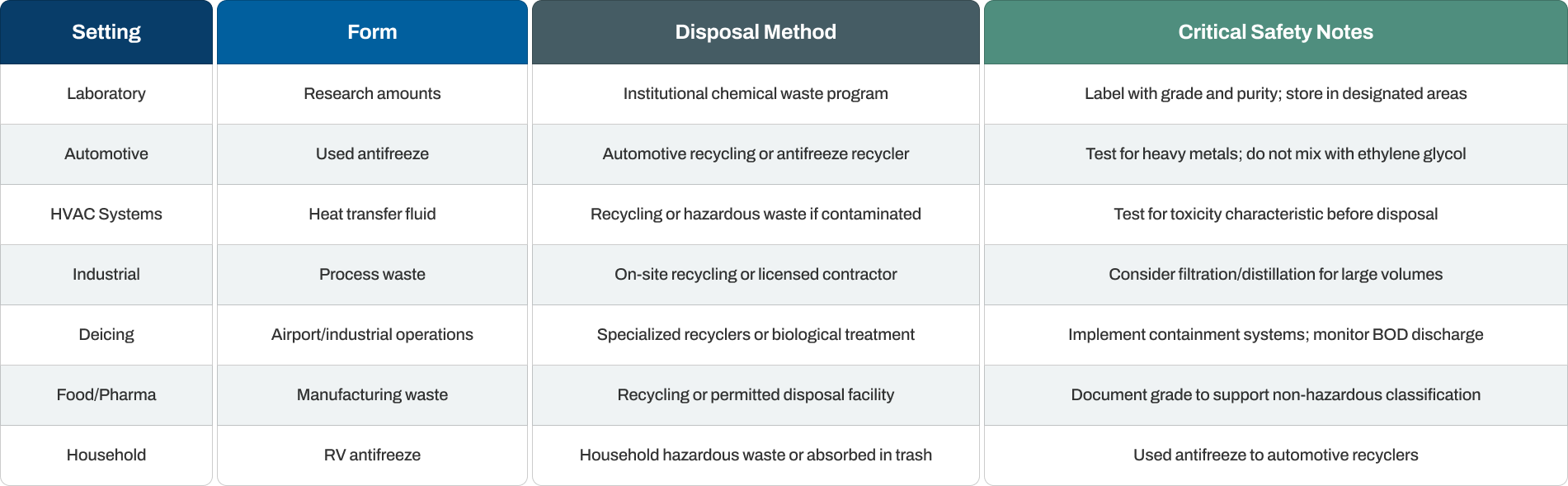
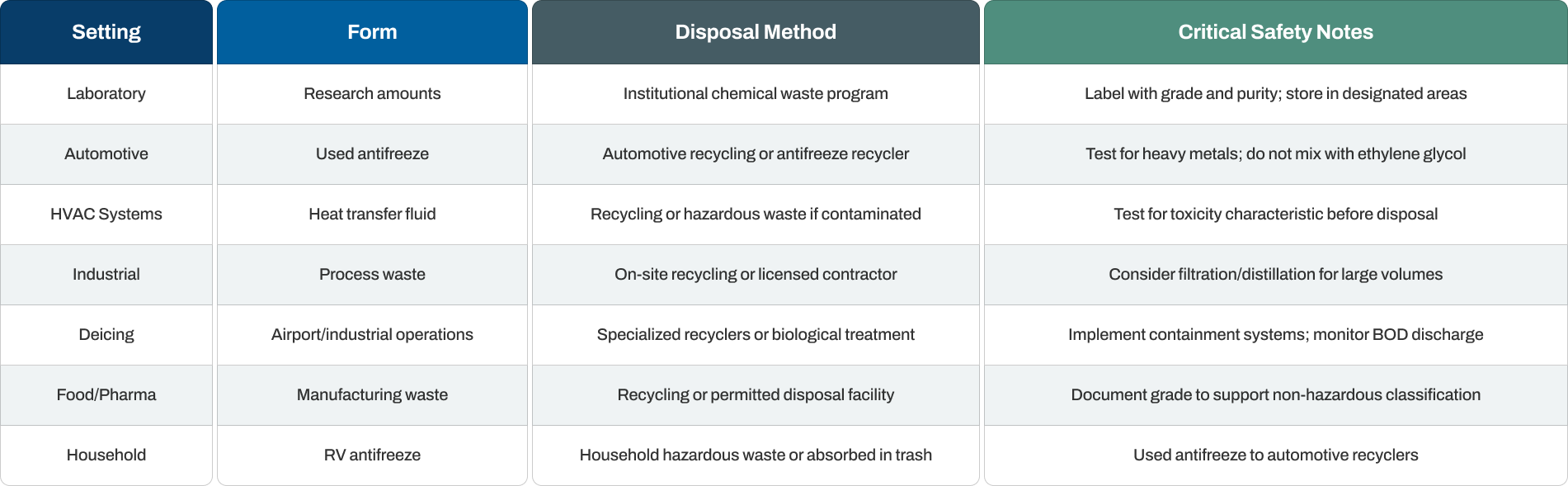
Quick Reference: Disposal Methods and Safety Requirements
Final Note
Propylene glycol waste characterization determines applicable disposal requirements, with pure materials qualifying for non-hazardous management while contaminated waste may require hazardous waste protocols. Understanding contamination testing, recycling opportunities, and BOD impacts promotes compliant, environmentally responsible disposal operations.
For safe, regulatory-compliant disposal of propylene glycol and expert guidance on characterization, recycling options, and contamination testing, contact licensed chemical waste disposal contractors, antifreeze recyclers, or environmental consulting services. Always consult current Safety Data Sheets (SDS) for specific handling and disposal information related to your particular propylene glycol product and application, and follow all applicable institutional, company, federal, state, and local regulations for chemical waste management.
When uncertain about disposal procedures, waste characterization, or contamination testing, consult environmental health professionals or waste disposal specialists for guidance specific to your product grade, contamination status, volume, and jurisdiction.
For more detailed guidance, explore our Resource Library
Our Customer Care team is also available for more information and documentation, including chemical Safety Data Sheets.
Need Propylene Glycol You Can Trust?
If you are looking for high-quality propylene glycol for your lab, product line, or research facility, be sure to visit our store to explore our trusted selection and request a quote.
As your trusted partner in chemical supply, Lab Alley is always striving to meet the growing demands of our customers. We want you to be able to access all of your chemical needs in one place, along with streamlined online ordering and fast shipping.
Due to popular demand from our valued clientele, Lab Alley's propylene glycol is available in a range of purities and packaging options to suit various commercial, laboratory, and personal needs.