




How to Safely Dispose of Sodium Hypochlorite: Enviromental and Safety Guidelines
Disposing of sodium hypochlorite (NaOCl) properly is more than a regulatory checkbo, it has real consequences for the environment, worker safety, and the infrastructure that handles it downstream. This powerful oxidizing agent appears in water treatment operations, sanitation programs, industrial cleaning applications, and laboratory disinfection protocols, making proper disposal knowledge vital for professionals across numerous sectors.
Sodium hypochlorite disposal presents distinct challenges based on concentration levels, incompatible chemical reactions, and aquatic toxicity concerns. Learning appropriate disposal techniques protects wastewater treatment infrastructure and aquatic ecosystems while ensuring compliance with environmental regulations.
This guide examines sodium hypochlorite disposal fundamentals, addressing regulatory frameworks, neutralization procedures, chemical compatibility hazards, and disposal pathways suited for different concentration levels and application contexts.


In this article, we’ll review:
1. Why Proper Disposal Matters
2. How to Dispose of Sodium Hypochlorite
3. Special Considerations for Sodium Hypochlorite
Why Proper Disposal Matters
Sodium hypochlorite disposal carries significant implications that extend beyond routine waste handling. Understanding these consequences clarifies why environmental agencies and wastewater authorities have established specific protocols for managing this reactive oxidizer.
Environmental Protection
Sodium hypochlorite is toxic to aquatic organisms and can disrupt the biological activity of wastewater treatment systems, killing the beneficial microorganisms needed for sewage processing.
Even at low concentrations, free chlorine released from NaOCl can be harmful to fish and invertebrates. Aquatic species lack tolerance for oxidizing compounds that damage cellular structures and respiratory systems.
Releases to waterways create immediate toxicity hazards for aquatic life. Unlike biodegradable compounds that break down naturally, chlorine remains toxic until it reacts with organic matter or dissipates through chemical processes. Wastewater treatment facilities depend on microbial communities to process organic waste, and chlorine introduction destroys these communities, rendering treatment systems ineffective until biological populations recover.
Responsible disposal prevents contamination of waterways and supports compliance with environmental protection standards that recognize sodium hypochlorite's unique hazards to biological treatment systems.
Health & Safety
Sodium hypochlorite is a corrosive oxidizer that can cause severe skin, eye, and respiratory irritation. Concentrated solutions pose a significant risk of chemical burns upon contact — burns from oxidizers differ from thermal burns and require specialized medical treatment.
Decomposition or reaction with incompatible substances can release toxic chlorine gas. This colorless to yellow-green gas causes severe respiratory damage even at concentrations well below visible detection. Inhalation produces choking, coughing, chest pain, and difficulty breathing, and severe exposures can cause pulmonary edema (fluid accumulation in the lungs) that may prove fatal without prompt treatment.
Workers handling sodium hypochlorite for disposal face hazards from corrosive contact, chlorine gas inhalation, and violent reactions with incompatible materials. Establishing proper disposal procedures with suitable protective equipment is essential for preventing these exposure incidents, particularly in areas where chlorine gas releases could affect nearby populations.
Legal Compliance
Depending on concentration and quantity, sodium hypochlorite disposal may be regulated under the Clean Water Act (CWA), EPA guidelines, and local wastewater discharge permits. Regulatory applicability varies based on facility type and discharge characteristics.
Industrial and laboratory users may be subject to reporting requirements, waste manifests, and pretreatment standards. Facilities discharging to municipal systems typically face stricter oversight than those using other disposal methods.
Local wastewater authorities establish discharge limits for chlorine and oxidizing agents that protect treatment plant operations. These limits reflect biological system sensitivities and receiving water quality standards.
Industrial waste discharge permits often specify maximum chlorine concentrations, daily loading limits, and monitoring requirements. Non-compliance can result in significant fines and penalties, including permit suspensions that halt facility operations until violations are corrected.
Documentation requirements vary based on waste classification and disposal method. Facilities must maintain records demonstrating proper characterization, authorization verification, and disposal pathway selection.
How to Dispose of Sodium Hypochlorite
Effective sodium hypochlorite disposal begins with understanding concentration-specific requirements and matching waste to appropriate disposal methods while meeting all regulatory obligations.
Check Applicable Regulations
Regulatory compliance verification establishes the groundwork for legally sound disposal operations across all concentration levels.
-
Review EPA guidelines and local wastewater authority discharge limits for chlorine and oxidizing agents. Federal frameworks provide baseline standards while local authorities impose site-specific restrictions.
-
Examine whether your facility holds an industrial waste discharge permit with chlorine concentration thresholds. Permitted facilities face explicit limits that differ from general prohibitions affecting non-permitted dischargers.
-
Verify state and local regulations for corrosive or oxidizing chemical waste disposal. Jurisdictional requirements may exceed federal standards based on local environmental conditions or infrastructure limitations.
-
Establish if the NaOCl solution is contaminated with hazardous substances, which fundamentally changes disposal requirements. Contamination with acids, ammonia, heavy metals, or organic compounds triggers hazardous waste protocols.
-
Consult institutional environmental health and safety (EHS) protocols before initiating any disposal activities. Organizations maintain internal procedures reflecting site-specific conditions and regulatory interpretations.
-
Review the Safety Data Sheet for your specific product concentration such as 5%, 10%, or 12.5% formulations. Requirements vary substantially between household-strength and industrial-grade products.
Drain Disposal Considerations
Sewer discharge of sodium hypochlorite depends critically on concentration, volume, authorization status, and contamination.
-
Dilute, low-concentration sodium hypochlorite, such as household bleach at 3 to 6% in very small quantities, may be acceptable for drain disposal with significant water dilution in many jurisdictions. Always verify with local wastewater authorities first, rather than assuming acceptability.
-
Contact municipal wastewater treatment facilities directly to confirm discharge acceptability, concentration limits, and dilution requirements. Written authorization provides documentation protecting against future liability.
-
Large or concentrated quantities must not be disposed of via drains, as high chlorine levels are toxic to the biological processes in wastewater treatment plants. Bulk disposal destroys microbial populations essential for treatment operations.
-
Neutralization with a reducing agent such as sodium thiosulfate or sodium bisulfite before drain disposal may be required or recommended. Verify this approach with local authorities before proceeding, as some jurisdictions mandate neutralization while others permit direct discharge of dilute solutions.
-
Contaminated NaOCl mixed with ammonia compounds, acids, solvents, or other incompatible substances must never be disposed of via drains due to the risk of toxic gas generation in collection systems. These mixtures create severe hazards for utility workers and treatment plant personnel.
-
Some municipalities explicitly prohibit the disposal of oxidizing chemicals above certain concentrations in municipal sewer systems. Review local ordinances to identify any absolute prohibitions that supersede general discharge standards.
Use Designated Waste Disposal Methods
Appropriate disposal routes align with waste characteristics, concentration levels, contamination status, and regulatory classification.
Small Quantities (Laboratories and Small Businesses): Low-concentration, uncontaminated NaOCl may often be neutralized and diluted for sanitary sewer disposal after verification with local authorities. Sodium thiosulfate or sodium bisulfite serve as effective reducing agents for this conversion.
Alternatively, collect in clearly labeled, compatible plastic containers designed for corrosive chemical storage, and dispose of them through institutional chemical waste programs where available. Academic and research institutions typically provide dedicated collection services with trained personnel managing corrosive and oxidizing wastes.
Label containers with complete contents description, including "Sodium Hypochlorite," concentration percentage, and accumulation start date. Include hazard warnings for "Corrosive" and "Oxidizer" classifications.
Industrial Quantities: Large volumes must be collected by licensed hazardous waste disposal contractors or sent to permitted chemical treatment facilities.
Maintain waste manifests and disposal records as required by EPA and state regulations.
Industrial facilities should explore neutralization and treatment options before collection. On-site neutralization reduces waste volume and disposal costs while eliminating oxidizing characteristics.
Contaminated NaOCl: Sodium hypochlorite contaminated with ammonia compounds, acids, organic solvents, heavy metals, or biological materials must be managed as hazardous waste through licensed disposal contractors. Contamination creates reactive mixtures that cannot be safely neutralized or discharged.
Label contaminated waste with full composition information. Identify both the sodium hypochlorite concentration and all known or suspected contaminants to allow proper handling assessment. Provide complete documentation, including Material Safety Data Sheets for all components.
Laboratory and Institutional Waste: Follow institutional EHS protocols and collect through chemical waste programs with proper container labeling. Institutions typically require NaOCl collection through chemical waste streams regardless of concentration. This ensures tracking and prevents accidental mixing in waste lines that could generate toxic gases.
Maintain chemical waste logs documenting disposal of corrosive and oxidizing materials, even when quantities are small. Use pre-labeled containers provided by institutional programs, which meet compatibility requirements and include appropriate hazard warnings.
Neutralization Before Disposal
Sodium hypochlorite can be chemically neutralized before disposal to reduce its reactivity and environmental impact through controlled chemical reduction.
-
Sodium thiosulfate (Na₂S₂O₃) or sodium bisulfite (NaHSO₃) are commonly used reducing agents that convert free chlorine to non-toxic chloride salts. These compounds react reliably with hypochlorite without generating hazardous byproducts.
-
The neutralization reaction is exothermic and releases heat. Add reducing agent slowly with stirring to control temperature rise and prevent localized overheating.
-
This step is often required before disposal of dilute solutions to wastewater systems. Neutralization protects the treatment plant biological processes from chlorine toxicity.
-
Neutralization must be performed carefully, with pH verification, in a well-ventilated area. Monitor reaction completion using chlorine test strips or pH measurement to confirm chlorine removal.
-
Verify this approach meets local discharge requirements before initiating neutralization programs. Some jurisdictions mandate specific procedures or prohibit certain reducing agents based on downstream effects.
-
Add a reducing agent in slight stoichiometric excess to ensure complete chlorine removal. Test treated solution to verify chlorine absence before discharge or further handling.
-
Never neutralize sodium hypochlorite contaminated with incompatible materials. Contaminated solutions require hazardous waste disposal rather than chemical treatment and discharge.
Never Mix Chemicals
Sodium hypochlorite is a strong oxidizer that reacts violently or dangerously with numerous common chemicals, creating severe hazards.
Never mix sodium hypochlorite with:
-
Acids such as hydrochloric, acetic, or nitric acid, which release toxic chlorine gas. This reaction occurs rapidly and generates dangerous gas concentrations even from small quantities.
-
Ammonia or ammonium compounds, which produce toxic chloramine gases. Chloramines cause respiratory damage and have been responsible for numerous accidental poisonings.
-
Hydrogen peroxide or other oxidizers, which risk violent reaction with heat generation and potential splashing of corrosive liquids. Combined oxidizers can decompose explosively under certain conditions.
-
Organic solvents, alcohols, or flammable materials, which create fire and explosion risks. Hypochlorite oxidizes organic compounds exothermically, potentially igniting vapors or causing runaway reactions.
-
Heavy metals or metal salts, which can accelerate decomposition and generate heat. Catalytic decomposition produces oxygen gas that can pressurize closed containers until rupture occurs.
Keep sodium hypochlorite strictly separated from incompatible materials during storage, handling, and disposal. Maintain distinct collection containers for different waste types and post clear signage identifying incompatible materials in storage areas.
Follow PPE Guidelines
Worker protection during sodium hypochlorite disposal requires appropriate personal protective equipment matched to concentration and operation type.
-
Always wear chemical-resistant gloves such as nitrile or neoprene when handling sodium hypochlorite for disposal. Latex offers inadequate protection against oxidizing compounds.
-
Use splash-proof safety goggles or a face shield to protect eyes and face from splashes. Oxidizer contact with the eyes requires immediate irrigation and medical evaluation.
-
Don protective clothing, including laboratory coats or chemical-resistant aprons, when transferring or handling solutions. For concentrated solutions above 10%, a chemical-resistant apron is strongly recommended.
-
Ensure adequate ventilation in all disposal areas to prevent the accumulation of chlorine vapors. Work in fume hoods, well-ventilated rooms, or outdoor areas when handling concentrated solutions.
-
Have eyewash stations and emergency shower facilities readily accessible within immediate reach. Emergency equipment must remain unobstructed and functional for rapid decontamination.
-
In confined or poorly ventilated spaces, respiratory protection may be required. Half-face respirators with combination cartridges protect against chlorine gas exposure.
Special Considerations for Sodium Hypochlorite
Concentration Matters
Disposal requirements differ significantly between household bleach (3 to 6% NaOCl), commercial-grade solutions (10 to 12.5%), and industrial-strength products. Always identify concentration before selecting a disposal method; higher concentrations are subject to stricter handling and disposal standards regardless of volume.
Instability and Degradation
Sodium hypochlorite degrades over time, especially when exposed to heat, light, or contaminants, releasing oxygen and reducing active chlorine content. Degraded solutions produce sodium chloride and oxygen gas, but still require proper disposal through authorized pathways. Reduced chlorine content does not exempt solutions from regulatory requirements. Storage in sunlight or elevated temperatures accelerates degradation, and oxygen generation can pressurize containers: inspect for buildup during long-term storage.
Water Treatment Applications
NaOCl used in municipal or industrial water treatment may be subject to specialized regulations under the Safe Drinking Water Act and local environmental permits. Chlorinated backwash water and filter cleaning solutions typically require dechlorination before discharge. Always verify permit conditions before disposing of water treatment-related sodium hypochlorite waste.
Food Processing and Sanitation
Food-grade sodium hypochlorite rinse water at very dilute concentrations (50 to 200 ppm) may be acceptable for drain disposal under certain food processing regulations. Verify with local authorities before establishing any drain discharge program, and document dilution rates and discharge volumes.
Laboratory and Research Use
Institutions typically require NaOCl collection through chemical waste streams regardless of concentration, to ensure tracking and prevent accidental mixing in waste lines. Research-grade sodium hypochlorite may contain stabilizers or additives affecting disposal requirements; always verify composition through the Safety Data Sheet.
Incineration
Sodium hypochlorite is generally not recommended for incineration due to the generation of corrosive chlorinated combustion byproducts, including hydrochloric acid vapor. Chemical neutralization and wastewater treatment are the preferred disposal routes. Incineration should only be considered when contamination makes chemical treatment impossible.
Small-Scale and Household Quantities
Small quantities of household bleach can typically be diluted heavily with water and flushed down the drain in most residential areas. Pour slowly with abundant water flushing. Avoid disposal alongside incompatible drain cleaners containing acids or ammonia, as sequential disposal of incompatible products can generate toxic gases in drain traps. Never dispose of concentrated commercial bleach (above 6%) through household drains without dilution or neutralization.
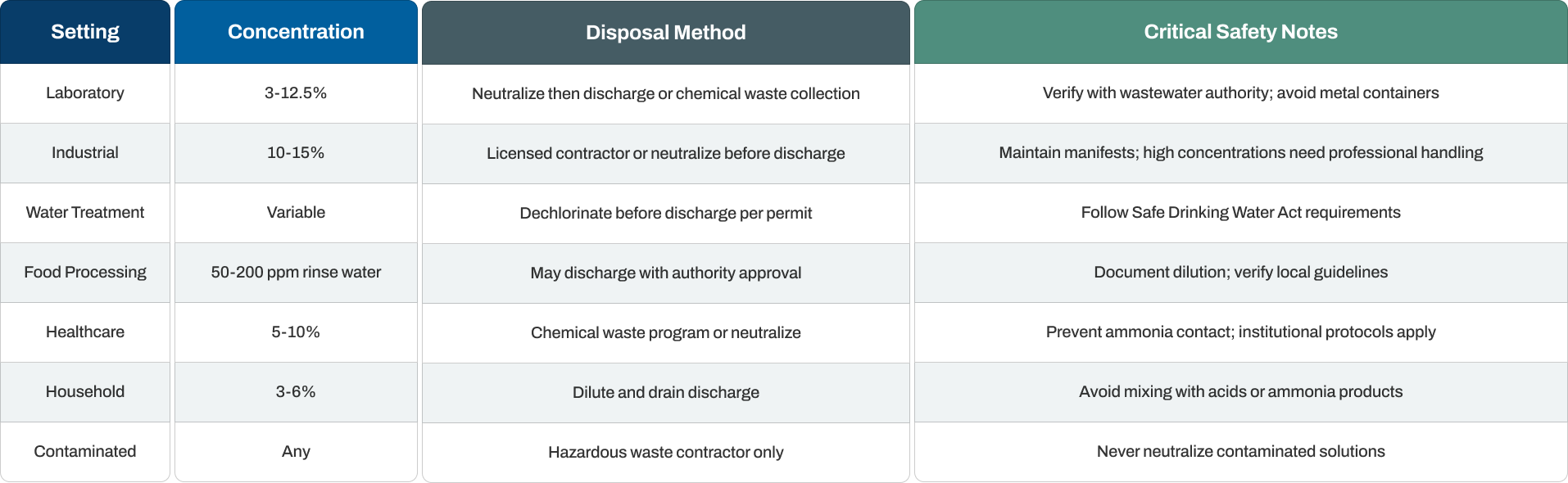
Quick Reference: Disposal Methods and Safety Requirements
Final Note
Sodium hypochlorite disposal requirements vary dramatically based on concentration, with household products permitting simple dilution while industrial concentrations demand neutralization or professional waste management. Understanding local discharge limits, chemical incompatibilities, and neutralization procedures promotes compliant, safe disposal operations.
For safe, regulatory-compliant disposal of sodium hypochlorite and expert guidance on neutralization procedures and concentration-specific requirements, consult your local wastewater treatment authority, institutional EHS office, or a licensed environmental contractor. Always reference the Safety Data Sheet for your specific product and concentration, and follow all applicable federal, state, and local waste management regulations.
When uncertain about disposal procedures, neutralization requirements, or discharge authorization, consult environmental health professionals or wastewater treatment specialists for guidance specific to your concentration level, volume, contamination status, and jurisdiction.
For more detailed guidance, explore our Resource Library
Our Customer Care team is also available for more information and documentation, including chemical Safety Data Sheets.
Need Sodium Hypochlorite You Can Trust?
If you are looking for high-quality sodium hypochlorite for your lab, product line, or research facility, be sure to visit our store to explore our trusted selection and request a quote.
As your trusted partner in chemical supply, Lab Alley is always striving to meet the growing demands of our customers. We want you to be able to access all of your chemical needs in one place, along with streamlined online ordering and fast shipping.
Due to popular demand from our valued clientele, Lab Alley's sodium hypochlorite is available in a range of purities and packaging options to suit various commercial, laboratory, and personal needs.