




How to Store Denatured Ethanol
Denatured ethanol is a highly flammable, volatile organic liquid that requires strict storage practices to maintain its quality, prevent contamination, and ensure safe handling. Unlike pure ethanol, denatured ethanol contains toxic additives (denaturants) that create additional safety hazards and storage considerations. Common denaturants include methanol, isopropanol, acetone, and other toxic compounds that significantly impact storage requirements and safety protocols.
The challenge with storing this material goes beyond typical flammable liquid protocols. You're dealing with a dual-hazard substance where fire prevention meets toxicity management. A single storage mistake can trigger regulatory violations, worker exposure incidents, or catastrophic fires with toxic smoke.
This guide covers the practical aspects of how to store denatured ethanol, from environmental conditions to container selection and regulatory requirements.


In this article, we’ll examine
- Recommended Storage Conditions
-
Container & Packaging Requirements
-
Segregation & Compatibility
-
Safe Handling in Storage Areas
-
Regulatory Compliance & Labeling
-
Special Considerations by Denatured Ethanol Type
Recommended Storage Conditions
The environment where you store denatured ethanol determines whether it remains stable and safe or becomes a liability.
Temperature Control
Keep storage temperatures below 25°C (77°F) for optimal stability. The sweet spot sits between 15°C and 25°C, where vapor generation stays minimal and denaturants remain stable. Push above 30°C and you're creating volatile conditions with increased vapor build-up and ignition risk.
This material has a flash point of just 12.8°C (55°F), meaning it can ignite at normal room temperature if vapors concentrate near an ignition source. Temperature swings destabilize denaturants and stress container seals over time. Keep storage areas away from heating systems, loading docks, and anywhere sunlight hits directly.
Humidity Control
Dry conditions matter because ethanol grabs moisture from the air. When water gets absorbed, it dilutes both the alcohol and denaturants, throwing off the concentrations you need for regulatory compliance. This is particularly critical for Specially Denatured Alcohol, where TTB requires specific denaturant ratios.
Tight-sealing containers prevent moisture from sneaking in and compromising product integrity. High humidity also accelerates container corrosion, especially when methanol or other reactive denaturants are present. For substantial quantities, invest in dehumidification equipment for consistent control.
Light Exposure
Keep denatured ethanol away from sunlight and UV radiation. Many denaturants break down under UV exposure, and this photodegradation can alter the carefully balanced denaturant ratios required for TTB compliance. Acetone and ketone denaturants are particularly vulnerable.
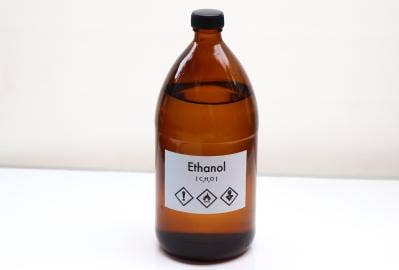
Dark storage prevents light degradation while helping maintain stable temperatures. For smaller quantities, amber glass containers filter UV effectively. Bulk storage works best in dedicated interior spaces away from windows and skylights.
Ventilation
Ventilation goes beyond standard flammable liquid requirements. You need exceptional air movement to prevent the accumulation of both ethanol and denaturant vapors. This isn't just about explosion prevention - methanol and other denaturants create toxic atmospheres requiring their own ventilation standards.
Continuous ventilation systems with vapor detection capabilities are essential for bulk storage. Natural airflow rarely cuts it. You need mechanical systems designed to handle multiple volatile components, and the equipment itself must be explosion-proof.
Storage Duration
Properly sealed containers in cool, dry, dark conditions can hold denatured ethanol indefinitely. However, denaturants complicate the picture. Some degrade gradually, affecting product performance and potentially compromising TTB compliance over time.
Test stored material regularly to verify denaturant integrity, especially if you're approaching typical shelf life expectations. Watch for separation, precipitation, or color changes that signal denaturant breakdown.
Container & Packaging Requirements
Container selection determines whether denatured ethanol stays contained and compliant or becomes a source of leaks, vapors, and contamination.
Material Selection
Choose containers made from HDPE plastic, borosilicate glass, stainless steel (316L grade), or PTFE. These materials resist both ethanol and common denaturants, including methanol, isopropanol, acetone, methyl ethyl ketone, and methyl isobutyl ketone.
Verify compatibility with every denaturant component, not just ethanol. Some denaturants attack materials that ethanol alone wouldn't affect. Ketones can degrade certain plastics. Methanol reacts with materials that pure ethanol tolerates.
For bulk storage, secondary containment sized to hold at least 110% of your largest container volume is essential. This catches spills and leaks before they become environmental releases or workplace hazards.
Materials to Avoid
Stay away from materials that react with specific denaturants. Some plastics dissolve slowly in ketone denaturants. Untreated aluminum and certain alloys corrode when exposed to methanol. Natural rubber and some elastomers fail with ketone or aromatic denaturants.
Cork closures absorb denaturants, causing contamination and allowing vapor escape. Even if a material works fine for ethanol, check each denaturant individually before committing to containers or seals.
Safety Container Requirements
Federal regulations classify denatured ethanol as a Class IB flammable liquid because of its 12.8°C flash point. Use only approved flammable liquid storage cabinets meeting OSHA 29 CFR 1910.106 specifications.
Labels need to address both flammability and denaturant toxicity. Standard flammable liquid warnings don't cover the toxic exposure risks from denaturants. Your containers must prevent both vapor escape and toxic exposure.
Sealing Systems
Use tight-fitting, chemically-resistant caps with gasket seals designed for your specific denaturant formulation. Check seals regularly for degradation, especially with aggressive denaturants that can attack elastomers over time.
Positive-seal closures provide visual confirmation that containers are properly secured. When seals fail, replace them immediately with materials verified to be compatible with all denaturant components.
Segregation & Compatibility
What you store near denatured ethanol matters as much as how you store the material itself.
Fire Safety Segregation
Keep everything away from ignition sources. The 12.8°C flash point means vapors can ignite at room temperature. Beyond standard flammable liquid separation, you need enhanced spacing because of toxic vapor hazards.
Standard refrigerators are absolutely prohibited - only explosion-proof refrigerators are acceptable. Maintain larger buffer zones from occupied areas than you would for pure ethanol because denaturant toxicity demands additional separation.
Chemical Compatibility
Denaturant reactivity creates compatibility concerns beyond ethanol's chemical properties. Methanol denaturants react more aggressively with oxidizing agents than pure ethanol. Ketone denaturants clash with strong bases and reducing agents in ways that pure alcohol doesn't.
Never store near strong acids. The reactions between acids and denaturant formulations can be violent and unpredictable. Reactive metals also pose problems - some catalyze denaturant reactions that wouldn't occur with pure ethanol.
Grade Segregation
Different denatured formulations must stay separate. Mixing SDA and CDA formulations creates TTB compliance violations and potentially dangerous chemical combinations. Industrial grades can't mix with pharmaceutical or cosmetic grades without risking contamination.
Never store denatured ethanol anywhere near non-denatured ethanol. Accidental mixing creates serious TTB compliance problems. Organize by formulation type and compatibility, not alphabetically or by convenience.
Quantity Limitations
OSHA caps Class I flammable liquid storage at 60 gallons per safety cabinet. You're allowed a maximum of three approved cabinets per area without additional fire protection measures. Some jurisdictions impose stricter limits when toxic denaturants are present.
Safe Handling in Storage Areas
How you set up storage areas and the procedures you establish directly impact both safety and regulatory compliance.
Personal Protective Equipment (PPE)
Chemical-resistant gloves must work against both ethanol and your specific denaturants. Standard nitrile doesn't always provide adequate protection, particularly against ketones and aromatic compounds.
Respiratory protection addresses denaturant toxicity that standard flammable liquid handling doesn't require. Methanol, pyridine, and other toxic denaturants demand enhanced respiratory protection. Safety goggles and face shields prevent denaturant splash exposure, and emergency eyewash stations must be immediately accessible.
Fire Safety Equipment
Class B fire extinguishers suitable for toxic flammable liquids should be installed throughout storage areas. Alcohol-resistant foam is essential because standard aqueous film-forming foam doesn't work effectively on alcohol fires.
Training must cover the specific hazards of fighting fires involving toxic denaturants. Combustion products from denaturants create additional exposure risks beyond typical alcohol fires.
Toxicity Management
Vapor detection systems must monitor for toxic denaturants, not just flammable vapor levels. Establish medical emergency procedures specific to denaturant toxicity, especially methanol poisoning, which requires immediate intervention.
Post poison control contact information prominently in multiple locations. Train all personnel on denaturant-specific health hazards beyond standard flammable liquid training.
Emergency Preparedness
Emergency protocols must address both fire and toxic exposure scenarios simultaneously. Staff training on spill cleanup should be specific to denatured ethanol formulations rather than generic chemical spill procedures.
Keep spill containment materials compatible with both ethanol and denaturants readily available. Post emergency contact numbers for poison control, hazmat response, and medical facilities experienced in treating denaturant exposure.
Regulatory Compliance & Labeling
Regulatory requirements for denatured ethanol storage are more complex than for most industrial chemicals because of dual federal oversight.
TTB Regulations
The Alcohol and Tobacco Tax and Trade Bureau regulates denatured alcohol formulations, permits, and taxation. Your approved formulas must comply with 27 CFR specifications covering denaturant types and precise amounts.
Maintain documentation proving denaturant formula compliance and certificates showing adherence to approved formulations. Tax exemption status depends entirely on maintaining proper denaturant ratios - any storage practice allowing denaturant degradation or selective evaporation jeopardizes tax exemption.
OSHA Compliance
Federal workplace safety requirements address both flammable and toxic substance storage. The Class IB flammable classification applies because of the 55°F flash point, but denaturants add toxic substance requirements on top of fire safety rules.
Safety training must cover denaturant-specific hazards beyond standard flammable liquid training. Medical surveillance programs are mandatory in some cases for workers regularly exposed to methanol-containing formulations.
Labeling Requirements
Labels must show both flammable and toxic hazard warnings clearly. Specify denaturant types and concentrations as required by TTB regulations and workplace safety standards. Include emergency contact information for denaturant-specific exposures.
Maintain Safety Data Sheets for each denaturant component, not just for the finished product. Follow GHS labeling requirements for mixture classification, considering all hazardous components.
Documentation Requirements
Keep current Safety Data Sheets accessible to all personnel who might encounter the material. Documentation should reflect the specific formulation being stored, including the complete denaturant composition. Maintain records of storage conditions, inspection results, and any incidents.
Special Considerations by Denatured Ethanol Grade
Different formulations create distinct storage challenges based on their denaturant compositions and regulatory classifications.
Specially Denatured Alcohol (SDA)
SDA formulations like SDA 40B contain specific approved denaturants for particular industrial applications. Each formula has unique storage considerations based on its denaturant properties. TTB permits and formula-specific compliance are mandatory.
Storage conditions must accommodate the most restrictive denaturant in the formulation. Documentation requirements are extensive - facilities storing SDA must maintain detailed records demonstrating proper handling and preventing diversion to unauthorized uses.
Completely Denatured Alcohol (CDA)
CDA formulations like CDA 12A contain multiple denaturants, including methanol and isopropanol. Multiple denaturants create more complex storage requirements because of potential interactions and cumulative toxicity.
Enhanced toxicity concerns require stricter safety protocols than SDA formulations. Regulatory burden is lower compared to SDA, but safety requirements are higher because of increased toxicity from multiple denaturant components.
Industrial Denatured Ethanol
Petroleum-based denaturants require petroleum storage protocols layered on top of alcohol storage requirements. Bulk quantities often stored in industrial settings require enhanced fire protection systems.
Worker training programs must cover industrial denaturant exposure, addressing both acute and chronic health effects. Environmental compliance for air emissions from volatile denaturants may be required depending on quantities and local regulations.
Laboratory/Reagent Grade
Laboratory formulations contain toxic denaturants like methanol, acetone, or pyridine selected for specific analytical or research applications. Laboratory storage protocols for toxic chemical mixtures apply in addition to flammable liquid requirements.
Enhanced spill response procedures for toxic denaturant cleanup should be established. Chemical hygiene plan compliance for denaturant exposure prevention is mandatory in research and educational settings.
Environmental and Safety Considerations
Storage practices have implications reaching beyond immediate workplace safety.
Fire Hazard Management
Fires involving denatured ethanol produce toxic combustion products from denaturants. These create hazards beyond standard alcohol fires that affect both firefighters and building occupants. Fire suppression systems must handle toxic vapor management, and evacuation procedures need enhancement for toxic smoke inhalation prevention.
Environmental Protection
Spill containment requirements are more stringent because of the toxic denaturant's environmental impact. Methanol and other denaturants contaminate soil and groundwater differently than ethanol, requiring enhanced protection measures.
Air emissions monitoring may be required for volatile denaturants depending on storage quantities and local regulations. Waste disposal becomes more complex because of multiple hazardous components requiring proper characterization.
Worker Safety Programs
Medical surveillance programs for workers exposed to toxic denaturants provide early detection of health effects. Enhanced training on denaturant-specific health effects goes beyond standard chemical safety to address cumulative exposure concerns.
Exposure monitoring programs for methanol and other toxic denaturants may be required by OSHA. Personal protective equipment programs must address multiple chemical hazards from both flammability and toxicity simultaneously.
Key Takeaways
Store denatured ethanol in non-reactive containers like HDPE, borosilicate glass, stainless steel 316L, or PTFE at stable temperatures between 15-25°C with enhanced ventilation. Use approved flammable liquid storage cabinets meeting OSHA 29 CFR 1910.106 requirements with labels addressing both flammability and denaturant toxicity.
Implement comprehensive fire and toxicity safety measures, including specialized suppression systems and emergency procedures for denaturant-specific exposures. Ensure TTB regulatory compliance, including proper permits, documentation, and formula adherence for tax exemption maintenance.
Maintain segregation between different denatured formulations and from non-denatured ethanol while implementing enhanced environmental protection measures. Recognize that storage complexity increases significantly because multiple denaturant components each have different compatibility, stability, and safety requirements that must be satisfied simultaneously.
For more detailed guidance, explore our Resource Library.
Our Customer Care team is also available for more information and documentation, including chemical Safety Data Sheets.
Need Denatured Ethanol You Can Trust?
If you are looking for high-quality denatured ethanol for your lab, product line, or research facility, be sure to visit our store to explore our trusted selection and request a quote.
As your trusted partner in chemical supply, Lab Alley is always striving to meet the growing demands of our customers. We want you to be able to access all of your chemical needs in one place, along with streamlined online ordering and fast shipping.
Due to popular demand from our valued clientele, Lab Alley's denatured ethanol is available in a range of purities and packaging options to suit various commercial, laboratory, and personal needs.