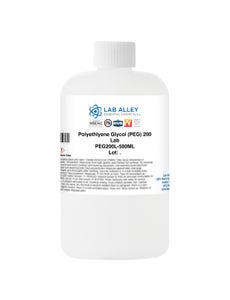






Polyethylene Glycol (PEG) Overview: Properties, Applications, Safety & Sourcing Guide
Polyethylene Glycol (PEG), also known as polyethylene oxide (PEO) or polyoxyethylene (POE), is a synthetic polymer compound that shows up in more places than most people realize. This petroleum-derived material consists of repeating ethylene oxide units linked together in chains of varying lengths, creating compounds with remarkably different properties depending on molecular weight.
Walk into any pharmacy and PEG sits inside tablets as a binding agent, coats pills for easier swallowing, and forms the active ingredient in certain laxatives. Visit a cosmetics counter and PEG moisturizes skin care products, thickens lotions, and carries fragrances. Step into manufacturing facilities and PEG lubricates machinery, disperses pigments in coatings, and modifies polymer properties. Research laboratories use PEG daily for protein purification, cell fusion experiments, and creating hydrogels for tissue engineering.
What makes polyethylene glycol so universally useful? The same water-loving structure that helps PEG dissolve drugs also attracts moisture to skin. The chemical stability that preserves pharmaceuticals also allows safe food contact. The range of molecular weights creates everything from thin liquids to waxy solids, each serving distinct purposes.
Whether you're formulating pharmaceuticals, developing cosmetic products, conducting biochemical research, or selecting industrial lubricants, understanding the different PEG grades and their specific characteristics helps optimize results while ensuring regulatory compliance. This guide covers everything from molecular structure to purchasing decisions, providing practical information for working with this versatile polymer family.
Properties of Polyethylene Glycol
Molecular weight determines nearly everything about how PEG behaves. The same basic chemical structure creates vastly different materials simply by changing chain length.
Key Facts About Polyethylene Glycol
-
Compound Name: Polyethylene Glycol
-
Synonyms: PEG, Polyethylene Oxide (PEO for higher molecular weights), Polyoxyethylene (POE), Macrogol, Carbowax
-
Chemical Formula: H-(O-CH₂-CH₂)n-OH or (C₂H₄O)nH₂O, where n represents the number of repeating ethylene oxide units
-
CAS Number: 25322-68-3
-
EINECS Number: 500-038-2
-
Molecular Weight: Ranges from approximately 200 to several million daltons
-
Appearance: Varies dramatically by molecular weight, from clear colorless liquids to white waxy solids or free-flowing powders
Density Characteristics
Liquid PEG grades demonstrate density greater than water, affecting how spills behave and influencing equipment design for pumping and storage. Solid PEG materials increase in density as molecular weight rises, with this progression continuing predictably across the entire molecular weight range.
Thermal Properties
Both the melting point and the boiling point increase significantly with molecular weight. Lower MW PEGs remain liquid at room temperature, while solid PEGs show melting points that climb progressively higher. PEG 1000 melts around 37-40°C, PEG 4000 around 53-58°C, and PEG 8000 at approximately 60-63°C. These precise melting ranges make certain PEG grades valuable for controlled-release pharmaceutical formulations.
The non-volatile nature of PEG distinguishes it from many solvents. Unlike ethanol or acetone that evaporate readily, PEG stays put. This characteristic proves advantageous for applications requiring persistent lubrication or moisture retention but creates different challenges during cleanup and equipment maintenance.
Materials below 20,000 molecular weight typically carry the PEG designation. Above this threshold, the industry commonly uses the term polyethylene oxide (PEO), though the basic chemical structure remains identical. This distinction helps differentiate between pharmaceutical and cosmetic grades (usually PEG) versus specialized industrial and research applications (often PEO).
Polyethylene Glycol (PEG) is a water-soluble polyether polymer available in multiple molecular weights for industrial, laboratory, and commercial use. PEG supports manufacturing, pharmaceuticals, cosmetics, food processing, biotechnology, lubrication, and chemical processing, where consistent performance and controlled viscosity are required. U.S. laboratories and manufacturers sourcing PEG by grade and molecular weight can contact Lab Alley at 512-668-9918 for product selection and ordering support.
Solubility and pH
Mix PEG with water in any ratio and they blend completely. Liquid PEGs are completely miscible with water, creating homogeneous solutions instantly. Solid PEGs (MW 1000 and above) dissolve readily in water without changing color, odor, or taste, with dissolution rate decreasing somewhat as molecular weight increases.
Beyond water, PEG dissolves in many organic solvents, including ethanol, acetone, benzene, glycerin, and aromatic hydrocarbons. This dual solubility in both water and organic solvents provides formulation flexibility rarely found in other polymers. However, PEG shows poor solubility in aliphatic hydrocarbons, paraffins, waxes, and ethers.
Aqueous PEG solutions are generally neutral to slightly acidic. Unlike strong acids or bases, PEG won't attack metals through pH corrosion or irritate tissues through extreme acidity or alkalinity. This chemical gentleness contributes to widespread pharmaceutical and cosmetic use.
Viscosity increases dramatically as molecular weight rises. PEG 200 flows like water with only slightly more resistance. PEG 400 shows noticeable thickness resembling light syrup. By PEG 600, viscosity becomes significant enough to affect processing equipment selection.
Reactivity and Stability
Chemical stability under normal conditions makes PEG reliable for long-term applications. Unlike compounds that polymerize further or decompose, PEG maintains its structure when properly stored. This stability supports shelf life measured in years rather than months.
Non-volatile characteristics prevent evaporation. Hygroscopic properties cause PEG to absorb moisture from air, especially lower molecular weight grades. Open a container of PEG 400 in humid conditions and watch the water content gradually increase. High-purity applications require careful moisture control, keeping containers tightly sealed except during actual use.
At temperatures above 50°C, PEG gradually tends to oxidize when exposed to air. Extended heating in open containers causes slow degradation. Combustible material classification means solid PEG powders present dust explosion hazards if dispersed in air near ignition sources, requiring appropriate precautions during bulk handling.
Strong oxidizers, strong acids, and strong bases create incompatibility concerns. Never store hydrogen peroxide, nitric acid, or similar oxidizers near PEG. Terminal hydroxyl groups provide reactive sites for chemical modification. Researchers exploit these groups for PEGylation reactions, attaching PEG chains to proteins and drugs. Prolonged storage under certain conditions may slowly form reactive peroxides, though this remains uncommon with properly packaged material.
PEG Types and Molecular Weight Grades
The number following "PEG" indicates average molecular weight in grams per mole. PEG 400 has an average molecular weight of around 400 g/mol, while PEG 8000 weighs approximately 8000 g/mol. Actual molecular weight of any specific PEG product falls within narrow limits (approximately ±5%).
Low Molecular Weight PEGs (Liquids)
PEG 200: Clear, colorless liquid; approximate MW 200 g/mol
PEG 300: Clear, colorless liquid; approximate MW 300 g/mol
PEG 400: Clear, colorless viscous liquid; approximate MW 400 g/mol; most widely used liquid grade for pharmaceutical and food applications
PEG 600: Viscous liquid or semi-solid depending on temperature; approximate MW 600 g/mol
Medium Molecular Weight PEGs (Semi-solids/Solids)
PEG 1000: White waxy solid; approximate MW 1000 g/mol
PEG 1500: White waxy solid; approximate MW 1500 g/mol
PEG 2000: White waxy solid or flakes; approximate MW 2000 g/mol
High Molecular Weight PEGs (Solids)
PEG 3000: White powder or flakes; approximate MW 3000 g/mol
PEG 3350: White powder; approximate MW 3350 g/mol; used as an osmotic laxative
PEG 4000: White granular powder or flakes; approximate MW 4000 g/mol
PEG 6000: White powder or flakes; approximate MW 6000 g/mol
PEG 8000: White free-flowing powder; approximate MW 8000 g/mol
Very High Molecular Weight (Polyethylene Oxide)
PEO: Materials with MW 100,000 to 5,000,000+ used for specialized applications, including rheology modification, water treatment, and biomedical applications
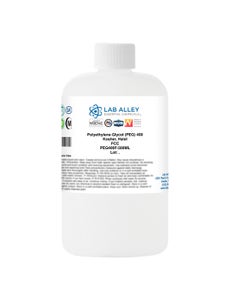
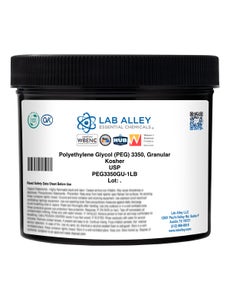
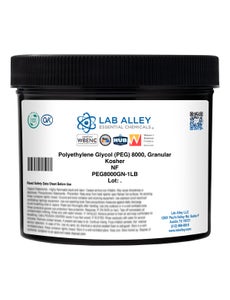
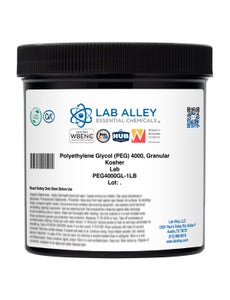
Polyethylene Glycol from Lab Alley is offered in multiple molecular weights and grades, with packaging ranging from small laboratory bottles to bulk drums and totes.
Common Uses & Applications
PEG's combination of water solubility, chemical stability, low toxicity, and regulatory acceptance creates opportunities across nearly every industry.
Pharmaceutical Applications
Excipients in oral, topical, and parenteral drug formulations provide the foundation for countless medications. Tablets incorporate PEG as a binder, coating agent, and disintegration modifier. Controlled and sustained release formulations use solid PEG grades to create matrices that dissolve gradually, releasing drugs over extended periods.
Solubilizer for poorly water-soluble drugs helps compounds enter solution where absorption can occur. Suppository and ointment base formulations exploit PEG's melting characteristics. Osmotic laxative products like Miralax, Movicol, and MoviPrep uses PEG 3350, drawing water into the intestinal tract through osmotic pressure.
Injectable formulation vehicle applications occasionally incorporate PEG for drugs requiring special solubilization. PEGylation of proteins, peptides, and biologics improves pharmacokinetics and reduces immunogenicity. Numerous marketed biologics use this technology to extend circulation time in the bloodstream and decrease immune system recognition. Cell culture and cryopreservation applications protect cells during freezing and promote cell fusion in hybridoma production.
Food & Beverage Applications
Food additive status (INS 1521, E1521 in the EU) permits approved uses. Humectant and moisture retention agent functions prevent products from drying out during storage. Emulsifier and stabilizer roles help mix ingredients that normally separate. Anti-foaming agent applications control excessive foam during processing. Coating agents create smooth, glossy surfaces on foods and supplements.
Cosmetic & Personal Care Applications
Moisturizer and humectant in skin care products attract and retain moisture. Emulsifier and thickening agent functions create stable mixtures of oils, waxes, and water-based ingredients. Solvent and carrier in perfumes and fragrances dissolve aromatic compounds. An ingredient in toothpaste, mouthwash, and oral care products maintains paste consistency. Hair care formulations incorporate PEG for conditioning effects. The base for various personal care products provides the desired texture and performance.
Industrial & Manufacturing Applications
Lubricant and plasticizer uses reduce friction and improves flexibility. Surfactant and dispersing agent roles distribute pigments uniformly. Solvent for dyes, inks, and coatings creates stable formulations. Mold release agent applications prevent adhesion. Textile processing aid functions support dyeing and finishing operations. Metalworking fluids cool and lubricate cutting operations. Rubber and polymer processing employs PEG as a processing aid. The precursor for polyurethane production reacts with diisocyanates. Ink solvent and lubricant for inkjet printers maintain printhead performance.
Biomedical & Research Applications
Protein precipitation and purification techniques use PEG extensively in biochemistry laboratories. DNA and RNA precipitation occur when cold ethanol containing PEG is added to nucleic acid extracts. Cell fusion and protoplast fusion applications exploit PEG's ability to promote cell membrane merging. Hydrogel formation for tissue engineering and 3D bioprinting uses PEG as a matrix material. Drug delivery systems and nanoparticle formulations improve circulation time. Surface modification and bioconjugation (PEGylation) extend therapeutic performance. Osmotic pressure generation in biochemistry experiments controls water movement. Biomedical research applications span countless procedures.
Other Applications
Wood treatment and preservation stabilize waterlogged archaeological wood. Concrete additives improve workability. Capacitor and battery applications employ PEG in electrolyte formulations. Enhanced oil recovery techniques inject PEG solutions to improve petroleum extraction.
Fight Your Kidney Stone with This Natural Product Hack
Fight kidney stones. Discover how citric acid naturally prevents stone formation.

Is Lactic Acid Bad? A Look at the Health Science
Is lactic acid bad for you? Debunking myths and revealing its vital role in your body & beyond.
Hospitality Without Hitchhikers: Boric Acid’s Role in Bed Bug Prevention
Protect your hospitality business. Boric acid is key to preventing bed bug infestations.
Harnessing Silica Sulfuric Acid to Enhance Concrete Durability
Enhance concrete longevity. Silica sulfuric acid improves strength and chemical resistance.
Safety Information
While generally recognized as having low toxicity, proper handling of PEG requires attention to physical hazards and appropriate workplace practices.
Hazards & Precautions
General Safety: Not considered hazardous by the 2012 OSHA Hazard Communication Standard (29 CFR 1910.1200)
Toxicity: Generally recognized as having low acute toxicity; not classified as carcinogenic, mutagenic, or reproductively toxic by major regulatory agencies
Health Effects: May cause mild irritation to eyes, skin, and respiratory tract upon prolonged or repeated exposure; dust from solid PEGs may cause respiratory irritation if inhaled; large oral doses may cause gastrointestinal discomfort
Combustibility: Combustible material, but not highly flammable under normal conditions
Environmental: Not readily biodegradable; low bioaccumulation potential due to water solubility
Personal Protective Equipment (PPE)
Safety glasses or goggles are recommended to prevent eye contact. Protective gloves (nitrile or neoprene) for prolonged handling. Lab coat or protective clothing shields skin and garments. Dust mask or respirator when handling powdered forms in dusty conditions. Generally, minimal PPE is required under normal use conditions.
Storage Guidelines
Store in tightly closed containers in a cool, dry, well-ventilated area. Protect from excessive heat, moisture, and direct sunlight. Keep away from strong oxidizers, strong acids, and strong bases. Keep away from ignition sources. Lower molecular weight liquid PEGs are hygroscopic and should be kept tightly sealed to prevent moisture absorption. Stable for extended periods when properly stored.
Emergency Procedures
Fire: Use water spray, foam, dry chemical, or CO₂ extinguishers
Spill: Avoid dust formation for solid PEGs; sweep up or vacuum material and place in appropriate waste container; liquid spills can be absorbed with inert material; prevent entry into drains and waterways
Exposure - Eyes: Rinse immediately with plenty of water for at least 15 minutes; seek medical attention if irritation persists
Exposure - Skin: Wash thoroughly with soap and water; remove contaminated clothing; seek medical attention if irritation develops
Exposure - Inhalation: Move to fresh air; seek medical attention if respiratory symptoms occur
Exposure - Ingestion: Rinse mouth with water; drink water if conscious; seek medical attention for large amounts or if symptoms develop
Regulatory & Classification
PEG's long history of safe use created extensive regulatory approval across pharmaceutical, food, cosmetic, and industrial applications.
OSHA Classification
Not considered a hazardous chemical under the 2012 OSHA Hazard Communication Standard (29 CFR 1910.1200). No established OSHA Permissible Exposure Limit (PEL).
FDA & Food Safety
Various PEG grades are approved for food use and generally recognized as safe (GRAS) for specific applications. Listed in Food Chemicals Codex (FCC) with specifications for food-grade products. Approved for pharmaceutical use meeting United States Pharmacopeia (USP) standards. Approved for cosmetic use under FDA regulations.
International & Other Regulatory Status
European Union: Approved food additive E1521 for specific molecular weight grades
Halal and Kosher: Certified grades available
EPA TSCA Inventory: Listed (Toxic Substances Control Act)
Canadian DSL: Domestic Substances List compliant
Environmental Considerations
Not readily biodegradable; polymer structure resists rapid breakdown. Low bioaccumulation potential due to hydrophilicity. Generally not classified as hazardous waste under RCRA. Some bacterial species can degrade PEG under specific conditions. Aquatic toxicity is generally low. Biodegradability decreases with increasing molecular weight. Should not be discharged directly into waterways.
How to Safely Dispose of Sulfuric Acid
Sulfuric acid is one of the most common acidifying reagents and sulfur sources, essential across multiple industries. At the same time, it is also a toxic and highly hazardous chemical reagent, requiring safe handling and disposal by trained personnel.
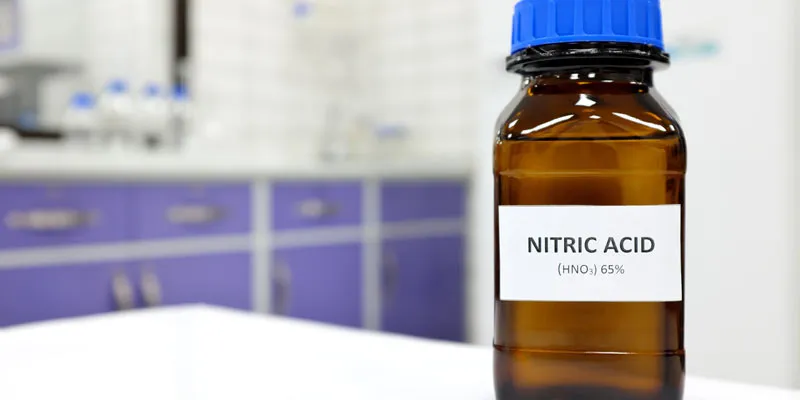
How To Use Nitric Acid Safely
Nitric acid is a corrosive chemical and harmful to humans. Its contact with skin and eyes can cause serious burns. Affected skin will require flushing with soap and lukewarm water for at least 30 minutes.
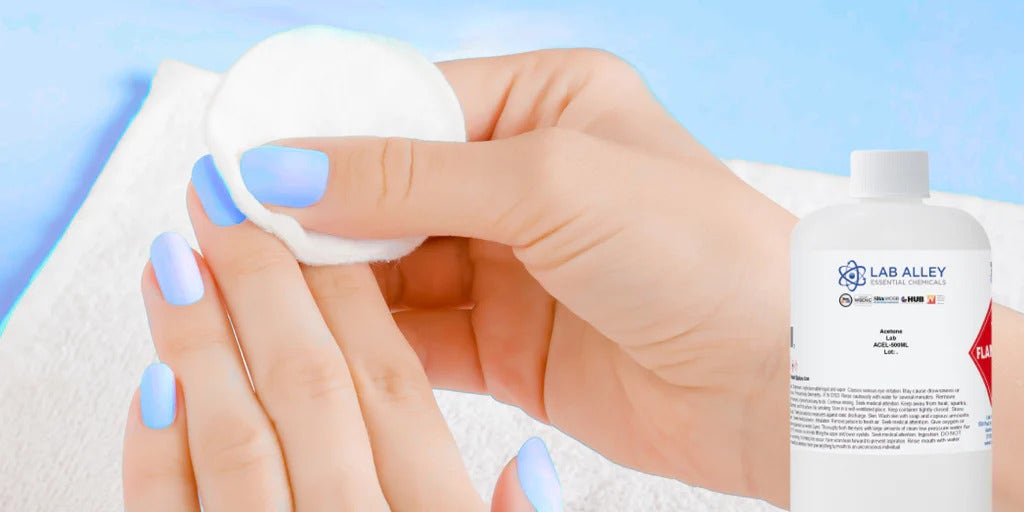
Acetone Safety: Proper Storage and Disposal Methods
Acetone is a staple chemical solvent in most laboratories. It is also perhaps one of the most recognizable chemicals to the layperson, best known as the pungent solvent comprising nail polish remover.
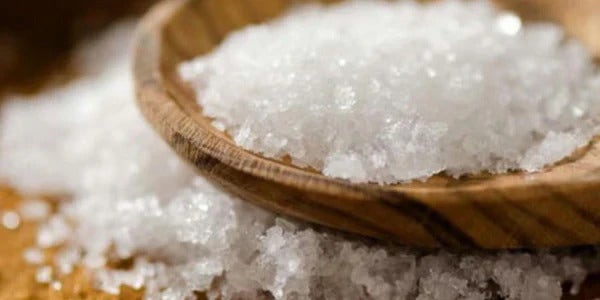
How to Use Potassium Iodide Safely and Where to Buy it Online
Potassium Iodide Powder, also known as Potassium Salt of Hydriodic Acid, Iodic Acid Potassium Salt, Potassium Monoiodide, and Knollide, has the chemical formula KI. It appears as a white crystalline powder, odorless, and is soluble in water at ambient conditions.
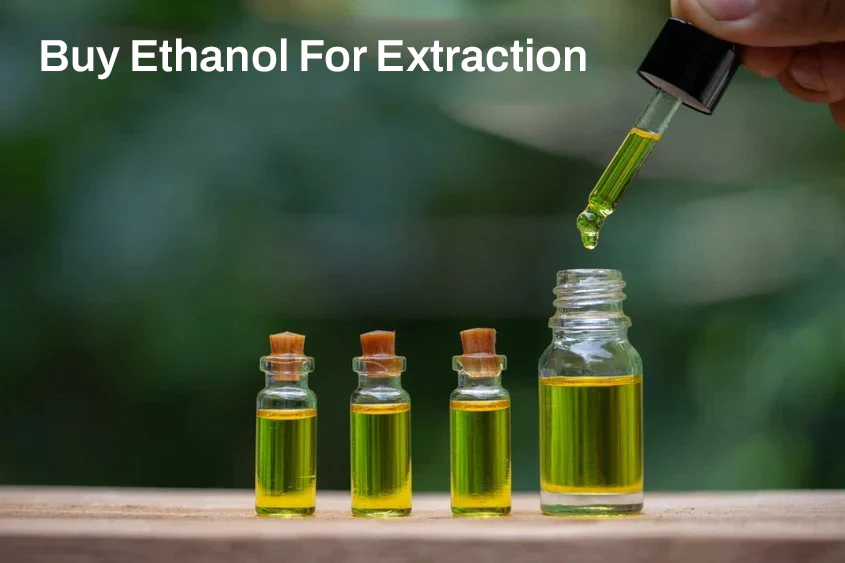
Medicinal Oils Derived From Plants
You can order food-grade ethanol, extraction-grade ethanol, ACS-grade ethanol, FCC-grade ethanol, USP grade ethanol, HPLC-grade ethanol and kosher ethanol from Lab Alley. Perform ethanol (EtOH) extraction at ultra-low temperatures for the best yields.
Ethanol extraction is a cost-effective way to use ethanol as an industrial solvent to produce high-quality botanical extracts from large volumes of medicinal herbs or plants.
PEG Grades and Pack Sizes
Lab Alley provides comprehensive PEG sourcing serving pharmaceutical, food, cosmetic, industrial, and research applications with appropriate grades and packaging options.
Available Grades & Purities
Multiple pharmaceutical and industrial grades, including USP (United States Pharmacopeia), FCC (Food Chemicals Codex), NF (National Formulary), EP (European Pharmacopoeia), Lab Grade, Technical Grade, and specialty grades. Halal and Kosher certified options available. Common molecular weights include PEG 200, 300, 400, 600, 1000, 1500, 2000, 3350, 4000, 6000, and 8000.
Pack Sizes & Bulk Availability
Available in sizes ranging from 1-liter bottles to bulk quantities. Common pack sizes include 1L, 4L, 1 gallon, 4 gallons, 5 gallons, and 20L containers. PEG 400 is available in multiple configurations, including single bottles and case packs. Solid PEGs (such as 4000, 8000) are available in granular or powder form. Packaging varies by molecular weight and grade.
Regulatory Requirements
Food-grade PEGs must meet FCC specifications. Pharmaceutical-grade PEGs must meet USP/NF standards. Proper labeling is required for food contact and pharmaceutical applications. Certificates of analysis (CoA) are typically available upon request. Halal and Kosher certifications available for applicable markets.