





Shelf Life & Expiration of Propylene Glycol: Storage and Stability Guide
Propylene Glycol is a versatile organic compound used across pharmaceutical, food and beverage, cosmetic, and industrial applications. Understanding how long it remains effective helps you maintain product quality and ensure reliable performance in critical uses. While propylene glycol offers strong chemical stability, attention to storage practices prevents oxidation, moisture absorption, and quality changes that compromise effectiveness.
Propylene glycol stability varies by grade, environmental factors, and container integrity. Pharmaceutical and food-grade products demonstrate excellent longevity when handled correctly, while exposure to air, heat, and light accelerates degradation. This guide delivers practical recommendations for maximizing propylene glycol shelf life and recognizing when replacement becomes necessary.


In this article, we’ll review:
- How Long Does Propylene Glycol Last?
- Signs That Propylene Glycol Has Expired
- What to Do If Propylene Glycol Is Expired
How Long Does Propylene Glycol Last?
Propylene glycol longevity depends on grade, packaging quality, and storage practices. Understanding these variables helps you plan inventory management and determine replacement timing.
Shelf Life Duration
Unopened containers: Typically last 2 to 5 years from the manufacturer's date when stored according to manufacturer guidelines. This range reflects differences in grade and storage conditions.
Recommended maximum: Some safety data sheets note that peroxides may form in material stored for several years. As a precaution, it's generally recommended that the product not be stored longer than 3 years.
Pharmaceutical-grade (USP/EP): Demonstrates extended stability in sealed containers, supporting long-term inventory for regulated applications where quality consistency is critical.
Food-grade (FCC): Maintains comparable stability when properly packaged, making it suitable for extended storage in food and beverage production environments.
Technical-grade: Shows similar shelf life in sealed containers, though specifications may be less stringent than pharmaceutical or food grades.
Chemical Stability
Propylene glycol exhibits robust stability under typical conditions, though certain factors influence quality retention:
Inherent stability: The chemical doesn't degrade easily under proper storage conditions and doesn't freeze readily, allowing reliable warehousing across varied climates.
Oxidation pathways: Prolonged exposure to heat, air, and light can cause slow oxidation over time, potentially forming degradation products and affecting quality. This process accelerates at elevated temperatures.
Peroxide formation: Material stored for several years may develop peroxides, representing the primary long-term degradation concern. This risk increases with extended storage beyond recommended timeframes.
Low vapor pressure: The compound's low volatility contributes to storage stability, as evaporation poses minimal concern compared to more volatile solvents.
Acidity development: With increasing storage time, acidity and odor can increase, serving as indicators of oxidative degradation.
Purity & Packaging
Container selection and grade specifications significantly affect how well propylene glycol maintains its quality:
Grade advantages: Higher purity pharmaceutical-grade (USP/EP) propylene glycol in sealed containers retains quality longer than technical-grade or opened containers. Pharmaceutical specifications ensure a consistent composition that supports extended shelf life.
Food-grade stability: Food-grade (FCC) propylene glycol maintains stability when properly packaged, providing reliable performance for food and beverage applications.
Container materials: Compatible materials such as stainless steel (recommended for USP/EP grade), HDPE, or other chemical-resistant materials provide adequate protection during storage.
Seal integrity: Sealed containers from manufacturers provide optimal protection against oxidation and contamination. Tight sealing throughout the storage period prevents quality decline.
Air exposure risk: Exposure to air can accelerate oxidation, especially at elevated temperatures. This makes seal quality crucial for long-term storage success.
Original packaging: Manufacturer containers offer the best protection until first use because they're engineered specifically for propylene glycol storage and transport.
Storage Conditions
Creating appropriate storage environments is fundamental to preserving propylene glycol quality:
Temperature guidelines: Maintain controlled room temperature at 15-30°C (59-86°F). This range prevents heat-induced oxidation while accommodating typical warehouse conditions.
Heat management: Avoid excessive heat, which can accelerate oxidative degradation. When heating is required for bulk storage or transport, product temperature should be controlled to prevent unintentional overheating over extended periods. Industry recommendations suggest heating to no more than 40°C.
Moisture management: Propylene glycol is hygroscopic and absorbs moisture from the air. Keep containers tightly sealed at all times to prevent moisture absorption, which can dilute concentration and reduce effectiveness. Store in a dry, well-ventilated area.
Light shielding: Protect from direct sunlight, UV light sources, and prolonged elevated temperatures. Store in cool areas to prevent oxidative degradation and maintain product integrity.
Freeze resistance: Storage presents no unusual problems as propylene glycol doesn't freeze readily under normal conditions, providing flexibility in storage location selection.
Contamination prevention: Use clean equipment when handling. The compound can be offloaded from tank trucks or tank cars into storage tanks and kept with little difficulty due to its stability and low vapor pressure.
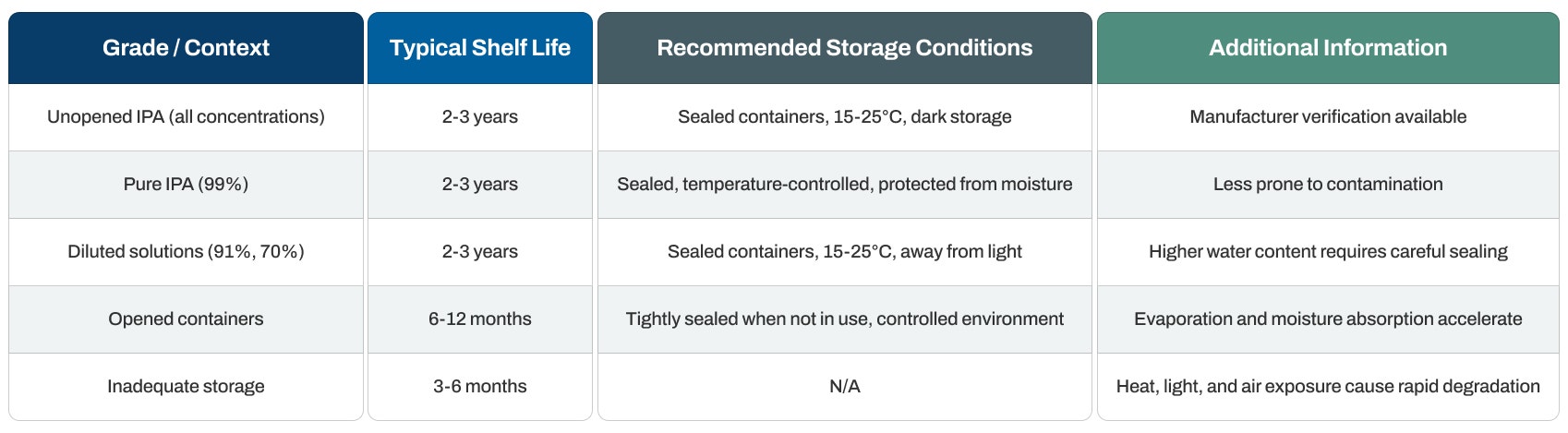
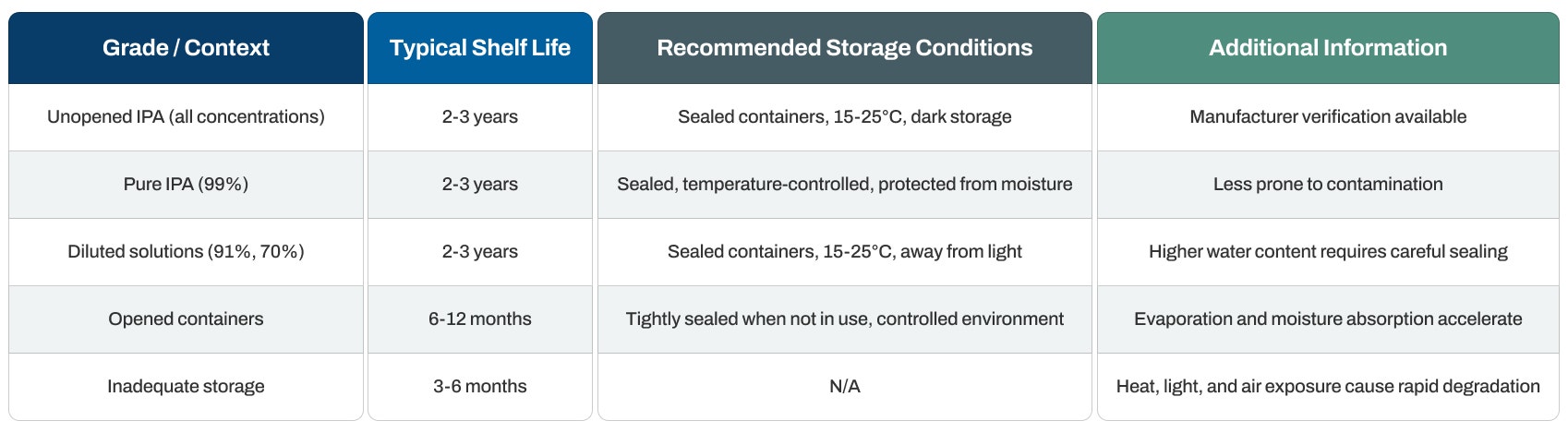
Quick Reference: Shelf Life and Storage
Signs That Propylene Glycol Has Expired
Observable changes in appearance and performance indicate when propylene glycol has degraded beyond acceptable limits. Recognizing these signs early prevents using compromised material in critical applications.
Color Change: Yellowing or discoloration in normally clear, colorless propylene glycol indicates oxidation or contamination. Fresh material should appear water-clear without any tint.
Increased Acidity or Odor: With increasing storage time, acidity and odor can increase, serving as indicators of oxidative degradation. Fresh propylene glycol has a mild, slightly sweet odor that shouldn't intensify over time.
Precipitation or Cloudiness: Visible particles, haziness, or sediment suggest contamination or degradation. Clean propylene glycol should remain completely clear without suspended matter.
Moisture Absorption: If containers have been improperly sealed, the material may have absorbed excess moisture from the air, diluting its concentration and reducing effectiveness. This becomes apparent through changed viscosity or performance.
Reduced Effectiveness: Pharmaceutical, food, or cosmetic applications may reveal altered viscosity, reduced solvent performance, or inconsistent functionality. Performance shifts directly compromise process reliability and product quality.
Altered Physical Properties: Changes in viscosity, flow characteristics, or solvent properties indicate degradation affecting functional performance.
What to Do If Propylene Glycol Is Expired
Discovering expired propylene glycol requires a methodical approach to safeguard product quality, maintain safety, and preserve performance.
Check Manufacturer Guidelines
Review expiration or retest dates on packaging or certificates of analysis. Manufacturers may not support re-certification once the product has exceeded its shelf life, particularly for pharmaceutical and food-grade applications where regulatory compliance is mandatory.
Users are advised to consider their own shelf life studies as conditions and handling may deviate from manufacturer standards. Custom testing can determine whether material remains suitable for specific applications, though this approach typically applies only to non-critical industrial uses.
For pharmaceutical and food applications, strict adherence to expiration dates ensures product safety and regulatory compliance, regardless of apparent condition.
Follow Proper Disposal Procedures
Dispose of expired propylene glycol according to local regulations for chemical waste. While propylene glycol has low toxicity and is readily biodegradable, follow proper disposal protocols for industrial quantities to ensure regulatory compliance.
Do not discharge into waterways, drains, or sewers, as this violates environmental regulations regardless of low toxicity. Large quantities require collection by licensed waste handlers familiar with chemical disposal requirements.
Maintain disposal records according to good manufacturing practices or industry standards. Documentation supports regulatory audits and quality system oversight.
Replace with Fresh Stock
Expired or degraded propylene glycol can be ineffective for critical applications. Source replacement material from established suppliers who provide comprehensive documentation, including certificates of analysis showing recent manufacture dates.
Use fresh propylene glycol with valid certification to ensure proper quality and consistent performance. Confirm that grade, purity specifications, and quality parameters align with your application requirements, whether for pharmaceutical formulations, food processing, cosmetic products, or industrial processes.
Inspect incoming shipments for packaging integrity, proper sealing, and clear labeling. Verify that containers show no signs of discoloration, contamination, or seal damage before accepting delivery.
Proper Storage Extends Shelf Life
Implementing sound storage practices from the beginning maximizes lifespan and preserves quality:
Container selection: Keep propylene glycol in tightly sealed containers made of compatible materials such as stainless steel (recommended for USP/EP grade), HDPE, or other chemical-resistant materials. Storage presents no unusual problems due to the compound's stability.
Temperature management: Maintain controlled room temperature at 15-30°C (59-86°F). Avoid excessive heat, which can accelerate oxidative degradation. When heating is required for bulk storage or transport, control product temperature to prevent unintentional overheating over extended periods. Industry guidelines recommend heating to no more than 40°C.
Moisture protection: Propylene glycol is hygroscopic and absorbs moisture from the air. Keep containers tightly sealed at all times to prevent moisture absorption, which can dilute concentration and reduce effectiveness. Store in a dry, well-ventilated area with good air circulation.
Light and heat shielding: Protect from direct sunlight, UV light sources, and prolonged elevated temperatures. Store in cool areas to prevent oxidative degradation and maintain product integrity.
Contamination prevention: Use clean equipment when handling to avoid introducing foreign substances. The compound can be offloaded from tank trucks or tank cars into storage tanks and kept with little difficulty due to its stability and low vapor pressure.
Proper labeling: Clearly label containers with contents, date received or opened, and expiration date to ensure proper rotation and timely use of stock. This practice proves particularly important for pharmaceutical and food-grade applications where traceability is mandatory.
Inventory rotation: Use older stock first through organized inventory tracking. Monitor dates carefully to ensure material gets used while still within its optimal shelf life, particularly respecting the 3-year maximum storage recommendation.
Condition monitoring: Regular inspection of storage environments catches problems before product quality deteriorates. Promptly address temperature fluctuations, seal integrity concerns, or ventilation issues to maintain optimal conditions.
Bulk storage considerations: For large-scale storage in tanks, ensure proper venting, temperature controls, and cleaning protocols. The material's low vapor pressure and stability simplify bulk handling compared to more volatile compounds.
Conclusion
Propylene glycol typically lasts 2 to 5 years from manufacture when stored correctly, though a 3-year maximum is generally recommended to prevent peroxide formation. Primary concerns include slow oxidation, forming degradation products and increased acidity, moisture absorption, diluting concentration, and peroxide development during extended storage. Appropriate storage in sealed, chemical-resistant containers protected from heat, light, and moisture preserves quality and maximizes the lifespan of this stable organic compound. Following manufacturer recommendations and implementing proper storage protocols ensures dependable performance across pharmaceutical, food and beverage, cosmetic, and industrial applications.
Note: Fresh propylene glycol stored under optimal conditions provides consistent performance throughout its lifespan when handled according to manufacturer specifications and quality standards for your specific application.
For more detailed guidance, explore our Resource Library for comprehensive storage and handling information.
Our Customer Care team is also available for more information and documentation, including chemical Safety Data Sheets.
Need Propylene Glycol You Can Trust?
If you are looking for high-quality propylene glycol for your lab, product line, or research facility, be sure to visit our store to explore our trusted selection and request a quote.
As your trusted partner in chemical supply, Lab Alley is always striving to meet the growing demands of our customers. We want you to be able to access all of your chemical needs in one place, along with streamlined online ordering and fast shipping.
Due to popular demand from our valued clientele, Lab Alley's propylene glycol is available in a range of purities and packaging options to suit various commercial, laboratory, and personal needs.