





Specially Denatured Alcohol Safety & Hazards: Essential Handling Guidelines
Specially denatured alcohol is ethanol rendered unfit for beverage use through approved denaturants while maintaining solvent properties for industrial and pharmaceutical applications. Hazard severity varies by denaturant type: methanol formulations present extreme toxicity risks, including blindness and death, while other formulations use less acutely toxic but still harmful additives. All SDA formulations are highly flammable and require strict handling protocols, proper PPE, and TTB compliance.
Workers in manufacturing, pharmaceuticals, cosmetics, laboratories, and industrial settings need to grasp the distinct dangers of specially denatured alcohol. Despite its similarity to beverage alcohol in appearance and flammability, the added denaturants transform it into a poison that can blind or kill from small exposures.
Methanol-based formulations can destroy vision from exposures measured in milliliters and prove fatal from amounts you could hold in a shot glass. The ethanol base remains just as flammable as drinking alcohol, igniting easily near heat or sparks. This guide provides essential information on specially denatured alcohol safety, including recognizing exposure symptoms and executing proper emergency responses.
In this article, we’ll explore:
- Chemical Hazards Overview
- Exposure Risks & Health Effects
- First Aid Measures
- Handling & Storage Precautions
- Spill & Leak Procedures
- Fire & Explosion Hazards
- Regulatory & Compliance Information
- Specialized Denatured Ethanol Types: Safety Considerations
- Technical Documents & References
Chemical Hazards Overview
The danger profile of specially denatured alcohol stems from pairing ethanol's flammability with deliberately added toxic substances. Both aspects demand attention during handling.
Hazard Classification
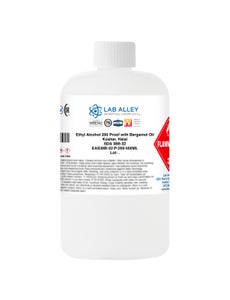
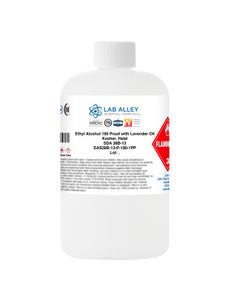
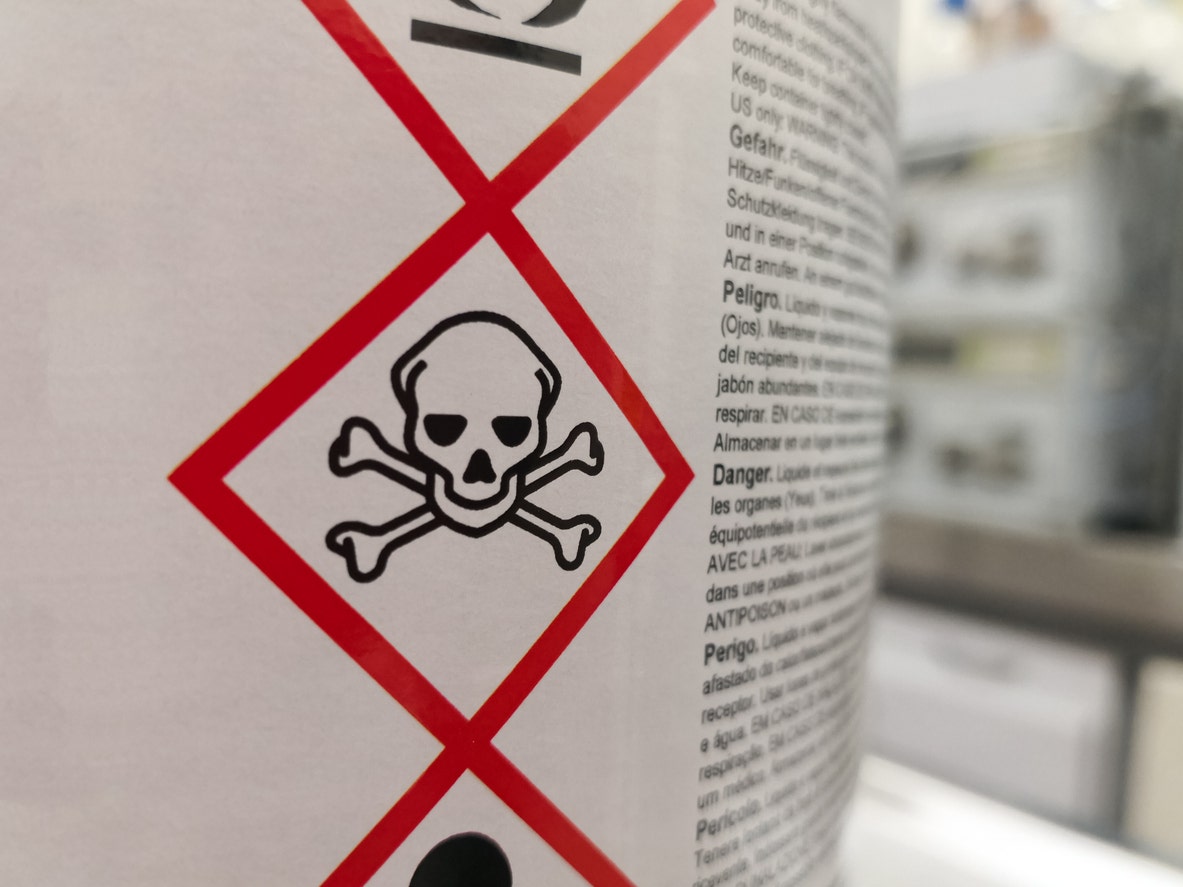
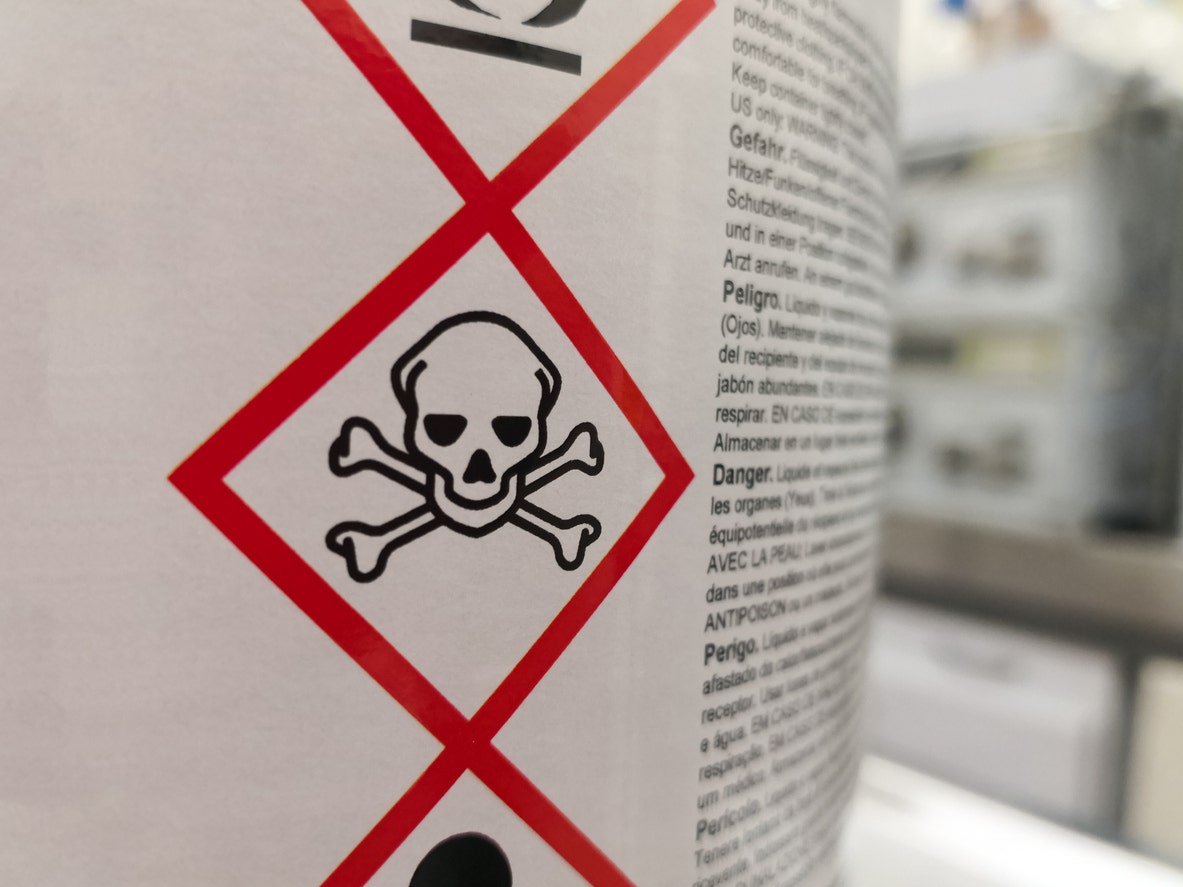
The Globally Harmonized System marks SDA with several warning symbols. A flame pictogram (GHS02) indicates a flammable liquid hazard. Methanol-containing versions display a skull and crossbones (☠️ GHS06) for acute toxicity. An exclamation mark (⚠️ GHS07) warns of irritation and harmful effects.
NFPA ratings vary by denaturant: Health 1-3 (methanol rated 3), Flammability 3 (serious fire hazard), Reactivity 0 (stable).
Primary Risks
Main hazards include fire danger with a flash point around 13°C (55°F), meaning ignition can happen on cool days. Vapors form explosive mixtures with air and travel to distant ignition sources. Static electricity during transfers can trigger ignition. SDA burns with nearly invisible flames in daylight, making fire detection difficult.
Denaturant toxicity varies dramatically by formulation. Methanol versions can cause blindness from 10-15 mL and death from 30-100 mL. Other denaturants cause moderate to severe poisoning. Not all formulations are safe for consumption.
Vapor inhalation produces dizziness, drowsiness, headache, nausea, and airway irritation from ethanol. Denaturant vapors add specific toxicity. Methanol causes severe poisoning and vision damage. High concentrations trigger narcotic effects and respiratory suppression.
Skin contact causes drying and irritation. Denaturants are absorbed through the skin in toxic amounts, especially methanol. Eye contact triggers serious irritation with redness, tearing, and pain.
Swallowing is extremely dangerous. Methanol formulations are highly toxic, with small amounts causing permanent blindness and moderate amounts proving fatal. Symptoms include nausea, vomiting, vision changes, metabolic acidosis, seizures, coma, and death.
Exposure Risks & Health Effects
Understanding how specially denatured alcohol affects health enables you to recognize dangerous conditions and respond appropriately.
Breathing vapors affects you through both ethanol and denaturants. Ethanol causes dizziness, headache, and drowsiness. Heavy concentrations cause narcotic responses and respiratory problems. Denaturant vapors add specific toxicity. Methanol exposure causes severe poisoning affecting vision and the central nervous system.
Skin contact causes drying and irritation. Denaturants absorb through intact skin in toxic amounts. Methanol penetrates skin readily, creating poisoning risk without ingestion. Extended contact or large surface area exposure increases absorbed dose.
Eye contact triggers immediate irritation, tearing, and pain. Certain denaturants may cause additional corneal damage beyond ethanol irritation.
Swallowing specially denatured alcohol is a medical emergency. Methanol formulations present the most severe danger. As little as 10-15 mL can cause permanent blindness. Amounts of 30-100 mL can be fatal. Symptoms develop over hours and include nausea, vomiting, vision changes, confusion, seizures, metabolic acidosis, coma, and death. Immediate antidote therapy with fomepizole or ethanol is critical.
Other formulations also cause serious harm when swallowed. Isopropanol causes severe gastric irritation and central nervous system depression. Completely denatured alcohol contains multiple denaturants in high concentrations, creating extreme toxicity.
Long-term exposure may produce liver injury, neurological impairment, and ongoing dermatitis. Chronic methanol exposure causes permanent vision damage.
First Aid Measures
Quick, appropriate first aid prevents minor exposures from becoming serious injuries. The combination of fire risk and poisoning potential demands fast action.
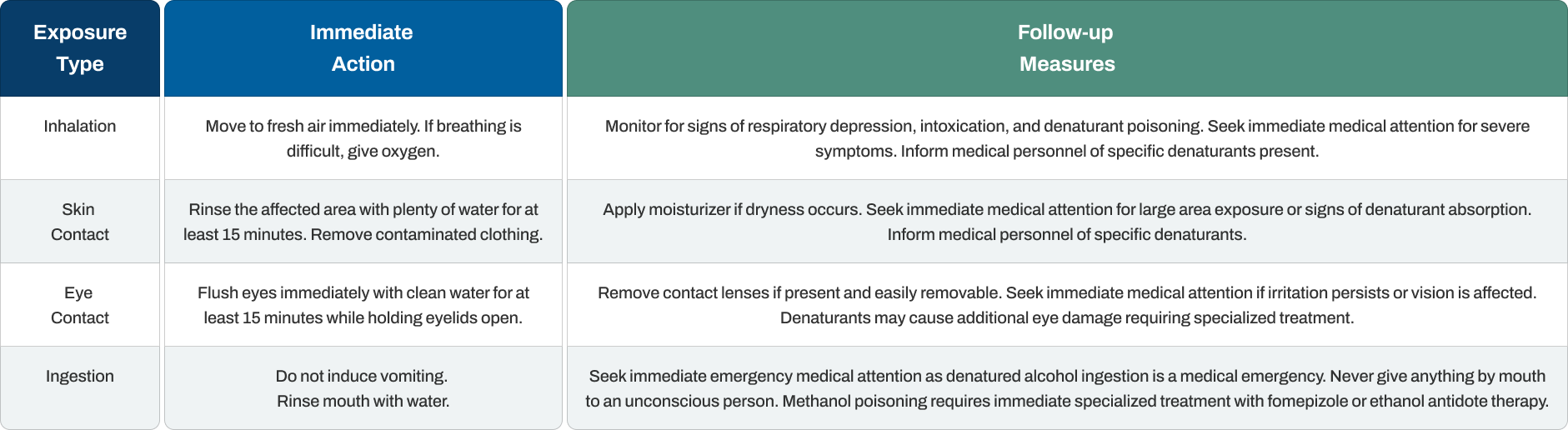
Methanol poisoning symptoms may appear hours after exposure, making immediate medical attention essential even without symptoms. Treatment with fomepizole or ethanol must begin quickly to prevent methanol metabolism into toxic formic acid.
Handling & Storage Precautions
Safe work with specially denatured alcohol requires paying attention to fire prevention and toxic exposure control simultaneously.
Safe Handling Procedures
Wear chemical-resistant gloves (nitrile), safety goggles, and protective clothing when handling SDA. Maintain strong ventilation to keep vapors below explosive concentrations and toxic levels. Eliminate all ignition sources, including open flames, hot surfaces, sparks, and static electricity. Install explosion-proof electrical equipment where vapors might accumulate. Ground and bond containers during transfers to prevent static discharge.
Prevent prolonged skin contact even when wearing gloves. Never eat, drink, or smoke in work areas. Wash your hands thoroughly after any contact.
Storage Conditions
Store in cool, dry, well-ventilated spaces below 25°C (77°F) away from heat, sparks, flames, and oxidizing materials. Keep containers tightly closed in approved flammable liquid storage cabinets.
Label containers clearly as "Denatured Alcohol: Poison, Not for Internal Use." This prevents accidental consumption. Separate from incompatible materials and food products. Never store where it could be mistaken for beverage alcohol.
Incompatible Substances
Strong oxidizing agents (permanganates, peroxides, nitrates); strong acids and bases; alkali metals (sodium, potassium); acetyl chloride; chromium trioxide; certain plastics and rubber materials.
Spill & Leak Procedures
SDA spills create both immediate fire danger and toxic exposure risk, requiring quick action.
Emergency Response Steps
Eliminate all ignition sources immediately. Evacuate non-essential personnel. Maintain ventilation using explosion-proof fans if needed. Wear appropriate protective equipment, including respiratory protection for large spills. Use explosion-proof equipment only for cleanup.
Containment Methods
Stop the leak if safe to do so. Contain with dikes or barriers. Absorb with inert, non-combustible material like vermiculite or sand. DO NOT use combustible absorbents. Prevent entry into waterways, sewers, or confined spaces. Use vapor suppression foam for large spills.
Proper Disposal
Recover spilled material for proper hazardous waste disposal. Dispose of contaminated absorbents as hazardous waste per federal, state, and local regulations. Incinerate in an approved facility. Never discharge to waterways or sewers. Follow TTB and EPA RCRA requirements.
Fire & Explosion Hazards
Fire and explosion create the most immediate dangers with specially denatured alcohol. The extreme flammability, combined with nearly invisible flames, creates unique hazards.
Flammability
Extremely flammable with a flash point around 13°C (55°F). Creates explosive vapor-air combinations across a broad range. Vapors are heavier than air and travel considerable distances to ignition sources. Autoignition temperature is roughly 365°C (689°F).
SDA burns with nearly invisible pale blue flame in daylight, making fire detection extremely difficult. Use thermal imaging equipment to detect invisible flames when fire is suspected.
Extinguishing Media
Use alcohol-resistant foam specifically designed for polar solvent fires. Dry chemical extinguishers work for small fires. Carbon dioxide works for electrical fires involving SDA. Water spray can cool containers, but never use direct water streams.
Firefighting Precautions
Apply respiratory protection with SCBA and full protective gear. Denaturant combustion produces toxic gases, including formaldehyde and carbon monoxide. Approach from upwind. Cool containers with water spray from maximum distance. Use thermal imaging to locate fire boundaries. Vapors may reignite after apparent extinguishment.
Regulatory & Compliance Information
Specially denatured alcohol faces extensive regulatory requirements from multiple agencies.
OSHA Regulations
Flammable liquid under 29 CFR 1910.106. PEL for ethanol: 1000 ppm; additional limits for denaturants (methanol: 200 ppm, isopropanol: 400 ppm). Requires PPE, ventilation, and flame-resistant clothing in hazardous areas. Explosion-proof electrical equipment is required in classified locations.
EPA & Environmental Impact
Ethanol breaks down readily; denaturants may be persistent and toxic to aquatic life. Subject to VOC emissions regulations and TRI reporting. Reportable quantity varies by denaturant (methanol RQ: 5000 lbs).
DOT Transportation Regulations
Class 3 Flammable Liquid; UN1170 or UN1987; Packing Group II. Requires proper labels, placards, and shipping papers.
FDA/TTB Compliance
Regulated by TTB under 27 CFR Part 20. Specific formulations must comply with approved TTB formulas. Requires TTB permit for use. Strictly prohibited in food, beverages, or internal drugs. Subject to record-keeping and inspection.
Specialized Denatured Ethanol Types: Safety Considerations
Different, specially denatured alcohol formulas have dramatically different toxicity while sharing similar fire hazards.
SDA 3A (Methanol): Contains 5% methanol, extremely toxic. 10-15 mL can cause blindness; 30-100 mLcan be potentially fatal. Requires immediate treatment with fomepizole or ethanol. Strictest safety protocols required.
SDA 40B (t-Butanol + Denatonium): Lower acute toxicity. Contains extremely bitter denatonium benzoate to deter ingestion. Commonly used in cosmetics. Safer handling than methanol, but still hazardous.
SDA 3C (Isopropanol): Contains 5% isopropanol with moderate toxicity. Less toxic than methanol but causes severe gastric irritation and CNS depression if ingested.
CDA (Completely Denatured): Multiple denaturants in high concentrations with the highest overall toxicity. Available without a permit due to extreme toxicity. Requires maximum safety precautions.
Technical Documents & References
Working safely with specially denatured alcohol requires access to accurate technical documentation.
Safety Data Sheets (SDS) provide formulation-specific hazards, exposure limits, PPE requirements, and emergency procedures for each SDA type. TTB Regulations (27 CFR Part 20) detail approved formulas, permits, use restrictions, and compliance requirements.
Certificate of Analysis (COA) verifies denaturant type, concentration, and compliance with TTB specifications. Poison Control (1-800-222-1222) provides emergency treatment protocols, especially critical for methanol exposures.
Final Note
Specially denatured alcohol pairs extreme flammability with deliberate toxicity, requiring the highest level of safety awareness. The denaturants that prevent drinking create serious poisoning hazards, causing permanent injury or death from relatively small exposures.
Success with SDA safety requires recognizing that formulation matters critically. Methanol-containing versions demand maximum precautions due to the potential for blindness and death. All formulations share extreme flammability, requiring constant fire prevention.
By consistently eliminating ignition sources, maintaining proper ventilation, preventing skin contact with appropriate PPE, and following TTB compliance requirements, you can reduce risks while safely using this regulated material across industrial, pharmaceutical, and manufacturing applications.
Explore our Resource Library for more information.
Our Customer Care team is also available for more information and documentation, including chemical Safety Data Sheets.
Need Specially Denatured Ethanol You Can Trust?
If you are looking for high-quality, specially denatured ethanol for your lab, product line, or research facility, be sure to visit our store to explore our trusted selection and request a quote.
As your trusted partner in chemical supply, Lab Alley is always striving to meet the growing demands of our customers. We want you to be able to access all of your chemical needs in one place, along with streamlined online ordering and fast shipping.
Due to popular demand from our valued clientele, Lab Alley's specially denatured ethanol is available in a range of purities and packaging options to suit various commercial, laboratory, and personal needs.