

-
Oleic acid is a monounsaturated omega-9 fatty acid. It is often found in various animal and vegetable fats and oils. Chemically, it is a carboxylic acid with an 18-carbon chain and a cis-double bond at the ninth carbon from the omega end.
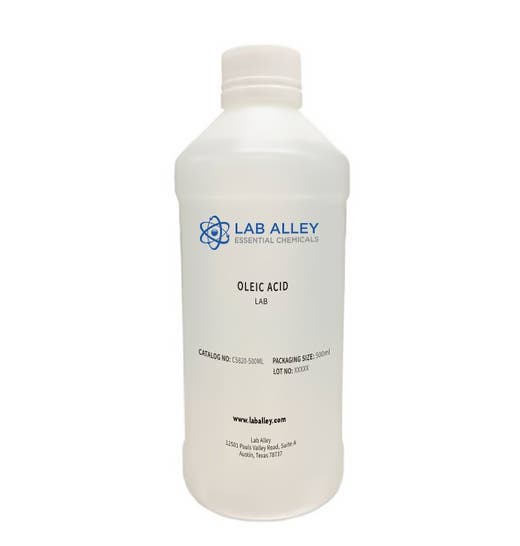
In laboratory settings, oleic acid refers to a purified form of oleic acid typically used for research, chemical synthesis, and other laboratory applications. Here are some key points about oleic acid in its lab-grade form.
-
- Chemical Synthesis: Oleic acid can be used as a starting material or reagent in organic synthesis reactions to produce other compounds. Its carboxylic acid functional group and double bond make it a versatile building block for the synthesis of pharmaceuticals, flavors, fragrances, and other fine chemicals.
- Emulsification and Surfactants: Oleic acid is a surfactant, meaning it can reduce the surface tension between two liquids or between a liquid and a solid. It is often used in laboratory formulations to create emulsions, stabilize colloidal suspensions, or enhance solubility.
- Cosmetic and Pharmaceutical Formulations: Oleic acid is commonly used in the formulation of cosmetics, topical creams, and pharmaceutical products. In laboratory settings, it may be incorporated into experimental formulations to study its effects on skin penetration, drug delivery, or product stability.
- Lubricants and Greases: Oleic acid can be used as a component in lubricants and greases, particularly in laboratory-scale formulations for research and development purposes. It can help reduce friction and wear between moving parts in mechanical systems.
-
Product Information
| CAS | 112-80-1 |
|---|---|
| Grade | Lab Grade |
| Molecular formula | C18H34O2 |
| Molecular weight | 282.46 |
| Autoship Available | No |