





How to Safely Dispose of Denatured Ethanol
Proper disposal of denatured ethanol is critical for environmental protection, workplace safety, and regulatory compliance. The toxic additives that make this material unsuitable for consumption also create significant disposal challenges beyond those of pure ethanol. Understanding these requirements protects both people and the environment while keeping your operations compliant with hazardous waste regulations.
Denatured ethanol contains compounds like methanol, isopropanol, and other toxic substances that classify it as both ignitable and toxic hazardous waste. This dual classification means stricter handling requirements and more complex disposal procedures than most other industrial solvents require.
This guide examines the critical aspects of denatured ethanol disposal, including regulatory requirements, safety protocols, and practical disposal strategies for different settings and quantities.


In this article, we’ll review:
1. Why Proper Disposal Matters
2. How to Dispose of Denatured Ethanol
3. Special Considerations for Denatured Ethanol
Why Proper Disposal Matters
Denatured ethanol disposal carries implications that extend well beyond routine waste management practices. Understanding these considerations helps you recognize why proper handling protocols exist for this commonly used industrial solvent.
Environmental Protection
Environmental considerations for denatured ethanol focus on preventing serious ecological damage:
-
Denatured ethanol poses severe risks to aquatic organisms due to both the ethanol component and toxic denaturants. Methanol, a common denaturant, is particularly toxic to aquatic life and can cause significant damage to water ecosystems. Proper disposal prevents contamination of water sources and protects soil quality.
-
The combination of flammable alcohol and toxic additives creates a waste stream that can harm wildlife, contaminate drinking water supplies, and persist in environmental systems longer than biodegradable materials. These hazards make proper disposal essential rather than optional.
Health & Safety
Human health considerations make denatured ethanol disposal a workplace safety priority:
-
Denatured ethanol presents multiple health hazards beyond those of pure ethanol. It's highly flammable with a low flash point and contains toxic denaturants that can cause serious health effects, including blindness, organ damage, and death if ingested. Methanol exposure specifically can cause respiratory irritation, central nervous system depression, and metabolic acidosis.
-
Proper disposal practices minimize exposure risks during handling and prevent accidental contact that could lead to severe health consequences. Workers handling this material face risks from both fire hazards and toxic vapor inhalation if procedures aren't followed correctly.
Legal Compliance
The regulatory framework surrounding denatured ethanol disposal is notably complex:
-
Denatured ethanol is classified as both ignitable (D001) and toxic hazardous waste under the Resource Conservation and Recovery Act (RCRA). When methanol is present as a denaturant, it adds the U154 listed waste classification. As a flammable liquid containing toxic substances, it's strictly forbidden from entering the public sewer system under any circumstances.
-
Violations can result in substantial environmental fines, cleanup costs, and potential criminal liability for willful violations. The multiple waste codes associated with denatured ethanol make compliance more challenging than for single-classification wastes.
How to Dispose of Denatured Ethanol
Effective denatured ethanol disposal starts with understanding your specific waste characteristics and matching them to appropriate disposal pathways while meeting all applicable regulatory requirements.
Check Regulations
Regulatory compliance research forms the foundation of any successful disposal plan:
Review local and state hazardous waste regulations for both ignitable and toxic wastes, as denatured ethanol typically carries multiple waste codes (D001 for ignitability, U154 for methanol content). Different jurisdictions may impose additional requirements beyond federal standards.
Check transportation requirements, as denatured ethanol solutions are regulated as UN1170 ETHANOL SOLUTION, Hazard Class 3, Packing Group II. This classification affects how you can transport waste to disposal facilities and what documentation you need.
Verify if your facility requires permits for hazardous waste storage and disposal. Many operations need generator permits before they can accumulate hazardous waste on-site. Both D001 and U154 wastes have reportable quantities of 100 pounds each for spill notification requirements, meaning large releases trigger mandatory reporting to environmental agencies.
Understanding these regulatory requirements before disposal prevents compliance problems and ensures you can handle denatured ethanol safely and legally according to waste codes and transportation standards.
Follow Neutralization Protocols If Applicable
Chemical treatment requirements for denatured ethanol differ fundamentally from non-denatured alternatives:
NOT APPLICABLE: Denatured ethanol cannot be neutralized for disposal due to the presence of toxic denaturants and must be collected for hazardous waste disposal as both an ignitable and toxic chemical mixture. Unlike acids or bases that can be neutralized, the toxic denaturants remain hazardous regardless of any chemical treatment.
Dilution Prohibition: Intentional dilution of denatured ethanol to reduce alcohol content below 24% does not eliminate the toxic waste classification from denaturants and is illegal for hazardous waste avoidance. Regulatory agencies specifically prohibit dilution as a means of avoiding proper hazardous waste disposal requirements.
No Exemptions: Unlike non-denatured ethanol, there are no concentration exemptions for denatured ethanol due to the presence of toxic denaturants such as methanol (U154 listed waste). The toxic components remain regulated regardless of how diluted the solution becomes.
Use Designated Waste Disposal Methods
The multiple hazards associated with denatured ethanol require specialized management approaches.
Multiple Waste Codes
Denatured ethanol typically requires disposal with multiple hazardous waste codes:
- D001 (Ignitable) - due to low flash point
- U154 (Methanol) - when methanol is used as a denaturant
Additional codes may apply based on other denaturants present
Industrial Quantities
Large volumes of denatured ethanol used in manufacturing, cleaning, or extraction may also be classified as F003 spent solvent waste in addition to the above codes. This spent solvent classification adds another layer of regulatory requirements for industrial users.
Laboratory Waste
Collect in appropriate containers designed for both flammable and toxic liquids, label clearly with all applicable waste codes (typically D001, U154), and dispose of through institutional hazardous waste programs. Never pour laboratory quantities down drains or dispose of them in regular trash.
Commercial Products
Denatured ethanol products, including hand sanitizers, cleaning solutions, and fuel additives, must be managed as hazardous waste when discarded. The commercial packaging doesn't change the hazardous waste classification of the contents.
Fire and Safety Hazards During Disposal
Denatured ethanol poses extreme fire hazards that affect disposal procedures:
Denatured ethanol has a flash point of approximately 12.8°C (55°F) and explosive limits of 3.3-19.0% in air, meaning it can ignite easily under normal conditions. Vapors may travel considerable distances to ignition sources and flashback, creating explosion risks in areas where the material is handled.
The material is highly sensitive to static discharge, requiring grounded equipment and anti-static precautions during transfer and handling operations. Containers may explode when heated or exposed to fire, making storage and handling locations critical to safety.
Never Mix Chemicals
Chemical compatibility issues can create extremely hazardous situations during disposal:
Never mix denatured ethanol with strong oxidizing agents, acids, bases, or other chemicals that could cause violent reactions. The combination of flammable alcohol and reactive denaturants makes mixing particularly dangerous.
Keep separate from incompatible materials during storage and disposal periods. Do not mix with other alcohols, solvents, or cleaning agents unless specifically approved by waste management professionals familiar with the chemical interactions involved.
Avoid contact with metals that may catalyze reactions with denaturants. Some denaturants react with certain metals to produce hydrogen gas or other hazardous byproducts.
Follow Enhanced PPE Guidelines
Worker protection during denatured ethanol disposal requires comprehensive safety equipment:
Always wear chemical-resistant gloves (nitrile or neoprene), safety goggles, and full protective clothing when handling denatured ethanol for disposal. Standard latex gloves don't provide adequate protection against prolonged exposure to denaturants.
Use respiratory protection in poorly ventilated areas due to toxic denaturant vapors that can cause respiratory irritation and systemic effects. Ensure adequate ventilation and use explosion-proof electrical equipment when handling to prevent ignition from electrical sparks.
Keep away from heat, sparks, open flames, and hot surfaces during all handling operations. Have appropriate fire extinguishing equipment (CO₂, dry chemical, alcohol-resistant foam, or water spray) readily available and ensure workers know how to use it.
Use non-sparking tools and take precautionary measures against static discharge during transfer operations. Emergency eyewash and shower facilities should be immediately accessible in areas where denatured ethanol is handled.
Special Considerations for Denatured Ethanol
Different applications and settings require specific disposal approaches based on the unique hazards of this material.
Multiple Waste Classifications
Denatured ethanol is always classified as both ignitable (D001) and toxic waste (U154 when containing methanol), regardless of concentration. This makes it more strictly regulated than non-denatured ethanol and eliminates the simplified disposal options available for pure ethanol.
Denaturant Identification
Identify all denaturants present to determine complete waste code requirements. Common denaturants include:
-
Methanol (U154 listed waste) - Creates its own regulatory requirements
-
Isopropanol - Additional ignitability concerns
-
Gasoline - Creating petroleum hydrocarbon waste
-
Bitrex or other bittering agents - May trigger additional compatibility concerns
No Small Quantity Exemptions
Even minimal quantities of denatured ethanol must be collected for hazardous waste disposal due to toxic denaturant content. The small quantity generator exemptions that apply to some hazardous wastes don't apply here because of the listed waste classification from methanol.
Spent Solvent Classification
Denatured ethanol used in industrial cleaning, extraction, or manufacturing processes carries F003 spent solvent classification in addition to characteristic and listed waste codes. This classification applies when the material has been used as a solvent, not just when it's discarded as an unused product.
Enhanced Storage Requirements
Due to toxic denaturant content, storage requirements are more stringent than for non-denatured ethanol. Secondary containment is mandatory to catch spills or leaks. Enhanced ventilation prevents the accumulation of flammable and toxic vapors in storage areas.
Regulatory Complexity
The presence of multiple denaturants may trigger additional waste codes beyond D001 and U154, requiring careful waste characterization. Work with waste management professionals to identify all applicable codes for your specific formulation.
Emergency Spills
Use non-combustible absorbent materials and collect all contaminated materials for hazardous waste disposal. Remove all ignition sources immediately and ensure adequate ventilation to prevent vapor accumulation. Contact emergency responders for large spills due to toxic vapor hazards that may require evacuation or specialized response equipment.
Container and Storage Requirements
Use only approved containers specifically designed for flammable and toxic liquid mixtures. Standard plastic containers may not provide adequate chemical resistance or meet regulatory requirements for hazardous waste storage.
Containers must be properly labeled with all applicable hazardous waste codes and denaturant information. Labels should include the accumulation start date, hazard warnings, and emergency contact information.
Empty Container Management
Empty containers require more stringent management due to toxic residues from denaturants. Standard air-drying may not be sufficient to render containers safe for disposal or reuse. Consult waste management professionals for proper empty container protocols that meet regulatory definitions of "empty" for listed waste containers.
Health Monitoring
Facilities regularly handling denatured ethanol should consider health monitoring programs for workers due to chronic exposure risks from toxic denaturants. Methanol exposure in particular can cause cumulative health effects that warrant medical surveillance.
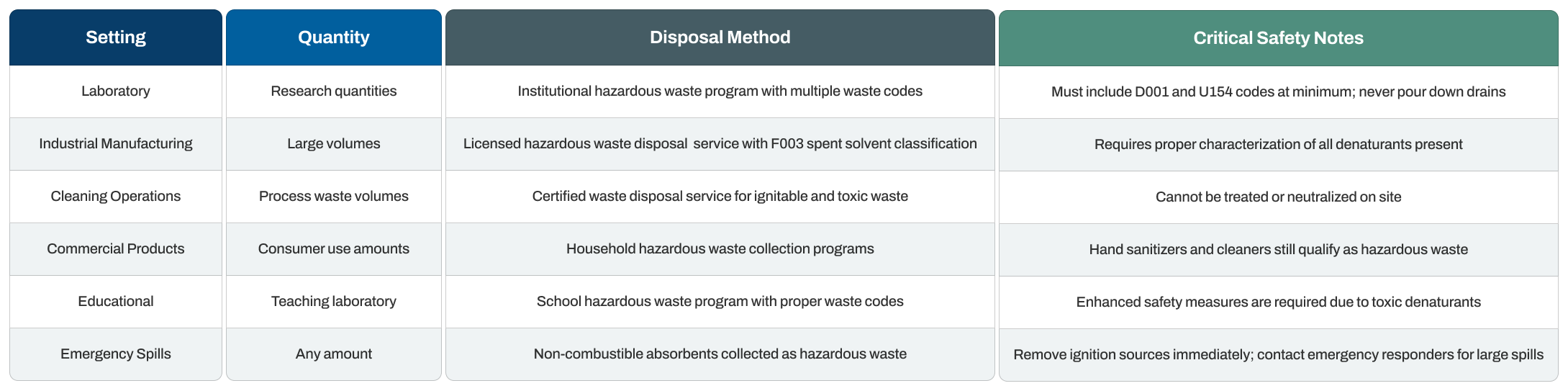
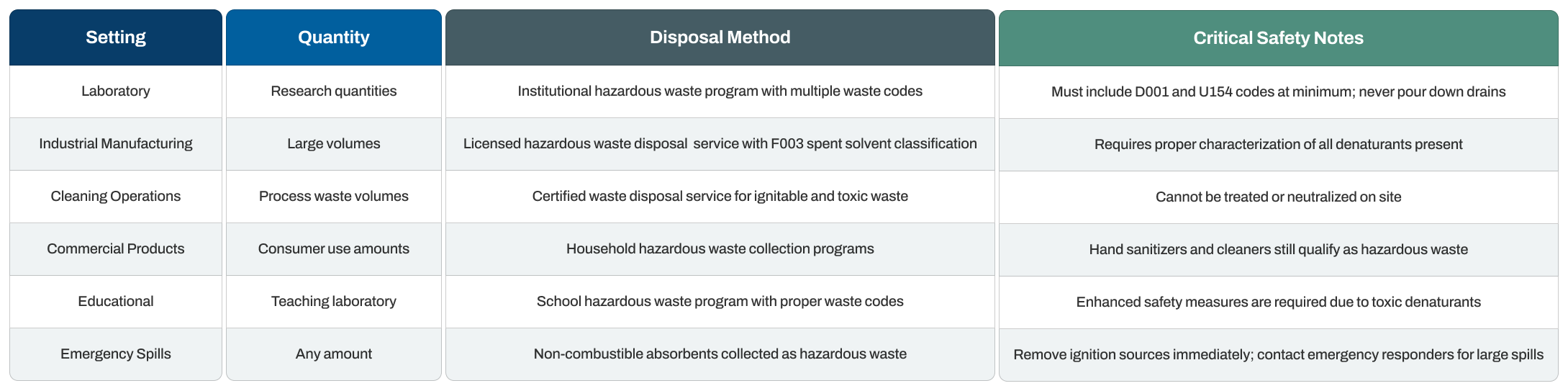
Quick Reference: Disposal Methods and Safety Requirements
Final Note
Denatured ethanol disposal requires strict adherence to hazardous waste regulations due to its classification as both ignitable and toxic waste. By understanding federal and local requirements, using proper waste codes for all disposal documentation, working with licensed hazardous waste disposal services, and maintaining comprehensive personal protective equipment throughout the process, you can ensure both safe and compliant disposal.
When you're uncertain about any aspect of denatured ethanol disposal procedures, always consult with qualified Environmental Health and Safety professionals or contact hazardous waste management companies with expertise in multi-code waste streams.
For safe, regulatory-compliant disposal of denatured ethanol and expert guidance on waste characterization, contact licensed hazardous waste management companies with expertise in multi-code waste streams. Always consult current Safety Data Sheets (SDS) for specific denaturant information and follow all applicable federal, state, and local regulations for hazardous waste management.
For more detailed guidance, explore our Resource Library
Our Customer Care team is also available for more information and documentation, including chemical Safety Data Sheets.
Need Denatured Ethanol You Can Trust?
If you are looking for high-quality denatured ethanol for your lab, product line, or research facility, be sure to visit our store to explore our trusted selection and request a quote.
As your trusted partner in chemical supply, Lab Alley is always striving to meet the growing demands of our customers. We want you to be able to access all of your chemical needs in one place, along with streamlined online ordering and fast shipping.
Due to popular demand from our valued clientele, Lab Alley's denatured ethanol is available in a range of purities and packaging options to suit various commercial, laboratory, and personal needs.