





How to Safely Dispose of Ethanol: Environmental and Safety Guidelines
Properly disposing of ethanol is crucial for environmental protection, worker safety, and regulatory compliance. This flammable solvent is used in laboratories, healthcare facilities, industrial operations, food processing, and cleaning applications, making proper disposal knowledge vital for professionals across various sectors.
Ethanol disposal creates major challenges because of its extreme flammability and classification as hazardous waste. Learning correct disposal methods protects workers from fire hazards and exposure risks while maintaining compliance with strict regulatory requirements.
This guide explores ethanol disposal basics, covering regulatory considerations, fire safety protocols, and disposal pathways suited for different concentrations and application settings.


In this article, we’ll review:
1. Why Proper Disposal Matters
2. How to Dispose of Ethanol
3. Special Considerations for Ethanol
Why Proper Disposal Matters
Ethanol disposal has serious consequences that go beyond standard waste management. Recognizing these impacts helps explain why environmental agencies and facilities have created specific guidelines for handling this flammable solvent.
Environmental Protection
Environmental damage from ethanol happens when disposal methods ignore how the compound behaves in natural systems:
-
Though ethanol degrades readily in nature, it causes documented harm to aquatic organisms, including fish, algae, and wildlife. Uncontrolled releases can damage aquatic ecosystems before breakdown occurs.
-
Big spills cause oxygen loss in water systems as microorganisms quickly consume the ethanol, potentially creating dead zones that kill fish and other aquatic creatures during breakdown.
-
Soils receiving ethanol may suffer temporary harm to helpful microorganisms and plants, though these problems typically resolve as the compound degrades naturally.
-
Correct disposal stops potential environmental damage and supports responsible chemical management that shields ecosystem health during breakdown.
Health & Safety
Human health concerns make ethanol disposal a workplace safety priority, affecting community protection:
-
Ethanol is extremely flammable as a liquid and vapor, creating severe fire and explosion dangers during handling and disposal. The low flash point of 12°C (53.6°F) means ignition at room temperature.
-
Breathing vapors may cause airway irritation, drowsiness, dizziness, and, with heavy concentrations, breathing suppression. Long exposure can damage organs, especially the liver and nervous system.
-
The compound causes serious eye irritation, and long-term skin contact results in drying, irritation, and skin inflammation. Ethanol penetrates skin substantially, potentially causing body-wide effects.
-
Workers handling ethanol for disposal face dangers from fire, vapor breathing, splashes, and spills. Setting up correct disposal procedures with suitable protective gear is critical for stopping exposure problems.
Legal Compliance
The regulatory system around ethanol disposal creates enforceable duties that vary by location and waste type:
-
Ethanol is classified as D001 ignitable hazardous waste under the Resource Conservation and Recovery Act (RCRA) when thrown away, requiring collection through hazardous waste disposal programs. Operations cannot legally eliminate it through regular trash or drain systems.
-
As a flammable liquid, ethanol cannot enter the public sewer system. City wastewater treatment plants cannot safely process flammable solvents due to fire and explosion dangers in collection systems.
-
Moving ethanol waste is regulated as UN1170 ETHANOL SOLUTION, Hazard Class 3, Packing Group II, requiring correct documentation, labeling, and handling during movement to disposal sites.
-
D001 wastes have a reportable quantity of 100 pounds for spill notification requirements. Releases above this level must be reported to the National Response Center.
-
Operations creating ethanol waste may need permits for hazardous waste storage and disposal, depending on monthly generation amounts. Compliance needs vary by location, but violations bring major penalties.
How to Dispose of Ethanol
Effective ethanol disposal begins with knowing your specific waste details and connecting them to the correct disposal methods while meeting all applicable regulatory requirements.
Check Applicable Regulations
Regulatory compliance research builds the base of any successful disposal plan. The disposal process must start with reviewing local, state, and federal hazardous waste rules for ignitable wastes.
Examine local and state hazardous waste rules specifically for ignitable wastes, as ethanol is everywhere classified as D001 ignitable hazardous waste. Storage, labeling, and disposal timing requirements may vary between locations based on facility size and waste creation rates.
Review transportation requirements carefully, as ethanol solutions are regulated as UN1170 ETHANOL SOLUTION, Hazard Class 3, Packing Group II. This classification determines how waste must be packaged, labeled, and documented during movement to disposal sites.
Check if your operation requires permits for hazardous waste storage and disposal. Many states require permits for operations creating more than specified monthly amounts of hazardous waste, with tough recordkeeping and reporting duties.
Learning these regulatory requirements before disposal stops compliance troubles and supports safe and legal ethanol handling according to concentration levels and federal environmental protection standards.
Keep in Mind: Neutralization Is NOT Applicable
Different from many chemical wastes that can be neutralized or treated before disposal, ethanol cannot be neutralized for disposal goals. The compound must be collected for hazardous waste disposal as an ignitable and flammable chemical regardless of concentration.
Dilution Prohibition: Purposeful dilution or neutralization of hazardous chemical waste to avoid hazardous waste collection is illegal under federal and state rules. This ban exists because dilution doesn't eliminate the dangerous features; it just hides them temporarily.
Limited Exception: Water solutions containing less than 24% alcohol by volume are exempt from ignitable classification, provided they are at least 50% water by weight. These weak solutions may qualify for different disposal routes in some locations, but this exemption applies only to solutions that naturally fall below this level, not to purposely diluted waste.
This restriction means you cannot treat ethanol waste on-site to dodge hazardous waste requirements. The compound must be managed as ignitable hazardous waste through approved disposal channels.
Use Designated Waste Disposal Methods
Correct disposal routes depend on concentration, quantity, and regulatory classification under RCRA hazardous waste rules.
Non-Hazardous Disposal: Small amounts of solutions with less than 24% alcohol and at least 50% water may be thrown away as non-hazardous waste in some locations, but check local rules first. This exemption applies only to naturally weak solutions, not to waste purposely diluted to dodge hazardous waste classification.
Industrial Quantities: Big volumes or strong solutions containing ethanol may be classified as F003 spent solvent waste when used in extraction, purification, or cleaning processes. This classification adds extra regulatory requirements beyond the D001 ignitable waste label.
Laboratory Waste: Gather in suitable flammable liquid waste containers, label clearly with waste codes (D001 at minimum, F003 if applicable), and eliminate through institutional hazardous waste programs. Many universities and research centers provide dedicated collection services for flammable solvent waste.
Place waste containers in approved flammable liquid storage cabinets in cool, dry, well-ventilated spaces away from ignition sources. Maintain correct grounding and bonding during waste transfers to stop static discharge ignition.
Understand Fire and Safety Hazards
Ethanol creates extreme fire dangers that require constant attention during waste handling and storage. The compound has a flash point of 12°C (53.6°F), meaning ignition at room temperature or below. Explosive limits range from 3.3-19.0% in air, creating a wide concentration range where ignition can happen.
Vapors are heavier than air and may move considerable distances to ignition sources, then flash back to the waste container. This behavior creates explosion risks in areas where ethanol vapors can gather, including storage rooms, basements, and poorly ventilated spaces.
The compound is sensitive to static discharge, requiring grounded equipment during all transfer work. Even small static sparks from non-grounded containers or pouring work can ignite vapors and start fires.
Containers may explode when heated, creating flying debris hazards and spreading burning liquid. Never store ethanol waste near heat sources or in areas exposed to direct sunlight.
Never Mix Chemicals
Chemical compatibility problems can turn routine disposal into disasters. Skip mixing ethanol with strong oxidizing agents, including permanganates, peroxides, nitrates, or chromium compounds. These combinations can cause violent reactions, spontaneous ignition, or explosive breakdown.
Separate from other chemicals during storage and disposal. Never combine ethanol waste with other solvent waste streams, acid or base waste, or reactive materials without checking compatibility through safety data sheets.
Mixed chemical wastes often require more expensive disposal as unidentified or incompatible waste mixtures, and they create extra hazards for workers handling the waste.
Follow PPE Guidelines
Worker protection during ethanol disposal requires correct equipment selection and use:
-
Always wear chemical-resistant gloves (nitrile recommended), safety goggles, and protective clothing when handling ethanol for disposal goals to stop skin contact and eye exposure.
-
Maintain good ventilation when transferring or consolidating ethanol waste to dodge breathing vapors that may cause airway irritation, dizziness, or narcotic effects from high concentrations.
-
Stay away from heat, sparks, open flames, and hot surfaces during all handling work. Take away all potential ignition sources from work areas before starting waste transfers.
-
Have suitable fire extinguishing equipment readily available, including CO2, dry chemical, or alcohol-resistant foam extinguishers rated for Class B flammable liquid fires.
-
Use non-sparking tools and take precautions against static discharge. Ground all containers and transfer equipment before starting work.
-
Use explosion-proof electrical equipment when handling ethanol waste in enclosed areas. Regular electrical switches, motors, and lighting can provide ignition sources for ethanol vapors.
Special Considerations for Ethanol
Ethanol creates unique disposal considerations based on its hazardous waste classification, extreme flammability, and diverse uses across multiple industries.
Institutional Guidelines
Many universities and research centers classify all ethanol waste as ignitable hazardous waste requiring collection through hazardous waste programs, regardless of concentration. These internal protocols reflect federal RCRA requirements and often go beyond regulatory minimums to support consistent waste management across diverse chemicals.
Institutional waste programs provide labeled collection containers specifically built for flammable liquid waste, regular pickup schedules that stop excessive buildup, and documentation systems that simplify compliance for researchers and educators. Always follow institutional procedures as they typically reflect consultation with environmental health and safety professionals.
Small Quantities Require Proper Disposal
A common mistake assumes small amounts of ethanol can be thrown down drains or in regular trash. However, EPA rules do not base hazardous waste decisions on volume limits. Even small amounts of ethanol must be collected for hazardous waste disposal when the material shows hazardous features.
The ignitable nature of ethanol makes it hazardous regardless of quantity. A single liter of ethanol creates the same fire danger per unit volume as a drum, and rules recognize this by requiring the correct disposal of all amounts.
Spent Solvent Classification
Ethanol used in manufacturing processes may be classified as F003 spent solvent waste, besides D001 ignitable waste. The F003 listing applies when ethanol is used as a solvent in processes including extraction, purification, or cleaning work.
This double classification affects disposal requirements and costs, as F003 wastes face extra regulatory review. Operations creating F003 wastes must track creation rates carefully, as these amounts affect hazardous waste generator status.
Healthcare and Hand Sanitizer Disposal
Alcohol-based hand sanitizers are ignitable hazardous wastes when thrown away and must be managed according to RCRA rules. Healthcare facilities, schools, and businesses that throw away expired or unwanted hand sanitizer cannot simply toss these products in regular trash.
The jump in hand sanitizer use during the COVID-19 pandemic created disposal challenges for many operations unfamiliar with hazardous waste management. Expired hand sanitizer must be collected as ignitable hazardous waste and eliminated through licensed waste handlers.
Denatured Ethanol Considerations
Denatured ethanol often includes methanol, which is listed as U154 toxic waste under RCRA. This makes denatured ethanol both ignitable (D001) and toxic waste, requiring disposal as mixed hazardous waste. The specific denaturant formula affects disposal classification and costs.
Operations using denatured ethanol must verify the denaturant composition through safety data sheets to correctly classify waste for disposal. Mixed waste categories often cost more to eliminate than single-category wastes.
Emergency Spills
Ethanol spills create immediate fire dangers requiring quick action focused on removing ignition sources. Use non-combustible absorbent materials, including vermiculite, diatomaceous earth, or commercial spill pads built for flammable liquids. Never use sawdust or other combustible absorbents.
Take away all sources of ignition immediately, including electrical equipment, smoking materials, and potential static sources. Use spark-proof tools and non-sparking equipment for cleanup work. Create ventilation to stop vapor buildup while removing ignition sources from ventilation equipment.
Gather absorbed material in suitable flammable waste containers for disposal as hazardous waste. Do not try to wash spills down drains, as this creates fire dangers in sewer systems and breaks rules.
Container and Storage Requirements
Store ethanol waste in approved flammable liquid containers made from compatible materials. Use only containers specifically built and rated for flammable liquid storage, with correct closures that seal effectively.
Keep containers tightly closed except when adding waste. Open containers allow vapor release that creates fire dangers and breaks safety rules.
Store in cool, dry, well-ventilated areas away from all ignition sources. Use approved flammable liquid storage cabinets that provide fire protection and correct ventilation. These cabinets must be correctly grounded and bonded.
Label all waste containers clearly with contents, hazard warnings, and accumulation start dates. Rules typically limit accumulation periods to 90 days for small quantity generators and shorter periods for larger generators.
Empty Containers
Empty ethanol containers can be air-dried in well-ventilated areas without triple rinsing. Volatile organic solvents like ethanol evaporate completely, and federal rules recognize this by not requiring triple rinsing for volatile solvents not on the EPA Acutely Hazardous Waste "P" List.
Air-dry containers in designated areas away from ignition sources with good ventilation to scatter vapors safely. Once dry, containers may be eliminated through normal recycling or trash channels in most locations.
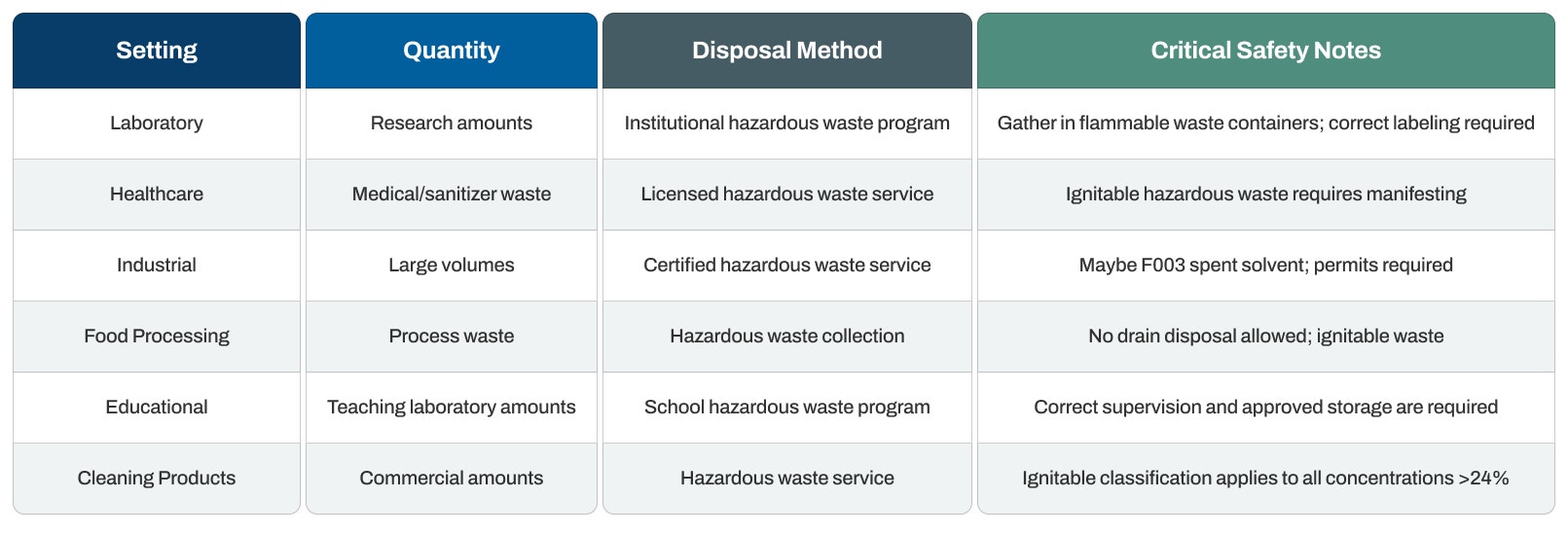
Quick Reference: Disposal Methods and Safety Requirements
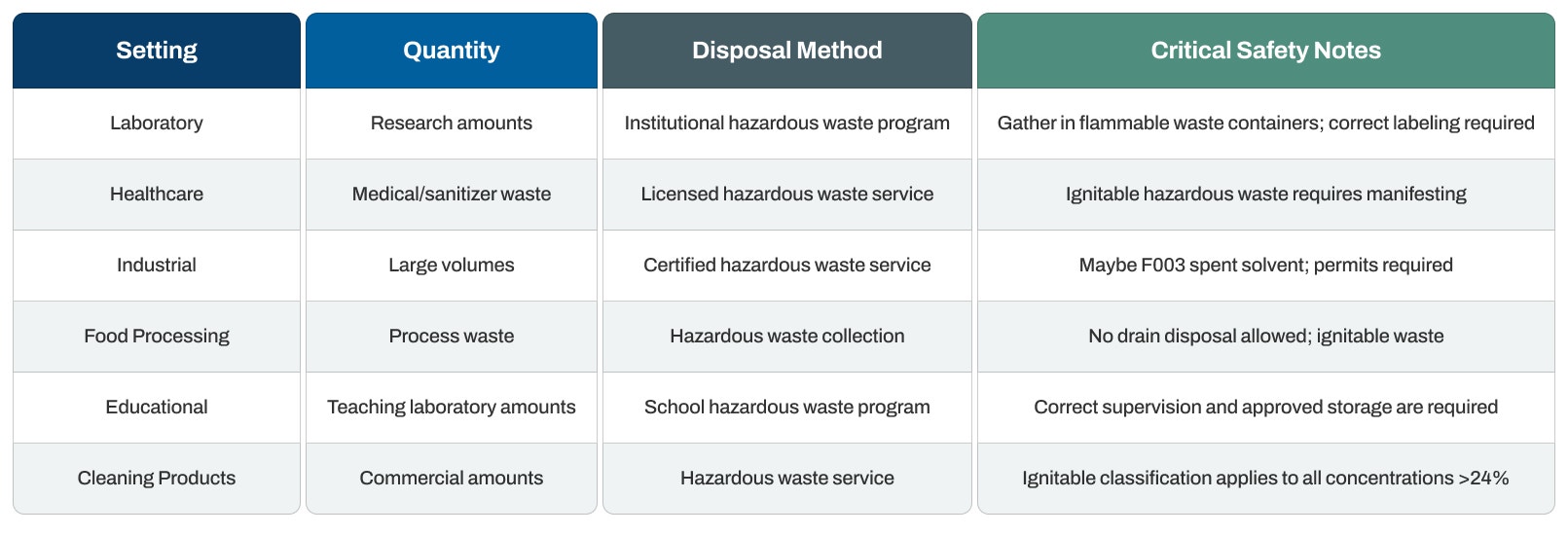
Final Note
Ethanol's classification as ignitable hazardous waste requires strict disposal protocols regardless of application or concentration. Understanding federal RCRA requirements, using correct fire safety procedures, and maintaining suitable protective equipment promote compliant, safe disposal operations.
For safe, regulatory-compliant disposal of ethanol and expert guidance, contact licensed hazardous waste management companies. Always consult current Safety Data Sheets (SDS) for specific handling and disposal information, and follow all applicable federal, state, and local regulations for hazardous waste management.
When uncertain about disposal procedures, consult environmental health professionals or hazardous waste disposal specialists for guidance specific to your concentration, volume, and jurisdiction.
For more detailed guidance, explore our Resource Library
Our Customer Care team is also available for more information and documentation, including chemical Safety Data Sheets.
Need Ethanol You Can Trust?
If you are looking for high-quality ethanol for your lab, product line, or research facility, be sure to visit our store to explore our trusted selection and request a quote.
As your trusted partner in chemical supply, Lab Alley is always striving to meet the growing demands of our customers. We want you to be able to access all of your chemical needs in one place, along with streamlined online ordering and fast shipping.
Due to popular demand from our valued clientele, Lab Alley's ethanol is available in a range of purities and packaging options to suit various commercial, laboratory, and personal needs.