





How to Safely Dispose of Lactic Acid: Environmental and Safety Guidelines
Disposing of lactic acid properly matters for environmental protection, worker safety, and meeting waste management requirements. This organic acid appears in food manufacturing, laboratory work, cosmetic production, and various industrial processes, making appropriate disposal knowledge essential for professionals across multiple sectors.
Lactic acid's disposal presents fewer challenges than many chemicals due to its biodegradable nature and GRAS status, yet concentrated formulations still demand careful handling. Understanding appropriate disposal methods protects workers from chemical burns while preventing temporary environmental pH disruptions.
This guide examines lactic acid disposal fundamentals, covering regulatory considerations, neutralization techniques, and disposal pathways appropriate for different concentrations and application settings.


In this article, we’ll review:
1. Why Proper Disposal Matters
2. How to Dispose of Lactic Acid
Why Proper Disposal Matters
Lactic acid disposal carries significant implications that extend beyond routine waste management practices. Understanding these consequences helps you recognize why environmental agencies and facilities have established specific guidelines for handling this organic acid effectively.
Environmental Protection
Environmental impacts from lactic acid occur when disposal practices fail to account for the compound's behavior in natural systems:
-
While lactic acid is biodegradable and generally environmentally friendly, concentrated solutions can temporarily affect local pH levels in soil and water systems, stressing sensitive organisms before natural degradation processes restore normal conditions.
-
Uncontrolled discharge of concentrated lactic acid can create temporary pH depression in receiving waters, affecting aquatic organisms sensitive to acidity changes, even though the acid biodegrades readily through natural processes.
-
Soil systems receiving concentrated lactic acid experience temporary pH alterations that can affect nutrient availability and microbial populations, though these effects generally reverse as the acid biodegrades naturally.
-
Proper disposal prevents potential short-term environmental impacts and ensures responsible chemical management that protects ecosystem health during the biodegradation period.
Health & Safety
Human health considerations make lactic acid disposal a workplace safety priority that extends to community protection:
-
Concentrated lactic acid solutions can cause skin and eye burns during handling and disposal operations, particularly when working with solutions exceeding 10% concentration.
-
Proper disposal practices minimize exposure risks during handling and prevent accidental contact that could lead to chemical burns or respiratory irritation from vapor exposure in poorly ventilated areas.
-
Workers handling concentrated lactic acid for disposal face risks from splashes, spills, or vapor exposure. Implementing appropriate disposal procedures with proper protective equipment is essential for preventing exposure incidents.
Legal Compliance
The regulatory framework surrounding lactic acid disposal creates enforceable obligations that vary by jurisdiction and waste characteristics:
-
Even though lactic acid holds GRAS (Generally Recognized as Safe) status for food use, industrial and laboratory quantities may be subject to local waste disposal regulations requiring compliance to avoid violations and ensure responsible waste management.
-
Municipal wastewater treatment facilities often impose pH discharge limits and may restrict acid concentrations in waste streams, requiring verification before disposal to prevent treatment plant disruption.
-
Compliance requirements vary by jurisdiction and waste characteristics, with some areas classifying concentrated organic acids as hazardous waste requiring special handling and documentation.
How to Dispose of Lactic Acid
Effective disposal of lactic acid requires understanding your specific waste characteristics and strictly following protocols designed to protect both human health and environmental systems while meeting all regulatory requirements.
Check Applicable Regulations
Regulatory compliance research forms the foundation of any successful disposal plan. The disposal process must begin with reviewing local, state, and federal waste disposal regulations for organic acids, particularly for concentrated solutions or large quantities.
Review local and state waste disposal regulations for organic acids, particularly for concentrated solutions or large quantities. Requirements vary significantly between jurisdictions based on local treatment capacity and environmental sensitivity.
Check pH discharge limits for your area, as concentrated lactic acid solutions are highly acidic. Most municipal systems require a pH between 5.5 and 9.5, with some jurisdictions imposing stricter ranges depending on treatment plant capabilities.
Verify if your facility requires special permits for acid waste disposal. Industrial dischargers often need permits specifying allowable discharge quantities, concentrations, and monitoring obligations that must be satisfied before discharge to municipal systems.
Understanding these regulatory requirements before disposal prevents compliance problems and ensures you can handle lactic acid safely and legally according to concentration levels and local environmental protection standards.
Prepare Waste for Disposal Through Neutralization
Chemical treatment requirements for lactic acid depend on concentration and intended disposal pathway. Unlike some chemicals that require specialized treatment, lactic acid responds well to standard neutralization procedures when performed correctly.
Dilute solutions (<10%): May often be neutralized with sodium bicarbonate (baking soda) or lime to bring pH to the 6-8 range before disposal. These weak acid solutions require relatively small amounts of neutralizing agent and generate minimal heat during the neutralization reaction.
Concentrated solutions: Should be slowly diluted with large amounts of water, then neutralized with appropriate bases under controlled conditions. Never add concentrated acid directly to neutralizing agents, as vigorous reactions generate heat and splashing hazards that can injure workers.
Monitor pH: Use pH strips or a pH meter to ensure proper neutralization before disposal. Document pH measurements to verify compliance with discharge requirements and maintain records for regulatory purposes.
This characteristic means that you should verify local pH requirements and discharge standards before disposing of lactic acid solutions, particularly when dealing with large quantities or when local regulations specify pH ranges for organic acid-containing waste.
Use Designated Waste Disposal Methods
Appropriate disposal pathways depend on concentration, quantity, and local regulations.
Non-Hazardous Waste Classification
Lower concentrations of lactic acid often qualify for simplified disposal approaches. Small quantities of diluted, neutralized lactic acid solutions may be acceptable for disposal in drains in many areas, as lactic acid is biodegradable and food-safe. Always verify local wastewater treatment plant guidelines first, as acceptance criteria vary between facilities.
Storage before disposal should use clearly labeled containers that prevent contamination and allow proper identification of contents, concentration levels, and any special handling requirements.
Food-Grade Disposal
Food processing applications benefit from lactic acid's GRAS status. Food-grade lactic acid waste from food processing may often be disposed of through normal food waste channels after appropriate dilution and neutralization. Food industry operations should coordinate with their wastewater treatment providers to establish acceptable discharge practices.
Industrial Quantities
Higher concentrations or larger volumes require specialized management approaches. Large volumes or concentrated solutions should be collected by certified waste disposal services or processed through industrial wastewater treatment systems with proper pH adjustment. These disposal services provide documentation proving proper waste handling and final disposition.
Keep these containers in a secure, cool, and well-ventilated area away from incompatible materials that could react with organic acids or create additional disposal complications.
Laboratory Waste
Educational and research settings demand consistent protocols. Collect in appropriate acid-resistant containers, label clearly with contents and concentration, and dispose of through institutional chemical waste programs. Many universities and research institutions classify lactic acid as organic acid waste requiring collection through hazardous waste programs regardless of its food-safe status.
Understand Lactic Acid's Biodegradable Nature
Unlike many chemicals, lactic acid is naturally biodegradable and breaks down readily in wastewater treatment systems and soil environments. Microorganisms metabolize lactic acid as a carbon and energy source, facilitating rapid degradation under both aerobic and anaerobic conditions.
This biodegradability makes disposal generally easier and more environmentally acceptable than synthetic chemicals requiring specialized treatment or incineration. Municipal wastewater treatment plants effectively process diluted, neutralized lactic acid through normal biological treatment processes without requiring special handling.
Never Mix Chemicals
Chemical compatibility issues can transform routine disposal into hazardous situations. Avoid mixing lactic acid with strong bases, oxidizers, or other chemicals that could cause violent reactions, heat generation, or toxic gas production. Exothermic neutralization reactions with strong bases like sodium hydroxide require controlled addition with cooling to prevent dangerous heat buildup.
Keep separate from incompatible materials during storage and disposal. Never combine lactic acid waste with other acid or base waste streams without verifying compatibility and understanding reaction hazards that could create unsafe conditions.
Follow PPE Guidelines
Worker protection during lactic acid disposal requires appropriate equipment selection and use:
-
Always wear chemical-resistant gloves (nitrile or neoprene), safety goggles, and protective clothing when handling concentrated lactic acid for disposal purposes to prevent skin and eye contact that could cause chemical burns.
-
Ensure adequate ventilation when neutralizing or diluting to avoid inhaling vapors that may cause respiratory irritation, especially when working with heated solutions or large quantities where vapor concentrations can accumulate.
-
Have eyewash facilities available when working with concentrated solutions to provide immediate flushing capability for treating accidental eye exposure that requires prompt action to prevent corneal damage.
Special Considerations for Lactic Acid
Lactic acid presents unique disposal considerations based on its GRAS status, biodegradability, and diverse applications across multiple industries.
Institutional Guidelines
Many universities and research institutions classify lactic acid as organic acid waste requiring collection through hazardous waste programs, regardless of its food-safe status. These internal protocols often exceed regulatory minimums to ensure consistent waste management across diverse chemicals.
Institutional waste programs provide labeled collection containers, pickup schedules, and documentation systems that simplify compliance for researchers and educators. Always follow institutional procedures, even when more permissive disposal methods might be technically allowed under local regulations.
Homebrew/Small Scale
For very small quantities such as homebrewing amounts, neutralization followed by drain disposal may be acceptable in some areas after pH verification confirms neutralization is complete. However, always verify local guidelines first, as acceptance criteria vary significantly between jurisdictions and treatment facility capabilities.
Homebrewers and small-scale users should contact their municipal wastewater treatment facility to confirm acceptable disposal practices for their specific volumes and concentrations before proceeding with drain disposal.
Food Industry Disposal
Food-grade lactic acid waste can often be handled through normal food processing waste streams after appropriate dilution and neutralization that brings pH within acceptable discharge ranges. Food manufacturing facilities typically operate under industrial discharge permits that specify allowable pH ranges and organic loading rates.
Concentrated solutions may still require neutralization before discharge even in food industry settings where the compound serves food-safe purposes. Coordinate with wastewater treatment providers to establish discharge practices that comply with permit conditions and treatment plant capabilities.
Emergency Spills
Small spills can be neutralized with sodium bicarbonate, using approximately 1 gram of baking soda per 1 mL of 88% lactic acid as a rough guideline for estimating neutralizer quantities. However, never mix concentrated acid directly with a neutralizing agent, as the rapid reaction generates excessive heat and vigorous bubbling.
Proper spill response procedure: Contain the spill using absorbent materials to prevent spreading. In a separate container, dilute the acid with water following proper addition order. Separately prepare a neutralizing solution with sodium bicarbonate dissolved in water. Slowly combine the diluted acid with the neutralizing solution while monitoring temperature and pH to ensure a controlled reaction. Once neutralized and cooled to room temperature, dispose of according to local requirements.
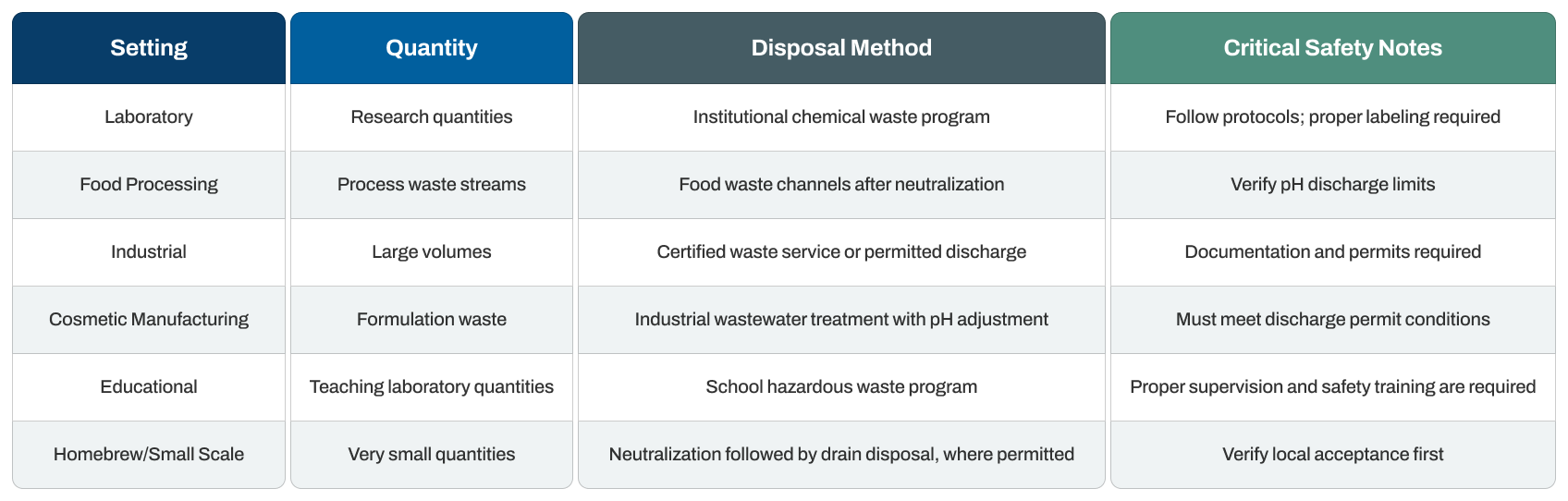
Quick Reference: Disposal Methods and Safety Requirements
Final Note
Lactic acid's biodegradability and low toxicity simplify disposal relative to many chemicals, though concentrated solutions require neutralization before discharge. Understanding local requirements, applying proper treatment procedures, and maintaining appropriate protective equipment ensures compliant, safe disposal operations.
When uncertain about disposal procedures, consult environmental health professionals or local wastewater authorities for guidance specific to your concentration, volume, and jurisdiction.
For more detailed guidance, explore our Resource Library.
Our Customer Care team is also available for more information and documentation, including chemical Safety Data Sheets.
Need Lactic Acid You Can Trust?
If you are looking for high-quality lactic acid for your lab, product line, or research facility, be sure to visit our store to explore our trusted selection and request a quote.
As your trusted partner in chemical supply, Lab Alley is always striving to meet the growing demands of our customers. We want you to be able to access all of your chemical needs in one place, along with streamlined online ordering and fast shipping.
Due to popular demand from our valued clientele, Lab Alley's lactic acid is available in a range of purities and packaging options to suit various commercial, laboratory, and personal needs.