





How to Store Non-Denatured Ethanol
Non-denatured ethanol is a highly flammable, volatile liquid that demands careful storage practices. As pure ethyl alcohol without toxic additives, this solvent requires specific attention to maintain quality, prevent contamination, and ensure workplace safety. Storage challenges include regulatory compliance, fire safety requirements, and keeping the ethanol pure.
Getting storage right protects your investment in this premium solvent. Poor storage leads to concentration loss, contamination, fire hazards, and regulatory violations. Whether you're storing pharmaceutical-grade ethanol for research, food-grade material for production, or laboratory reagents for analysis, proper storage practices keep the product safe and usable.
This guide covers the essential elements of non-denatured ethanol storage, from container selection to regulatory requirements.


In this article, we’ll examine
- Recommended Storage Conditions
-
Container & Packaging Requirements
-
Segregation & Compatibility
-
Safe Handling in Storage Areas
-
Regulatory Compliance & Labeling
-
Special Considerations by Non-Denatured Ethanol Type
Recommended Storage Conditions
Creating the right storage environment preserves ethanol quality while minimizing hazards.
Temperature Control
Store non-denatured ethanol between 15°C and 25°C (59°F-77°F) for optimal stability and safety. Temperatures above 30°C increase vapor buildup and ignition risk dramatically. The low flash point of 12.8°C means this material can ignite at normal room temperature, making temperature control critical.
Avoid temperature swings that cause container expansion and contraction. These changes can compromise seals, leading to evaporation and moisture absorption. Choose storage locations with stable temperatures away from heating systems and direct sunlight.
Humidity Control
Non-denatured ethanol is highly hygroscopic, meaning it pulls moisture from the air. This water absorption reduces concentration and compromises purity. Store ethanol in dry areas with controlled humidity.
Use containers with tight seals to prevent moisture absorption. For absolute ethanol grades, consider desiccant storage systems that actively maintain anhydrous conditions. Monitor humidity levels regularly, especially for pharmaceutical and laboratory-grade applications where purity matters most.
Light Exposure
Avoid direct sunlight and UV exposure. Prolonged UV can trigger photochemical reactions that degrade pure ethanol. Store in opaque containers or dark storage areas to prevent photodegradation.
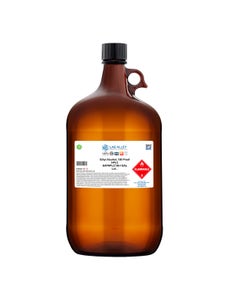
Amber glass containers provide excellent UV protection while maintaining chemical compatibility. Dark storage spaces also help maintain consistent temperatures by blocking solar heat gain.
Ventilation
Exceptional ventilation prevents vapor accumulation. Ethanol vapors are heavier than air and travel along floors to reach distant ignition sources. Implement continuous ventilation systems for bulk storage areas.
Ensure adequate air changes per hour based on the quantity stored. Ventilation systems must use explosion-proof equipment in areas handling large quantities. Poor ventilation creates invisible fire hazards as vapors collect in low spots.
Storage Duration
Properly stored non-denatured ethanol maintains indefinite stability. Pure ethanol doesn't chemically degrade under correct storage conditions. The product remains usable as long as you protect it from moisture, heat, and light.
However, concentration may decrease over time if seals are compromised. Regular purity testing is recommended for long-term storage, especially for high-grade applications. Check both concentration and water content periodically.
Container & Packaging Requirements
The right containers protect ethanol quality and prevent dangerous situations.
Compatible Materials
Use non-reactive materials that won't contaminate the ethanol or degrade over time. HDPE plastic works well for most applications and resists chemical interaction. Borosilicate glass provides excellent chemical resistance and prevents any taste or odor contamination, making it ideal for food and pharmaceutical grades.
Stainless steel 316L grade offers superior corrosion resistance for industrial applications. PTFE (Teflon) provides the highest chemical resistance for specialized uses. PET, LDPE, PP, and PPS are also suitable options depending on your specific needs.
Materials to Avoid
Avoid prolonged contact with untreated aluminum, which can oxidize and create contamination. Certain brass alloys may risk metal leaching, especially in high-purity applications.
Cork closures allow evaporation and may impart flavors. Use synthetic closures for long-term storage instead. PVC and some rubber materials degrade when exposed to ethanol over time, compromising container integrity.
Safety Container Requirements
Non-denatured ethanol has a flash point of 12.8°C (55°F), classifying it as a Class IB flammable liquid under OSHA regulations. Use approved flammable liquid storage cabinets that meet OSHA 29 CFR 1910.106 and NFPA 30 requirements.
For laboratory quantities, use Type I or Type II safety cans with spring-closing lids, flame arresters, and pressure relief capabilities. These features prevent vapor escape and protect against fire spread.
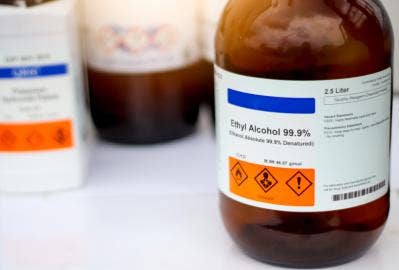
Containers must be securely sealed to prevent leakage, evaporation, and moisture ingress. Label clearly with contents, concentration, hazard information, and storage date. Clear labeling prevents confusion and helps with inventory tracking.
Segregation & Compatibility
Proper separation prevents dangerous reactions and maintains product quality.
Fire Safety Segregation
Store non-denatured ethanol away from all ignition sources due to its extremely low flash point. Maintain minimum distances from electrical equipment, heating systems, and potential spark sources. Follow OSHA 29 CFR 1910.106 spacing requirements for flammable liquid storage.
Keep ethanol away from areas with static electricity generation potential. Even small static sparks can ignite vapor-air mixtures.
Chemical Compatibility
Keep separate from strong oxidizing agents, which can cause violent reactions with ethanol. Never store near concentrated sulfuric acid, potassium, or other reactive chemicals.
Avoid storage with mineral acids, isocyanates, or chloroform, which react violently with ethanol. Maintain proper segregation from other flammable solvents based on compatibility groups.
Grade Segregation
Store different concentrations separately to prevent cross-contamination. Pharmaceutical-grade ethanol requires segregation from technical grades to maintain purity standards.
Food-grade ethanol must be stored in dedicated food-safe facilities separate from industrial grades. Maintain clear identification and segregation between different proof levels. Mixing grades compromises the higher-purity material and may violate regulatory requirements.
Quantity Limitations
OSHA standards limit storage to no more than 60 gallons of Class I flammable liquids per safety cabinet. A maximum of three approved storage cabinets per facility area applies without additional fire protection measures.
Large-scale storage requires specialized bulk storage facilities with enhanced fire protection. These facilities need specialized construction, detection systems, and suppression equipment.
Safe Handling in Storage Areas
Proper procedures during storage activities protect workers and prevent incidents.
Personal Protective Equipment (PPE)
Wear chemical-resistant gloves made from Neoprene, Butyl, or Viton when handling containers. These materials resist ethanol penetration better than standard latex or nitrile gloves.
Use safety goggles to prevent eye contact and protect against splashes. Ensure adequate ventilation or use respiratory protection in confined spaces. Wear anti-static clothing to prevent static discharge around flammable vapors.
Have emergency eyewash stations and safety showers readily accessible. These should be within 10 seconds of travel time from storage areas.
Fire Safety Equipment
Install Class B fire extinguishers suitable for flammable liquid fires. Use CO₂, dry chemical, or alcohol-resistant foam types. Standard foam extinguishers don't work on ethanol fires because the alcohol dissolves the foam.
Ethanol burns with a nearly invisible blue flame, making detection difficult in daylight. Implement automatic fire detection and suppression systems for bulk storage areas. Establish emergency evacuation procedures and ensure staff training on fire emergency response.
Store contaminated rags or wipes in approved metal containers with self-closing lids. These materials can spontaneously combust if stored improperly.
Electrical Safety
Use explosion-proof electrical equipment in storage areas. Standard electrical equipment can create sparks that ignite vapors. Ground all equipment and containers to prevent static discharge.
Install intrinsically safe lighting and ventilation systems. These systems are designed to operate without creating ignition sources. Regular inspection and maintenance of electrical systems prevent unexpected ignition sources.
Regulatory Compliance & Labeling
Staying compliant avoids penalties and ensures safe operations.
TTB Regulations
Purchasing reagent alcohol in containers larger than 4 liters requires TTB (Alcohol and Tobacco Tax and Trade Bureau) approval for most commercial applications. Storage facilities must be secured against unauthorized access and meet TTB construction requirements.
Maintain accurate records of inventory, purchases, and usage for TTB reporting. Government agencies and qualifying institutions may obtain permits for tax-free ethanol. Without proper documentation, you may face significant tax liability.
OSHA Compliance
Follow OSHA 1910.106 requirements for flammable liquid storage, including proper labeling and ventilation. Implement required fire protection systems and emergency procedures.
Maintain Safety Data Sheets readily accessible to all personnel. Document safety training and regular safety inspections. OSHA inspections focus heavily on flammable liquid storage practices.
Building Code Compliance
Storage facilities must comply with local building codes for flammable liquid storage. Install appropriate electrical classifications and fire-rated construction. Ensure proper emergency exits and fire department access.
Implement required fire detection and suppression systems. Building inspectors verify these systems during routine inspections.
Documentation Requirements
Maintain detailed records of ethanol quantities, concentrations, and storage locations. Document regular safety inspections and maintenance activities.
Keep permits, certificates, and regulatory correspondence readily available. Track inventory changes for tax and regulatory reporting. Good documentation demonstrates due diligence and simplifies audits.
Special Considerations by Ethanol Grade
Different grades require tailored storage approaches.
Absolute/Anhydrous Ethanol (≥99.5%)
This grade is extremely hygroscopic and will rapidly absorb moisture from air if exposed. It requires the most stringent moisture control and airtight sealing.
Consider molecular sieve storage systems to maintain anhydrous conditions. Monitor water content regularly as absorption can occur even through small seal imperfections. Store in specialized anhydrous storage containers with desiccant systems.
95% Ethanol (190 Proof)
This concentration forms an azeotrope with water, representing the practical limit of simple distillation. It's more stable than absolute ethanol but still requires moisture protection.
This grade is suitable for most pharmaceutical and laboratory applications. Moisture control is less critical than with absolute ethanol but maintain dry storage conditions.
Pharmaceutical Grade Ethanol
Must meet USP (United States Pharmacopeia) purity standards. Store in pharmaceutical-grade facilities with appropriate documentation and traceability.
Maintain a cold chain if specified and avoid contamination from non-pharmaceutical sources. Regular purity testing is required to maintain pharmaceutical compliance. Segregate from all non-pharmaceutical-grade materials.
Food-Grade Ethanol
Must be stored in FDA-approved food-safe facilities. Maintain complete traceability documentation from source to use. Segregate from all non-food-grade chemicals and materials.
Follow HACCP principles for storage and handling. Regular quality testing ensures food safety standards are met. Any contamination can render entire batches unusable.
Laboratory/Reagent Grade Ethanol
Store according to laboratory chemical storage protocols. Maintain chemical purity for analytical applications. Keep separate from other laboratory chemicals that might cause contamination.
Follow institutional chemical hygiene plans. Document storage conditions for research reproducibility. Poor storage can affect experimental results.
Environmental and Safety Considerations
Broader safety and environmental measures complete a comprehensive storage program.
Fire Hazard Management
Ethanol vapors can travel considerable distances and ignite at remote ignition sources. Install comprehensive fire detection and suppression systems appropriate for Class B fires.
Develop and practice emergency response procedures for ethanol fires and spills. Consider foam suppression systems for large storage areas, as water may spread burning ethanol rather than extinguishing it.
Environmental Protection
Implement secondary containment systems for bulk storage to prevent environmental contamination. Secondary containment should hold at least 110% of the largest container volume.
Install vapor recovery systems where required by environmental regulations. Consider air emissions permits for facilities storing large quantities. Develop spill response procedures to prevent environmental contamination.
Static Electricity Control
Bond and ground all containers, piping, and equipment during transfer operations. Use conductive flooring and grounding straps for personnel.
Maintain humidity levels sufficient to reduce static generation where possible. Regular testing of grounding systems verifies electrical continuity. Failed grounding systems create invisible ignition hazards.
Vapor Control
Monitor vapor concentrations to ensure levels remain well below lower explosive limits. Implement continuous vapor detection systems in storage areas.
Design ventilation systems to handle peak vapor generation during filling operations. Consider vapor recovery systems for environmental compliance and safety. Recovered vapors can be condensed and returned to storage, reducing waste and emissions.
Conclusion
Storing non-denatured ethanol safely requires attention to temperature, humidity, ventilation, and fire safety. Use appropriate containers made from HDPE, borosilicate glass, stainless steel 316L, or PTFE. Store at stable temperatures between 15-25°C with excellent ventilation and strict moisture control.
Follow OSHA and NFPA requirements for flammable liquid storage cabinets. Maintain quantity limitations per cabinet and implement comprehensive fire safety measures, including Class B extinguishers and automatic detection systems.
Ensure regulatory compliance for TTB, OSHA, and local building codes. Maintain detailed documentation while following grade-specific requirements for pharmaceutical, food-grade, and laboratory applications.
Pure ethanol has indefinite chemical stability when properly stored and sealed. The higher value and purity requirements of non-denatured ethanol justify investment in proper storage systems and maintenance procedures. Good storage practices protect your investment, keep workers safe, and maintain product quality for its intended use.
For more detailed guidance, explore our Resource Library.
Our Customer Care team is also available for more information and documentation, including chemical Safety Data Sheets.
Need Non-Denatured Ethanol You Can Trust?
If you are looking for high-quality non-denatured ethanol for your lab, product line, or research facility, be sure to visit our store to explore our trusted selection and request a quote.
As your trusted partner in chemical supply, Lab Alley is always striving to meet the growing demands of our customers. We want you to be able to access all of your chemical needs in one place, along with streamlined online ordering and fast shipping.
Due to popular demand from our valued clientele, Lab Alley's non-denatured ethanol is available in a range of purities and packaging options to suit various commercial, laboratory, and personal needs.