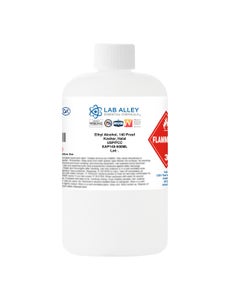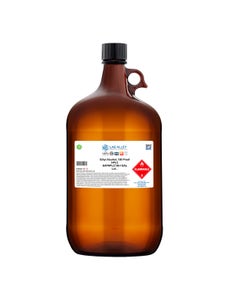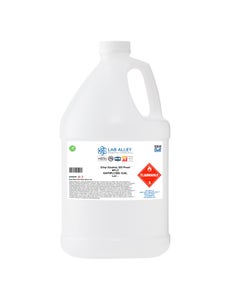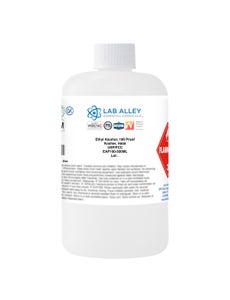





Types of Non-Denatured Ethanol
Ethanol (C₂H₅OH), also known as ethyl alcohol, is a colorless, volatile alcohol produced through fermentation of carbohydrates or synthetic processes. You'll find this versatile compound everywhere from the vodka in your liquor cabinet to the gasoline in your car, from hospital hand sanitizers to the vanilla extract in your pantry.
What makes ethanol so adaptable? The answer lies in how it's produced, purified, and formulated. Different grades vary in purity level, water content, added denaturants, and concentration, which is measured in proof. These variations determine whether ethanol ends up in pharmaceuticals, beverages, industrial solvents, or fuel tanks.
Choosing the right type matters enormously. Use food-grade ethanol in manufacturing, and you've broken federal law. Pick denatured alcohol for a beverage application, and you've created a poisonous product. Understanding the distinctions between types ensures operations are compliant, products are safe, and businesses run smoothly.
Several key factors guide selection: purity requirements, proof or concentration needs, regulatory compliance (TTB, FDA, USP, FCC), whether denaturants are acceptable, the intended end-use, tax considerations, and safety requirements.
In this article, we’ll explore:
- Common Grades & Purities
-
Certifications & Standards
-
Chemical Forms & Variants
-
Applications Based on Type
-
Regulatory Classifications
-
How to Choose the Right Type
Common Grades & Purities
Non-denatured ethanol comes in several grades designed for specific applications. Using the wrong grade can cause regulatory violations, contaminate your product, or waste money.
Food Grade (FCC)
Food-grade ethanol carries GRAS certification and meets FDA standards. It contains only ethyl alcohol with no additives. Production facilities follow food-safe protocols and maintain strict impurity limits.
Available in 190-200 proof concentrations, it works for food extraction, botanical processing, and food manufacturing. Think vanilla extract or herbal tinctures. The absence of denaturants makes it safe when ethanol remains in the final product.
Pharmaceutical Grade (USP)
This high-purity form meets United States Pharmacopeia standards for applications requiring the highest purity levels. Maximum allowable impurities follow specifications in USP monographs.
It serves medical applications, antiseptics, tinctures, and pharmaceutical manufacturing. When making medicine, purity isn't negotiable. These requirements ensure patient safety where contamination could cause serious harm.
USP/FCC Dual Grade
This premium grade meets both USP and FCC standards simultaneously. It represents the highest commercial purity level for multi-purpose uses. Facilities producing dual-grade ethanol maintain the strictest quality controls.
Operations handling both pharmaceutical and food production find this valuable. You can use one high-quality ethanol instead of maintaining separate inventories.
Beverage Alcohol
TTB-regulated ethanol for human consumption ranges from 30-190 proof (15-95% alcohol by volume). This includes neutral spirits used in beverage production with specific labeling and tax requirements.
Production facilities must maintain TTB permits and pay federal excise taxes of $13.50 per proof gallon. The regulatory oversight ensures beverage safety and proper tax collection.
ACS/Reagent Grade
Ultra-high purity ethanol meets American Chemical Society standards for analytical and research applications. Minimal impurities prevent interference with laboratory procedures and results.
Analytical chemistry, molecular biology, and research laboratories depend on this purity level. Suppliers provide detailed certificates of analysis documenting compliance.
Organic Grade
USDA organic-certified ethanol comes from organic feedstocks like organic cane or corn. It meets both FCC and USP standards while maintaining organic integrity for organic food and pharmaceutical processing.
The entire production chain must comply with organic handling requirements. Annual inspections verify compliance, and detailed recordkeeping demonstrates organic integrity.
Industrial Use Permit Grade
Tax-free ethanol is available to qualified institutions like hospitals, schools, research laboratories, and government agencies with TTB industrial use permits. The federal excise tax of $13.50 per proof gallon adds up quickly for high-volume users.
Getting permits requires demonstrating legitimate need and agreeing to usage reporting. For institutions using thousands of gallons annually, the tax savings can reach tens of thousands of dollars.
Certifications & Standards
Various certifications ensure non-denatured ethanol meets specific regulatory and quality requirements.
GRAS Certification
Generally Recognized as Safe status by the FDA references 21 CFR 184.1293, ensuring safety for human consumption in food processing. This results from extensive safety data and widespread industry acceptance.
USP Standards
United States Pharmacopeia specifications ensure high-purity ethanol suitable for pharmaceutical extraction and medical uses. Standards define acceptable impurity levels and specify required testing methods. Compliance requires rigorous quality control and batch-specific documentation.
FCC Standards
Food Chemicals Codex compliance establishes strict purity and safety requirements for food applications. Standards cover identity, purity, and allowable impurities. Manufacturers demonstrate ongoing compliance through testing each batch.
TTB Compliance
Alcohol and Tobacco Tax and Trade Bureau regulations govern beverage alcohol production, tax-paid ethanol, and industrial use permits. Compliance involves permits, tax payments or exemptions, labeling requirements, and detailed recordkeeping. Violations carry serious penalties.
Kosher/Halal Certification
Religious dietary compliance ensures adherence to specific production and handling requirements. Kosher certification comes from qualified rabbinical authorities, while Halal certification comes from Islamic certifying bodies. These certifications open essential markets for manufacturers serving observant communities.
Organic Certification
USDA organic compliance requires derivation from certified organic feedstocks. The National Organic Program sets standards for organic production, handling, and labeling. Annual inspections, detailed recordkeeping, and separation from non-organic materials throughout production are required.
cGMP Compliance
Current Good Manufacturing Practices certification ensures quality control and contamination prevention for pharmaceutical and medical applications. Requirements cover facility design, personnel training, and documentation practices. For pharmaceutical applications, this compliance is non-negotiable.
Chemical Forms & Variants
Non-denatured ethanol comes in different concentrations and from various production sources.
Absolute Ethanol (200 Proof)
Anhydrous ethanol contains 99.5-100% ethyl alcohol. This highest purity form serves moisture-sensitive pharmaceutical and laboratory applications. Producing it requires specialized dehydration beyond simple distillation, like molecular sieves or desiccants.
The challenge is its hygroscopic nature. It absorbs moisture rapidly from the air, so opening a container in humid conditions starts reducing the concentration. Users typically buy smaller containers and use them quickly.
190 Proof Ethanol (95%)
This azeotropic mixture of 95% ethanol and 5% water represents the highest concentration achievable through simple distillation. It's the most commonly used concentration for food and pharmaceutical applications, balancing high purity with practical handling.
The 5% water content benefits some applications. For disinfection, water helps ethanol penetrate microbial cell walls. For extraction, water can help dissolve certain compounds.
140-180 Proof Ethanol
Lower concentrations containing 70-90% ethanol serve disinfection, cleaning, and applications where higher water content is beneficial. These concentrations often work better for disinfection than pure ethanol because water helps denature proteins in microorganisms.
Grain-Derived Ethanol
Premium ethanol from grain feedstocks like wheat, barley, and rye is often preferred for pharmaceutical and food applications. Grain fermentation produces clean ethanol with minimal impurities easily removed during distillation. The traditional association with quality makes it preferred by some manufacturers.
Cane-Derived Ethanol
High-quality ethanol from sugar cane is particularly valuable for organic applications and premium food processing. It often commands premium prices, especially with organic certification. The source appeals to consumers who prefer plant-based ingredients from renewable resources.
Corn-Derived Ethanol
Traditional ethanol from corn meets various purity standards for multiple applications. Corn represents the most common feedstock in North America due to an abundant supply. Modern production achieves pharmaceutical and food-grade purity through advanced distillation. Cost-effectiveness makes it widely used.
Synthetic Ethanol
Petrochemical-derived ethanol meets technical specifications but isn't suitable for food or pharmaceutical applications due to source restrictions. Regulatory bodies restrict synthetic ethanol from food and drug uses based on source, not purity. It serves industrial applications where the feedstock source doesn't matter.
Applications Based on Type
Different types serve specific applications based on purity and certification.
Food & Beverage Production
Food-grade ethanol extracts botanicals, flavor compounds, and essential oils. It preserves food products and appears in baking and food processing. The GRAS status and absence of denaturants make it safe when ethanol remains in finished products. Vanilla extract, herbal supplements, and flavor concentrates depend on food-grade ethanol extraction.
Pharmaceuticals & Healthcare
Pharmaceutical-grade ethanol produces tinctures, liquid medications, antiseptics, and hand sanitizers. It serves as a solvent for drug formulations and sterilizes medical equipment. The high purity ensures patient safety. Manufacturers need batch-specific certificates of analysis proving USP compliance.
Laboratory & Research
ACS/Reagent-grade ethanol serves analytical chemistry, molecular biology, histology, and research requiring ultra-high purity. Even trace contaminants can invalidate results in sensitive applications like mass spectrometry or molecular biology procedures.
Cosmetics & Personal Care
Food or pharmaceutical-grade ethanol appears in perfume, skincare, and cosmetics, where purity and safety for human contact matter. It serves as a solvent and preservative. High purity prevents skin irritation, and the absence of denaturants ensures safety for direct skin application.
Cleaning & Disinfection
Concentrations from 70-90% serve surface disinfection and cleaning in healthcare, food service, and laboratory settings. Non-denatured ethanol provides effective disinfection without toxic residues that could contaminate food or affect research.
Industrial Extraction
High-proof ethanol extracts botanicals, produces essential oils, and enables chemical synthesis. The ability to recover and reuse ethanol makes it economical for large-scale operations. Distillation systems recover ethanol from extraction solutions while reclaiming solvent for reuse.
Regulatory Classifications
Non-denatured ethanol falls under multiple regulatory frameworks depending on intended use.
TTB-Regulated Beverage Alcohol
The Federal Alcohol Administration Act subjects beverage alcohol to TTB oversight. Production requires DSP permits. Federal excise tax applies at $13.50 per proof gallon. Formula approvals verify products meet standards. Label approvals ensure compliance.
Tax-Paid Industrial Ethanol
Ethanol with taxes paid can serve manufacturing applications without permits, subject to specific use restrictions and recordkeeping. Tax-paid ethanol costs more but eliminates permit requirements. For smaller users or those who don't meet permit eligibility, paying the tax simplifies operations.
Industrial Use Permit Alcohol
Tax-free ethanol for qualified users requires annual permit renewal and usage reporting. Qualifying requires demonstrating legitimate need and maintaining compliance. Usage reporting documents how permitted alcohol is used to prevent diversion to taxable uses.
FDA-Regulated Food Grade
Subject to FDA food additive regulations, GRAS status requirements, and food facility registration to ensure food safety. Manufacturers must maintain food-safe facilities, personnel training, and documented procedures.
DEA Considerations
Large-scale pharmaceutical ethanol may require DEA registration depending on intended use and distribution. DEA involvement focuses on preventing diversion to illegal drug manufacturing. Registration requirements depend on use patterns and quantities.
Organic Certified
Subject to USDA National Organic Program requirements for organic processing, handling, and labeling. Organic certification requires annual inspections and detailed documentation. Maintaining organic status involves strict separation from non-organic materials.
How to Choose the Right Type
Selecting appropriate ethanol involves evaluating multiple factors.
Match Grade to Intended Use
Food-grade serves food applications. Pharmaceutical grade works for medical use. Beverage grade suits consumption. ACS grade handles analytical work. Organic grade serves organic processing. Using the wrong grade can cause regulatory violations or product contamination.
Verify Regulatory Compliance
Ensure appropriate certifications like GRAS status for food use, USP standards for pharmaceuticals, and TTB compliance for beverage applications. Review supplier certifications before purchasing and verify documentation supports regulatory claims.
Select Appropriate Proof/Concentration
Higher proof (190-200) works for extraction and pharmaceutical use. Moderate concentrations (140-180 proof) serve disinfection. Specific proofs suit beverage applications. Concentration affects efficacy and regulatory classification.
Consider Tax Implications
Industrial use permits provide tax-free ethanol for qualified institutions. Tax-paid ethanol serves commercial manufacturing. At $13.50 per proof gallon, tax on 1,000 gallons of 190 proof adds $12,825 to costs. For high-volume users, investigating permit eligibility is worthwhile.
Evaluate Denaturant Compatibility
Choose certifications like Kosher, Halal, or organic based on end-use requirements and market demands. Understanding customer requirements helps determine necessary certifications. Balance certification costs against market opportunities.
Review Supplier Qualifications
Ensure suppliers provide certificates of analysis, hold appropriate permits, maintain quality systems, and offer regulatory compliance support. Evaluate supplier track records and supply chain reliability.
Assess Storage and Handling Requirements
Consider hazmat shipping requirements, flammability classifications, and compatibility with existing processes. Storage requirements affect total cost. Flammable liquid storage cabinets, fire suppression systems, and explosion-proof equipment add to facility costs.
Evaluate Purity Requirements
Applications requiring the highest purity should specify dual USP/FCC grade or organic certifications. Balance cost against quality requirements. Don't pay for unnecessary purity, but don't compromise if your application demands it.
Consider Source Preferences
Choose grain-derived for pharmaceutical applications or organic cane-derived for premium organic processing based on requirements and specifications. Some applications benefit from specific feedstock sources based on traditional quality associations or consumer preferences.
Key Takeaways
Non-denatured ethanol offers superior purity, safety, and regulatory compliance compared to denatured alternatives. This makes it the preferred choice for pharmaceutical, food, beverage, and research applications where quality matters.
The variety of grades, certifications, and forms ensures you can find ethanol that meets your specific requirements. Food-grade serves food processing. Pharmaceutical-grade handles medical applications. Beverage alcohol meets consumption standards. ACS-grade supports analytical research. Organic-certified ethanol enables organic processing.
Choosing the right type requires matching the grade to use, verifying regulatory compliance, selecting appropriate concentration, considering tax implications, and evaluating certification requirements. Working with qualified suppliers who provide proper documentation simplifies the selection process.
Understanding these distinctions helps you select ethanol that meets technical requirements, satisfies regulatory demands, and supports your quality objectives. Proper grade selection pays off through better results, regulatory compliance, and customer satisfaction.
For more detailed guidance, explore our Resource Library.
Our Customer Care team is also available for more information and documentation, including chemical Safety Data Sheets.
Find Non-Denatured Ethanol You Can Trust
If you are looking for high-quality non-denatured ethanol for your lab, product line, or research facility, be sure to visit our store to explore our trusted selection and request a quote.
As your trusted partner in chemical supply, Lab Alley is always striving to meet the growing demands of our customers. We want you to be able to access all of your chemical needs in one place, along with streamlined online ordering and fast shipping.
Due to popular demand from our valued clientele, Lab Alley's non-denatured ethanol is available in a range of purities and packaging options to suit various commercial, laboratory, and personal needs.