





Types of Polyethylene Glycol: Understanding Molecular Weights, Grades and Applications
Polyethylene glycol (PEG) is a polyether compound with the chemical structure H−(O−CH2−CH2)n−OH. You might also see it called polyethylene oxide (PEO) or polyoxyethylene (POE), depending on its molecular weight. This versatile polymer appears in everything from pharmaceutical tablets to cosmetic creams, from food processing to industrial lubricants.
What makes polyethylene glycol so adaptable? The answer lies in its molecular structure. PEG exists in various molecular weights ranging from 200 to over 20,000 g/mol, differing by chain length, physical state, and properties. A low molecular weight PEG flows like honey, while a high molecular weight version looks like white flakes or powder.
Choosing the right type matters significantly. Different molecular weights address specific performance requirements. Liquid grades (PEG 200-600) serve as solvents and humectants. Semi-solid grades (PEG 600-1000) have a paste-like consistency for intermediate applications. Solid grades (PEG 1000+) work as binders, lubricants, and controlled-release agents. Low molecular weight PEGs dissolve completely in water and attract moisture readily. High molecular weight PEGs show reduced water solubility and less moisture absorption.
Key factors determine which type to choose: molecular weight, physical state, grade specification (USP/NF, FCC, technical), application requirements, solubility needs, hygroscopicity, viscosity requirements, and regulatory compliance.
In this article, we’ll explore:
- Common PEG Molecular Weights
-
Grades & Purity Levels
-
Physical Forms
-
Chemical Variants
-
Applications Based on Type
-
Regulatory Classifications
-
Certifications & Standards
-
Safety & Handling Considerations
-
How to Choose the Right Type
Common PEG Molecular Weights
When asking for polyethylene glycol, you'll immediately face a question: What molecular weight? The number after "PEG" indicates the average molecular weight, and these distinctions matter because each weight targets specific performance requirements.
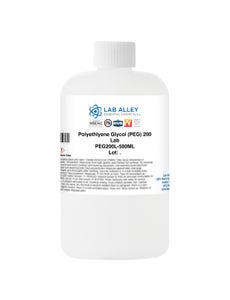
PEG 200: Molecular weight approximately 190-210 g/mol. Clear, colorless, non-volatile liquid used as a solvent, humectant, and plasticizer in pharmaceuticals and cosmetics.
PEG 300: Molecular weight approximately 285-315 g/mol. Clear liquid used in parenteral formulations up to approximately 30% v/v, as a solvent, and in soft gelatin capsules.
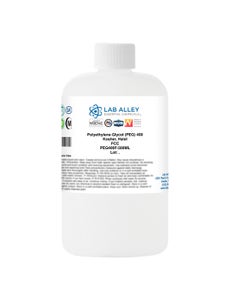
PEG 400: Perhaps the most widely used grade at 380-420 g/mol. This viscous liquid serves as a pharmaceutical excipient, cosmetic humectant, and appears in ophthalmic solutions. HP DesignJet printers even use it as an ink solvent.
PEG 600: At 570-630 g/mol, this grade sits at the transition between liquid and semi-solid. Can exist as a liquid or a paste depending on temperature. Used in adhesives, humectant applications, chemical intermediates, inks, and lubricants.
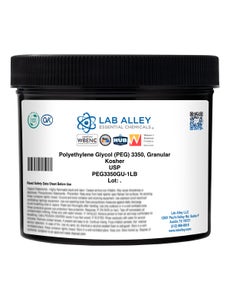
PEG 1000: Molecular weight approximately 950-1050 g/mol. White to off-white solid flakes are used in pharmaceutical tablets, cosmetics, and industrial applications.
PEG 1500: Molecular weight approximately 1300-1600 g/mol. White, flaky solid used in pharmaceutical and cosmetic formulations.
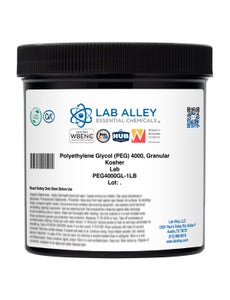
PEG 4000 (Macrogol 4000): Molecular weight approximately 3000-4010 g/mol. White, flaky solid used in tablet film coatings, pharmaceutical ointments, and as a laxative in products like Movicol and Laxido.
PEG 6000: Molecular weight approximately 5000-7000 g/mol. Available as flakes or free-flowing milled powder. Used across pharmaceutical, cosmetic, and industrial applications.
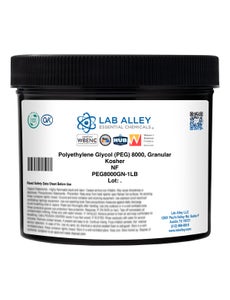
PEG 8000: Molecular weight approximately 7000-9000 g/mol. White solid powder for pharmaceutical and industrial applications requiring a high molecular weight polymer.
Grades & Purity Levels
Polyethylene glycol's physical state changes dramatically with molecular weight.
Liquid (PEG 200-600): Clear, colorless to slightly yellow viscous liquids. Completely miscible with water. Hygroscopic with a slight characteristic odor and a bitter, slightly burning taste. Viscosity increases with molecular weight.
Semi-Solid (PEG 600-1000): Paste-like consistency. Can be solid at ambient temperatures. Intermediate properties between liquid and solid grades. Sometimes requires gentle heating for flow.
Solid Flakes (PEG 1000-6000+): White or off-white flakes with a faint, sweet odor. Range from paste to waxy flake consistency. Require melting for some applications, but easier to handle in tablet manufacturing.
Milled Powder (PEG 6000+): Free-flowing white powder created by milling solid flakes. Easier handling and dosing in tablet manufacturing and dry applications. Flows through automated equipment more consistently.
Chemical Variants
Several chemical variants serve specialized applications requiring modified properties.
Standard PEG (HO-PEG-OH): Linear polymer with hydroxyl groups at both ends. Structure: H−(O−CH2−CH2)n−OH. The most common form has both terminal groups reactive.
Methoxy PEG (mPEG): Monofunctional methyl ether PEG with one end capped by a methoxy group. Used in PEGylation applications where a single reactive end prevents unwanted crosslinking.
Activated PEG: Terminal hydroxyl replaced with reactive functional groups. Enables crosslinking and conjugation for bioconjugation and drug delivery. Common activating groups include NHS esters, maleimides, and vinyl sulfones.
Branched/Multi-arm PEG: Y-shaped or multi-arm geometries for specialized drug delivery and tissue engineering applications. Multiple arms create more crosslinking points.
Discrete PEG (dPEG): Monodisperse, uniform PEG with a single, specific molecular weight. Higher purity but significantly more expensive (10-1000 fold cost). Reserved for high-value pharmaceutical research.
Polydisperse PEG: Standard commercial PEG with a distribution of molecular weights around the average. More economical for most applications.
Physical Forms
Beyond molecular weight, polyethylene glycol comes in various purity grades targeting different industries.
USP Grade (United States Pharmacopeia): Meets rigorous USP monograph requirements for pharmaceutical use. High purity with specific limits on impurities, residue, optical absorbance, and color. Used in pharmaceutical manufacturing, drug formulations, and medicinal applications. Documentation accompanies each batch detailing test results.
NF Grade (National Formulary): Meets National Formulary monograph standards with quality equal to USP grade. Used in pharmaceutical and food applications.
FCC Grade (Food Chemicals Codex): Meets FCC specifications for food ingredients with special toxicity and safety tests. Used as a food additive (INS number 1521, E1521 in the EU). Food processors choose this grade because regulations require it.
Pharmaceutical Grade: General term for high-purity PEG meeting USP/NF standards. Used in oral, topical, and parenteral dosage forms. Manufacturers operate under GMP requirements.
Technical/Industrial Grade: Lower purity (typically 80-95%) for industrial manufacturing where pharmaceutical purity isn't required. Cost savings become significant when processing large volumes.
Reagent Grade: High purity for laboratory and analytical applications. Certificates of analysis document exact impurity levels for research requiring minimal interference.
Applications Based on Type
Different polyethylene glycol types serve remarkably diverse applications across multiple industries.
Pharmaceuticals
Excipients in tablets (binder, lubricant, controlled-release), ointment bases, suppository bases, solvent for liquid medications, parenteral formulations (PEG 300/400 up to 30% v/v), laxatives (Macrogol/MiraLax/Movicol), ophthalmic lubricants, and drug delivery systems.
Cosmetics & Personal Care
Humectants, emulsifiers, surfactants, cleansing agents, and skin conditioners in creams, lotions, shampoos, toothpastes, deodorants, personal lubricants, hair care products, and lipsticks.
Food Applications
Food additive (anti-foaming agent, INS 1521, E1521 in EU), processing aid, carrier for food additives, and dietary supplements. Requires FCC certification.
Industrial Manufacturing
Plasticizers, lubricants, dispersing agents, anti-static agents, mold release agents, heat transfer media, rubber processing, textile processing, and metalworking fluids.
Chemical Processing
Solvents, dehydration agents, chemical intermediates for polyesters and polyurethanes, and raw material for surfactants.
Coatings & Inks
Water-resistant coating base, printing ink solvent, and paint formulations.
Specialty Applications
Phase change materials for thermal energy storage, polymer electrolytes, preservation of waterlogged artifacts, wood stabilization, paintball fill, and solid rocket fuel components.
Biomedical Applications
PEGylation of therapeutic proteins, drug delivery nanoparticles, hydrogels for tissue engineering, and ion channel studies.
Regulatory Classifications
Different regulatory frameworks govern polyethylene glycol depending on its intended use.
FDA-Approved: PEG is USFDA-approved for pharmaceuticals, cosmetics, and food applications.
GRAS Status: Generally Recognized as Safe for food applications when used appropriately.
USP-NF Standards: Specific monographs define pharmaceutical grade requirements, including appearance, solubility, purity, impurity limits, and testing methods.
FCC Standards: Food Chemicals Codex specifications for food-grade PEG, including purity and safety requirements.
WHO Acceptable Daily Intake: Up to 10 mg/kg body weight established by the World Health Organization.
Parenteral Use Limits: PEG 300 and 400 recommended maximum concentration approximately 30% v/v due to hemolytic effects above 40% v/v.
Pharmacopeia Standards: Must meet compendial requirements in various pharmacopeias (USP, BP, EP, JP) depending on region.
Certifications & Standards
Various certifications demonstrate compliance with industry requirements.
USP/NF Monograph Compliance: Products must meet all requirements for molecular weight, including identity, purity, and impurity limits.
Certificate of Analysis (COA): Documentation verifying molecular weight range, hydroxyl number, appearance, purity, and specification compliance.
GMP Compliance: Pharmaceutical-grade PEG manufactured in Good Manufacturing Practice facilities.
Kosher/Halal Certification: Available for PEG used in certified food, pharmaceutical, or cosmetic applications.
Non-GMO Certification: Available from suppliers for applications requiring non-GMO sourcing.
FCC Compliance: Food-grade PEG meets Food Chemicals Codex purity and identity standards.
Safety & Handling Considerations
Understanding polyethylene glycol's safety profile ensures safe operations.
Toxicity: Low toxicity profile. Non-toxic, non-irritating to skin. Generally considered safe. Some hypersensitivity reactions have been reported with PEGylated formulations.
Absorption & Metabolism: Absorbed PEG is excreted largely unchanged in urine. Low-molecular-weight PEGs may be partially metabolized.
Biodegradability: Not readily biodegradable (5-day BOD of 0-1%). Low potential to bioaccumulate due to hydrophilicity.
Chemical Stability: Chemically stable in air and solution. Grades below MW 2000 are hygroscopic. Can oxidize if exposed to temperatures exceeding 50°C for extended periods.
Storage Requirements: Store in well-closed containers in a cool, dry place. Storage under nitrogen reduces oxidation. Use stainless steel, aluminum, glass, or lined steel containers. Avoid iron contamination.
Handling: Antioxidants may be added to inhibit oxidation. Maintain the minimum temperature for molten solid grades. Protect from moisture (lower MW grades).
Compatibility: Soluble in water, ethanol, acetone, glycols, and chloroform. Insoluble in highly acidic or alkaline solutions. Solubility is not affected by electrolytes or hard water.
How to Choose the Right Type
Selecting appropriate polyethylene glycol requires careful evaluation of requirements.
Match molecular weight to application: Use liquid PEGs (200-600) for solvents and humectants. Solid PEGs (1000+) for tablet binders and controlled release. High MW PEGs (4000-8000) for laxatives and coatings.
Select appropriate grade: Choose USP/NF grade for pharmaceuticals, FCC grade for food, and technical grade for industrial use.
Consider physical state requirements: Select a liquid for ease of mixing. Solid for tableting and applications requiring a solid form.
Evaluate solubility needs: Lower MW for complete water miscibility. Higher MW for applications requiring reduced water uptake.
Assess hygroscopicity: Use higher MW PEGs (above 2000) where moisture sensitivity is a concern. Lower MW for humectant properties.
Review regulatory requirements: Ensure selected grade meets FDA, USP, FCC, or applicable regulatory standards.
Verify supplier qualifications: Confirm supplier provides proper documentation, manufactures in GMP facilities (for pharmaceutical use), and offers consistent quality.
Consider cost vs. purity: Use polydisperse PEG for most applications. Reserve discrete PEG for specialized high-precision applications despite 10-1000x cost.
Evaluate functional requirements: Consider viscosity, melting point, binding properties, lubrication needs, and compatibility with other formulation components.
Key Takeaways
Polyethylene glycol exists in numerous molecular weights from 200 to 20,000+ g/mol, serving applications from pharmaceutical excipients to industrial lubricants.
Various purity grades target specific industries. USP/NF grade serves pharmaceuticals. FCC grade meets food requirements. Technical grade provides economical industrial performance.
Physical forms range from clear liquids through semi-solids to white flakes and milled powders, each suited to different handling requirements.
Chemical variants, including methoxy PEG, activated PEG, and branched PEG, serve specialized biomedical and drug delivery applications.
Successful selection matches molecular weight, grade, physical form, and certifications to application requirements while satisfying regulatory obligations. Working with Lab Alley ensures access to proper grades with appropriate documentation for your polyethylene glycol needs.
For more detailed guidance, explore our Resource Library.
Our Customer Care team is also available for more information and documentation, including chemical Safety Data Sheets.
Find Polyethylene Glycol You Can Trust
If you are looking for high-quality polyethylene glycol for your lab, product line, or research facility, be sure to visit our store to explore our trusted selection and request a quote.
As your trusted partner in chemical supply, Lab Alley is always striving to meet the growing demands of our customers. We want you to be able to access all of your chemical needs in one place, along with streamlined online ordering and fast shipping.
Due to popular demand from our valued clientele, Lab Alley's polyethylene glycol is available in a range of purities and packaging options to suit various commercial, laboratory, and personal needs.