




How and Why to Treat Polyethylene Glycol Waste
Note: Polyethylene glycol (PEG) is a neutral, non-ionic polymer that does not require pH neutralization. However, PEG waste requires proper treatment for safe disposal, removal from process streams, and environmental protection. This guide addresses proper handling and disposal of PEG-containing solutions.
Treating polyethylene glycol waste is important for safety, environmental protection, and ensuring proper waste disposal. Whether dealing with pharmaceutical manufacturing, cosmetic production, laboratory research, or industrial processing streams, proper PEG treatment helps ensure regulatory compliance and prevents environmental harm.
Operations using polyethylene glycol across pharmaceutical excipients, cosmetic formulations, industrial lubricants, and research applications often encounter situations that require effective waste treatment. The compound's variable biodegradability based on molecular weight creates challenges for waste management that proper treatment procedures address systematically.
This guide explores the key aspects of polyethylene glycol waste treatment, covering the reasons for treatment, step-by-step procedures, and safety protocols that protect workers while promoting regulatory compliance.


In this article, we’ll explore:
- Why Treat Polyethylene Glycol
- How to Treat Polyethylene Glycol Waste
- Safety Precautions During Treatment
Why Treat Polyethylene Glycol?
Understanding the reasons for treating polyethylene glycol waste helps create appropriate protocols across different applications and facility types.
Safety & Spill Response
PEG spills can create slippery surfaces requiring careful cleanup procedures. High molecular weight PEG solutions are viscous and require absorbent materials for containment. Proper treatment facilitates cleanup and reduces handling complications for personnel during waste management operations.
Industrial & Laboratory Use
Many processes require PEG removal from solutions to prevent product contamination in final formulations. Treatment prevents fouling of membranes and filtration equipment in processing facilities, which can shut down operations and require expensive cleaning. Ensures product purity in pharmaceutical, cosmetic, and chemical manufacturing, where even small amounts of residual PEG can affect final product quality or downstream processing.
Environmental Protection
PEG contributes to biochemical oxygen demand (BOD) in wastewater systems. High concentrations can interfere with biological wastewater treatment processes by overwhelming the oxygen capacity of treatment systems. Regulatory compliance requires proper management of synthetic polymer discharge in industrial effluent to meet permitted discharge limits.
How to Treat Polyethylene Glycol
Effective polyethylene glycol waste treatment follows a structured approach, promoting safety while achieving treatment goals through appropriate methods.
Step 1: Identify the Chemical Properties
Determine PEG molecular weight, as commercial grades range from 200 to over 20,000 Da. Lower molecular weight PEGs (200-1,000) are liquids, while higher grades become increasingly viscous or solid.
Measure concentration and volume to calculate treatment requirements and estimate costs. Check for other additives or contaminants that may affect the treatment process, including salts, surfactants, or organic solvents.
Critical factor: Biodegradability decreases significantly with increasing molecular weight.
Step 2: Select Appropriate Treatment Methods
Biodegradation (For Low-to-Medium MW PEGs):
PEGs with molecular weights of approximately 8,000-14,600 Da are biodegradable under aerobic conditions in activated sludge systems. Microorganisms break down the polymer chains into carbon dioxide and water over time. Higher-molecular-weight PEGs (20,000+ Da) are poorly biodegradable or essentially non-biodegradable and require physicochemical treatment instead. This method works well for laboratory and pharmaceutical waste containing lower MW grades where dilution into existing wastewater treatment is feasible.
Activated Carbon Adsorption:
An effective method for removing PEG from aqueous solutions through surface adsorption onto activated carbon particles. Removal efficiency is influenced by contact time, PEG molecular weight, pH, temperature, and initial concentration. Works across all molecular weight ranges but may require substantial carbon quantities for high concentrations. The spent carbon with adsorbed PEG requires proper disposal as solid waste.
Advanced Oxidation (Fenton Reagent/Ozonation):
Fenton oxidation using hydrogen peroxide and ferrous iron can achieve approximately 85% total organic carbon (TOC) removal by breaking polymer chains into smaller fragments. Ozonation fragments polymeric chains through oxidative cleavage but typically cannot achieve complete removal alone. These methods work better when combined with other treatment approaches for higher molecular weight PEGs. Chemical costs and reaction control requirements limit application to smaller waste volumes.
Membrane Filtration (Ultrafiltration/Nanofiltration):
Efficient for separating higher molecular weight PEGs from aqueous solutions, producing clean permeate water suitable for discharge or reuse. This method concentrates PEG for easier disposal while recovering clean water. Most effective for industrial-scale treatment of high MW PEG waste where water recovery provides economic value. Requires periodic membrane cleaning to maintain performance.
Precipitation/Salting Out:
The addition of high concentrations of salts, such as ammonium sulfate or sodium chloride, can precipitate PEG from aqueous solutions by reducing polymer solubility. Most effective for higher molecular weight polymers, where the precipitation is more complete. The precipitated PEG can be collected and disposed of as solid waste while the aqueous phase undergoes further treatment to remove residual salt before discharge.
Dilution:
Appropriate for small quantities of low molecular weight PEG when discharge concentration limits permit and biodegradation capacity is available in the receiving treatment system. This is the simplest method, but only suitable when local wastewater treatment systems can handle the added BOD load without exceeding permit limits.
Step 3: Treatment Procedure
Work in a well-ventilated area and wear appropriate PPE, including gloves and safety glasses. For spills, use absorbent materials such as sand, vermiculite, or commercial absorbents to contain and collect material before treatment. Clean up slippery residues promptly to prevent slip hazards.
For adsorption treatment, add activated carbon slowly while stirring to ensure good contact between PEG and carbon surfaces. Allow adequate contact time of several hours to ensure maximum PEG removal, then filter to remove the carbon-PEG mixture. Dispose of spent carbon according to solid waste protocols.
For precipitation methods, add precipitating salt gradually with continuous stirring to promote uniform mixing. Allow a settling period for complete precipitation, typically several hours to overnight. Separate liquid and solid phases through decantation or filtration. The solid PEG-salt mixture requires appropriate disposal.
For biological treatment, ensure the PEG molecular weight is below 10,000 Da for reliable biodegradation in conventional systems. Dilute to appropriate concentrations for activated sludge systems, typically below levels that would shock the biological treatment. Allow adequate contact time for complete treatment before final quality verification.
Step 4: Monitoring and Validation
Measure dissolved organic carbon (DOC) or total organic carbon (TOC) to assess treatment effectiveness and verify PEG removal. Verify BOD/COD levels meet wastewater discharge standards specified in permits or local regulations. Ensure pH is within the acceptable discharge range, typically pH 6-9 for most municipal systems.
For biological treatment, monitor biodegradation through CO₂ production or organic carbon removal over time. Test small samples first when treating large volumes to determine exact treatment requirements and optimize chemical dosing. Document treatment process and results for regulatory compliance records and future reference.
Step 5: Waste Disposal
Low molecular weight PEG solutions (MW less than 1,000) treated to acceptable discharge limits are generally suitable for sanitary sewer disposal after biological treatment or sufficient dilution. Concentrated PEG waste, especially high molecular weight grades, may require collection by chemical waste management services for off-site treatment or incineration.
Treated effluent must meet local wastewater discharge standards before release to sewers or surface waters. Large volumes require verification of treatment effectiveness through laboratory analysis and may need specialized disposal even after treatment if contaminants are present.
Special Considerations for PEG Treatment
Pharmaceutical Industry Applications: PEG excipients in pharmaceutical manufacturing produce waste streams that are generally low in toxicity compared to active ingredients. Waste containing PEG from drug formulations requires documentation and appropriate disposal procedures to meet pharmaceutical waste regulations. Some high-purity PEG grades may be recoverable for non-critical applications, reducing disposal costs.
Cosmetic Manufacturing: PEG and PEG derivatives used in personal care products are widely utilized as surfactants, emulsifiers, and humectants in lotions, creams, and shampoos. Cosmetic manufacturing waste containing PEG is generally compatible with standard industrial wastewater treatment due to low toxicity. Treatment makes waste suitable for discharge to municipal wastewater treatment facilities after meeting discharge requirements.
Research Laboratory Considerations: Small volumes of low molecular weight PEG (MW less than 10,000) used in molecular biology or protein purification are typically biodegradable and can be diluted for drain disposal in most institutions. High molecular weight PEG (MW greater than 10,000) from research applications should be collected for chemical waste disposal through institutional programs. PEG contaminated with hazardous biological materials requires appropriate decontamination before disposal to eliminate biohazards.
Industrial Applications: PEG-based products used in manufacturing, including lubricants, surfactants, and processing aids, generate waste streams requiring treatment before discharge. Mixed waste streams should be characterized before selecting a treatment method to identify all components. Consult with waste management services for large-volume industrial PEG waste disposal to determine the most cost-effective options.
Safety Precautions During Treatment
Correct safety practices protect workers and promote successful treatment outcomes across all application scales.
Personal Protective Equipment: Wear chemical-resistant gloves and safety glasses when handling concentrated PEG solutions to prevent skin and eye contact. Additional PPE may be required based on other contaminants present in the waste stream, such as acids, bases, or toxic chemicals.
Spill Management: Clean spills promptly using absorbent materials to prevent spreading. Spilled PEG can create slippery conditions on smooth surfaces that present fall hazards to workers. Mark wet areas until cleaning is complete.
Ventilation: Ensure adequate ventilation when using chemical treatment methods, including oxidation processes or when working with organic solvents for extraction methods. Proper air movement prevents vapor accumulation and maintains safe working conditions.
Dust Hazard: High molecular weight solid PEG can form combustible dust when in powder form. Avoid creating dust clouds and eliminate ignition sources when handling powdered forms during treatment operations. Use dust control measures and grounding.
Emergency Preparedness: Have absorbent materials and spill cleanup supplies readily available when working with PEG solutions. Know the location of eyewash stations and safety showers for emergency decontamination.
Conclusion
Proper treatment of polyethylene glycol ensures safer handling, environmental responsibility, and regulatory compliance across pharmaceutical, cosmetic, and industrial applications. The treatment approach must be selected based on molecular weight, with low-to-medium MW PEGs suitable for biodegradation and high MW PEGs requiring physicochemical treatment methods.
PEG's low toxicity and the biodegradability of lower molecular weight grades make it relatively manageable compared to many other synthetic polymers, though proper treatment protocols must still be followed to prevent environmental impact and ensure compliance with wastewater discharge regulations.
For more detailed guidance, explore our Resource Library.
Our Customer Care team is also available for more information and documentation, including chemical Safety Data Sheets.
Need Polyethylene Glycol You Can Trust?
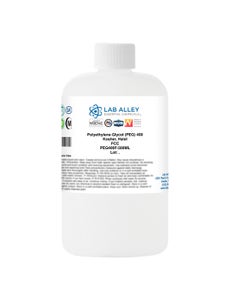
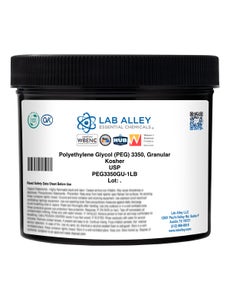
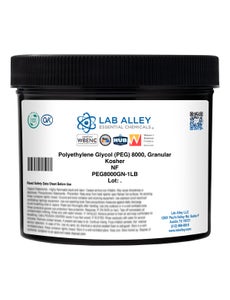
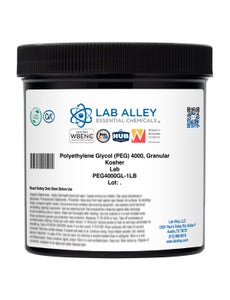
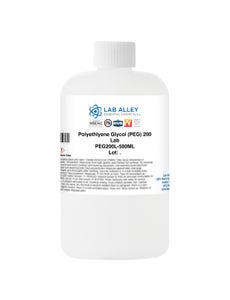
If you are looking for high-quality polyethylene glycol for your lab, product line, or research facility, be sure to visit our store to explore our trusted selection and request a quote.
As your trusted partner in chemical supply, Lab Alley is always striving to meet the growing demands of our customers. We want you to be able to access all of your chemical needs in one place, along with streamlined online ordering and fast shipping.
Due to popular demand from our valued clientele, Lab Alley's polyethylene glycol is available in a range of purities and packaging options to suit various commercial, laboratory, and personal needs.