





How to Safely Dispose of Non-Denatured Ethanol: Regulatory Requirements and Best Practices
Proper disposal of non-denatured ethanol is crucial for environmental protection, safety, and regulatory compliance. Non-denatured ethanol, also known as pure ethyl alcohol or grain alcohol, requires careful handling and disposal due to its highly flammable nature, regulatory classification as hazardous waste, and unique status under TTB (Alcohol and Tobacco Tax and Trade Bureau) regulations.
The complexity surrounding non-denatured ethanol disposal stems from its dual nature as both a food-grade ingredient and a hazardous, flammable liquid. Unlike denatured ethanol, which contains toxic additives, non-denatured ethanol's purity creates additional regulatory oversight while actually simplifying some environmental concerns. However, its extreme flammability and classification as ignitable hazardous waste demand strict adherence to disposal protocols.
Understanding non-denatured ethanol disposal becomes crucial when you consider its widespread use across food manufacturing, pharmaceutical production, research laboratories, and industrial applications. From extraction processes to analytical chemistry, this versatile solvent demands careful end-of-life management to protect both human health and environmental systems while meeting federal alcohol regulations.
This guide examines the critical aspects of non-denatured ethanol disposal, including regulatory requirements, safety protocols, and practical disposal strategies for different settings and quantities.


In this article, we’ll review:
1. Why Proper Disposal Matters
2. How to Dispose of Non-Denatured Ethanol
3. Special Considerations for Non-Denatured Ethanol
Why Proper Disposal Matters
Non-denatured ethanol disposal carries significant implications that extend beyond routine waste management practices. Understanding these consequences helps you recognize why environmental agencies and the TTB have established specific guidelines for handling this material effectively.
Environmental Protection
Environmental damage from non-denatured ethanol occurs primarily through its effects on aquatic ecosystems and oxygen depletion, though it presents less toxicity than denatured formulations:
-
Aquatic toxicity: Non-denatured ethanol poses risks to aquatic organisms with documented toxicity levels for fish, algae, and water organisms. While less toxic than denatured alcohol due to the absence of poisonous additives, improper disposal can still harm aquatic life.
-
Oxygen depletion: When ethanol enters waterways, its biodegradation consumes dissolved oxygen needed by fish and other aquatic organisms, potentially creating dead zones in affected water bodies.
-
Water contamination: Improper disposal prevents environmental contamination and ensures responsible chemical management, protecting both surface water and groundwater sources from alcohol contamination.
-
Ecological disruption: Even though non-denatured ethanol is biodegradable, concentrated releases can overwhelm natural degradation processes and cause temporary but significant ecosystem damage.
Health & Safety
Human health and safety considerations make non-denatured ethanol disposal a critical workplace priority:
-
Extreme flammability: Non-denatured ethanol is a highly flammable liquid and vapor with a flash point of 12.8°C (55°F), creating severe fire and explosion risks during handling and disposal operations.
-
Vapor hazards: May cause respiratory irritation, drowsiness, dizziness, and central nervous system depression when vapors are inhaled during disposal procedures, particularly in poorly ventilated areas.
-
Physical irritation: Can cause serious eye irritation and skin defatting through prolonged contact, making proper protective equipment essential during disposal activities.
-
Static discharge sensitivity: Highly sensitive to static electricity, which can ignite vapors during transfer operations, requiring grounded equipment and anti-static precautions.
-
Explosion risks: Vapors may travel considerable distances to ignition sources and flash back, creating explosion hazards. Containers may explode when heated or exposed to fire.
-
Relative safety advantage: Unlike denatured ethanol, non-denatured ethanol lacks toxic additives, simplifying health concerns related to chemical poisoning but maintaining all flammability hazards.
Legal Compliance
The regulatory framework surrounding non-denatured ethanol disposal creates enforceable obligations under multiple federal agencies:
-
RCRA classification: Non-denatured ethanol is classified as an ignitable hazardous waste regulated under the Resource Conservation and Recovery Act (RCRA) when disposed of, and must be collected for hazardous waste disposal.
-
Waste code designation: Classified as D001 ignitable hazardous waste when discarded, regardless of concentration above 24% by volume. D001 wastes have a reportable quantity of 100 pounds for spill notification requirements.
-
Sewer prohibition: As a flammable liquid, it is forbidden from entering the public sewer system under federal and most local regulations.
-
Transportation requirements: Non-denatured ethanol solutions are regulated as UN1170 ETHANOL SOLUTION, Hazard Class 3, Packing Group II, requiring proper documentation and handling during transport to disposal facilities.
-
TTB oversight: May be subject to additional Alcohol and Tobacco Tax and Trade Bureau (TTB) regulations for tax and permit purposes, especially in commercial quantities, adding complexity beyond standard hazardous waste rules.
-
Permit requirements: Facilities may require permits for hazardous waste storage and disposal, with specific recordkeeping and reporting obligations.
How to Dispose of Non-Denatured Ethanol
Effective non-denatured ethanol disposal starts with understanding your specific waste characteristics and matching them to appropriate disposal pathways while meeting all applicable regulatory requirements from both environmental and alcohol control agencies.
Check Regulations
Regulatory compliance research forms the foundation of any successful disposal plan. The disposal process must begin with a comprehensive regulatory review:
Federal requirements: Review Resource Conservation and Recovery Act (RCRA) regulations for ignitable wastes, as non-denatured ethanol is classified as D001 ignitable hazardous waste requiring collection for hazardous waste disposal.
State and local regulations: Check local and state hazardous waste regulations for ignitable wastes, as many jurisdictions impose additional restrictions beyond federal baseline requirements.
Transportation compliance: Check transportation requirements, as non-denatured ethanol solutions are regulated as UN1170 ETHANOL SOLUTION, Hazard Class 3, Packing Group II, requiring proper shipping papers, labeling, and vehicle placarding.
Facility permits: Verify if your facility requires permits for hazardous waste storage and disposal, including generator status determination and associated recordkeeping obligations.
TTB considerations: Understand that non-denatured ethanol may be subject to TTB regulations for tax and permit purposes, particularly in commercial or industrial quantities, which can affect disposal procedures.
Reportable quantities: Note that D001 wastes have a reportable quantity of 100 pounds for spill notification requirements to the National Response Center.
Follow Neutralization Protocols If Applicable
Chemical treatment requirements for non-denatured ethanol differ fundamentally from acids, bases, or other reactive chemicals:
NOT APPLICABLE: Non-denatured ethanol cannot be neutralized for disposal and must be collected for hazardous waste disposal as an ignitable/flammable chemical. Unlike acids or bases that can be pH-adjusted, ethanol's flammability cannot be chemically neutralized.
Dilution prohibition: Intentional dilution or neutralization of hazardous chemical waste for the purpose of avoiding collection is illegal under RCRA regulations. This practice constitutes waste manipulation prohibited by federal law.
Limited exception: Aqueous solutions containing less than 24% alcohol by volume are exempt from ignitable classification under RCRA regulations. However, deliberately diluting concentrated ethanol to avoid hazardous waste classification violates federal regulations.
This distinction is critical because many chemical disposal protocols involve neutralization, but non-denatured ethanol requires complete collection and professional disposal without chemical treatment attempts.
Use Designated Waste Disposal Methods
Appropriate disposal pathways depend on concentration, quantity, and how the ethanol was used in your operations:
Non-Hazardous Disposal
Small quantities of solutions with less than 24% alcohol by volume may be disposed of as non-hazardous waste, but verify local regulations first. Municipal sewer systems may accept these dilute solutions if:
-
Local regulations specifically allow such disposal
-
The concentration verifiably falls below 24% alcohol by volume
-
The solution contains no other hazardous constituents
-
Discharge pH and other parameters meet local requirements
Hazardous Waste Collection
Concentrated non-denatured ethanol (above 24% by volume) requires collection as D001 ignitable hazardous waste:
-
Store in appropriate containers designed for flammable liquids
-
Label clearly with waste codes (D001) and hazard information
-
Maintain proper documentation, including waste manifests
-
Arrange pickup by licensed hazardous waste transporters
-
Dispose of through permitted hazardous waste treatment facilities
Industrial Quantities and Spent Solvents
Large volumes or concentrated solutions containing non-denatured ethanol may be classified as F003 spent solvent waste when used in:
-
Extraction processes for oils, fats, or active ingredients
-
Purification operations in pharmaceutical or chemical manufacturing
-
Cleaning processes in industrial or laboratory settings
F003 classification carries additional regulatory requirements beyond simple D001 ignitable waste, including stricter tracking and reporting obligations.
Laboratory Waste Programs
Academic and research institutions typically classify non-denatured ethanol as ignitable hazardous waste:
-
Collect in appropriate flammable liquid waste containers
-
Label clearly with waste codes, contents, and accumulation start dates
-
Dispose of through institutional hazardous waste programs
-
Follow campus-specific procedures for satellite accumulation areas
-
Maintain required training and documentation
Fire and Safety Hazards During Disposal
Non-denatured ethanol poses extreme fire hazards throughout the disposal process that require constant vigilance:
Critical fire characteristics:
-
Flash point of 12.8°C (55°F) means the room temperature often exceeds the ignition threshold
-
Explosive limits of 3.3-19.0% in air create a wide flammable range
-
Vapors are heavier than air and travel to distant ignition sources
-
Burns with nearly invisible flame in daylight conditions
-
Static discharge can provide sufficient ignition energy
Explosion prevention:
-
Remove all sources of ignition immediately from disposal areas
-
Use spark-proof tools and explosion-proof equipment exclusively
-
Ensure adequate ventilation to prevent vapor accumulation
-
Ground and bond all containers during transfer operations
-
Maintain awareness that containers may explode when heated or exposed to fire
Fire suppression readiness:
-
Have appropriate fire extinguishing equipment readily available
-
Use CO₂, dry chemical, alcohol-resistant foam, or water spray
-
Never use standard foam, which breaks down in alcohol fires
-
Ensure personnel know ethanol burns with invisible flames
-
Maintain clear evacuation routes from disposal areas
Never Mix Chemicals
Chemical compatibility issues can transform routine disposal into emergencies:
Prohibited mixtures:
-
Avoid mixing non-denatured ethanol with strong oxidizing agents (permanganates, peroxides, nitrates) that could cause violent reactions or spontaneous ignition
-
Keep separate from strong acids that generate heat when mixed with ethanol, potentially causing immediate vapor ignition
-
Do not mix with other alcohols or solvents unless specifically approved by the hazardous waste disposal service
-
Maintain separation from incompatible materials during storage and disposal operations
Segregation requirements:
-
Store non-denatured ethanol waste separately from other chemical waste streams
-
Use dedicated containers for ethanol waste only
-
Clearly label incompatibility warnings on storage areas
-
Train personnel on reaction hazards and proper segregation
Even chemicals that appear harmless can interact with ethanol to create more hazardous waste classifications or dangerous reaction products, making proper segregation essential throughout the disposal process.
Follow PPE Guidelines
Worker protection during non-denatured ethanol disposal requires appropriate equipment selection and consistent use:
Required personal protective equipment:
-
Always wear chemical-resistant gloves (nitrile or neoprene) when handling non-denatured ethanol for disposal
-
Use safety goggles to protect against splashes and vapor exposure
-
Wear protective clothing that covers all exposed skin to prevent defatting effects
-
Ensure flame-resistant clothing when handling large quantities
Ventilation and environmental controls:
-
Ensure adequate ventilation in all disposal areas to prevent vapor accumulation
-
Use explosion-proof electrical equipment exclusively when handling ethanol
-
Maintain ventilation systems in proper working order
-
Monitor vapor levels if handling large quantities
Fire safety equipment:
-
Keep away from heat, sparks, open flames, and hot surfaces during all handling operations
-
Use non-sparking tools exclusively for container opening and transfer
-
Take precautionary measures against static discharge through proper grounding
-
Maintain fire extinguishers rated for alcohol fires within immediate reach
Training requirements:
-
Ensure all personnel handling ethanol waste receive proper hazardous waste training
-
Provide specific instructions on fire hazards and emergency procedures
-
Conduct regular refresher training on PPE use and safety protocols
-
Document all training for regulatory compliance
Special Considerations for Non-Denatured Ethanol
Non-denatured ethanol presents unique regulatory and practical challenges that distinguish it from other laboratory and industrial chemicals:
Regulatory Classification
Consistent hazardous waste status: Non-denatured ethanol is always classified as D001 ignitable hazardous waste when discarded, regardless of concentration above 24% by volume. This classification applies universally across all settings and use patterns.
Waste code application: Even small quantities of concentrated non-denatured ethanol must be collected for hazardous waste disposal. EPA does not base hazardous waste determinations on volume limits for ignitable materials above threshold concentrations.
TTB Regulations
Federal alcohol oversight: Non-denatured ethanol may be subject to additional Alcohol and Tobacco Tax and Trade Bureau (TTB) regulations for tax and permit purposes, especially in commercial quantities. This creates dual regulatory oversight not found with denatured ethanol.
Tax implications: Disposal of non-denatured ethanol may trigger reporting requirements under TTB regulations, particularly for facilities holding alcohol permits or handling substantial quantities.
Spent Solvent Classification
F003 waste designation: Non-denatured ethanol used in manufacturing, cleaning, or extraction processes may be classified as F003 spent solvent waste under RCRA regulations. This applies when ethanol serves as a solvent in:
-
Extraction of oils, fats, or pharmaceutical active ingredients
-
Purification processes in chemical or food manufacturing
-
Cleaning operations in industrial settings
F003 classification carries stricter requirements than simple D001 ignitable waste, including enhanced tracking and more limited treatment options.
Industrial Ethyl Alcohol Exemption
Recycling and reclamation: Under certain circumstances, non-denatured ethanol used in industrial processes may qualify for RCRA exemptions when recycled or reclaimed, but this requires careful regulatory analysis and compliance with specific conditions.
Exemption limitations: This exemption does not apply to all situations and requires demonstrating legitimate recycling rather than waste disposal, along with meeting stringent documentation requirements.
Grade-Based Considerations
Food grade vs. technical grade: Both food-grade and technical-grade non-denatured ethanol are subject to the same disposal regulations when discarded as waste. The purity level and intended use don't affect hazardous waste classification.
USP and pharmaceutical grades: These high-purity forms follow identical disposal requirements despite their premium cost and quality specifications. Regulatory status is determined by ignitability, not purity.
Laboratory Use
Academic and research institutions: Typically classify non-denatured ethanol as ignitable hazardous waste requiring collection through hazardous waste programs regardless of quantity or concentration above 24% by volume.
Teaching laboratories face additional complexity because of the need to manage numerous small-quantity waste streams while maintaining student safety and environmental compliance.
Emergency Spills
Immediate response requirements:
-
Use non-combustible absorbent materials (vermiculite, diatomaceous earth) rather than organic absorbents
-
Collect all absorbed material for hazardous waste disposal
-
Remove all sources of ignition immediately from the spill area
-
Use spark-proof tools exclusively during cleanup
-
Ensure adequate ventilation to prevent vapor accumulation in low-lying areas
-
Prevent entry into waterways, sewers, or confined spaces
Reporting obligations: Spills exceeding 100 pounds trigger federal reporting requirements to the National Response Center in addition to local emergency response notifications.
Container and Storage Requirements
Proper containment before disposal:
-
Store in cool, dry, well-ventilated areas away from all ignition sources
-
Keep containers tightly closed and properly grounded to prevent static buildup
-
Use only approved containers designed specifically for flammable liquids
-
Maintain secondary containment for larger quantities
-
Label all waste containers clearly with contents, hazard codes, and accumulation dates
Storage limitations: Most facilities face time limits on how long they can accumulate hazardous waste before disposal, typically 90 or 180 days, depending on generator status.
Empty Containers
Disposal advantages: Empty containers can be air-dried in well-ventilated areas without triple rinsing, as non-denatured ethanol is not on the EPA Acutely Hazardous Waste "P" List.
Empty container definition: Containers must be empty (less than 3% by weight remaining) to qualify for simplified disposal. Containers with residual ethanol above this threshold must be managed as hazardous waste.
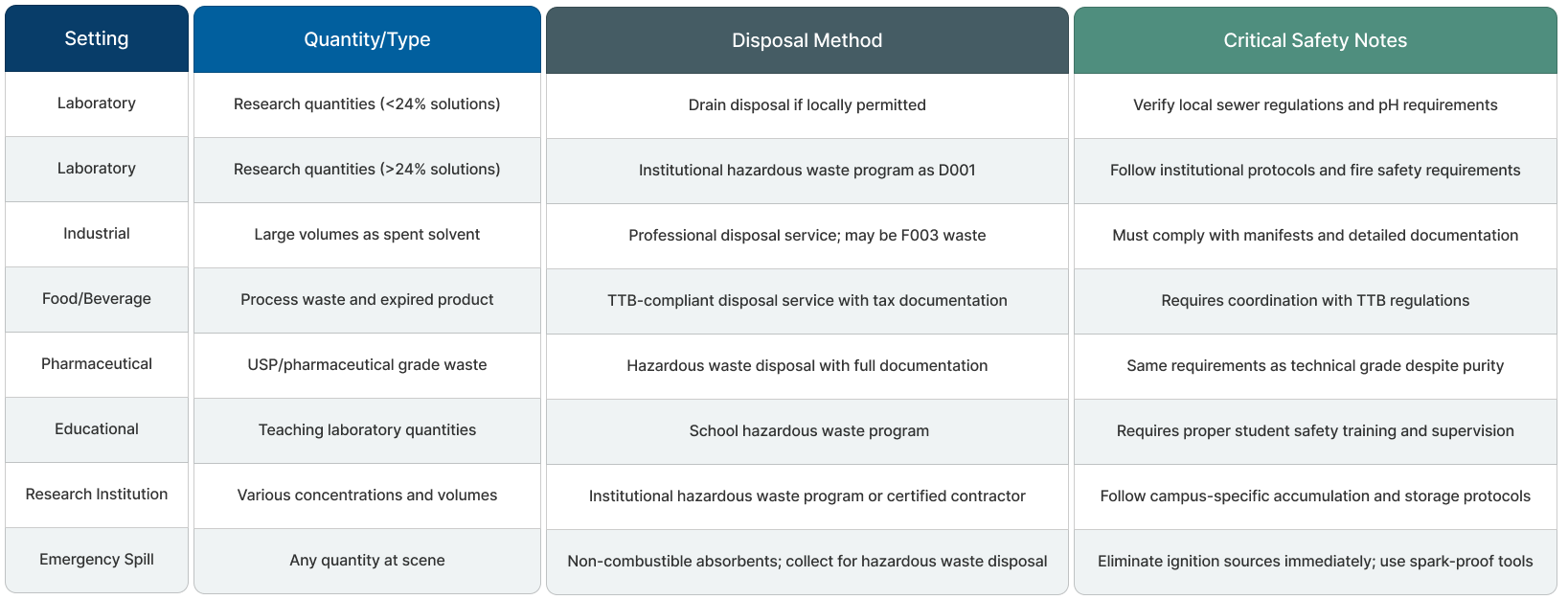
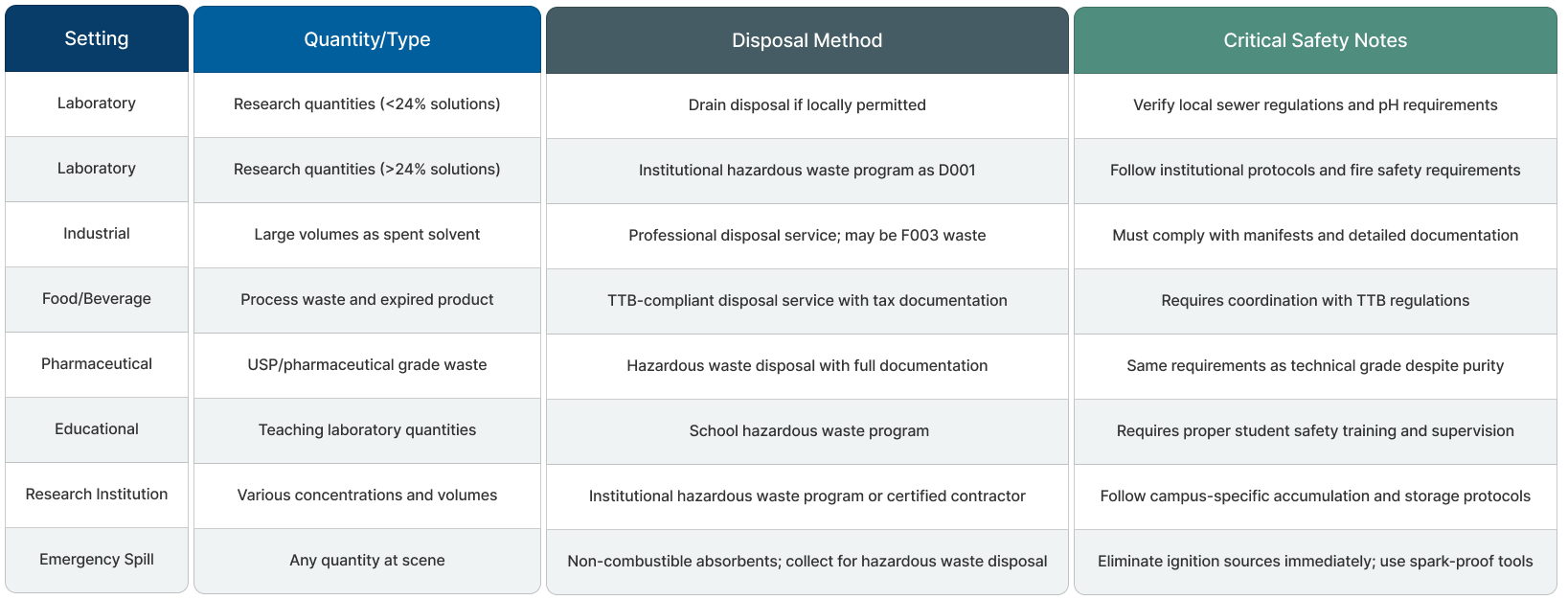
Quick Reference: Disposal Methods and Safety Requirements
Final Note
Non-denatured ethanol disposal requires careful attention to flammability hazards, environmental protection, and complex regulatory compliance involving both RCRA hazardous waste rules and TTB alcohol regulations. The absence of toxic denaturants simplifies some environmental concerns compared to denatured ethanol, but the extreme fire hazards and dual regulatory oversight create unique disposal challenges.
By understanding federal RCRA and TTB requirements, checking local regulations, using proper fire-safe storage and handling methods, working with licensed hazardous waste disposal services, and maintaining appropriate personal protective equipment throughout the process, you can ensure both safe and compliant non-denatured ethanol disposal.
When you're uncertain about any aspect of non-denatured ethanol disposal procedures, always consult with qualified Environmental Health and Safety professionals, contact certified waste management services familiar with both hazardous waste and TTB regulations, or reach out to your state environmental agency for guidance tailored to your specific situation.
For safe, regulatory-compliant disposal of non-denatured ethanol and expert guidance, contact licensed hazardous waste management companies with experience handling flammable liquids and alcohol products. Always consult current Safety Data Sheets (SDS) for specific handling and disposal information, and follow all applicable federal, state, and local regulations for hazardous waste management.
For more detailed guidance, explore our Resource Library
Our Customer Care team is also available for more information and documentation, including chemical Safety Data Sheets.
Need Non-Denatured Ethanol You Can Trust?
If you are looking for high-quality non-denatured ethanol for your lab, product line, or research facility, be sure to visit our store to explore our trusted selection and request a quote.
As your trusted partner in chemical supply, Lab Alley is always striving to meet the growing demands of our customers. We want you to be able to access all of your chemical needs in one place, along with streamlined online ordering and fast shipping.
Due to popular demand from our valued clientele, Lab Alley's non-denatured ethanol is available in a range of purities and packaging options to suit various commercial, laboratory, and personal needs.