




How to Safely Dispose of Polyethylene Glycol: Environmental and Safety Guidelines
Responsible disposal of polyethylene glycol (PEG) plays a vital role in environmental stewardship, workplace safety, and meeting regulatory standards. This versatile polymer is used extensively in pharmaceutical manufacturing, cosmetic formulations, food processing operations, laboratory research, and industrial applications, making proper disposal knowledge essential for professionals across multiple sectors.
Polyethylene glycol disposal presents unique challenges based on contamination status, molecular weight variations, and volume considerations. Understanding correct disposal methods protects ecosystems from biochemical oxygen demand impacts while maintaining compliance with wastewater treatment regulations.
This guide examines polyethylene glycol disposal fundamentals, covering regulatory frameworks, environmental considerations, biodegradability factors, and disposal pathways suited for different contamination levels and application settings.


In this article, we’ll review:
1. Why Proper Disposal Matters
2. How to Dispose of Polyethylene Glycol
3. Special Considerations for Polyethylene Glycol
Why Proper Disposal Matters
Polyethylene glycol disposal carries important implications that extend beyond routine waste management. Understanding these impacts helps explain why wastewater authorities and facilities have established specific guidelines for handling this biodegradable polymer.
Environmental Protection
Environmental considerations from polyethylene glycol occur when disposal methods fail to account for how the compound behaves in natural systems:
-
While polyethylene glycol demonstrates relatively low environmental toxicity and biodegrades naturally, substantial volumes can elevate biochemical oxygen demand (BOD) in aquatic environments, potentially reducing dissolved oxygen concentrations and harming fish and other water-dwelling organisms.
-
The biodegradation process consumes oxygen that aquatic species require for survival. When treatment facilities receive excessive PEG loads, biological processing may deplete oxygen levels, creating conditions that stress or kill aquatic life during the breakdown cycle.
-
Different molecular weight formulations degrade at varying rates, with lower molecular weight PEGs breaking down more rapidly than higher molecular weight versions.
-
Responsible disposal prevents these environmental impacts and demonstrates a commitment to sustainable chemical stewardship.
Health & Safety
Human health and safety factors in polyethylene glycol disposal remain relatively modest compared to hazardous chemicals:
-
Polyethylene glycol exhibits minimal acute toxicity and is generally recognized as safe (GRAS) status for numerous applications, including incorporation into food products as an additive and pharmaceutical formulations as an excipient.
-
Despite its low toxicity profile, thermal decomposition or heating generates vapors that may irritate respiratory passages.
-
Contact with PEG can cause skin irritation or allergic reactions in sensitive individuals. Prolonged or repeated contact may lead to dermatitis in susceptible workers.
-
Disposal operations involving large volumes or contaminated PEG create additional hazards from co-mingled chemicals, heavy metals, or biological agents.
-
Implementing appropriate disposal protocols reduces unnecessary exposure during waste handling operations.
Legal Compliance
Regulatory obligations for polyethylene glycol disposal vary significantly based on contamination status, volume, and local requirements:
-
Standard polyethylene glycol typically falls outside hazardous waste classifications under federal regulations, yet disposal operations must align with municipal wastewater discharge standards and industrial waste handling protocols established by treatment authorities.
-
Local wastewater treatment plants operate under discharge permits that specify acceptable chemical loads, BOD contributions, and concentration limits.
-
Industrial discharge permits often contain conditions governing polymer introductions to wastewater systems. Some municipalities enforce restrictions on synthetic polymer disposal due to treatment process limitations.
-
Substantial volumes or PEG contaminated with regulated substances trigger hazardous waste classification, requiring management through licensed disposal contractors.
-
Violations can result in penalties from wastewater authorities, corrective action requirements, and potential discharge permit suspensions.
How to Dispose of Polyethylene Glycol
Successful polyethylene glycol disposal begins with understanding contamination status, molecular weight characteristics, and local regulatory requirements that determine acceptable disposal pathways.
Check Applicable Regulations
Compliance verification establishes the groundwork for legally sound disposal operations.
Examine municipal wastewater treatment facility discharge limitations and pH parameters that govern what materials can enter sewer systems. Treatment plants maintain specific chemical load tolerances and organic loading capacities that affect PEG acceptability.
Confirm whether your operation holds industrial waste discharge authorizations that specify permissible discharge types, volumes, concentrations, and monitoring requirements.
Research state and local ordinances governing non-hazardous chemical waste handling. Requirements differ substantially across jurisdictions.
Establish whether contamination has occurred with hazardous substances, heavy metals, pharmaceutical residues, or biological materials. PEG mixed with regulated substances faces entirely different disposal requirements than pure material.
Review institutional environmental health and safety procedures for chemical waste handling if operating within an academic or research setting.
Verify the molecular weight of your PEG product, as physical properties and disposal options vary significantly between low molecular weight liquids (PEG 200, 400) and high molecular weight solids (PEG 3350, 8000).
Drain Disposal Considerations
Sewer discharge of polyethylene glycol depends on purity, volume, local authorization, and wastewater treatment capacity:
-
Pure, uncontaminated PEG in modest quantities may qualify for sanitary sewer disposal following dilution in numerous jurisdictions, but this option requires explicit verification from wastewater treatment authorities before implementation.
-
Contact local wastewater treatment plants directly to confirm acceptability, as discharge standards vary between facilities. Never assume drain disposal is acceptable without confirmation.
-
Substantial quantities should bypass drain disposal routes due to their potential to overwhelm treatment system capacity through elevated BOD contributions.
-
Contaminated PEG containing hazardous chemicals, heavy metals, pharmaceutical compounds, or biological agents cannot enter sewer systems under any circumstances.
-
Certain municipalities enforce specific limitations on polymer introductions to wastewater infrastructure. Verify local restrictions before establishing disposal programs.
Use Designated Waste Disposal Methods
Appropriate disposal routes align with waste characteristics, contamination status, volume, and regulatory classification.
Small Quantities (Laboratories and Small Businesses): Uncontaminated PEG in limited amounts often qualifies for dilution and sanitary sewer discharge after obtaining explicit approval from wastewater treatment authorities. Verify acceptable dilution ratios and maximum discharge volumes with local officials.
Alternative routes include collection in properly marked containers for management through institutional chemical waste systems. Some jurisdictions permit disposal through standard refuse streams for small quantities of pure PEG.
Label containers clearly with contents, including "Polyethylene Glycol," molecular weight if known, and accumulation start date.
Industrial Quantities: Substantial volumes warrant collection by authorized waste management services. Licensed waste contractors can transport bulk PEG to appropriate facilities.
Thermal treatment at licensed incineration or waste-to-energy facilities provides an environmentally sound option. PEG combusts cleanly, producing primarily carbon dioxide and water as end products while recovering energy value.
Participation in solvent reclamation programs offers recycling opportunities for certain PEG grades. Document all industrial-scale disposals through waste tracking manifests and maintain disposal records.
Contaminated PEG: Polyethylene glycol bearing hazardous chemical residues, heavy metal contamination, pharmaceutical active ingredients, or biological materials requires hazardous waste management through licensed contractors.
These wastes demand classification under applicable waste codes, labeling with appropriate hazard warnings, and documentation following hazardous waste protocols. Never attempt to dilute contaminated PEG to reduce hazardous characteristics.
Laboratory and Institutional Waste: Adhere to organizational environmental health and safety requirements, which often mandate collection through chemical waste programs regardless of PEG's non-hazardous classification.
Utilize chemical waste collection systems with appropriate container labeling. Academic and research facilities typically provide dedicated collection programs with regular pickup schedules.
Understanding Biodegradability
Polyethylene glycol undergoes biological decomposition when oxygen is present, distinguishing it from many persistent synthetic polymers.
Degradation speed correlates strongly with molecular size. Lower molecular weight formulations (PEG 200, 400, 600) degrade more rapidly through microbial action than higher molecular weight counterparts (PEG 3350, 8000), which break down more slowly due to their longer polymer chains.
This biodegradation capability positions PEG favorably relative to numerous synthetic polymers from an environmental perspective. However, the biodegradation process itself creates environmental considerations. As microorganisms consume PEG, they utilize dissolved oxygen from the surrounding water, temporarily reducing oxygen availability for aquatic organisms.
Never Mix Chemicals
Chemical compatibility concerns influence safe disposal practices and prevent hazardous reactions.
Prevent combining polyethylene glycol with powerful oxidizing compounds, including permanganates, peroxides, or nitrates. Avoid contact with concentrated acids or other incompatible substances that might trigger reactions or complicate disposal pathways.
Maintain separation from incompatible materials throughout storage and disposal operations. Mixed chemical wastes face more restrictive disposal requirements and substantially higher management costs.
Follow PPE Guidelines
Worker protection during polyethylene glycol disposal requires appropriate personal protective equipment:
-
Use suitable gloves during all handling activities. Nitrile gloves provide adequate protection for PEG contact.
-
Wear safety goggles or face shields to protect eyes from splashes during disposal operations.
-
Don protective garments or laboratory coats to prevent skin contact and clothing contamination.
-
Maintain sufficient air circulation when managing heated PEG or processing large volumes.
-
Ensure emergency eyewash equipment and safety showers remain accessible within 10 seconds of areas where chemical handling occurs.
-
When handling contaminated PEG containing hazardous substances, upgrade PPE to match the most hazardous component.
Special Considerations for Polyethylene Glycol
Polyethylene glycol disposal involves unique factors based on molecular weight variations, contamination status, and application-specific considerations.
Molecular Weight Variations
Different molecular weight PEGs exhibit distinct physical characteristics that significantly affect disposal options and environmental behavior.
Products designated PEG 200, 400, 600, 1000, 3350, 8000, and higher span a range from thin liquids to waxy solids or powders. Lower molecular weight formulations exist as liquids at room temperature and demonstrate enhanced biodegradation kinetics. These grades more readily qualify for dilution and sewer discharge where local regulations permit.
Higher molecular weight versions appear as solids, semi-solids, or waxy materials with slower biological breakdown rates. These grades typically require collection for alternative disposal routes, including incineration or solid waste management.
Pharmaceutical Grade Disposal
Polyethylene glycol incorporated into pharmaceutical products should flow through pharmaceutical waste channels, particularly when active pharmaceutical ingredient (API) contamination exists.
Pharmaceutical waste streams face specific regulatory oversight under healthcare waste management frameworks. Even non-hazardous pharmaceutical excipients like PEG should follow specialized disposal pathways when they've contacted drug substances.
PEG contaminated with pharmaceutical compounds cannot enter standard sewer systems or general refuse. Manage through reverse distribution programs, pharmaceutical waste contractors, or licensed incineration facilities.
Laboratory and Research Settings
Academic institutions and research facilities often require polyethylene glycol collection through chemical waste programs despite its non-hazardous classification.
These institutional requirements support comprehensive waste tracking, documentation integrity, and consistent handling across diverse chemical inventories. Universities typically provide dedicated laboratory chemical waste collection with regular pickup schedules and trained personnel managing waste streams.
Food-Grade PEG
Food-grade polyethylene glycol waste originating from food production operations may enter standard food waste disposal routes following appropriate dilution in many locations.
Verify local food processing waste guidelines before implementing disposal programs. Food manufacturers should consult with wastewater authorities regarding acceptable disposal methods. Small quantities from food applications typically qualify for sanitary sewer disposal after dilution, though confirmation remains essential.
Contaminated PEG
Polyethylene glycol bearing heavy metal contamination, solvent residues, or other regulated substance contamination must receive hazardous waste management.
Contamination transforms PEG from a manageable non-hazardous substance into regulated waste requiring specialized handling. Common contamination scenarios include PEG used in metal processing operations, solvent extraction applications, or pharmaceutical manufacturing.
Contaminated materials cannot enter drain systems or general refuse streams, regardless of the base PEG material's non-hazardous status. Maintain detailed records documenting contamination sources and disposal methods.
Incineration Options
Polyethylene glycol accepts thermal disposal through authorized waste-to-energy operations, where combustion yields predominantly carbon dioxide and water as end products.
Licensed incineration facilities provide an environmentally sound disposal option for both pure and contaminated PEG. Thermal treatment eliminates waste volume while recovering energy value, making incineration particularly attractive for large quantities or contaminated materials.
Recycling and Recovery Options
Certain industrial solvent recovery operations accept uncontaminated PEG for reprocessing or recycling, especially premium-grade materials.
Recycling represents the most environmentally preferable disposal alternative when available. Reclaimed PEG can be redistilled, purified, and reformulated for reuse. Contact specialty chemical reclaimers to explore recycling possibilities for your specific PEG grade and volume.
Pharmaceutical and technical grades command a higher recycling value than commodity grades. Maintain segregation of different molecular weights and grades to preserve recycling value.
Small-Scale and Household Quantities
Limited quantities of pure PEG from consumer applications such as personal care items or food-grade laxative products typically qualify for household refuse disposal or dilution and drain discharge.
Review local household waste guidance to confirm acceptable disposal methods in your area. Consumers disposing of PEG-containing products like cosmetics, personal lubricants, or over-the-counter laxatives can typically use standard household disposal methods.
For larger consumer quantities or uncertain disposal status, contact local household hazardous waste collection programs.
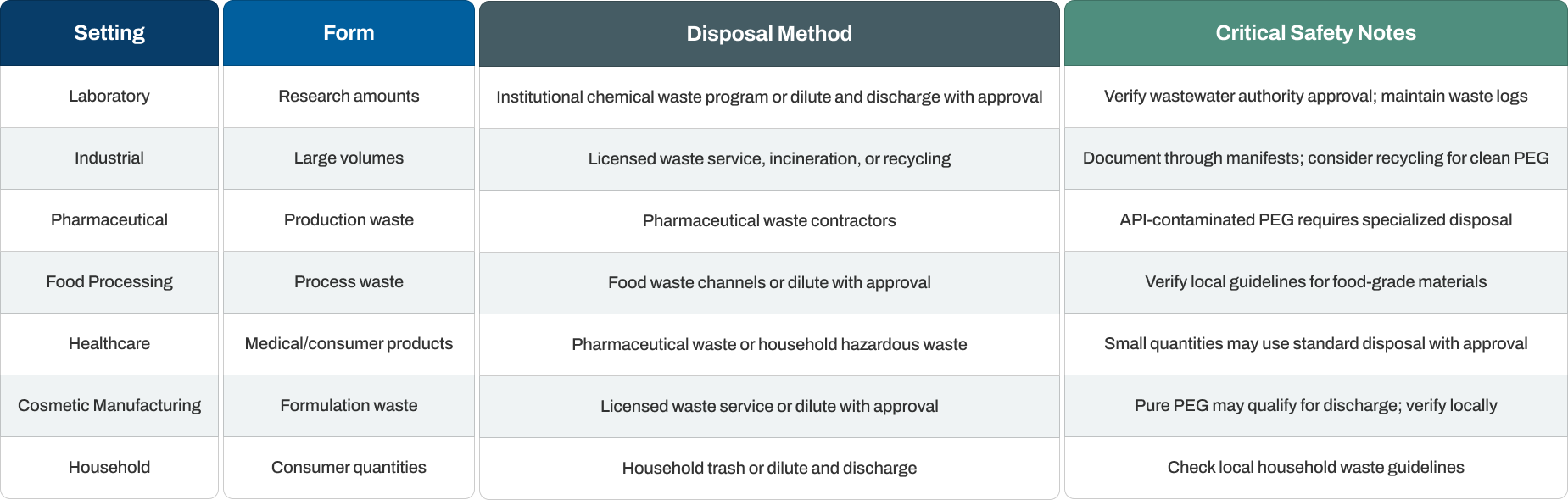
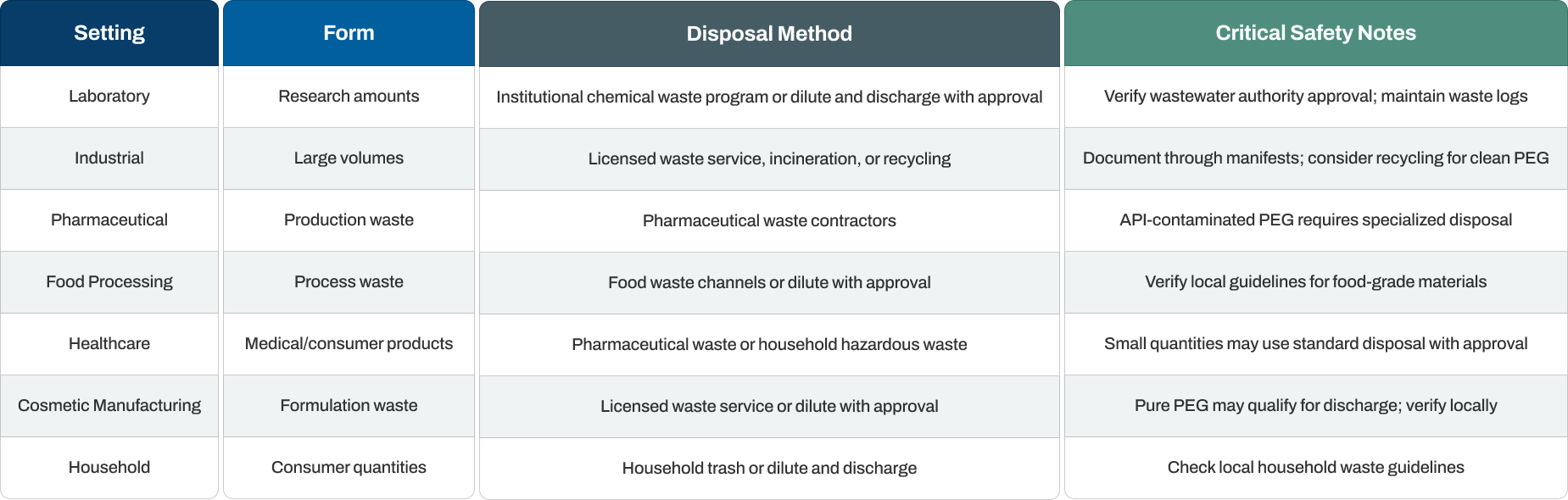
Quick Reference: Disposal Methods and Safety Requirements
Final Note
Polyethylene glycol's non-hazardous classification under typical circumstances permits flexible disposal options, yet contamination status, volume, and local wastewater capacity govern acceptable methods. Understanding municipal discharge requirements, verifying contamination status, and maintaining documentation promote compliant, environmentally responsible disposal operations.
For safe, regulatory-compliant disposal of polyethylene glycol and expert guidance on contamination-specific requirements, contact local wastewater treatment authorities or licensed waste management companies. Always consult current Safety Data Sheets (SDS) for specific handling and disposal information related to your particular PEG molecular weight and grade, and follow all applicable institutional, local, state, and federal regulations for chemical waste management.
When uncertain about disposal procedures, consult environmental health professionals or waste disposal specialists for guidance specific to your contamination status, molecular weight, volume, and jurisdiction.
For more detailed guidance, explore our Resource Library
Our Customer Care team is also available for more information and documentation, including chemical Safety Data Sheets.
Need Polyethylene Glycol You Can Trust?
If you are looking for high-quality polyethylene glycol for your lab, product line, or research facility, be sure to visit our store to explore our trusted selection and request a quote.
As your trusted partner in chemical supply, Lab Alley is always striving to meet the growing demands of our customers. We want you to be able to access all of your chemical needs in one place, along with streamlined online ordering and fast shipping.
Due to popular demand from our valued clientele, Lab Alley's polyethylene glycol is available in a range of purities and packaging options to suit various commercial, laboratory, and personal needs.