



Isopropanol (Isopropyl Alcohol) Overview: Properties, Applications, Safety & Sourcing Guide
Isopropanol, also known as isopropyl alcohol or 2-propanol, is a colorless, flammable organic compound widely used as a solvent, disinfectant, and cleaning agent across medical, industrial, household, and laboratory applications. You recognize this versatile chemical as "rubbing alcohol," found in medicine cabinets and first aid kits worldwide.
Visit any hospital and 70% isopropanol sits in wall-mounted dispensers, sanitizing hands between every patient contact. Walk through electronics manufacturing facilities and 99% isopropanol cleans circuit boards and removes flux residues. Open household cleaning cabinets and isopropanol-based products shine mirrors, remove sticky residues, and disinfect surfaces. Step into research laboratories and isopropanol serves as an everyday solvent for countless procedures from DNA extraction to equipment sterilization.
What makes isopropanol simultaneously indispensable and hazardous? The same rapid evaporation that leaves surfaces streak-free also creates fire risks from flammable vapors. The antimicrobial action that kills bacteria on the skin also causes central nervous system depression if ingested. The solvent power that dissolves oils and greases also dries and irritates skin with repeated contact. Every application weighs isopropanol's benefits against its flammability, which demands constant attention to ignition source control.
Whether you're formulating hand sanitizers, cleaning sensitive electronics, conducting laboratory research, or manufacturing industrial products, understanding isopropanol's concentration-dependent properties and fire hazards helps prevent accidents while maximizing effectiveness. This guide walks through everything from antimicrobial mechanisms to purchasing considerations, providing practical information for working safely with this ubiquitous yet flammable compound.
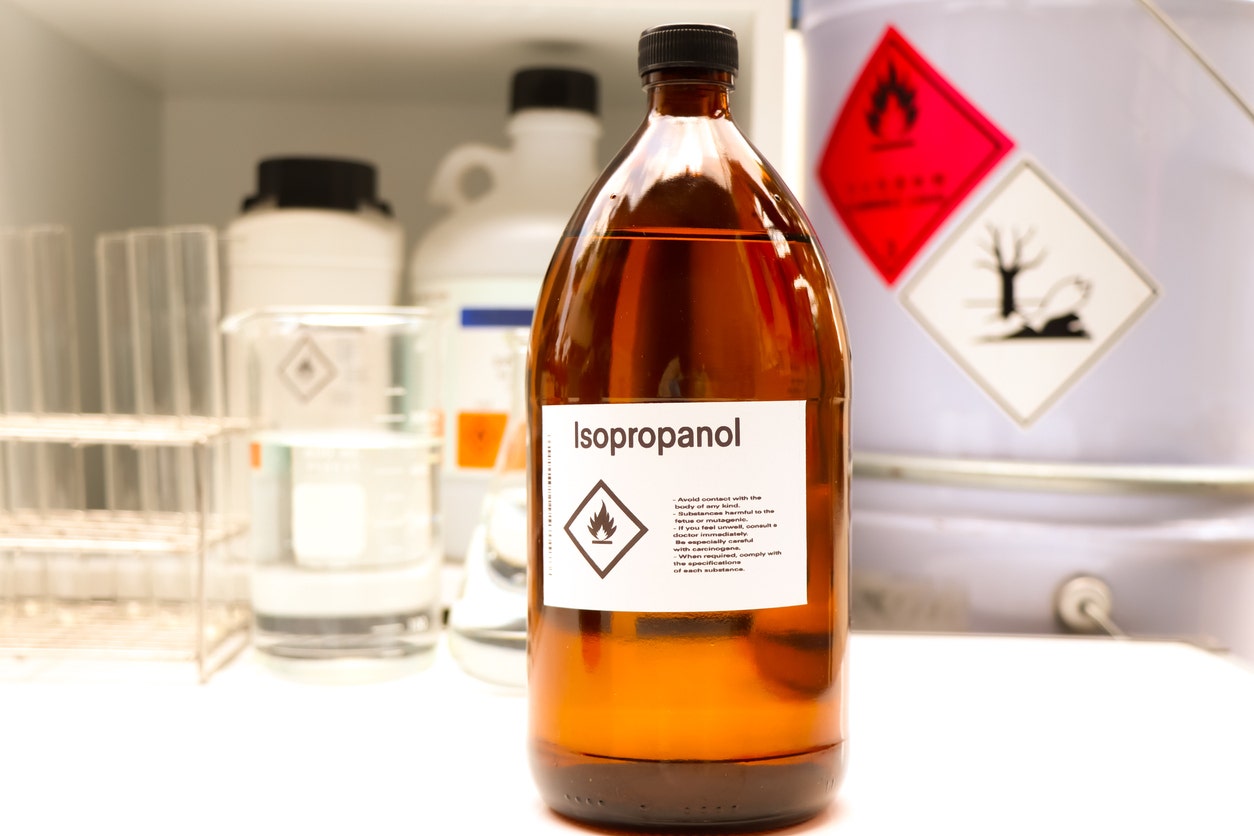
Properties of Isopropanol
Chemistry creates capability. Isopropanol's molecular structure produces characteristics making it valuable across diverse applications while requiring careful handling due to extreme flammability.
Key Facts About Isopropanol
-
Compound Name: Isopropanol
-
Synonyms: Isopropyl Alcohol, IPA, 2-Propanol, sec-Propyl alcohol, Dimethyl carbinol, Rubbing alcohol
-
Chemical Formula: (CH₃)₂CHOH or C₃H₈O
-
CAS Number: 67-63-0
-
RTECS Number: NT8050000
-
Molecular Weight: 60.10 g/mol
-
Appearance: Colorless liquid with a characteristic odor of rubbing alcohol
Density Characteristics
At 20°C, isopropanol weighs 0.786 g/cm³, making it lighter than water with a specific gravity of 0.79. Pour isopropanol onto water and it initially floats before mixing. This lower density affects emergency response procedures since floating isopropanol spreads fires across water surfaces rather than sinking safely.
Thermal Properties
Isopropanol boils at 82.5°C (181°F), slightly higher than ethanol but still well below water's boiling point. This explains why isopropanol evaporates readily at room temperature, leaving cleaned surfaces dry within minutes. The freezing point sits at -89.5°C (-129°F), keeping isopropanol liquid even in extreme cold.
Isopropanol and water create an azeotrope at approximately 80.37°C containing roughly 91% isopropanol. In this specific composition, both components evaporate together at identical rates. Simple distillation cannot push concentrations beyond this point. Reaching higher purity requires specialized separation techniques.
Here's the critical safety number: 11.7°C (53°F) flash point. This temperature indicates when isopropanol vapors ignite from any spark or flame. Normal room temperature exceeds this threshold year-round, meaning isopropanol continuously releases flammable vapors. NFPA Class IB flammable liquid classification reflects serious fire dangers. Autoignition temperature reaches 460°C.
Isopropanol, also known as isopropyl alcohol (IPA), is a colorless, flammable solvent widely used in laboratories, manufacturing, healthcare, electronics, and cleaning applications. The compound dissolves oils, resins, and many organic materials while evaporating quickly without residue, which supports surface preparation, disinfection, chemical processing, and equipment cleaning. U.S. laboratories and manufacturers sourcing isopropanol by grade and concentration can contact Lab Alley at 512-668-9918 for product selection and ordering support.
Solubility and Reactivity
Mix isopropanol with water in any ratio and they blend completely. This unlimited miscibility simplifies formulation work for products ranging from hand sanitizers to cleaning solutions. Isopropanol also mixes freely with ethanol, ether, and chloroform, providing flexibility for complex chemical formulations.
Isopropanol dissolves a wide range of substances, including ethyl cellulose, polyvinyl butyral, oils, alkaloids, and natural resins. However, salt solutions resist mixing with isopropanol, enabling salting-out processes.
pH measures neutral to slightly acidic in aqueous solutions. Unlike strong acids or bases, isopropanol won't attack metals through pH corrosion or burn skin through extreme acidity or alkalinity. Viscosity increases at lower temperatures, affecting flow characteristics during cold-weather handling.
Vapor pressure reaches 33 mmHg at 20°C and 44 mmHg at 25°C. Higher vapor pressure means isopropanol readily evaporates, continuously generating flammable vapors. Vapors mix with air, creating explosive atmospheres between 2.0% and 12.0% concentration by volume. This wide, explosive range demands vigilance about vapor accumulation.
Vapors heavier than air sink and accumulate in low areas like pits, basements, and floor drains. Active metals, including potassium, aluminum, and titanium, react with isopropanol, forming isopropoxides. Never store these reactive metals near isopropanol.
Strong oxidizers react violently, producing exothermic reactions that generate enough heat to ignite isopropanol vapors. Hydrogen peroxide, nitric acid, and similar compounds create dangerous situations. Strong acids and strong bases also create incompatibilities requiring separate storage.
Oxidation converts isopropanol to acetone. Prolonged storage under certain conditions may form peroxides, though this occurs less readily than with ethers. Hygroscopic behavior causes moisture absorption from the air. Open containers of high-purity isopropanol gradually dilute as atmospheric water gets absorbed.
Isopropanol Concentrations and Grades
Concentration profoundly affects both performance and appropriate applications. Water content influences antimicrobial effectiveness, evaporation rate, and solvent characteristics.
99% - 99.8% (Anhydrous/Nearly Anhydrous)
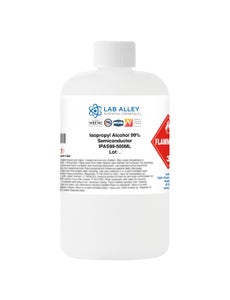
Highest purity grades contain virtually no water, making them essential for moisture-sensitive applications. Electronics cleaning demands anhydrous isopropanol since water damages circuits and leaves residues. Semiconductor manufacturing specifies 99%+ grades for precision cleaning during chip fabrication.
Laboratory solvent applications use 99% isopropanol for organic synthesis, where water interferes with reactions. Precision cleaning in aerospace, optics, and medical device manufacturing requires water-free formulations.
91% Isopropanol
Contains approximately 9% water, representing the azeotropic composition achievable through simple distillation. This concentration balances performance against cost, making it popular for general cleaning, disinfection, household use, and industrial solvent applications.
Antimicrobial effectiveness remains strong at 91% while evaporation proceeds quickly. More economical than 99% grades, 91% isopropanol suits applications where trace water poses no concerns.
70% Isopropanol
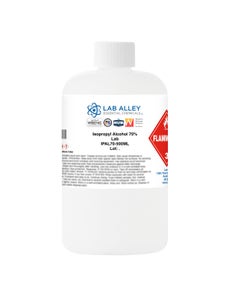
Contains 30% water in the most commonly recommended concentration for killing bacteria and viruses on skin and surfaces. Medical disinfection protocols typically specify 70% isopropanol for maximum antimicrobial effectiveness. Hand sanitizer formulations, first aid antiseptics, and surface disinfection rely on this concentration.
Why does 70% work better than 99% for disinfection? Water content enhances antimicrobial effectiveness by improving penetration into microorganisms. Pure alcohol coagulates proteins on microbial cell surfaces too rapidly, forming protective barriers. The 30% water slows this coagulation, allowing deeper penetration that denatures proteins throughout the cell.
Other Concentrations
Lower concentrations (50%, 40%) serve specific cleaning and formulation applications. Concentrations above 91% require specialized production techniques beyond simple distillation due to the water-isopropanol azeotrope.
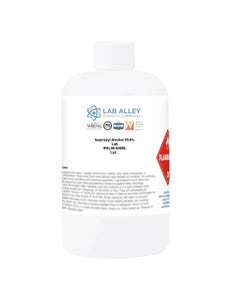
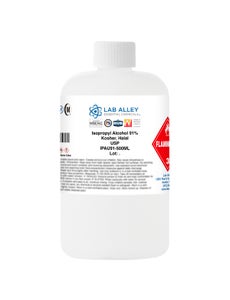
Isopropanol from Lab Alley is offered in multiple grades and concentrations, with packaging ranging from small laboratory bottles to bulk drums and totes.
Common Uses & Applications
Isopropanol's combination of antimicrobial properties, solvent power, rapid evaporation, and regulatory approval creates opportunities spanning healthcare through manufacturing.
Medical & Healthcare Applications
Antiseptic and disinfectant uses typically employ 70% concentration, providing rapid kill of bacteria, viruses, and fungi. Healthcare workers sanitize their hands with isopropanol-based products dozens of times daily. Surgical site preparation uses isopropanol for reducing microbial loads before incisions.
Rubbing alcohol for topical application treats minor cuts and abrasions while providing antiseptic protection. Hand sanitizer formulations combine 60-95% isopropanol with emollients and thickeners. Medical equipment sterilization employs isopropanol for surfaces and devices that tolerate alcohol contact. Hospital disinfection protocols specify isopropanol for environmental cleaning.
Laboratory & Research Applications
General laboratory solvent applications make isopropanol ubiquitous in research settings. Organic synthesis uses isopropanol as a reaction solvent and reagent. Analytical chemistry procedures incorporate isopropanol as an extraction solvent and chromatography component.
DNA precipitation and purification techniques employ cold isopropanol. Adding isopropanol to nucleic acid extracts causes DNA to precipitate as visible strands easily collected by centrifugation. Cleaning laboratory glassware and equipment benefits from isopropanol's solvent power and complete evaporation. HPLC mobile phase applications incorporate isopropanol for separating compounds.
Industrial Applications
Solvent uses for coatings, inks, resins, adhesives, and cleaning agents consume substantial isopropanol volumes. Degreasing and cleaning agents for manufacturing rely on isopropanol's ability to dissolve oils, then evaporate completely without residue.
Electronics cleaning and flux removal after circuit board soldering requires high-purity isopropanol. Extraction solvent applications pull compounds from natural products. Chemical intermediate production starts with isopropanol, with oxidation producing acetone. Antifreeze and de-icing formulations incorporate isopropanol for freezing point depression.
Household & Personal Care Applications
General household cleaning and disinfection products contain isopropanol for antimicrobial action and streak-free drying. Glass and mirror cleaners rely on isopropanol's rapid evaporation, leaving clear, residue-free surfaces. Stain remover formulations use isopropanol for dissolving organic stains.
Cosmetics and personal care products incorporate isopropanol as an ingredient, providing solvent action and antimicrobial preservation. Removal of adhesives and sticky residues exploits isopropanol's ability to dissolve many adhesive formulations.
Automotive & Fuel Applications
Fuel line antifreeze and gas dryer additives prevent water in fuel tanks from freezing during cold weather. Windshield washer fluid formulations combine isopropanol with detergents and dye. Engine cleaning and degreasing applications use isopropanol for removing oil and grease deposits.
Other Applications
Printing industry solvent applications dissolve inks and clean printing equipment. Preservation of biological specimens employs isopropanol for fixing tissues. Ink solvent and lubricant roles in inkjet printers maintain printhead function. Manufacturing of perfumes and cosmetics incorporates isopropanol throughout production processes.
Fight Your Kidney Stone with This Natural Product Hack
Fight kidney stones. Discover how citric acid naturally prevents stone formation.
Is Lactic Acid Bad? A Look at the Health Science
Is lactic acid bad for you? Debunking myths and revealing its vital role in your body & beyond.
Hospitality Without Hitchhikers: Boric Acid’s Role in Bed Bug Prevention
Protect your hospitality business. Boric acid is key to preventing bed bug infestations.
Harnessing Silica Sulfuric Acid to Enhance Concrete Durability
Enhance concrete longevity. Silica sulfuric acid improves strength and chemical resistance.
Safety Information
Isopropanol's extreme flammability overshadows other hazards. While ingestion toxicity, skin drying, and inhalation effects deserve attention, fire prevention must dominate safety planning.
Hazards & Precautions
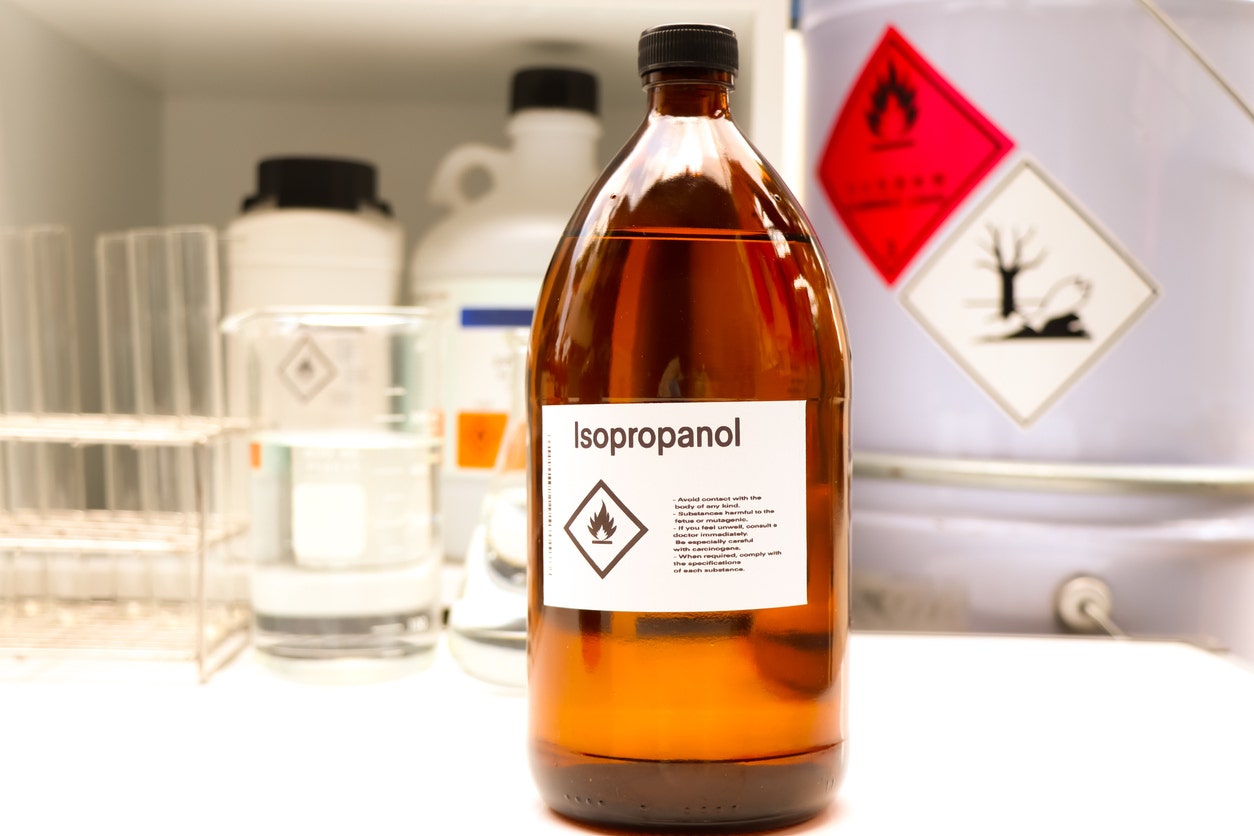
Flammability: NFPA Class IB flammable liquid and DOT Hazard Class 3 designations reflect serious fire risks. Flash point 11.7°C (53°F) means the room temperature constantly exceeds the ignition threshold. Vapors form explosive mixtures with air between 2.0% and 12.0% concentration.
Fire/Explosion Risk: Vapors heavier than air travel along floors and through ventilation systems, accumulating in low areas far from original containers. Ignition sources, including static sparks, hot surfaces, or electrical equipment, can ignite these vapor clouds.
Health Effects - Inhalation: Eye, nose, and throat irritation occur from vapor exposure. Headache, dizziness, and drowsiness develop with continued inhalation. High concentrations cause central nervous system depression.
Health Effects - Skin: Prolonged or repeated contact causes drying, cracking, and irritation. Isopropanol absorbs through the skin, entering the bloodstream during extensive exposure.
Health Effects - Ingestion: Causes central nervous system depression. Severe cases lead to coma requiring emergency medical treatment. Never induce vomiting after isopropanol ingestion. Seek immediate medical attention.
Personal Protective Equipment (PPE)
Safety goggles or chemical safety glasses prevent eye contact. Chemical-resistant gloves, with nitrile recommended, protect skin from direct contact and absorption. Lab coats or protective clothing shield the body and personal garments from splashes.
Closed-toe safety shoes prevent foot contact with spills. Remove clothing immediately when wet with isopropanol since the flammable liquid soaks into fabric. Respiratory protection with organic vapor cartridges becomes required when vapor concentrations exceed exposure limits.
Storage Guidelines
Store in cool, dry, well-ventilated areas away from heat, sparks, open flames, and all ignition sources. Approved flammable liquid storage cabinets provide critical fire protection. Keep containers tightly closed, preventing evaporation and moisture absorption.
Ground and bond containers during transfer operations, preventing static discharge. Store away from oxidizers, acids, bases, and incompatible materials. Prevent vapor accumulation in low or confined areas through adequate ventilation.
Emergency Procedures
Fire: Use alcohol-resistant foam extinguishers. CO₂ and dry chemical extinguishers also work effectively. Water may be ineffective for extinguishing flames, but it helps cool containers.
Spill: Eliminate all ignition sources immediately. Ventilate the area thoroughly. Absorb spilled liquid with an inert material for proper disposal. Prevent entry into drains and waterways.
Exposure - Eyes: Irrigate immediately with water for at least 15 minutes. Seek medical attention for persistent irritation.
Exposure - Skin: Flush with large amounts of water while removing contaminated clothing. Seek medical attention for persistent irritation.
Exposure - Inhalation: Move to fresh air immediately. Provide respiratory support if breathing becomes difficult. Seek medical attention for significant exposures.
Exposure - Ingestion: Seek immediate medical attention. DO NOT induce vomiting.
Regulatory & Classification
Isopropanol faces multiple regulatory frameworks governing workplace safety, transportation, medical use, and environmental protection.
OSHA Classification
Class IB Flammable Liquid classification triggers workplace safety requirements, including approved storage cabinets, proper labeling, fire protection systems, and worker training. TWA (8-hour time-weighted average) stands at 400 ppm (980 mg/m³). STEL (short-term exposure limit) reaches 500 ppm (1225 mg/m³). IDLH (Immediately Dangerous to Life or Health) sits at 2000 ppm.
NIOSH and ACGIH Recommendations
NIOSH REL (Recommended Exposure Limit) TWA matches OSHA at 400 ppm (980 mg/m³) with REL STEL at 500 ppm (1225 mg/m³). ACGIH TLV-TWA stands at 400 ppm with TLV-STEL at 500 ppm.
DOT Classification
UN 1219, Hazard Class 3 (Flammable liquid), Packing Group II (Medium Danger) designates isopropanol for shipping purposes. Proper shipping name appears as "Isopropyl alcohol" or "Isopropanol" on documentation. Hazmat shipping fees apply to all isopropanol shipments.
FDA Status
Approved for use in pharmaceutical formulations meeting USP (United States Pharmacopeia) grade specifications. Included in the FDA Inactive Ingredients Database for oral and topical preparations. Approved as an antiseptic and disinfectant in medical applications. Approved ingredient in over-the-counter hand sanitizer formulations.
Environmental Considerations
Biodegradable under aerobic conditions means microorganisms break down isopropanol in the presence of oxygen. Low bioaccumulation potential prevents concentration in organisms. However, isopropanol can be toxic to aquatic organisms in high concentrations. Should not be discharged into waterways. Disposal must comply with federal (RCRA), state, and local hazardous waste regulations.
How to Safely Dispose of Sulfuric Acid
Sulfuric acid is one of the most common acidifying reagents and sulfur sources, essential across multiple industries. At the same time, it is also a toxic and highly hazardous chemical reagent, requiring safe handling and disposal by trained personnel.
How To Use Nitric Acid Safely
Nitric acid is a corrosive chemical and harmful to humans. Its contact with skin and eyes can cause serious burns. Affected skin will require flushing with soap and lukewarm water for at least 30 minutes.
Acetone Safety: Proper Storage and Disposal Methods
Acetone is a staple chemical solvent in most laboratories. It is also perhaps one of the most recognizable chemicals to the layperson, best known as the pungent solvent comprising nail polish remover.
How to Use Potassium Iodide Safely and Where to Buy it Online
Potassium Iodide Powder, also known as Potassium Salt of Hydriodic Acid, Iodic Acid Potassium Salt, Potassium Monoiodide, and Knollide, has the chemical formula KI. It appears as a white crystalline powder, odorless, and is soluble in water at ambient conditions.
Medicinal Oils Derived From Plants
You can order food-grade ethanol, extraction-grade ethanol, ACS-grade ethanol, FCC-grade ethanol, USP grade ethanol, HPLC-grade ethanol and kosher ethanol from Lab Alley. Perform ethanol (EtOH) extraction at ultra-low temperatures for the best yields.
Ethanol extraction is a cost-effective way to use ethanol as an industrial solvent to produce high-quality botanical extracts from large volumes of medicinal herbs or plants.
Isopropanol Grades and Pack Sizes
Lab Alley stocks multiple isopropanol concentrations and package sizes serving diverse application needs from laboratory research through industrial manufacturing.
Available Grades & Purities
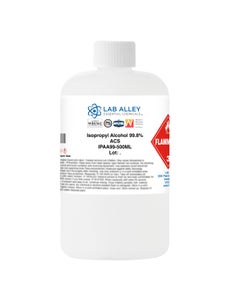
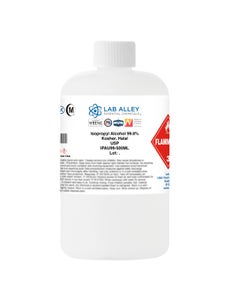
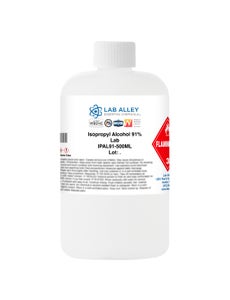
Multiple grades accommodate varying purity and regulatory requirements. 99.8% Lab Grade provides nearly anhydrous isopropanol for moisture-sensitive applications. 99% grades serve semiconductor and electronics applications. 91% USP Grade meets United States Pharmacopeia standards for medical and pharmaceutical use. 91% Lab Grade offers an economical option for general laboratory and industrial applications.
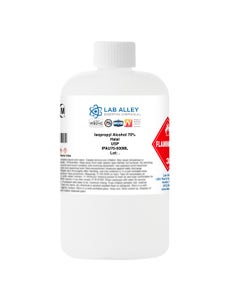
70% USP Grade meets pharmacopeia standards for antiseptic and disinfectant applications. 70% Lab Grade provides antimicrobial effectiveness for non-medical cleaning. ACS Reagent Grade and HPLC Grade are available from specialty suppliers. Kosher and Halal certified options serve manufacturers requiring religious compliance certifications.
Concentrations of 70%, 91%, and 99-99.8% represent the most commonly used specifications.
Pack Sizes & Bulk Availability
Lab Alley offers isopropanol in sizes ranging from 500mL to 55 gallons for quick shipping. Common pack sizes include 500mL, 1L, 4L, 1 gallon, 4 gallon case packs, 5 gallon pails, and 55 gallon drums. Bulk quantities, including 270-gallon totes and pallets, may be available for high-volume operations. Spray bottle formats provide a convenient application for cleaning and disinfection tasks.
Regulatory Requirements
Hazmat shipping fees apply to all isopropanol shipments due to flammability classification. DOT regulations require proper labeling and handling of Class 3 flammable liquids during transportation. USP grade meets United States Pharmacopeia standards for medical and pharmaceutical use. Proper storage in approved flammable liquid cabinets becomes required for workplace compliance with OSHA regulations.
FAQs
What is Isopropanol, and how does it differ from ethanol?
What are the potential side effects of Isopropanol exposure?
How should Isopropanol be stored to prevent degradation?
Does Isopropanol have an expiration date?
Is 70% or 99% Isopropanol better for disinfection?
Seventy percent isopropanol provides superior antimicrobial effectiveness compared to 99% for most disinfection applications. The 30% water content enhances penetration into microorganisms, allowing isopropanol to denature proteins throughout cells. Pure isopropanol (99%) coagulates surface proteins too rapidly, forming protective barriers that shield interior cell structures. Medical protocols and CDC recommendations specify 70% isopropanol for hand sanitization and surface disinfection. Use 99% for electronics cleaning and applications where water causes problems, but choose 70% when killing bacteria and viruses is the primary goal.