





Shelf Life & Expiration of Polyethylene Glycol (PEG): Storage and Stability Guide
Polyethylene Glycol (PEG) is a versatile polymer used across pharmaceutical, cosmetic, industrial, and laboratory applications. Understanding how long it remains effective helps you maintain product quality and ensure reliable performance. PEG offers remarkable stability compared to many chemical compounds, but proper storage practices are essential to prevent oxidation, discoloration, and degradation.
PEG stability varies by purity grade, environmental conditions, and container selection. Industrial grades can remain usable for extended periods, while pharmaceutical grades follow stricter shelf life guidelines. Exposure to air, light, and heat accelerates oxidation and can lead to peroxide formation. This guide provides practical recommendations for maximizing PEG shelf life and recognizing when replacement becomes necessary.


In this article, we’ll review:
- How Long Does Polyethylene Glycol Last?
- Signs That Polyethylene Glycol Has Expired
- What to Do If Polyethylene Glycol Is Expired
How Long Does Polyethylene Glycol Last?
PEG longevity is influenced by grade, purity, packaging quality, and storage practices. Understanding these factors allows you to make informed decisions about inventory management and replacement timing.
Shelf Life Duration
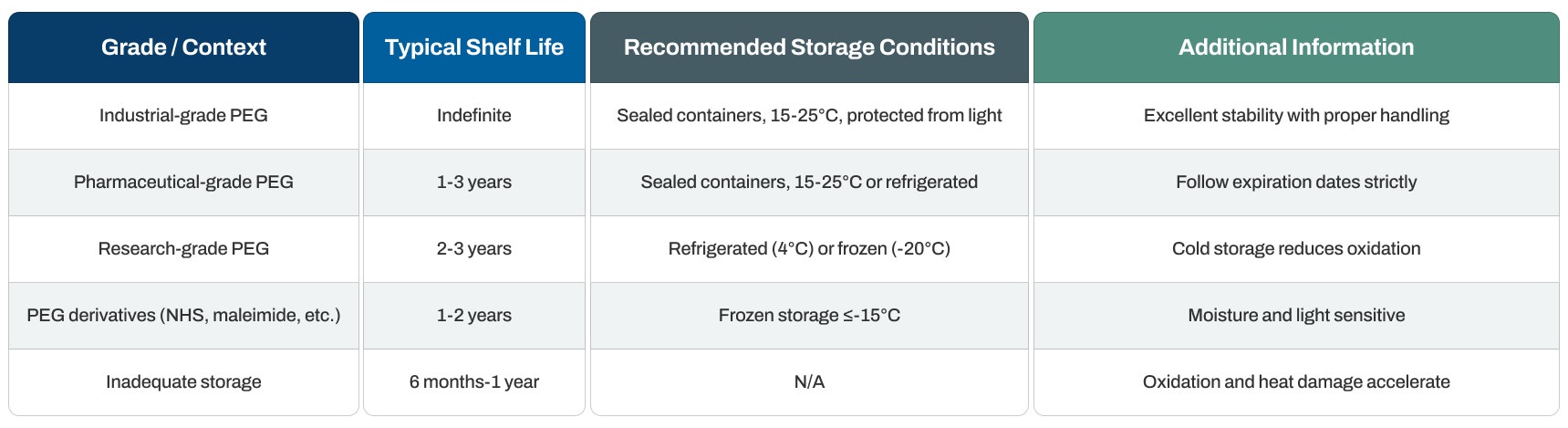
Industrial-grade PEG: Can remain usable indefinitely when stored in sealed containers. Its inherent chemical stability and resistance to hydrolysis support long-term warehousing when handled correctly.
Pharmaceutical-grade PEG: Manufacturers typically assign shelf lives of 1 to 3 years to maintain consistent potency and quality standards. This applies to PEG used in laxatives, drug formulations, and other regulated pharmaceutical products where precise specifications matter.
Research-grade PEG: Generally follows similar timeframes as pharmaceutical grades. Cold storage in refrigerated or frozen conditions can extend usability when quality testing confirms acceptable parameters.
Molecular weight variations: All molecular weights (PEG 200, 400, 1000, 3350, 4000, 6000, 8000, etc.) display comparable stability characteristics, simplifying storage planning across different grades.
Chemical Stability
PEG exhibits outstanding stability under typical conditions, though certain factors influence how well it maintains quality:
Inherent stability: This polymer resists hydrolysis and doesn't readily deteriorate during storage. Such robust chemistry enables extended shelf life when environmental factors are controlled.
Microbial resistance: PEG doesn't support mold or bacterial growth, eliminating biological contamination as a concern. This characteristic makes it particularly reliable for warehouse storage.
Oxidation pathways: Air, light, and heat exposure can trigger oxidative processes that form peroxides and breakdown products. While oxidation happens slowly under normal circumstances, it represents the primary threat to stored PEG.
Hydrolysis resistance: Unlike many polymers, PEG shows excellent resistance to water-induced breakdown. This durability contributes significantly to its impressive storage characteristics.
pH stability: Research and pharmaceutical grades maintain consistent pH levels over time when stored appropriately. pH shifts can signal aging or contamination in sensitive applications.
Purity & Packaging
Container choices and purity levels significantly impact how well Polyethylene Glycol retains its quality:
Purity considerations: Pharmaceutical grades face stricter shelf life requirements compared to industrial or cosmetic grades. These stringent standards guarantee consistent performance in regulated settings where exact specifications are mandatory.
Container materials: HDPE, polypropylene, glass, and stainless steel provide optimal protection during extended storage. These materials avoid chemical interactions and prevent contamination.
Oxygen barriers: Low oxygen permeability in containers is crucial for minimizing oxidative degradation. The barrier quality directly affects how quickly oxidation proceeds.
Sealed protection: Airtight containers guard against both oxidation and moisture absorption. Manufacturer packaging delivers the best protection until initial use.
Specialized derivatives: Certain PEG derivatives (NHS esters, maleimides, thiols, acrylates) show heightened sensitivity to moisture and light, requiring frozen storage at -15°C or colder. These functionalized varieties demand more rigorous protocols than standard PEG.
Storage Conditions
Creating the right storage environment is fundamental to preserving Polyethylene Glycol quality:
Temperature guidelines: Maintain 15-25°C (59-77°F) for general uses. This moderate range prevents thermal breakdown while avoiding unnecessary climate control expenses.
Enhanced preservation: Research-grade and pharmaceutical PEG benefit from refrigeration at 4°C or freezing at -20°C. Cold temperatures dramatically slow oxidation and extend usable life for critical applications.
Light shielding: Guard against direct sunlight and UV radiation. Dark storage locations or opaque containers prevent photochemical reactions that trigger oxidative breakdown.
Heat avoidance: Excessive heat speeds oxidation and may promote peroxide development. Position storage areas away from heat-generating equipment and windows.
Moisture management: Maintain tight seals to block moisture absorption, as PEG readily pulls water from the surrounding air. Water uptake alters viscosity and performance characteristics.
Oxidation control: Limit air contact by keeping containers closed when not actively dispensing. Long-term research-grade storage may benefit from nitrogen or argon blanketing to exclude oxygen and prevent peroxide formation.
Contamination prevention: Always use clean, dry tools when handling. Isolate PEG from incompatible substances like strong oxidizers, concentrated acids, and strong bases.
Quick Reference: Shelf Life and Storage
Signs That Polyethylene Glycol Has Expired
Observable changes in appearance and performance indicate when Polyethylene Glycol has degraded beyond acceptable limits. Catching these signs early prevents using compromised material that could harm your processes.
Color Change: Yellowing or browning in normally clear or white PEG signals oxidation or heat damage. Fresh material should look clear or white, depending on molecular weight and physical state.
Precipitation or Crystallization: Visible particles, haziness, clumping, or texture irregularities point to contamination or chemical breakdown. Solid forms may develop abnormal crystallization patterns or lumping.
Gas Formation or Pressure Build-up: Though uncommon, this indicates possible microbial contamination or chemical decomposition in pharmaceutical contexts. Swollen containers or pressure release upon opening require immediate investigation.
Reduced Effectiveness: Pharmaceutical, laboratory, or manufacturing applications may reveal altered viscosity, diminished solubility, inconsistent outcomes, or lost functionality. Performance shifts directly compromise formulation quality and process reliability.
pH or Conductivity Changes: Shifts in these parameters can reveal aging in research settings. These measurements provide sensitive indicators of chemical changes not immediately visible.
Altered Physical Properties: Modifications in viscosity, melting point, or flow behavior suggest degradation. Such changes substantially affect performance in precision work.
What to Do If Polyethylene Glycol Is Expired
Discovering expired Polyethylene Glycol requires a structured approach to safeguard product quality, maintain safety, and preserve performance.
Check Manufacturer Guidelines
Examine packaging labels and certificates of analysis for expiration dates and quality parameters. Pharmaceutical-grade PEG must not be used beyond the printed expiration date, as potency and safety become uncertain. Regulatory compliance in pharmaceutical settings demands strict observance of manufacturer-specified limits.
Industrial-grade PEG can undergo quality testing if the expiration status is unclear. Testing might include viscosity checks, pH analysis, color evaluation, and peroxide value testing to determine suitability for intended purposes.
Research applications may allow retesting by qualified staff to assess whether PEG meets acceptable specifications for less critical uses. Sensitive analytical work, however, should always rely on fresh, certified material
Follow Proper Disposal Procedures
Dispose of expired Polyethylene Glycol according to local chemical waste regulations. Although PEG has low toxicity and biodegrades, proper disposal protocols for industrial and pharmaceutical chemicals ensure environmental compliance.
Significant quantities may need collection by licensed waste handlers experienced with polymer disposal. Smaller amounts might go through approved laboratory waste channels, but verify local requirements beforehand.
Maintain disposal records according to good laboratory practices or pharmaceutical manufacturing standards. Documentation supports regulatory audits and quality system oversight.
Replace with Fresh Stock
For pharmaceutical and critical applications, obtain fresh PEG with current certification to guarantee consistent quality, potency, and formulation performance. Source replacement Polyethylene Glycol from established suppliers who provide comprehensive documentation, including certificates of analysis showing recent manufacture dates.
Confirm that grade, purity specifications, and molecular weight align with your application requirements. Inspect incoming shipments for damage, discoloration, or contamination before accepting delivery.
Review packaging integrity and manufacturer storage guidance. Verify that certificates of analysis demonstrate quality parameters meeting your process demands.
Proper Storage Extends Shelf Life
Implementing robust storage practices from the outset maximizes lifespan and preserves quality:
Container selection: Use tightly sealed containers made from HDPE, polypropylene, glass, or stainless steel. Choose containers with low oxygen permeability to reduce oxidation during storage.
Temperature management: Maintain 15-25°C (59-77°F) for general uses. Research-grade and pharmaceutical PEG should be refrigerated at 4°C or frozen at -20°C for maximum stability and minimal oxidation.
Light and heat shielding: Guard against direct sunlight and UV radiation. Store in dark locations or use opaque containers to prevent photochemical degradation. Keep away from heat sources that accelerate oxidation.
Moisture control: Ensure tight seals to prevent water absorption, since PEG is hygroscopic and pulls moisture from air. Regular monitoring catches sealing problems before quality deteriorates.
Oxidation management: Minimize air contact by keeping containers closed except during active use. Long-term research-grade storage may warrant nitrogen or argon blanketing to exclude oxygen and prevent peroxide development.
Contamination control: Use dedicated, clean, dry tools when dispensing. Separate PEG from incompatible materials like strong oxidizers, concentrated acids, and strong bases. Designated equipment prevents cross-contamination.
Special derivative handling: PEG derivatives (NHS esters, maleimides, thiols, acrylates) need frozen storage at -15°C or lower. These functionalized forms are exceptionally sensitive to moisture and light, requiring more stringent protocols.
Inventory rotation: Use older stock first through organized inventory tracking. Label containers with receipt dates and "opened" dates to monitor age.
Condition monitoring: Regular inspection of storage environments catches problems before product quality suffers. Promptly address temperature fluctuations or humidity concerns to maintain optimal conditions.
Conclusion
Polyethylene Glycol demonstrates exceptional stability, with industrial grades remaining usable indefinitely and pharmaceutical grades maintaining quality for 1 to 3 years under proper conditions. Primary concerns include oxidation that produces peroxides and discoloration, plus moisture absorption that affects physical characteristics.
Appropriate storage in sealed, compatible containers protected from heat, light, and air exposure preserves quality and maximizes the lifespan of this highly stable polymer. Following manufacturer recommendations and implementing sound storage protocols ensures dependable performance across pharmaceutical, research, and industrial applications.
Note: Fresh Polyethylene Glycol stored under optimal conditions provides consistent performance throughout its lifespan when handled according to manufacturer specifications and quality standards for your specific application.
For more detailed guidance, explore our Resource Library for comprehensive storage and handling information.
Our Customer Care team is also available for more information and documentation, including chemical Safety Data Sheets.
Need Polyethylene Glycol You Can Trust?
If you are looking for high-quality polyethylene glycol for your lab, product line, or research facility, be sure to visit our store to explore our trusted selection and request a quote.
As your trusted partner in chemical supply, Lab Alley is always striving to meet the growing demands of our customers. We want you to be able to access all of your chemical needs in one place, along with streamlined online ordering and fast shipping.
Due to popular demand from our valued clientele, Lab Alley's polyethylene glycol is available in a range of purities and packaging options to suit various commercial, laboratory, and personal needs.