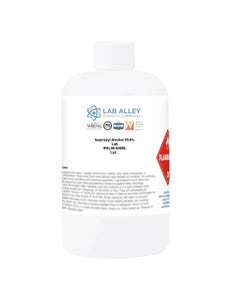




Types of Isopropanol: Understanding Concentrations, Grades, and Applications
Isopropanol (isopropyl alcohol, IPA, 2-propanol) is a colorless, volatile liquid with chemical formula (CH3)2CHOH and molecular weight 60.10 g/mol. You'll find this versatile compound in hand sanitizers, electronics cleaning solutions, pharmaceutical manufacturing, and industrial degreasers.
What makes isopropanol so adaptable? The answer lies in concentration and purity grade. Different versions vary in water content (70%, 91%, 99%) and manufacturing standards (USP/NF, ACS Reagent, Technical), which determine whether the alcohol ends up disinfecting hospital surfaces, cleaning circuit boards, or serving as a pharmaceutical solvent.
Choosing the right type matters enormously. Use 99% for surface disinfection and you've wasted money on ineffective cleaning. Pick Technical grade for pharmaceutical manufacturing and you've violated FDA regulations. Understanding the distinctions between concentrations and grades ensures operations stay compliant, products perform effectively, and processes run efficiently.
Several key factors guide selection: application type (disinfection versus cleaning versus solvent use), regulatory compliance requirements (pharmaceutical, food contact, cosmetic), evaporation rate needs, water sensitivity of the application, purity requirements, analytical reproducibility needs, and cost considerations.
In this article, we’ll explore:
-
Common Concentrations
-
Purity Grades & Standards
-
Applications by Type
-
Regulatory & Safety Considerations
-
How to Choose the Right Type
-
Storage & Handling
Common Concentrations
Walk into a store and you'll see isopropanol bottles labeled 70%, 91%, or 99%. These aren't arbitrary numbers. The concentration determines antimicrobial effectiveness, evaporation speed, and appropriate applications.
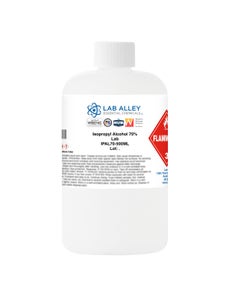
70% Isopropyl Alcohol
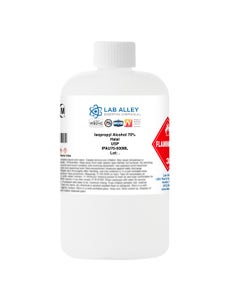
70% isopropanol contains 70% alcohol and 30% purified water. This stands as the most effective concentration for disinfection and antimicrobial activity, which surprises people who assume higher percentages work better.
The water content actually enhances disinfection performance. Water slows evaporation, allowing 10 to 30 seconds of contact time on surfaces. This extended contact period lets the alcohol penetrate microbial cell walls and denature proteins effectively. The 60% to 90% concentration range maintains strong antimicrobial action against bacteria, fungi, and viruses.
The CDC recommends 70% concentration for healthcare disinfection based on extensive testing. Hospitals use it for surface sanitization, medical equipment cleaning, and preparing skin before injections. Consumer products like rubbing alcohol, hand sanitizers, and medical wipes typically formulate at or near this concentration.
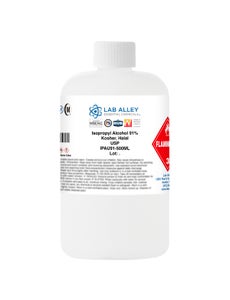
Available in USP/NF grade for pharmaceutical and medical applications, or Technical grade for general cleaning where regulatory standards don't apply.
91% Isopropyl Alcohol
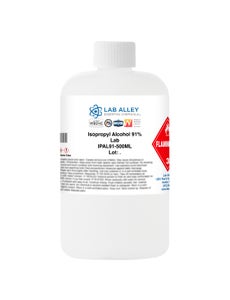
91% isopropanol balances cleaning power against evaporation rate. It contains 91% alcohol and 9% water, creating an intermediate option between disinfection-focused 70% and anhydrous 99%.
Evaporation occurs faster than 70% but slower than 99%, making 91% versatile for general-purpose applications. The slightly lower water content compared to 70% reduces surface contact time, making it less optimal for disinfection but perfectly adequate for cleaning tasks where antimicrobial action isn't the primary goal.
General cleaning applications benefit from this concentration. Degreasing tools and parts, removing adhesive residues, dissolving stains, and industrial wiping all work well with 91%. The balance between solvent strength and reasonable evaporation time makes it practical for everyday use.
Cost typically runs lower than 99% while maintaining better cleaning performance than 70% for non-disinfection tasks. This makes 91% the economical choice for applications where neither maximum disinfection nor immediate evaporation is critical.
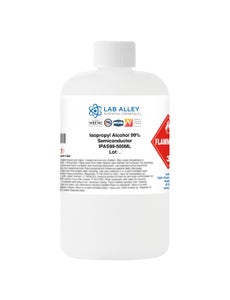
99% Isopropyl Alcohol (Anhydrous)
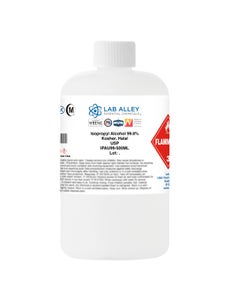
99% isopropanol contains at least 99.0% alcohol with minimal water content, earning the designation "anhydrous" (without water). This concentration behaves very differently from lower percentages.
Evaporation happens extremely rapidly. Liquid 99% isopropanol vanishes from surfaces within seconds, which makes it less effective for disinfection. The rapid evaporation reduces contact time, and the near-absence of water causes protein coagulation that forms a protective barrier around microorganisms rather than penetrating and destroying them.
The hygroscopic nature of 99% isopropanol means it aggressively absorbs moisture from the air. Open a bottle and the concentration begins dropping immediately as atmospheric water gets pulled into the liquid. This demands careful storage in tightly sealed containers.
Where does 99% excel? Applications requiring water-free cleaning. Electronics manufacturing uses it for circuit boards and computer chips, where any water residue would cause corrosion or short circuits. Precision equipment cleaning, water-sensitive manufacturing processes, and specialized solvent applications all benefit from the anhydrous character.
Available primarily in higher purity grades (ACS Reagent, HPLC) since applications demanding 99% concentration typically also require low impurity levels for technical or analytical reasons.
Purity Grades & Standards
Beyond concentration, purity grade determines regulatory compliance, documentation requirements, and acceptable impurity levels. Each grade targets specific industries with particular quality needs.
USP/NF Grade (United States Pharmacopeia/National Formulary)
USP/NF grade isopropanol achieves purity of at least 99.0% on an anhydrous basis while meeting stringent United States Pharmacopeia and National Formulary specifications. Manufacturing occurs under current Good Manufacturing Practices (cGMP) per 21 CFR Parts 210 and 211 in FDA-registered facilities subject to regular inspection.
Each batch comes with a Certificate of Analysis (COA) documenting test results for all specified parameters. This documentation supports FDA audits and quality control programs required in pharmaceutical manufacturing.
Pharmaceutical companies use USP/NF grade for drug formulation, both as an active ingredient and as a processing solvent. Medical wipe manufacturers require it for products contacting patients. Cosmetics and personal care products like lotions, creams, deodorants, and shampoos incorporate USP/NF grade to ensure consumer safety and regulatory compliance.
The premium pricing reflects extensive testing, cGMP manufacturing requirements, and comprehensive documentation. When regulations demand pharmaceutical-grade materials, no substitutes qualify.
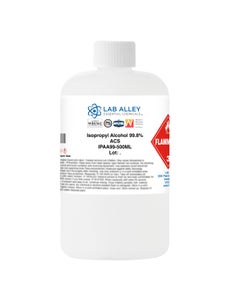
ACS Reagent Grade
ACS Reagent grade meets American Chemical Society specifications, typically requiring 99.5% purity or higher. This exceeds USP grade purity requirements, making ACS Reagent grade the choice for analytical applications where trace contaminants interfere with measurements.
Suppliers provide Certificates of Analysis guaranteeing ACS compliance. The specifications limit individual impurities to parts per million or billion, depending on the contaminant and its potential to affect analytical results.
Analytical laboratories depend on ACS Reagent grade for spectroscopy, titration, HPLC (High Performance Liquid Chromatography), chromatography, and other techniques where reproducible results demand ultra-pure reagents. Research and development teams use it for method validation and preparing calibration standards.
The controlled impurity profile ensures that experimental results reflect the system being studied rather than contamination from the solvent. When publishing research or validating analytical methods, using ACS Reagent grade demonstrates methodological rigor.
International Pharmacopoeial Grades (BP, EP, IP, JP)
International pharmaceutical standards provide alternatives to USP/NF for global markets. British Pharmacopoeia (BP), European Pharmacopoeia (EP), Indian Pharmacopoeia (IP), and Japanese Pharmacopeia (JP) each define specifications for pharmaceutical-grade isopropanol.
These grades enable pharmaceutical manufacturers to comply with local regulations in different markets. A company producing medications for European distribution needs EP-grade. Export to Japan requires JP grade. The specifications differ slightly between pharmacopeias, but all maintain pharmaceutical-quality standards.
Multinational pharmaceutical operations often maintain multiple pharmacopeial grades to serve different regional markets without reformulating products.
HPLC/HPLC-UV Grade
HPLC grade isopropanol achieves purity exceeding 99.9% while maintaining low UV absorption characteristics. This specialized grade serves High Performance Liquid Chromatography applications where even trace contaminants create false peaks or interfere with detection.
Manufacturing specifically minimizes residue and contaminants that would affect chromatographic performance. The low UV absorption proves critical for HPLC-UV detectors that measure compound concentrations by light absorption.
Analytical chemistry laboratories use HPLC grade for HPLC analysis and spectrophotometry, where UV transparency matters. The premium cost reflects the specialized manufacturing and testing required to achieve this level of purity and optical clarity.
FCC Grade (Food Chemicals Codex)
FCC grade meets Food Chemicals Codex specifications governing materials used in food contact applications. This grade maintains high purity while being free from contaminants harmful if trace amounts contact food.
Food processing facilities use FCC grade for cleaning equipment that touches food products. The specifications ensure incidental food contact won't introduce hazardous substances or objectionable flavors.
Regulatory compliance for food manufacturing facilities often requires FCC certification for all cleaning agents and processing aids that might contact food, even indirectly.
Technical/Industrial Grade
Technical or Industrial grade sacrifices purity for cost-effectiveness. Typical purity ranges from 85% to 95%, with higher impurity levels considered acceptable for applications where they don't interfere with performance.
Manufacturing standards are relaxed compared to pharmaceutical grades. No cGMP requirements apply. Documentation may be minimal or absent. This grade cannot be used for medical, pharmaceutical, food, or cosmetic applications where regulations demand higher standards.
Industrial cleaning, general-purpose wiping, surface coatings, inks, printed circuit board (PCB) cleaning in non-critical applications, and household cleaners all use Technical grade. Volume users save substantially compared to pharmaceutical grades.
When regulations don't govern your application and impurities won't affect performance, Technical grade delivers adequate quality at the lowest price point.
Applications by Type
Different industries gravitate toward specific concentrations and grades based on their unique requirements.
Disinfection & Sanitization (70% Preferred)
Healthcare facilities rely on 70% isopropanol for surface disinfection and medical equipment cleaning. The concentration and contact time balance provides reliable antimicrobial action against bacteria, fungi, and viruses.
Cleanrooms in pharmaceutical and electronics manufacturing use 70% for environmental disinfection. The controlled evaporation rate ensures adequate contact time for killing microorganisms while still drying reasonably quickly.
Hand sanitizers are formulated in the 60% to 90% concentration range, with many targeting 70% as optimal for balancing antimicrobial effectiveness against skin tolerability. Medical wipes and saturated wipes similarly use 70% concentration.
USP/NF grade serves healthcare and pharmaceutical applications. Technical grade works for general surface sanitization where pharmaceutical standards aren't required.
Electronics & Precision Cleaning (91-99% Preferred)
Circuit board cleaning demands minimal water content to prevent corrosion and short circuits. 91% to 99% isopropanol provides the rapid evaporation electronics manufacturers need.
Computer chip manufacturing, integrated circuit adapter cleaning, and electronic component degreasing all benefit from anhydrous or near-anhydrous alcohol. Water-sensitive devices require immediate evaporation, making 99% the preferred choice despite the higher cost.
ACS Reagent or HPLC grade typically serves these applications because electronics manufacturing demands low residue levels that Technical grade doesn't guarantee.
Industrial & Manufacturing
Degreasing metal parts and tools uses 91% isopropanol effectively. The concentration removes oils, greases, and residues while evaporating quickly enough for efficient workflow.
Machinery cleaning, paint thinning, and serving as a solvent for inks and adhesives all fall within industrial applications. Technical grade provides cost-effective performance for these non-regulated uses.
Large-volume industrial users achieve significant savings by selecting Technical grade and 91% concentration, avoiding the premium pricing of pharmaceutical grades and 99% concentration when neither is necessary.
Laboratory & Analytical
Chemical synthesis often requires isopropanol as a solvent. ACS Reagent grade ensures the solvent doesn't introduce contaminants that would affect reaction outcomes or product purity.
Equipment and glassware cleaning in analytical laboratories demands high-purity isopropanol to avoid cross-contamination between experiments. Reagent preparation and analytical testing similarly require ACS Reagent or HPLC grade.
Laboratories focused on life sciences might use USP/NF grade to maintain consistency with pharmaceutical standards, while chemistry laboratories typically prefer ACS Reagent grade.
Personal Care & Cosmetics (USP Grade)
Cosmetic formulations incorporate isopropanol in lotions, creams, deodorants, shampoos, and other toiletries. The alcohol serves as a humectant, solvent, and preservative.
FDA regulations governing cosmetics effectively require a USP/NF grade for any ingredient contacting consumers. The pharmaceutical-quality standards ensure consumer safety.
Personal care manufacturers typically use 99% concentration, diluting as needed in their final formulations. The anhydrous starting material provides maximum flexibility in product development.
Medical & Pharmaceutical (USP/NF Grade)
Pharmaceutical manufacturing uses isopropanol as a carrier for oral, injectable, and topical medications. It dissolves active pharmaceutical ingredients and serves as a processing solvent during drug synthesis.
Medical device manufacturing incorporates isopropanol in cleaning processes and as a component in certain devices. Biological sample preservation sometimes employs isopropanol for fixing tissues.
USP/NF grade with full documentation proves essential for FDA compliance. The pharmaceutical industry accepts no substitutes when regulations specify pharmacopeial-grade materials.
Regulatory & Safety Considerations
FDA Recognition
USP/NF grades receive FDA recognition as safe for pharmaceutical and food applications. This recognition follows decades of safe use and extensive toxicological evaluation.
The FDA's acceptance means using USP/NF grade provides a regulatory safe harbor. You're using a material the FDA has already evaluated rather than needing independent safety assessments.
DOT Classification
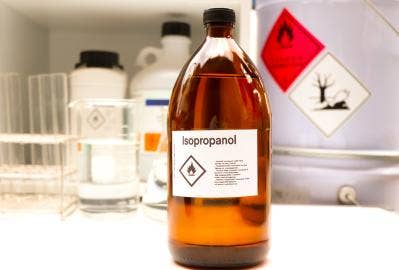
The Department of Transportation classifies isopropanol as UN1219, Class 3 (flammable liquid), Packing Group II. This classification triggers specific shipping requirements.
Hazmat shipping protocols apply regardless of concentration or purity grade. Proper placarding, documentation, and packaging protect transportation workers and emergency responders.
Disinfection Efficacy Standards
The CDC's Guideline for Disinfection and Sterilization in Healthcare Facilities specifically recommends 70% isopropanol for healthcare disinfection. This recommendation stems from extensive testing demonstrating optimal antimicrobial activity.
Concentrations above 60% effectively kill enveloped viruses, including influenza and coronavirus. However, concentrations exceeding 91% lose effectiveness because rapid protein coagulation creates a protective barrier around microorganisms rather than penetrating and destroying them.
Healthcare facilities following CDC guidelines standardize on 70% concentration to ensure reliable disinfection outcomes.
How to Choose the Right Type
Here's how to systematically select the appropriate isopropanol concentration and grade.
For Disinfection and Antimicrobial Activity
Use 70% IPA in USP/NF grade for healthcare applications or Technical grade for general surface disinfection. This concentration delivers maximum effectiveness against bacteria, fungi, and viruses. The CDC recommendation and decades of successful use make 70% the evidence-based choice.
For Electronics and Water-Sensitive Equipment Cleaning
Use 70% IPA in USP/NF grade for healthcare applications or Technical grade for general surface disinfection. This concentration delivers maximum effectiveness against bacteria, fungi, and viruses. The CDC recommendation and decades of successful use make 70% the evidence-based choice.
For General-Purpose Cleaning and Degreasing
Use 91% IPA in Technical grade. The concentration balances cleaning power against evaporation rate. Technical grade provides adequate purity at the lowest cost for non-regulated applications.
For Pharmaceutical Manufacturing
Use USP/NF grade at whatever concentration your formulation requires (typically 99% diluted as needed). Regulatory compliance demands pharmacopeial standards. FDA inspections verify you're using appropriate grades with proper documentation.
For Analytical Laboratory Work
Use ACS Reagent grade or HPLC grade, depending on analytical technique. High-purity analytical applications demand reproducible results free from solvent-introduced artifacts. The premium pricing proves worthwhile when research quality depends on reagent purity.
For Food Contact Applications
Use FCC grade isopropanol. Food-safe certification protects against regulatory violations and ensures consumer safety. The specifications guarantee freedom from contaminants that could migrate into food.
For Industrial Cleaning and Non-Regulated Applications
Use Technical grade at 91% concentration. Cost-effectiveness becomes the priority when medical, pharmaceutical, or food applications aren't involved. Volume savings add up substantially for large industrial users.
Key Takeaways
Isopropanol exists in multiple concentrations (70%, 91%, 99%) and purity grades (USP/NF, ACS Reagent, Technical, FCC, HPLC) targeting specific applications. 70% concentration maximizes disinfection effectiveness through slower evaporation and cell wall penetration. 91% balances cleaning power against evaporation for general use. 99% provides anhydrous conditions for electronics and water-sensitive applications.
USP/NF grade serves pharmaceutical, medical, and cosmetic applications under cGMP manufacturing with full documentation. ACS Reagent grade delivers ultra-high purity for analytical laboratories. Technical grade offers cost-effective performance for industrial applications. FCC grade meets food contact safety standards.
Successful selection matches concentration to antimicrobial needs versus evaporation requirements. Match grade to regulatory requirements (pharmaceutical, food, cosmetic, analytical). Consider cost against compliance needs. Verify supplier qualifications including certifications, Certificates of Analysis, and appropriate manufacturing standards.
Store in sealed, chemical-resistant containers away from ignition sources. Use adequate ventilation and PPE. Label dilutions clearly. Monitor concentration degradation in hygroscopic 99% grade.
For more detailed guidance, explore our Resource Library.
Our Customer Care team is also available for more information and documentation, including chemical Safety Data Sheets.
Find Isopropanol You Can Trust
If you are looking for high-quality isopropanol for your lab, product line, or research facility, be sure to visit our store to explore our trusted selection and request a quote.
As your trusted partner in chemical supply, Lab Alley is always striving to meet the growing demands of our customers. We want you to be able to access all of your chemical needs in one place, along with streamlined online ordering and fast shipping.
Due to popular demand from our valued clientele, Lab Alley's isopropanol is available in a range of purities and packaging options to suit various commercial, laboratory, and personal needs.