





Shelf Life & Expiration of Polyethylene Glycol (PEG): Storage and Stability Guide
Isopropanol (Isopropyl Alcohol, IPA) is a widely used solvent and disinfectant essential for cleaning, sanitization, laboratory work, and industrial processes. Knowing how long it remains effective helps you maintain product quality and ensure reliable performance in critical applications. While isopropanol demonstrates strong stability compared to many solvents, attention to storage practices prevents evaporation, water absorption, and concentration changes that compromise effectiveness.
IPA stability hinges on concentration, environmental factors, and container integrity. Unopened bottles stored correctly maintain their properties for years, while exposure to air, light, and moisture accelerates degradation. This guide delivers practical strategies for maximizing isopropanol shelf life and recognizing when replacement becomes necessary.


In this article, we’ll review:
- How Long Does Isopropanol Last?
- Signs That Isopropanol Has Expired
- What to Do If Isopropanol Is Expired
How Long Does Isopropanol Last?
IPA longevity depends on concentration, packaging quality, and storage practices. Understanding these variables helps you plan inventory management and determine replacement timing.
Shelf Life Duration
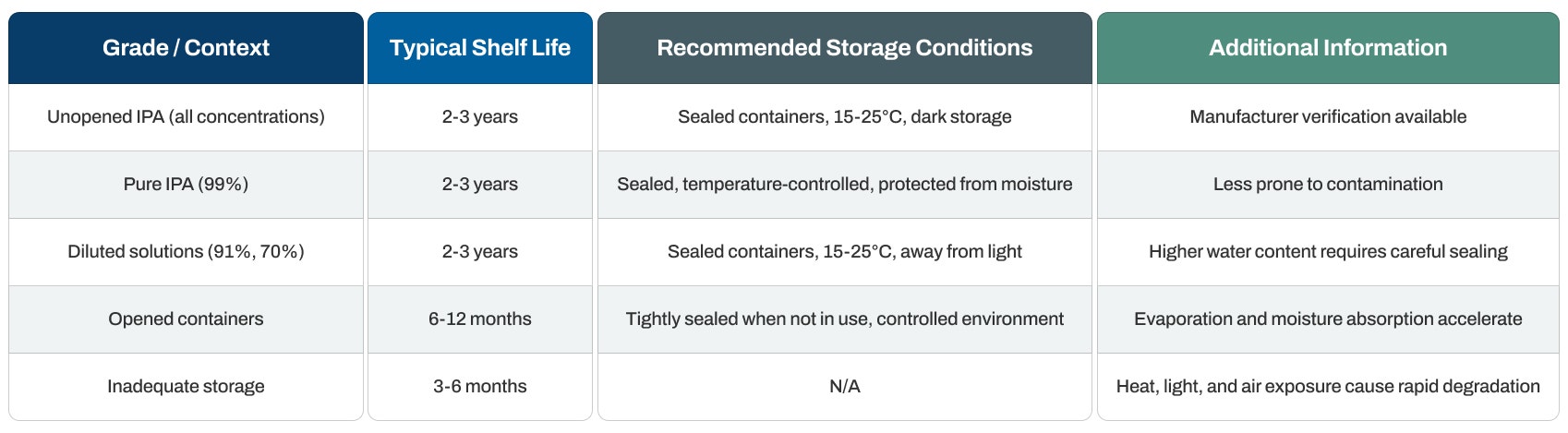
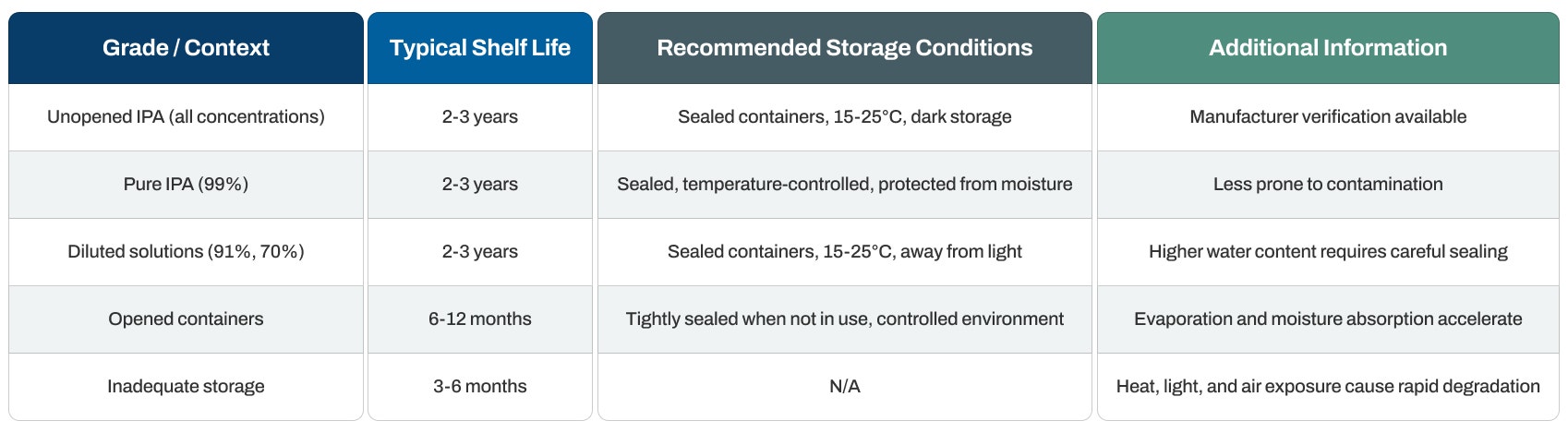
Unopened containers: Typically last 2 to 3 years from the manufacture date when stored correctly. Some manufacturers verify shelf life up to 3 years for pure IPA, providing reliable performance throughout this period.
Pure isopropanol (99%): Demonstrates longer stability than diluted solutions because minimal water content reduces opportunities for contamination and chemical interactions.
Common concentrations (91%, 70%): Show comparable shelf life in sealed containers, though their higher water content may slightly increase susceptibility to microbial contamination in poorly sealed containers.
Opened containers: Experience shorter usable periods due to evaporation and moisture absorption from repeated air exposure during use.
Chemical Stability
Isopropanol exhibits robust stability under typical conditions, though certain factors influence quality retention:
Inherent stability: The chemical doesn't degrade readily under proper storage conditions, allowing extended inventory management when environmental factors are controlled effectively.
Oxidation pathways: Can oxidize slowly when exposed to air, light, and heat over extended periods, potentially forming acetone and other oxidation products. While this process happens gradually, it represents a key degradation mechanism.
Evaporation tendency: As a volatile solvent with a boiling point of 82.6°C (180.7°F), evaporation becomes the primary concern rather than chemical breakdown. Poor container sealing allows gradual vapor loss that increases concentration.
Hygroscopic behavior: Readily absorbs water from the atmosphere, which can dilute the concentration over time. This characteristic makes moisture control particularly important for maintaining labeled percentages.
Antimicrobial properties: Functions as an effective disinfectant, inhibiting microbial growth in sealed containers. This property contributes to its storage stability.
Purity & Packaging
Container selection and concentration levels significantly affect how well isopropanol maintains its quality:
Concentration advantages: Higher-purity grades (99%, 91%, 70%) in sealed containers retain quality longer than in opened containers. Pure isopropanol (99%) shows less vulnerability to contamination than diluted solutions.
Container materials: Compatible materials such as HDPE, glass, and aluminum provide adequate protection during storage. These materials resist chemical interaction and prevent contamination.
Incompatible materials: Avoid prolonged storage in non-chemical-resistant containers, as certain plastics may degrade or become permeable over time.
Seal quality: Tight sealing prevents both evaporation and moisture ingress. Even small openings allow significant vapor loss over time, altering solution concentration.
Original packaging: Manufacturer containers offer optimal protection until first use because they're designed specifically for alcohol storage and transport.
Storage Conditions
Creating appropriate storage environments is fundamental to preserving isopropanol quality:
Temperature guidelines: Maintain room temperature at 15-25°C (59-77°F). This range prevents excessive evaporation while avoiding unnecessary climate control expenses.
Light shielding: Guard against direct sunlight and UV radiation. Dark storage locations prevent photochemical reactions that trigger oxidative breakdown.
Heat avoidance: Excessive heat accelerates both evaporation and oxidation. Position storage areas away from heat-generating equipment, windows, and direct sunlight.
Moisture management: Maintain tight seals to block water absorption, as IPA pulls moisture from the surrounding air. Water uptake dilutes the concentration and reduces effectiveness for disinfection and cleaning.
Evaporation control: Ensure proper sealing when not actively dispensing. Small openings can cause significant evaporation over time, changing the concentration of the solution.
Fire safety compliance: Store away from ignition sources, sparks, open flames, and electrical equipment due to high flammability. Follow OSHA requirements and local fire codes for flammable liquid storage, including proper ventilation and approved storage cabinets.
Quick Reference: Shelf Life and Storage
Signs That Isopropanol Has Expired
Observable changes in appearance and performance indicate when isopropanol has degraded beyond acceptable limits. Recognizing these signs early prevents using compromised material in critical applications.
Color Change: Yellowing or discoloration in normally clear isopropanol may indicate oxidation or contamination. Fresh IPA should appear water-clear without any tint.
Precipitation or Crystallization: Visible particles, haziness, or sediment suggest contamination or degradation products. Clean isopropanol should remain completely clear without suspended matter.
Gas Formation or Pressure Build-up: Though uncommon, this indicates possible contamination or chemical decomposition. Swollen containers or pressure release upon opening require immediate investigation.
Reduced Effectiveness: Cleaning, disinfection, or laboratory applications may reveal reduced antimicrobial activity, poor solvent performance, or altered evaporation rates. Performance shifts directly compromise process reliability.
Concentration Below Label: Water absorption or evaporation can cause concentration to drop below the labeled percentage, affecting effectiveness in applications requiring precise alcohol content for antimicrobial activity or solvent properties.
Altered Evaporation Rate: Changes in how quickly the solvent evaporates may indicate concentration changes or contamination affecting its physical properties.
What to Do If Isopropanol Is Expired
Discovering expired isopropanol requires a methodical approach to safeguard product quality, maintain safety, and preserve performance.
Check Manufacturer Guidelines
Examine packaging labels and certificates of analysis for expiration or retest dates. Most packaging includes this information to guide proper usage timing. Beyond the retest date, manufacturers may issue extended certificates of analysis after quality testing confirms the product still meets specifications.
Review documentation to determine whether retesting is appropriate for your application. Critical uses like healthcare disinfection typically require fresh material, while some industrial applications may permit tested material if it meets required specifications.
Follow Proper Disposal Procedures
Dispose of expired isopropanol according to local regulations for flammable chemical waste. IPA must be handled as a flammable liquid and should not be poured down drains in large quantities, as this creates fire hazards and violates environmental regulations.
Small amounts might be disposed of through approved laboratory waste channels or heavily diluted for drain disposal where local codes permit, but verify requirements beforehand. Significant quantities need to be collected by licensed waste handlers familiar with flammable solvent disposal.
Mark disposal containers clearly as "Flammable Liquid Waste" and store in approved areas away from ignition sources until pickup. Maintain documentation according to safety protocols and regulatory requirements.
Work in well-ventilated spaces when handling isopropanol for disposal. Remove all ignition sources and use appropriate personal protective equipment, including chemical-resistant gloves and safety goggles.
Replace with Fresh Stock
Expired or contaminated isopropanol can be ineffective for critical applications such as disinfection or precision cleaning. Source replacement IPA from established suppliers who provide comprehensive documentation, including certificates of analysis showing recent manufacture dates.
Use fresh isopropanol with a valid certification to ensure proper concentration and effectiveness. Confirm that concentration, purity specifications, and grade align with your application requirements, whether for healthcare disinfection, laboratory analysis, electronics cleaning, or industrial processes.
Inspect incoming shipments for packaging integrity, proper sealing, and clear labeling. Verify that containers show no signs of damage, leakage, or contamination before accepting delivery.
Proper Storage Extends Shelf Life
Implementing sound storage practices from the beginning maximizes lifespan and preserves quality:
Container selection: Keep isopropanol in tightly sealed containers made of compatible materials such as HDPE, glass, or aluminum. Avoid prolonged storage in non-chemical-resistant containers, as degradation may occur.
Temperature management: Maintain room temperature at 15-25°C (59-77°F). Avoid excessive heat, which can accelerate evaporation and oxidation, compromising both concentration and quality.
Light and heat shielding: Protect from direct sunlight and UV light exposure. Store in cool, dark areas away from heat sources to prevent photodegradation and thermal degradation that can form oxidation products.
Moisture control: Keep containers tightly sealed to prevent water absorption, as isopropanol is hygroscopic and readily pulls moisture from air. Water uptake dilutes concentration and reduces effectiveness for disinfection and cleaning applications.
Evaporation prevention: Ensure proper sealing when not actively using the product. Even small openings allow significant evaporation over time, altering the concentration of the solution and affecting performance.
Fire safety compliance: Store away from ignition sources, sparks, open flames, and electrical equipment due to high flammability. Follow OSHA requirements and local fire codes for flammable liquid storage, including proper ventilation and approved storage cabinets.
Inventory rotation: Use older stock first through organized inventory tracking. Label containers with receipt dates and "opened" dates to monitor age and ensure timely usage.
Condition monitoring: Regular inspection of storage environments catches problems before product quality deteriorates. Promptly address temperature fluctuations, ventilation issues, or seal integrity concerns to maintain optimal conditions.
Dedicated dispensing tools: Use clean, dry equipment when transferring isopropanol. Contaminated tools can introduce impurities that affect quality and performance.
Conclusion
Isopropanol typically lasts 2 to 3 years from manufacture when stored correctly in unopened containers, with some manufacturers verifying shelf life up to 3 years for pure IPA. Primary concerns include evaporation causing concentration changes, moisture absorption diluting effectiveness, and slow oxidation forming acetone and other products. Appropriate storage in sealed, compatible containers protected from heat, light, and moisture preserves quality and maximizes the lifespan of this versatile solvent and disinfectant. Following manufacturer recommendations and implementing proper storage protocols ensures dependable performance across healthcare, laboratory, and industrial applications.
Note: Fresh isopropanol stored under optimal conditions provides consistent performance throughout its lifespan when handled according to manufacturer specifications and safety standards for your specific application.
For more detailed guidance, explore our Resource Library for comprehensive storage and handling information.
Our Customer Care team is also available for more information and documentation, including chemical Safety Data Sheets.
Need Isopropanol You Can Trust?
If you are looking for high-quality isopropanol for your lab, product line, or research facility, be sure to visit our store to explore our trusted selection and request a quote.
As your trusted partner in chemical supply, Lab Alley is always striving to meet the growing demands of our customers. We want you to be able to access all of your chemical needs in one place, along with streamlined online ordering and fast shipping.
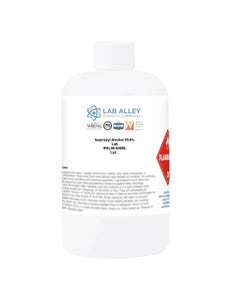
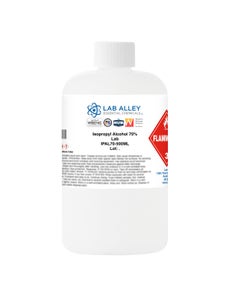
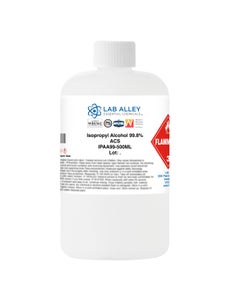
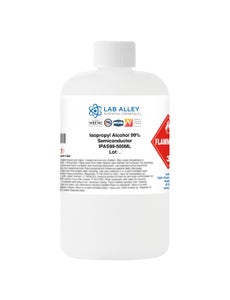
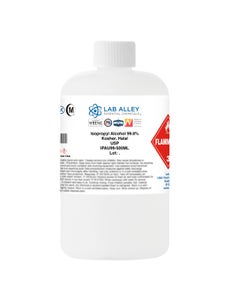
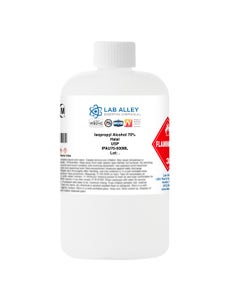
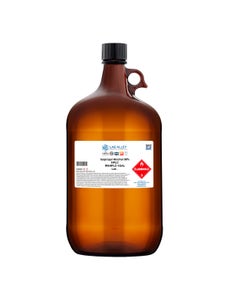
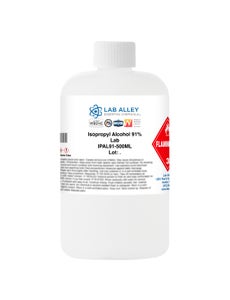
Due to popular demand from our valued clientele, Lab Alley's isopropanol is available in a range of purities and packaging options to suit various commercial, laboratory, and personal needs.