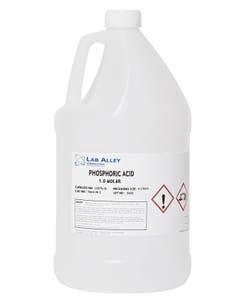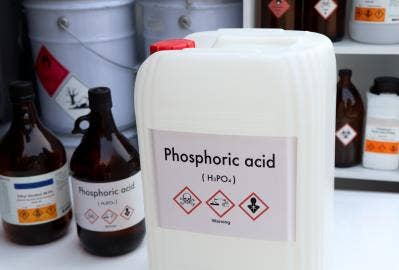






Phosphoric Acid Overview
Phosphoric acid (H₃PO₄) is an inorganic mineral acid used across food and beverage production, agriculture, industrial manufacturing, and electronics. Also known as orthophosphoric acid, it carries the food additive designation E338 and is supplied commercially as an 85% aqueous solution, a colorless, viscous, syrupy liquid. Its primary commercial roles include serving as a feedstock for phosphate fertilizers, an acidulant in cola beverages, and a metal treatment agent in industrial cleaning and coating processes.
What makes phosphoric acid valuable across such different sectors is the combination of moderate, controllable acidity with high water solubility and a non-volatile, non-flammable profile. Unlike stronger mineral acids such as hydrochloric or sulfuric acid, phosphoric acid can be handled with standard corrosive-acid precautions rather than extreme containment measures, while still providing the reactivity needed for metal treatment, pH adjustment, and fertilizer synthesis.
Phosphoric acid is classified as a corrosive substance under GHS with established hazard statements for skin, eye, and metal corrosivity. It ships under UN1805 as a Class 8 corrosive material, and its grades range from technical-purity solutions used in fertilizer and metal finishing to ACS reagent and food-grade formulations suitable for laboratory analysis and food production, respectively.
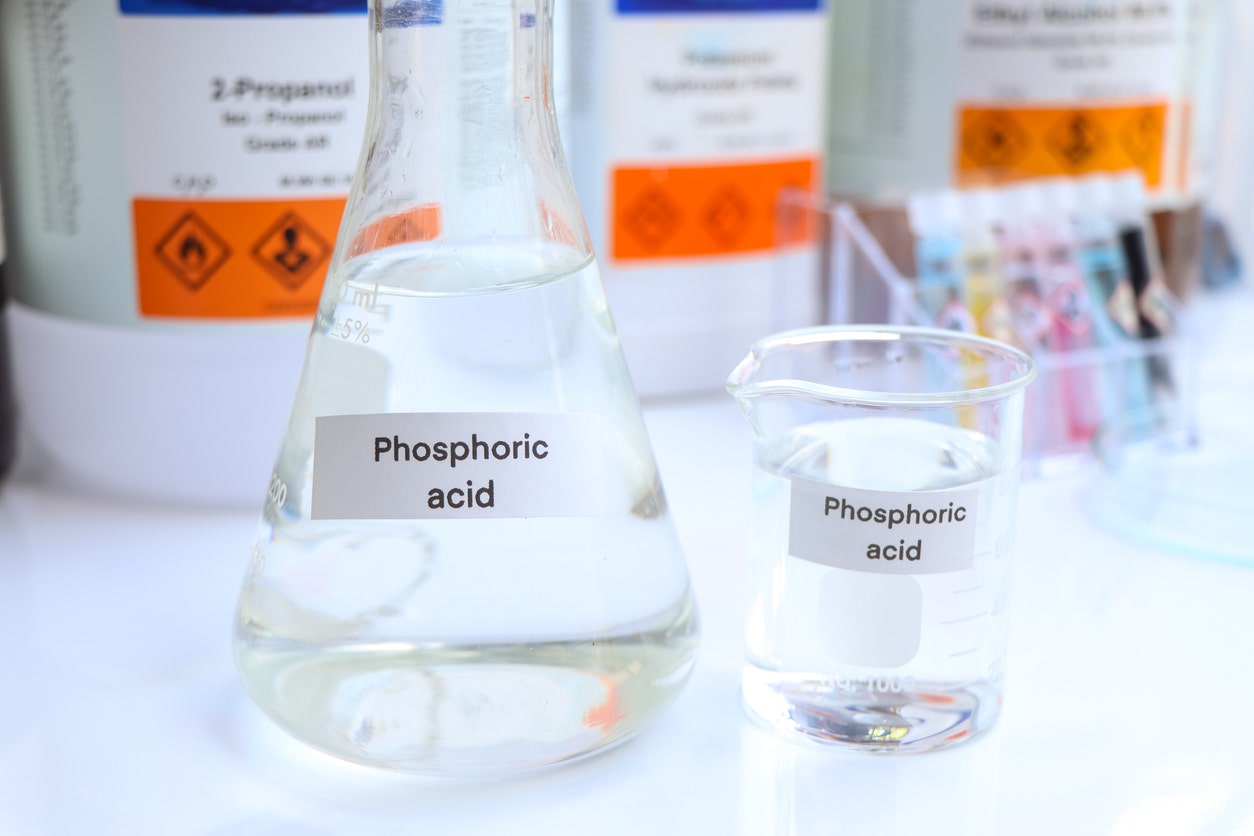

Properties of Phosphoric Acid
Key Facts
-
Compound Name: Orthophosphoric acid
-
Synonyms/Common Names: Phosphoric acid, orthophosphoric acid, E338
-
Chemical Formula: H₃PO₄
-
CAS Number: 7664-38-2
-
Molar Mass: 97.994 g/mol
-
Appearance: Colorless solid in anhydrous form; odorless. Commercially supplied as an 85% aqueous solution, a colorless, viscous, syrupy liquid.
Density and Behavior Relative to Water
Phosphoric acid is denser than water at every commercially relevant concentration, with the 85% aqueous solution measuring 1.6845 g/cm³ at 25°C and the solid anhydrous form reaching 1.834 g/cm³. This density difference matters for mixing and dilution calculations, since adding water to concentrated phosphoric acid produces a measurable volume and heat change rather than a simple linear dilution. Handlers working with high-concentration solutions should account for this when sizing containers or calculating dosing volumes.
Phosphoric acid is a colorless, odorless mineral acid widely used in industrial, food, agricultural, and laboratory applications. It functions as an acidifying agent, pH adjuster, and chemical intermediate in fertilizers, food and beverages, metal treatment, and cleaning products. U.S. laboratories and manufacturers sourcing phosphoric acid by grade and purity contact Lab Alley at 512-668-9918 for product selection and ordering support.
Melting Point, Boiling Point, and Thermal Decomposition
Anhydrous phosphoric acid melts at 42.35°C (108.23°F), while aqueous solutions boil at 100°C (212°F) as only the water component evaporates, leaving the acid behind. Heating the pure acid beyond approximately 158°C drives a dehydration reaction that converts it to pyrophosphoric acid rather than producing a true boiling transition. This means concentration through heating has a practical ceiling, beyond which the chemical identity of the product changes.
Solubility in Water and Organic Solvents
Phosphoric acid is infinitely soluble in both water and alcohol, dissolving with a small release of heat. It does not dissolve appreciably in most non-polar organic solvents, which limits its utility as a reagent in non-aqueous reaction systems. This solubility profile is part of why nearly all commercial and laboratory phosphoric acid products are formulated as aqueous solutions rather than offered as pure solute for solvent-based work.
Acidity and pH Behavior in Solution
A 0.1 N aqueous solution of phosphoric acid has a pH of approximately 1.5, reflecting its identity as a moderately strong triprotic acid with pKa values of 2.15, 7.09, and 12.32. The three dissociation steps mean phosphoric acid can buffer across a wide pH range depending on which protons have been removed, which is part of why it sees use in buffer systems and pH-control applications. Procurement and lab teams selecting concentration grades should match the intended pH target to the appropriate dissociation stage rather than assuming a single fixed acidity value.
Reactivity, Incompatibilities, and Stability
Phosphoric acid is corrosive to most common metals and to biological tissue, and it reacts exothermically with bases in neutralization reactions. Contact with active metals such as aluminum and iron can release flammable hydrogen gas, and the acid is capable of initiating polymerization in certain organic compounds. It reacts with cyanide compounds to liberate toxic hydrogen cyanide gas, and mixtures with nitromethane are explosive, though the acid itself is non-flammable and chemically stable under normal storage conditions.
Phosphoric acid from Lab Alley is available as a high-purity, clear, colorless liquid meeting food-grade, ACS, and reagent-grade specifications for laboratory, industrial, and manufacturing applications. Packaging ranges from small laboratory containers to bulk drums and totes to support research, production, and commercial supply needs.
Common Uses & Applications
Industrial Applications
Phosphoric acid is a primary feedstock for monoammonium phosphate (MAP) and diammonium phosphate (DAP) fertilizers, making it foundational to global agricultural supply chains. In metal treatment, it converts iron oxide into a protective ferric phosphate coating, a process that is the industry standard for automotive restoration and structural steel preparation ahead of painting or coating. Water treatment facilities use it to adjust pH and inhibit corrosion in municipal and industrial systems, while also preventing scale buildup in boilers and cooling towers.
Scientific and Laboratory Uses
ACS-grade phosphoric acid is used in analytical chemistry for reagent preparation and high-precision quality control work where purity and consistency are critical. Its well-characterized triprotic dissociation makes it a useful component in buffer formulation and pH standard preparation. Laboratories handling phosphate chemistry, ion chromatography, or acid digestion protocols rely on phosphoric acid as a controlled, reproducible reagent.
Consumer and Household Uses
Phosphoric acid is a key ingredient in carbonated soft drinks, particularly colas, where it contributes the characteristic tangy flavor and helps balance the beverage's sweetness. It also functions as a preservative in a range of processed foods, dairy products, and baked goods, inhibiting microbial growth and extending shelf stability. These consumer applications rely exclusively on food-grade formulations meeting FCC purity standards.
Specialized Applications
In pharmaceutical and food manufacturing, phosphoric acid is used for pH control in producing cheese products, fats, and shortenings, and it serves as a key phosphorus source in the synthesis of lithium-ion battery cathode materials. Electronic-grade phosphoric acid is essential to semiconductor manufacturing, where it is used in microelectronics etching and silicon wafer cleaning processes that demand exceptionally high purity. In agriculture, it is also incorporated into animal feed formulations as a phosphorus supplement supporting bone development and energy metabolism in livestock.
Fight Your Kidney Stone with This Natural Product Hack
Fight kidney stones. Discover how citric acid naturally prevents stone formation.

Is Lactic Acid Bad? A Look at the Health Science
Is lactic acid bad for you? Debunking myths and revealing its vital role in your body & beyond.
Hospitality Without Hitchhikers: Boric Acid’s Role in Bed Bug Prevention
Protect your hospitality business. Boric acid is key to preventing bed bug infestations.
Harnessing Silica Sulfuric Acid to Enhance Concrete Durability
Enhance concrete longevity. Silica sulfuric acid improves strength and chemical resistance.
Safety & Handling
Hazards and Precautions
Phosphoric acid carries the GHS signal word Danger, with hazard statements covering metal corrosivity (H290) and severe skin burns and eye damage (H314). It may also cause respiratory irritation upon exposure to mist or vapor. The severity of these hazards is concentration-dependent: dilute solutions act primarily as irritants, while concentrated solutions cause immediate and severe corrosive burns on contact.
Personal Protective Equipment
Handlers should use a certified vapor respirator whenever mist generation is possible, along with a face shield or chemical splash goggles to protect against eye contact. Nitrile gloves and a lab coat represent the minimum standard for laboratory handling, with boots required in industrial settings involving larger volumes. Eyewash stations and safety showers should be located within immediate reach of any work area where phosphoric acid is used.
Storage Guidelines
Phosphoric acid should be stored in a cool, dry, well-ventilated area in tightly closed containers, kept away from incompatible materials such as bases, active metals, and oxidizers. Recommended storage containers are metallic or coated fiberboard with a strong polyethylene inner liner. The acid is extremely corrosive to copper, brass, and stainless steel, and highly corrosive to aluminum, though it remains non-corrosive in the presence of glass, making glass and compatible polymer containers preferable for long-term storage.
Spill and Disposal Procedures
Spills should be neutralized with sodium bicarbonate or lime before cleanup, then absorbed using noncombustible absorbent material and placed in a suitable container for disposal. Surfaces should be cleaned thoroughly with water afterward to remove residual contamination. Phosphoric acid waste is classified as corrosive hazardous waste under UN1805, Hazard Class 8, and must be disposed of according to applicable regulations without mixing it into other waste streams.
Medicinal Oils Derived From Plants
You can order food-grade ethanol, extraction-grade ethanol, ACS-grade ethanol, FCC-grade ethanol, USP grade ethanol, HPLC-grade ethanol and kosher ethanol from Lab Alley. Perform ethanol (EtOH) extraction at ultra-low temperatures for the best yields.
Ethanol extraction is a cost-effective way to use ethanol as an industrial solvent to produce high-quality botanical extracts from large volumes of medicinal herbs or plants.
Phosphoric Acid Grades and Pack Sizes
Lab Alley supplies phosphoric acid across multiple grades to support laboratory, food production, and industrial use cases.
Available Grades & Concentrations
-
ACS Grade for analytical and laboratory applications
-
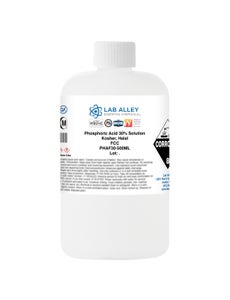
Food Grade (FCC), Kosher, Halal for food, beverage, and pharmaceutical use
-
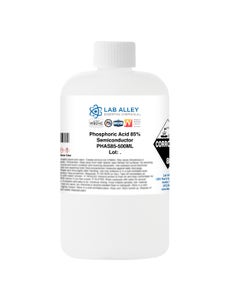
Semiconductor/Electronic Grade for microelectronics etching and semiconductor manufacturing
-
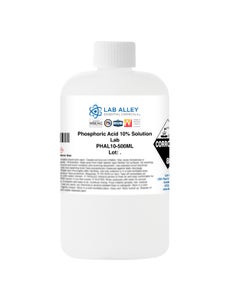
Lab Grade for general laboratory use
-
Reagent Grade for research and analytical applications
Pack Sizes & Bulk Availability
-
Laboratory bottles: 500 mL and 1 L for lab-scale use
-
Commercial containers: 4 L and 1 gallon for standard operations
-
Industrial drums: 5-gallon, 15-gallon, 55-gallon, and 270-gallon for high-volume applications
-
Case quantities available for bulk purchasing
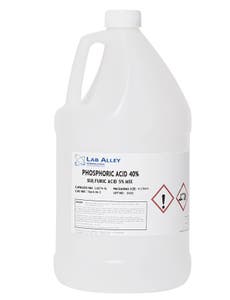
All Lab Alley phosphoric acid containers are UN-approved and DOT-compliant, with proper Class 8 corrosive labeling for safe transport and storage. Contact Lab Alley to confirm grade availability, pack size options, and current COA/SDS documentation for your specific application.
FAQs
What is phosphoric acid and how is it produced?
What are the potential side effects of phosphoric acid exposure?
How should phosphoric acid be stored to prevent degradation?
Phosphoric acid solutions remain stable at room temperature for years when kept properly sealed. Storage in a cool, dry, ventilated area in tightly closed, corrosion-resistant containers prevents both contamination and container degradation. Keeping the acid away from incompatible materials such as bases, oxidizers, and reactive metals also protects container integrity over time.
Does phosphoric acid have an expiration date?
Is phosphoric acid the same as phosphorous acid?
No. Phosphoric acid (H₃PO₄, CAS 7664-38-2) and phosphorous acid (H₃PO₃, CAS 13598-36-2) are distinct compounds with different molecular formulas, oxidation states, and applications. Phosphoric acid is the far more widely used of the two and is the standard form found in food, fertilizer, and industrial chemical applications, while phosphorous acid is primarily used in specialized reducing and chelating chemistry.