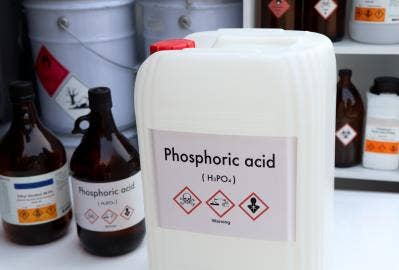






Phosphoric Acid Uses & Applications
Phosphoric acid (H₃PO₄), also known as orthophosphoric acid, is a colorless, odorless inorganic acid most commonly supplied as a viscous aqueous solution at 75 to 85 percent concentration. As a triprotic acid, it can donate three hydrogen ions in sequence, giving it distinct buffering behavior across a wide pH range. This same chemistry, combined with its non-oxidizing character and its ability to form stable phosphate salts and protective metal coatings, makes it useful in chemical environments where stronger mineral acids would be too aggressive or too difficult to control.
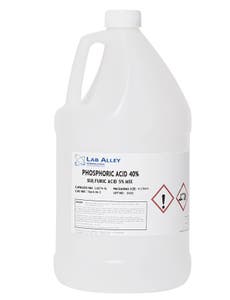
The acid is available in several purity tiers, including ACS, Lab, Food Grade (FCC), Semiconductor/Electronic, and Analytical Reagent grades, spanning concentrations from 10 to 85 percent along with a standardized 1.0 molar solution. This grade range allows it to serve markets with very different purity demands, from bulk agricultural processing to parts-per-billion semiconductor fabrication. Industries relying on phosphoric acid include agriculture, food and beverage production, metal finishing, semiconductor manufacturing, municipal and industrial water treatment, and pharmaceutical formulation.
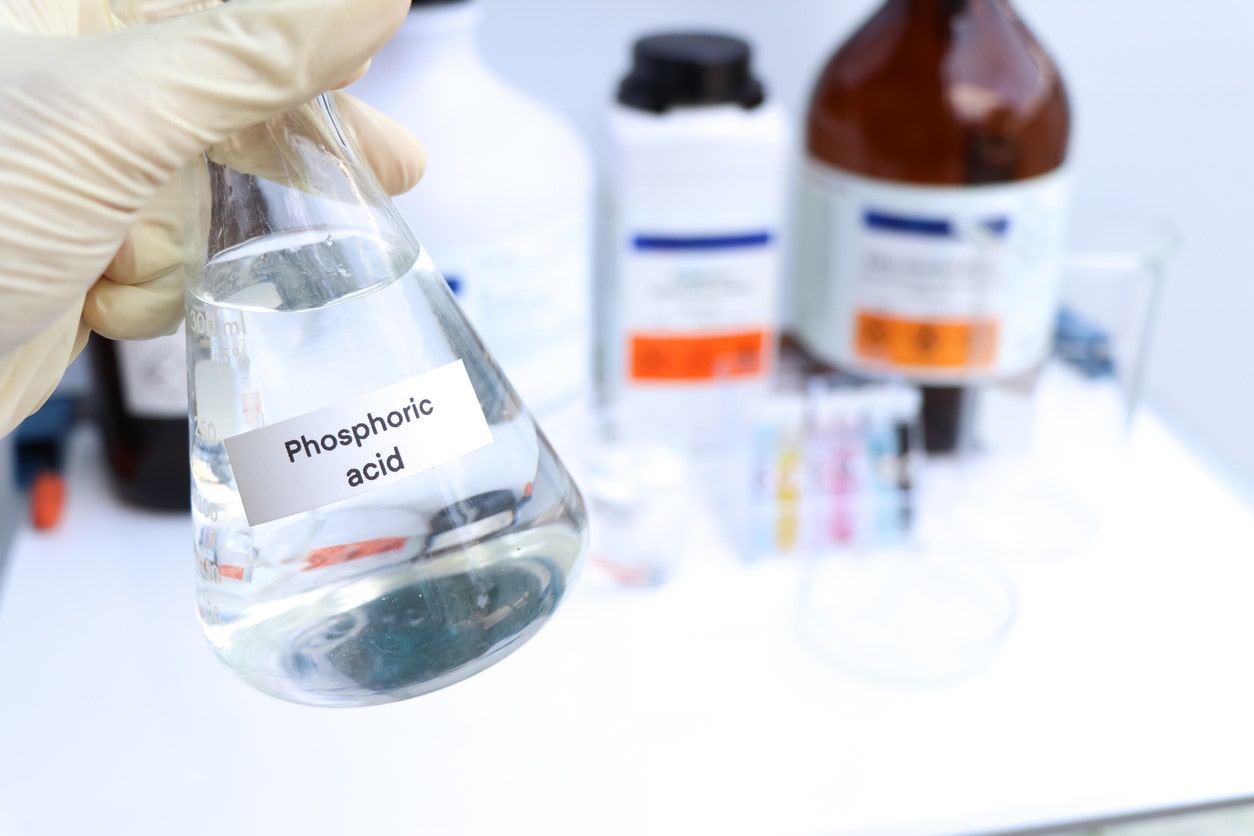
This article covers:
-
Industrial Applications
-
Scientific & Laboratory Uses
-
Medical & Pharmaceutical Uses
-
Food & Beverage Industry
-
Agriculture & Pesticides
-
Consumer & Household Uses
-
Environmental & Water Treatment
-
Semiconductor & Electronics Manufacturing
-
Dental Applications
-
Phosphoric Acid Grades and Pack Sizes
Industrial Applications
Manufacturing & Processing
Phosphoric acid is a key input in the production of phosphate salts, including mono-, di-, and tricalcium phosphate, which are used downstream in food, pharmaceutical, and industrial formulations. It also functions as a reactant in activated carbon manufacturing, where it helps develop the porous structure that gives activated carbon its adsorptive capacity. In industrial cleaning operations, it serves as a surface treatment agent ahead of metal pretreatment lines, preparing substrates for subsequent coating or finishing steps.
Chemical Synthesis
Manufacturers use phosphoric acid as a precursor or catalyst in synthesizing phosphate esters, detergent builders, and flame retardants, where its acidic and complexing properties support a range of reaction pathways. It also plays a role in producing lithium iron phosphate, a cathode material increasingly used in battery manufacturing. This application has grown in relevance as demand for stable, cost-effective battery chemistries has expanded across the energy storage and electric vehicle sectors.
Metallurgy & Mining
When phosphoric acid contacts iron oxide, or rust, it reacts to form iron phosphate, a dark and chemically stable coating that adheres tightly to the underlying steel. This conversion typically occurs at concentrations between 10 and 30 percent over a window of 15 to 30 minutes, making it a controllable and predictable process compared to acids that simply strip rust and leave bare metal exposed. The resulting phosphate layer is commonly used to prepare steel and iron surfaces for painting or powder coating in automotive, aerospace, and construction applications, where corrosion resistance and finish adhesion both matter.
Petroleum & Energy
Within refining operations, phosphoric acid is used as a catalyst support, helping stabilize and disperse active catalytic materials during specific refinery processes. It is also applied in corrosion inhibition strategies for pipeline systems, where controlling internal corrosion helps protect infrastructure integrity over long service life. These uses depend on the acid's ability to form protective phosphate layers without introducing the more aggressive reactivity associated with strong oxidizing acids.
Scientific & Laboratory Uses
Analytical Reagent
In analytical chemistry, phosphoric acid is used in titrations and other quantitative analysis procedures where precise, reproducible acid behavior is required. ACS and Analytical Reagent grades are formulated to the purity standards these applications demand, minimizing the risk of contaminants skewing results. Laboratories rely on this grade consistency to support method validation and repeatable testing protocols.
pH Adjustment & Buffering Agent
Because phosphoric acid is triprotic, it supports buffer preparation across a notably wide pH range, roughly 1.1 to 7.2 across its three dissociation steps. This versatility makes phosphate buffers a standard choice in biochemical research and chromatographic workflows, where maintaining a stable pH is essential to assay accuracy and separation performance. Researchers often select phosphate buffer systems specifically for this multi-step buffering capacity, which single-step acids cannot replicate.
Specialized Research Applications
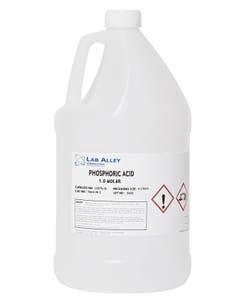
Phosphoric acid is used in HPLC mobile phase preparation, where it can adjust pH and improve peak resolution during chromatographic separations. It also functions as an ion-pairing agent in certain analytical methods and as a component of anode solutions in electrochemical research. The 1.0 molar standard solution is available for laboratories that need a precise, ready-to-use concentration without preparing dilutions from concentrated stock.
Medical & Pharmaceutical Uses
Excipient in Drug Formulations
Pharmaceutical formulators use phosphoric acid as a pH adjuster in both tablet and liquid drug formulations, where maintaining a specific pH range can directly affect the stability and efficacy of active ingredients. Pharmaceutical-grade material is manufactured to meet USP standards and the broader regulatory compliance expectations of drug production. This level of quality control is necessary given the sensitivity of pharmaceutical formulations to even minor impurities.
Active Pharmaceutical Ingredient (API)
Phosphoric acid functions as a component in certain anti-nausea medications, where its acidic properties contribute to the formulation's intended effect. It is also used in dental cement formulations, an application that bridges pharmaceutical and clinical dental use. In both cases, the acid's role depends on consistent purity and concentration control during manufacturing.
Food & Beverage Industry
Food Additive / Preservative
Phosphoric acid is an approved food additive, designated E338, used as an acidulant and pH modifier in a range of processed foods. Beyond adjusting acidity, it contributes a characteristic tart flavor and helps inhibit microbial growth, extending the usable shelf life of certain products. Food manufacturers select this additive specifically for its dual function as both a flavoring agent and a mild preservative.
Beverage Processing
The most recognizable beverage application is its use as the primary acidulant in cola drinks, where it delivers the tangy flavor profile associated with the category. In brewing, it serves as a water chemistry adjuster, helping brewers correct mineral balance and stabilize pH during fermentation. Food-grade material with FCC certification, along with Kosher and Halal designations, is available in 25, 30, 75, and 85 percent concentrations to suit different formulation needs.
Nutritional Supplements
Phosphate salts derived from phosphoric acid serve as a source of dietary phosphorus in nutritional supplements and fortified foods. Phosphorus is an essential mineral involved in bone health and cellular energy processes, and these phosphate compounds provide a stable, bioavailable form for supplement formulation. Manufacturers favor phosphoric acid derivatives for this purpose due to their consistent purity and ease of incorporation into existing supplement matrices.
Agriculture & Pesticides
Fertilizer Component
Fertilizer production represents the single largest use of phosphoric acid worldwide, accounting for roughly 75 to 80 percent of global consumption. The acid reacts with ammonia or calcium compounds to produce monoammonium phosphate, diammonium phosphate, and superphosphate fertilizers, all of which supply the phosphorus crops need for root development and overall growth. This scale of demand makes phosphoric acid production closely tied to global agricultural output and food security.
Animal Feed Additive
In animal nutrition, phosphoric acid is used to manufacture feed-grade monocalcium phosphate and dicalcium phosphate, both of which serve as phosphorus supplements in livestock and poultry feed. Phosphorus is a necessary nutrient for skeletal development and metabolic function in animals, and these feed-grade compounds provide a controlled, consistent source. Feed formulators rely on the purity of these phosphate derivatives to maintain predictable nutritional outcomes across production batches.
Consumer & Household Uses
Cleaning & Disinfecting
Phosphoric acid is the active ingredient in many heavy-duty bathroom and tile cleaners, where its acidity allows it to dissolve limescale, mineral deposits, and hard water stains on porcelain and grout. It is also used in rust remover products designed for tools and metal surfaces, where it performs the same rust-converting chemistry seen in industrial metal treatment. These consumer formulations typically use lower concentrations than industrial products while still delivering effective cleaning results.
Personal Care & Cosmetics
In skincare formulations, phosphoric acid is used as a pH adjuster to keep products within a range that is both stable and compatible with skin chemistry. Maintaining the correct pH in a cosmetic formulation affects not only product stability during storage but also how the product performs and feels on application. Formulators use small, carefully controlled amounts to achieve this balance without disrupting other active ingredients in the product.
Environmental & Water Treatment
Water & Wastewater
Municipal and industrial water treatment facilities use phosphoric acid for pH adjustment and corrosion control within distribution systems. At low concentrations, it forms a thin phosphate barrier on pipe surfaces that helps prevent corrosion, protecting infrastructure and reducing the risk of metal contamination in treated water. It also functions as a scale inhibitor in cooling towers, where preventing mineral buildup is essential to maintaining system efficiency.
Semiconductor & Electronics Manufacturing
Semiconductor Etching
Electronic-grade phosphoric acid at 85 percent concentration is used to selectively etch silicon nitride and remove aluminum layers during chip fabrication. The purity requirements for this application are exceptionally strict, with metallic impurities controlled down to parts-per-billion levels to avoid compromising device performance. This level of purity sets electronic-grade material apart from the industrial and food-grade versions used elsewhere in the product line.
Circuit Board Processing
Beyond chip fabrication, phosphoric acid is used in cleaning and surface preparation of printed circuit boards before plating or soldering steps. Proper surface preparation at this stage directly affects how well subsequent layers adhere and perform, making the acid's role a quality-critical step in board manufacturing. Electronics manufacturers depend on consistent grade purity to avoid introducing contaminants that could affect downstream processing or device reliability.
Dental Applications
Tooth Enamel Etching
In clinical dentistry, phosphoric acid is applied as a gel at 30 to 40 percent concentration for 15 to 30 seconds before bonding composites, sealants, or orthodontic brackets to tooth enamel. This brief exposure creates microscopic surface irregularities on the enamel, giving bonding materials a textured surface to grip rather than a smooth one. Without this etching step, restorative materials and orthodontic hardware would be considerably more prone to detaching from the tooth surface over time.
Dental Cement Component
Phosphoric acid is also an ingredient in zinc phosphate dental cements, which dentists use for cementing crowns and bridges. The acid's reactivity with zinc oxide forms the cement matrix that creates a durable bond between the restoration and the underlying tooth structure. This application reflects a different but related use of the acid's reactive chemistry compared to its role in direct enamel etching.
Phosphoric Acid Grades and Pack Sizes
Lab Alley supplies phosphoric acid across multiple grades and concentrations to support laboratory, industrial, food production, and electronics manufacturing needs. Every order ships with access to a Certificate of Analysis (COA) and Safety Data Sheet (SDS), giving customers the documentation needed for quality verification and regulatory compliance.
Available Grades & Formulations
-
ACS Grade 85% for analytical chemistry, titrations, and high-purity laboratory applications
-
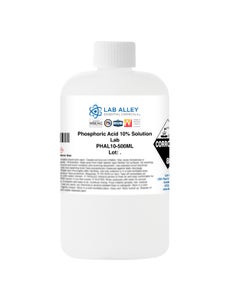
Lab Grade 75%, 85%, and 10% for general laboratory use, pH adjustment, and buffering
-
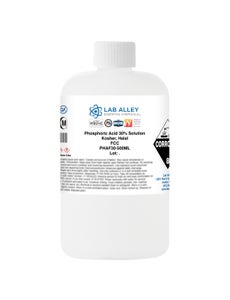
Food Grade (FCC) 25%, 30%, 75%, and 85%, Kosher and Halal certified, for food, beverage, brewing, and nutraceutical applications
-
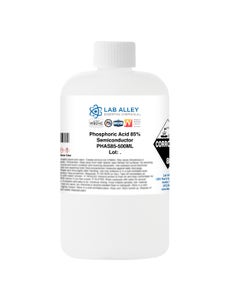
Semiconductor/Electronic Grade 85% for chip fabrication, silicon nitride etching, and circuit board processing
-
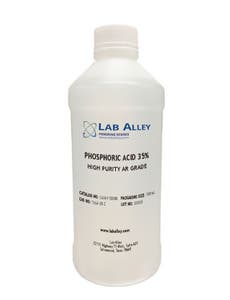
Analytical Reagent Grade 35% for quantitative analysis and standardized testing
-
1.0 Molar Solution for buffering and anode solution applications
Pack Sizes & Industrial Availability
-
Laboratory bottles: 500 mL and 1 L for lab-scale use
-
Commercial containers: 1 gallon and 4 liter for standard operations
-
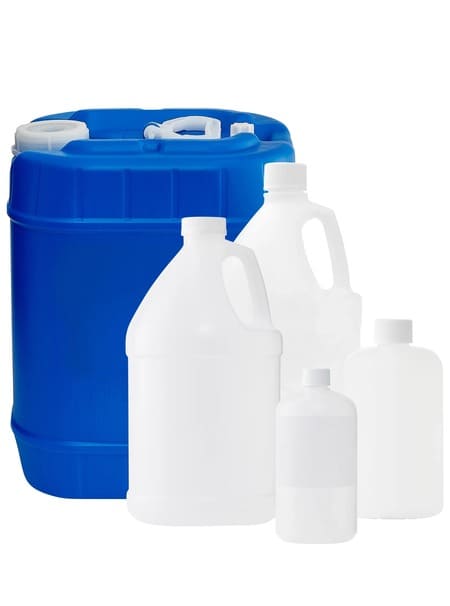
Industrial drums: 5 gallon, 15 gallon, 55 gallon, and 270 gallon for high-volume applications
-
Case quantities available for bulk purchasing
-
All containers are UN-approved and DOT-compliant with proper corrosive (Class 8) hazard labeling
Reach out to Lab Alley's customer care team to request a COA, SDS, or a custom quote for your specific grade and volume needs.
Final Note
Phosphoric acid's range of verified applications, from fertilizer production and food acidulation to semiconductor etching and dental bonding, reflects how its triprotic chemistry and non-oxidizing behavior adapt to vastly different industrial and clinical demands. Few acids serve the agricultural, food processing, electronics, and healthcare sectors with comparable effectiveness, and the availability of distinct purity grades, from food-safe FCC to ultra-pure electronic-grade, is what makes that breadth possible. This combination of chemical versatility and grade flexibility continues to support its role as a foundational chemical across both heavy industry and precision manufacturing.
For more detailed guidance, explore our Resource Library.
Our Customer Care team is also available for more information and documentation, including chemical Safety Data Sheets.
Need Phosphoric Acid You Can Trust?
If you are looking for high-quality phosphoric acid for your lab, product line, or research facility, be sure to visit our store to explore our trusted selection and request a quote.
As your trusted partner in chemical supply, Lab Alley is always striving to meet the growing demands of our customers. We want you to be able to access all of your chemical needs in one place, along with streamlined online ordering and fast shipping.
Due to popular demand from our valued clientele, Lab Alley's phosphoric acid is available in a range of purities and packaging options to suit various commercial, laboratory, and personal needs.