
• On Budget, On Time, Every Time : Essential Chemicals for a Better World• WOMAN-OWNED SMALL BUSINESS (WOSB)• OVER 256K+ HAPPY CUSTOMERS• TRUSTED BY NASA, TESLA, SPACEX, BOEING & MORE• HIGH PURITY, NATURAL AND ESSENTIAL CHEMICALS• SERVING 16 INDUSTRIES• PROUDLY PARTNERED WITH ECODRIVE• COA & SDS AVAILABLE ONLINE• QUALITY LAB SUPPLIES & EQUIPMENT• CERTIFIED QUALITY: ISO 9001, KOSHER, ORGANIC & MORE• GSA CONTRACT HOLDER | GOVERNMENT APPROVED• FAST NATIONWIDE DELIVERY• On Budget, On Time, Every Time : Essential Chemicals for a Better World• WOMAN-OWNED SMALL BUSINESS (WOSB)• TRUSTED BY NASA, TESLA, SPACEX, BOEING & MORE• OVER 256K+ HAPPY CUSTOMERS• HIGH PURITY, NATURAL AND ESSENTIAL CHEMICALS• SERVING 16 INDUSTRIES• PROUDLY PARTNERED WITH ECODRIVE• COA & SDS AVAILABLE• QUALITY LAB SUPPLIES & EQUIPMENT• CERTIFIED QUALITY: ISO 9001, KOSHER, ORGANIC & MORE• GSA CONTRACT HOLDER | GOVERNMENT APPROVED• FAST NATIONWIDE DELIVERY

We are now ISO 9001 Certified

Get 5% OFF on your first order |  Use Code: WELCOME5

Black Friday: Save 15% Sitewide with code BLACKFRIDAY26

Happy Thanksgiving! Our offices will be closed on November 26-27, but our Black Friday Sale is LIVE online! Shop 15% Off Now!

Anhydrous Grade Chemicals, Ships in 1 to 2 Days | Lab Alley

Anhydrous Grade

Dry salts and low water solvents with the water content listed on the product, ready to order online in minutes.

Order the dry chemical your method calls for and have it show up ready to use. If you've ever waited on a quote for a simple bottle of dry solvent, or chased a supplier to find out how much water was actually in it, you know how one small detail can stall a whole week of work. The Anhydrous Grade Chemicals on this page list their water content right on the product, so you can compare options and check out online without a sales call. Whether you run a research bench, a QC lab or a small production line, you shouldn't have to email anyone to learn if a bottle is dry enough. Prices are posted, and stock status and pack sizes show before anything goes in your cart. The Safety Data Sheet and lot Certificate of Analysis sit on the product page, so you can read them before you buy.

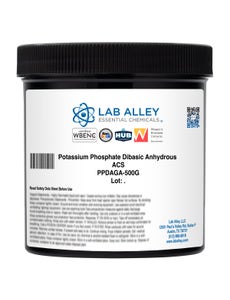
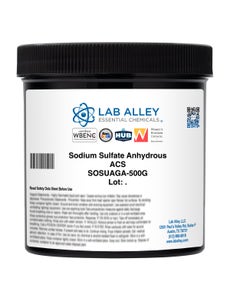
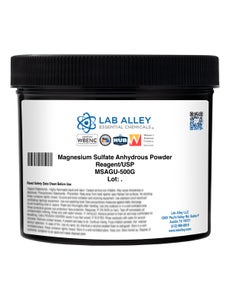
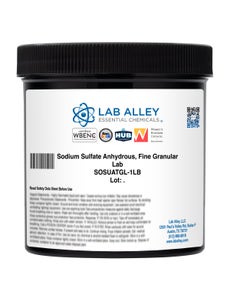
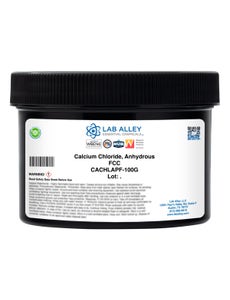
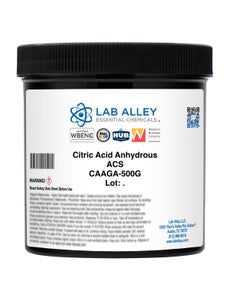
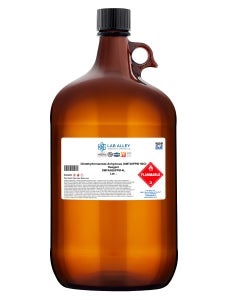
This page covers 41 products in two groups. The first is dry solids such as sodium sulfate, calcium chloride, citric acid and dextrose. They carry no water of crystallization, which matters when you're weighing a reagent, drying an organic layer or making a buffer you need to reproduce. The second group is reagent grade solvents sold with a stated maximum water content, from 10 ppm for acetonitrile, n-hexane and n-heptane up to 50 ppm for ethanol, DMSO and 1-chlorobutane. Anhydrous describes water content, not purity, so every product also carries its own grade, whether that's ACS, USP, FCC, reagent or lab. A few of the solids come in food and pharmaceutical grades, with Kosher and Halal on select products. Solids come in sizes from 100 g to 50 kg, and the solvents come in 4 L bottles or 4 x 4 L cases. Everything ships from Lab Alley's US inventory, and Autoship is available on select products if you reorder the same item every month. Not sure which one fits your work? The sections below explain each grade in a sentence.

256,000+ customers served
99.5% of orders ship in 1–2 business days
98.9% inventory accuracy
SDS + COA available online, every product
Set Descending Direction
Page
per page

About Anhydrous Grade

Anhydrous means without water. For a salt, it means the crystals don't hold water in their structure, so anhydrous sodium sulfate is the dry powder and not the decahydrate. For a solvent, it means the water has been brought down to a stated limit, usually written as a maximum in parts per million. A reading of 10 ppm is 0.001 percent water by weight, and 50 ppm is 0.005 percent.

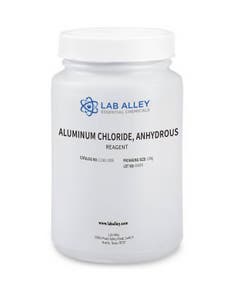
Dry doesn't mean it stays dry. Many anhydrous solids are hygroscopic, which means they pull moisture from the air once the bottle is open. Calcium chloride does it readily, and so does magnesium sulfate, which is exactly why both work as drying agents. Dry solvents do the same, and a solvent listed at 10 ppm can climb fast if the cap stays off. Reseal containers right after use and store them in a dry place. A few products, like aluminum chloride and sodium borohydride, react with water, so read the Safety Data Sheet before you open them. For the exact water value on a batch, check the lot Certificate of Analysis.


COMMON APPLICATIONS

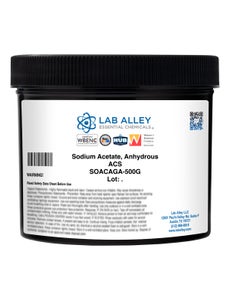
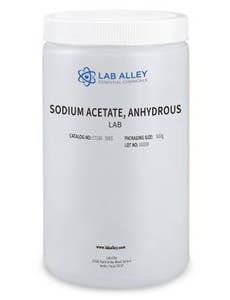
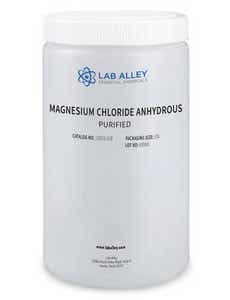
Dry solvents earn their place in reactions where a little water ruins the result. Anhydrous acetonitrile and ethanol are used for moisture sensitive synthesis, and acetonitrile also shows up in electrochemical measurements and in titrations that can't tolerate water. Dry salts have a different job. Sodium sulfate and magnesium sulfate pull the last traces of water out of an organic layer after an extraction. Sodium acetate goes into buffers and works as a chemical precursor. Magnesium chloride is used for dust and ice control, and calcium chloride is a common desiccant.

On the food and pharmaceutical side, anhydrous citric acid adjusts pH and adds a sour taste, and anhydrous dextrose is sold in USP grade. Anhydrous lanolin in USP grade is also here for personal care and ointment work.


GRADES EXPLAINED

Anhydrous isn't a purity grade on its own. It tells you about water, and every product here then carries a regular grade on top of it. Reagent Grade is the biggest group on this page, followed by Lab Grade and ACS Grade, with smaller numbers of USP and FCC food grade products.

ACS Grade meets the American Chemical Society reagent specifications, and each lot ships with a Certificate of Analysis showing measured values against those limits. Reagent Grade is high purity for general lab use, with the specifications and the water limit listed on the product page. Lab Grade suits teaching and general prep, and it isn't suitable for food, drug or medicinal use.

USP Grade follows the United States Pharmacopeia, and FCC follows the Food Chemicals Codex. Where you see USP/FCC or ACS/NF/FCC, one product meets more than one standard. Kosher and Halal are different. They describe how a product was made, not how pure it is, and only select products on this page carry them.


TYPES & GRADES AT A GLANCE

Meets American Chemical Society specifications, with a lot COA. For analytical work and any method that names ACS.
The largest group here, and where the dry solvents sit. High purity for general lab use, with the water limit listed on the product.
For teaching labs and general prep. Not suitable for food, drug or medicinal use.
Follows the United States Pharmacopeia, for pharmaceutical and personal care formulations.
Meets Food Chemicals Codex standards, for food and beverage ingredients.
Meets both pharmacopeia and food standards, which suits supplements.
One product that meets ACS, National Formulary and Food Chemicals Codex standards.
Select products only. Check the product name before you order.

WHY BUY FROM LAB ALLEY

  • Trusted by 256,000+ customers. Labs, schools and production teams keep coming back for Anhydrous Grade Chemicals, so you're ordering from a supplier that knows how to get this done.

  • 99.5% of orders ship in 1 to 2 business days. Your production schedule shouldn't wait on a truck.

  • 98.9% inventory accuracy. The size you see is the size you get, with no backorder surprise after checkout.

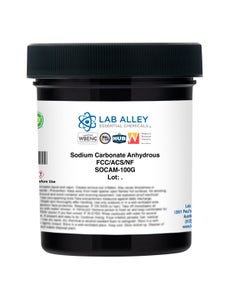
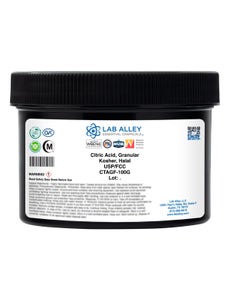
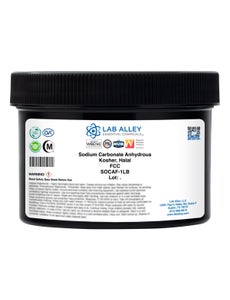
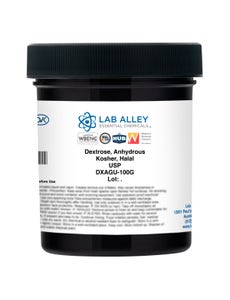
Lab Alley is ISO 9001 certified for quality management. In this category, Kosher and Halal certification applies only to select products, including Citric Acid, Anhydrous, Granular, USP/FCC/Food Grade, Kosher, Halal, Sodium Carbonate Anhydrous FCC, Kosher, Halal and Dextrose, Anhydrous, USP Grade, Kosher, Halal. The other anhydrous products here, including the dry solvents, do not list Kosher or Halal. Check the product name before you order.

Related: Browse the full Grade category to compare every grade Lab Alley carries.

Frequently Asked Questions

What’s the difference between anhydrous, ACS and reagent grade?
Anhydrous describes water content, so it sits alongside a grade instead of replacing one. ACS grade meets American Chemical Society specifications, and reagent grade is high purity for general lab work with its specs on the product page. A product can be both anhydrous and ACS, like Sodium Sulfate Anhydrous, ACS Grade. The dry solvents here are anhydrous and reagent grade. Check the product name for both labels.
What does ≤10ppm H2O mean on an anhydrous solvent?
It’s a maximum water content of 10 parts per million, or 0.001 percent. Lower numbers mean a drier solvent, and the dry solvents on this page run from 10 ppm to 50 ppm. Proof measures alcohol strength by volume and doesn’t state a water limit, so look for the ppm figure when your method is sensitive to water. Once a bottle is open it can absorb moisture, so reseal it right away.
Do I need a permit to buy anhydrous chemicals?
Most don’t. The only permit rule posted site wide is for Specially Denatured Alcohol in quantities of 5 gallons or more, which needs a TTB permit on file, and no product on this page is SDA. Our Ethanol Absolute is listed as undenatured. Dry solvents such as Ethanol Absolute and Acetonitrile list a DOT class and a hazmat fee, so check the Safety and Shipping tab on any product before you order.
Which anhydrous products are Kosher or Halal certified?
Three products on this page carry both: the USP/FCC granular citric acid, the FCC sodium carbonate and the USP dextrose. Each lists Kosher and Halal right in its product name, and the certificates sit under Product Manuals on the product page. No other anhydrous product here lists either one. Lab Alley’s ISO 9001 certification covers our quality management system, not individual products.
Can anhydrous chemicals ship to a home address?
Many chemicals ship only to businesses, schools and universities, and laboratories. If a product has that rule and you check out with a residential address, it’s removed from your order before shipping. Solvents also ship under hazmat rules with a fee. Check the Safety and Shipping tab on the product page, and contact customer care before you order if you aren’t sure your address qualifies.
Which anhydrous product should I buy for synthesis, drying or food use?
For moisture sensitive synthesis, pick the dry solvent with the lowest water limit your method allows. To dry an organic layer, look at Sodium Sulfate Anhydrous or Magnesium Sulfate Anhydrous. For buffers and analytical prep, ACS or reagent grade fits. For food and supplements, choose a USP or FCC product like the citric acid or dextrose. Lab Grade isn’t suitable for food, drug or medicinal use.
Is anhydrous acetonitrile the same as HPLC grade acetonitrile?
No. HPLC grade is purified for chromatography, with low UV absorbance and low residue. Anhydrous acetonitrile is defined by its water limit, and ours is reagent grade at 10 ppm or less. If you’re running a mobile phase, buy the HPLC or LC/MS grade. If your reaction or titration can’t tolerate water, buy the anhydrous product. Don’t swap one for the other without checking your method.
Can I buy anhydrous chemicals in bulk?
Yes for the solids. Many are offered in 12.5 kg, 25 kg and 50 lb sizes, and a few go up to 50 kg. The dry solvents on this page come as a 4 L bottle or a 4 x 4 L case. For drums, pallets, custom packaging or recurring volumes, request a quote or visit Bulk & Custom Chemicals.
Where do I find the SDS and Certificate of Analysis?
Open the product page and look for the Safety Data Sheet icon near the top, then the Product Manuals tab. You’ll find the SDS, the technical data sheet and lot Certificates of Analysis, plus Kosher and Halal certificates on certified products. If a document you need isn’t listed, contact customer care and ask for it.

Guides & Resources

How to Store Acetonitrile
Learn how to safely store acetonitrile. Discover best practices for storage, handling, and labeling to maintain quality, prevent contamination, and ensure compliance.
Read article →
Why Purity Levels Matter: The Lab Alley Commitment to High-Purity Chemicals
Why Purity Levels Matter: The Lab Alley Commitment to High-Purity ChemicalsWhen it comes to chemicals, purity isn’t just a detail—it&rs...
Read article →

Industries That Use Anhydrous Grade

Food & Beverage
Explore FCC and USP grade chemicals for food and beverage including citric acid, sodium benzoate, peracetic acid, emulsifiers and food safe sanitizers.
Learn more →
Life Sciences & Biotech
Explore high-purity chemicals for life sciences and biotech research including solvents, reagents, acids, bases, enzymes, buffers and molecular biology grade solutions.
Learn more →
Pharmaceuticals & Nutraceuticals
Explore USP and NF grade chemicals for pharma and nutraceuticals including solvents, excipients, propylene glycol, glycerin and HPLC reagents.
Learn more →
R&D/Laboratory
Explore ACS, HPLC and LC/MS grade chemicals for R&D and laboratory use including solvents, acids, bases, buffers and standardized solutions for research and QC.
Learn more →