



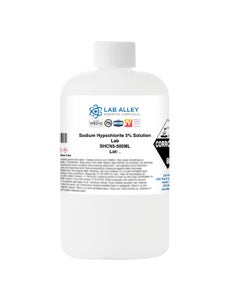
NaOCl. It's the salt behind the name bleach, and behind the smell too. In solution it comes out as a clear, faintly yellow liquid with that sharp chlorine bite, and at working strength it's corrosive enough to eat into metal, skin and eyes alike. What actually makes it a disinfectant is available chlorine and the hypochlorite ion, both of which go after organic material on contact, breaking down cell walls and pigments right along with whatever pathogen happens to be there. Every batch also gets a small dose of sodium hydroxide, and that's not filler. It slows the natural drift of sodium hypochlorite into sodium chloride and sodium chlorate, which is exactly why the concentration on the label keeps ticking down even in a container that's never been opened.
COMMON APPLICATIONS
Disinfecting water and wastewater, sanitizing surfaces and equipment, general bleaching and stain removal, pressure washing concrete, pools and driveways, dental and clinical disinfection, and chlorination steps in chemical and cosmetics manufacturing.
GRADES EXPLAINED
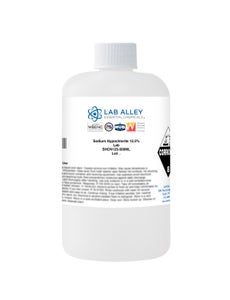
Both products here are Lab Grade, solid working purity, no food or pharmaceutical monograph attached. What actually separates them is strength. The 5% solution sits at household bleach concentration, fine for lighter cleaning and disinfecting. The 12.5% solution runs about two and a half times stronger, built for water treatment, bigger disinfection jobs, or diluting down to a working strength yourself rather than buying a large volume of something already diluted.
TYPES & GRADES AT A GLANCE
WHY BUY FROM LAB ALLEY
256,000+ customers already order their chemicals and reagents from Lab Alley. 99.5% of orders ship within 1 to 2 business days, and 98.9% inventory accuracy means the strength you see in stock is the strength that ships. SDS and COA are available online for both sodium hypochlorite solutions. Neither product on this page carries Kosher, Halal or food grade certification.
Related: See our Chlorides and Sodium Hydroxide collections, or browse all Salts.