Activated Carbon
Buy Food Grade Activated Carbon Powder and Granular in Wood Based, Coal Based and Bone Char Forms, Kosher and Halal Certified.
Activated carbon is one of those materials that sounds almost boring until you understand what it actually does. The activation process creates an internal pore structure so extensive that a single gram of this material can expose more surface area than a tennis court. Everything from drinking water to cooking oil to pharmaceutical intermediates gets cleaned, decolorized or purified by passing through it. That is not a niche product. It is a workhorse chemical used across food production, water treatment, industrial gas handling, pharma manufacturing and environmental remediation. What we carry here is the food-grade industrial version, not the wellness powder you see on social media, though the material is the same class of compound.
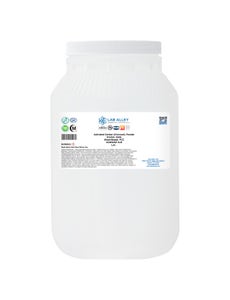
The Food Grade Wood Based Powder is Kosher and Halal certified and goes up to 750 lb bags, so if you are sourcing at production scale, that is likely where you start. The Coal Based Powder is Kosher certified and usually costs less than the wood-based version, which matters when your spec does not require a specific source material. Both are fine powders. If your system runs on a packed bed or continuous flow setup and you need something coarser, the Food Grade Granular is Kosher certified and built for that. Then there is the Animal Bone Black, the bone char option. It has a long history in cane sugar refining and decolorization work where the surface chemistry of bone-derived material is genuinely important, not just a preference.
SDS and COA come with every order and are posted online. Activated carbon is not among the more hazardous materials we carry, though it still ships to business, lab and school addresses only. Autoship is live on three of the four products, which a lot of industrial buyers find worth setting up given how regularly this stuff gets used.
256,000+
customers served
99.5%
of orders ship in 1–2 business days
98.9%
inventory accuracy
SDS + COA
available online, every product
Activated Carbon - 4 products All Filters
Activated Carbon - 4 products About Activated Charcoal
Activated charcoal is a form of non-graphite carbon that has been processed to enhance its microcrystalline internal porosity. Activated charcoal is a popular choice of adsorbent material for physical separation of impurities thanks to its high surface area and reactivity. It can effectively remove a wide range of pollutants including pesticides, herbicides, heavy metals, phenols, and chlorinated hydrocarbons. It is possible to derive activated carbon from any material containing a high concentration of carbon, including wood, charcoal, bone, or nut shells. The two basic processes for preparation are chemical or physical/gas activation. The processing method is usually dependent upon the starting material and the desired end product - granular or powdered form.
Recent environmental trends have further increased demand for this material. The diverse applications of activated charcoal include: air purification, gasoline vapor emission control in automobiles, cigarette filtration, and drinking water purification.
Common Uses and Applications
-
Water Purification: Activated carbon is widely used in water treatment processes to remove organic contaminants, odors, and colors. It can effectively remove impurities, chlorine, volatile organic compounds (VOCs), pesticides, and other chemicals from water.
-
Air Filtration: Activated carbon is utilized in air filters and purifiers to remove volatile organic compounds, odors, and harmful gases from indoor air. It is commonly used in industrial settings, vehicles, and home air purifiers.
-
Food and Beverage Industry: Activated carbon is utilized in the food and beverage industry for decolorization, deodorization, and purification purposes. It is commonly used in the production of sugar, edible oils, alcoholic beverages, and water filtration systems.
-
Gas and Vapor Treatment: Activated carbon is employed in gas masks and respirators to provide protection against toxic gases and vapors. It adsorbs and traps harmful chemicals, preventing them from being inhaled.
-
Chemical and Pharmaceutical Industries: Activated carbon plays a crucial role in various chemical and pharmaceutical processes. It is used for decolorization, purification, and removal of impurities from chemicals, solvents, and pharmaceutical intermediates.
-
Environmental Remediation: Activated carbon is used in soil and groundwater remediation to remove organic contaminants and pollutants. It can help clean up spills of petroleum products, pesticides, and other harmful substances.
-
Gold Recovery: Activated carbon is employed in the extraction of gold from cyanide solutions in the mining industry. It adsorbs the gold complex, allowing for its separation and recovery from the solution.
-
Industrial Processes: Activated carbon finds applications in various industrial processes, including catalyst support, solvent recovery, gas purification, and removal of impurities from chemicals and gases.
-
Energy Storage: Activated carbon is used in supercapacitors and batteries as an electrode material. Its high surface area enables efficient storage and release of electrical energy.
-
Personal Care and Beauty Products: Activated carbon is used in toothpaste, face masks, cleansers, and other personal care products. It helps in the adsorption of impurities, toxins, and excess oil from the skin and teeth.
Industries
About Activated Carbon
Carbon, processed until it is almost entirely holes. That is the simplest way to put it. The activation step, whether chemical or physical, creates millions of microscopic pores throughout each particle. What you end up with is a material that looks unremarkable but has a staggering amount of internal surface area. A single gram can expose anywhere from several hundred to over a thousand square meters, depending on the starting material and the processing method. Contaminants, colors, odors and organic molecules attach themselves to that surface as things pass through or over it. The carbon does not react with what it traps. It just holds it.
The starting material is not incidental. Wood, coal, coconut shells and bone all produce activated carbon, but they produce it differently. The pore sizes, surface chemistry and density vary enough that source material genuinely affects performance on certain applications. Worth knowing if you have not run into this before: activated carbon and activated charcoal are the same thing. The charcoal name is older, and you still see it on consumer products and in medical contexts. In industrial, food and water treatment settings, people usually say activated carbon. Both names, one material.
COMMON APPLICATIONS
Water treatment is the largest single use category. Activated carbon strips organic compounds, chlorine, chloramines, odors and color from drinking water, industrial process water and wastewater. In food and beverage production it decolorizes sugar, edible oils, wine, beer and spirits. Pharmaceutical manufacturers use it during API intermediate purification and decolorization. In industrial gas handling it goes into respirators, HVAC filtration, air purification systems and solvent recovery setups. Environmental remediation work leans on it for contaminated soil and groundwater cleanup. Mining operations use it to recover gold from cyanide solutions. And it appears as a catalyst support material in a range of chemical manufacturing processes.
GRADES EXPLAINED
Food Grade is the requirement for anything that goes near food, beverages, pharmaceutical intermediates or any application that calls for a certified grade. Three of the four products in this category carry Kosher certification. The Wood Based Powder also carries Halal, making it the only product here with both. The Bone Char sits outside that framework. Its pore structure and surface chemistry are different from the powders and granular, and its traditional use in cane sugar decolorization and refining is specific enough that it warrants a separate conversation when you are evaluating it.
Within Food Grade, the choice between powder and granular comes down to process design. Powder has faster contact kinetics and larger surface area per volume, which is why batch applications tend to use it. Granular is the choice for fixed bed and continuous flow systems where the carbon bed stays put and the process stream moves through it.
TYPES & GRADES AT A GLANCE
Fine wood-sourced powder. The only product in this category with both Kosher and Halal certification. Scales to 750 lb bags.
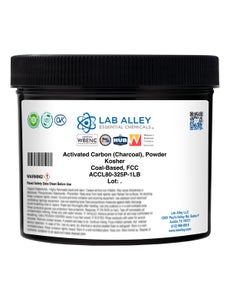
Fine coal-sourced powder, Kosher certified. Typically the lower-cost powder option when source material flexibility exists.
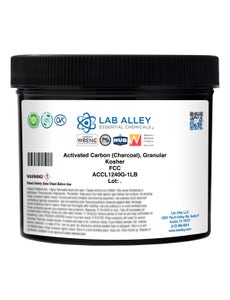
Coarser particle for flow-through and fixed bed use. Kosher certified. Less dust than fine powder.
Bone char. Specialty choice for decolorization and refining. No Kosher or Halal certification.
WHY BUY FROM LAB ALLEY
Lab Alley has shipped to more than 256,000 customers. Order accuracy runs at 98.9% and 99.5% of orders leave within 1 to 2 business days. Every activated carbon product has its SDS and COA posted and available before you order. The Wood Based Powder is the one to choose if both Kosher and Halal certification matter for your application. The Coal Based Powder and Granular are Kosher certified. Bone Char carries neither. Autoship is available on three of the four products if your operation runs through this on a schedule.
Related Products: Purified Water and all Specialty Chemicals.
Frequently Asked Questions
Where can I buy activated carbon or activated charcoal online?
We carry it here. Food Grade powder in both wood-based and coal-based, Food Grade granular, and bone char. Standard sizes order straight off the page without a quote. Inventory goes from 500 g jars up to 750 lb bags on some products, and most ship within a day or two.
Activated carbon and activated charcoal, are they actually the same thing?
No. Same material, two names. The charcoal name is older and never fully gave way in consumer markets, medical contexts or beauty products. Industrial buyers, food processors and water treatment companies mostly say activated carbon. The naming is historical, not technical.
Wood based or coal based, how do I choose?
Pore structure. Wood-sourced carbon tends to have larger pores, which works better for capturing bigger organic molecules. Coal-sourced carbon has a denser particle and different pore distribution. Some applications, particularly in food and pharmaceutical work, specify wood-derived material for compliance reasons independent of performance. Check what your process stream needs and whether your formulation or certification has a source restriction.
What does activated carbon actually get used for?
Adsorption. It holds molecules on its surface without reacting with them chemically. Practically, that means: removing chlorine, organics and odors from water. Stripping color from sugar, wine, edible oils and spirits. Cleaning up gas streams in industrial facilities. Purifying pharmaceutical intermediates. Remediating contaminated soil and groundwater. Recovering gold from cyanide solutions in mining. Supporting catalysts in chemical manufacturing. In labs it often turns up in sample prep and purification steps.
Which products are Kosher certified? Which ones carry Halal?
Kosher: the Wood Based Powder, the Coal Based Powder, and the Granular. Halal: the Wood Based Powder only. The Bone Char carries neither. If you need both Kosher and Halal on the same product, the Wood Based Powder is your only option in this category.
Powder or granular, which format works for my application?
Batch process where you add carbon to a liquid and then filter it out? Powder. Continuous flow or packed bed system where the carbon stays in place? Granular. Beyond the process difference, granular generates less airborne dust, which makes it easier to work with day to day in a production environment.
Can I order in bulk?
Yes. Wood Based Powder goes to 750 lb bags, Granular to 25 kg containers, all listed on the product pages. Bigger volumes or scheduled production runs go through Bulk & Custom Chemicals for a quote. Autoship saves 10% on repeat orders and is available on three of the four products here.
Does activated carbon need a purchase permit? Can it ship to a residence?
No permit required. Residential delivery is not available, same as the rest of our catalog. Orders go to business, lab or school addresses. If your address situation is unusual, call 512-668-9918 before ordering and we can sort it out.
Storage, anything specific I should know?
Keep it sealed. That surface area that makes activated carbon useful also means an open container will start pulling in whatever is in the air around it, moisture included, and that degrades performance over time. Store away from light and strong oxidizers. Fine carbon powder can form a combustible dust cloud at high concentrations, so keep it away from ignition sources and treat it the way you would any fine powder in a production setting.
Guides & Resources
Activated Carbon in the CBD/Hemp Industry
Activated Carbon in the CBD/Hemp Industry Extraction of Phytocannabinoids Phytocannabinoids THC and CBD are heavily studied for their therapeutic b...
Read article →Ethanol and activated carbon in the CBD/Hemp Industry
Ethanol and activated carbon are two of the most important materials in the CBD and hemp industry. In this article, we’ll discuss how both of...
Read article → Industries That Use Activated Carbon
Food & Beverage
Explore FCC and USP grade chemicals for food and beverage including citric acid, sodium benzoate, peracetic acid, emulsifiers and food safe sanitizers.
Learn more →Pharmaceuticals & Nutraceuticals
Explore USP and NF grade chemicals for pharma and nutraceuticals including solvents, excipients, propylene glycol, glycerin and HPLC reagents.
Learn more →R&D/Laboratory
Explore ACS, HPLC and LC/MS grade chemicals for R&D and laboratory use including solvents, acids, bases, buffers and standardized solutions for research and QC.
Learn more →Manufacturing & Industrial
Explore chemicals for manufacturing and industrial use including ACS grade solvents, acids, alkalis, glycols and water treatment chemicals available in bulk sizes.
Learn more →