Tubes & Tubing
Test tubes, culture tubes, quartz tubing and joint adapters, with the size, material and pack count listed on every product page.
Find the right tube and order it in minutes. If you've ever hunted through catalogs for a size, waited on a quote for a few cases of test tubes, or wondered whether a culture tube ships with its cap, you know how much time that eats. Lab Alley's tubes and tubing collection puts the answers on the page. You'll find borosilicate test tubes with and without a rim, plain and screw cap culture tubes, round bottom culture tubes with caps, and clear fused quartz tubing for furnace work. A few 24/40 joint adapters and a polypropylene drying rack sit alongside them, so one order can set up a whole bench.
Sizes are written the way you'd search for them. Rimmed borosilicate test tubes run from 10 x 75 mm up to 38 x 200 mm and come in packs of 72, with cases of 720 for many sizes. Culture tubes start at 0.75 mL and go up to 60 mL. Quartz tubing comes in a standard 4 foot length, and custom lengths are available if you ask. A quick note on the word tubing. Here it means glass and quartz tubing. If you need flexible tubing or fittings for chromatography, head to Tubing and Fittings. Not sure which tube fits your rack, your centrifuge or your furnace? Call Customer Care at (512) 668 9918 and talk it through.
256,000+
customers served
99.5%
of orders ship in 1–2 business days
98.9%
inventory accuracy
SDS + COA
available online, every product
Tubes & Tubing - 11 products All Filters
Tubes & Tubing - 11 products About Tubes & Tubing
Most of the glass tubes here are borosilicate, and the number that comes after it matters. Borosilicate 3.3 has the lower thermal expansion of the two, so it copes better when a tube moves from a hot plate to a cool bench. The round bottom culture tubes with caps use it. The disposable culture tubes use 5.1 expansion borosilicate. It's a little less forgiving of sharp temperature swings, but it works well for single use culture and sample work. Either way, you get good chemical resistance and clear glass you can see through.
Rims and closures change how a tube behaves. A rimmed test tube has a reinforced lip that helps with pouring and handling. The screw cap finish culture tubes take a cap, and the listing says caps are not included. The round bottom culture tubes ship with an autoclavable polypropylene screw cap with a PTFE liner. Quartz is a different material altogether. Clear fused quartz tolerates far higher temperatures than borosilicate, so it's the one to reach for when you're building a furnace tube or running gas through a hot zone.
COMMON APPLICATIONS
Test tubes handle the small jobs. You can mix a few milliliters, run a qualitative test, warm a sample in a water bath or set up a classroom demo. Culture tubes are for growing, holding and moving biological samples, and the disposable ones save you the washing and the cross contamination worry. Screw cap versions suit longer incubations and sample transport because the cap keeps evaporation down.
Quartz tubing goes into tube furnaces, high temperature reactions and custom apparatus. The 24/40 joint adapters connect standard taper glassware for distillation and vacuum setups, and the polypropylene drying racks give wet tubes somewhere to drain.
GRADES EXPLAINED
Tubes don't come in chemical grades the way solvents do, so the labels worth reading are the glass type and the standard. ASTM E438 Type I Class A describes borosilicate 3.3 glass, and Type I Class B describes the 5.1 expansion glass used in the disposable culture tubes. The spec sheets for the culture tubes name the class, and the screw cap finish tubes also list USP Type I.
Fused quartz sits outside that system. Its sizes are listed as inner diameter by outer diameter, in millimeters, so check both numbers against your fitting before you order. Test tube sizes work the other way around, with diameter first and length second.
TYPES & GRADES AT A GLANCE
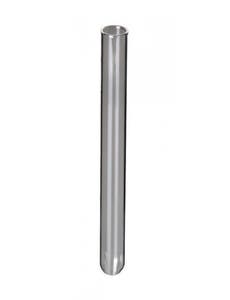
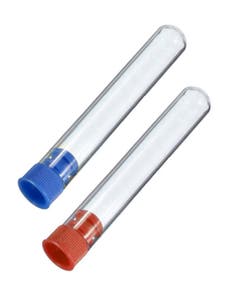
Test Tubes with Rim: Borosilicate tubes with a reinforced lip, for everyday bench work, demos and sample prep.
Test Tubes with Rim: Borosilicate tubes with a reinforced lip, for everyday bench work, demos and sample prep.
Test Tubes without Rim: Rimless borosilicate tubes for racks and setups where a lip gets in the way.
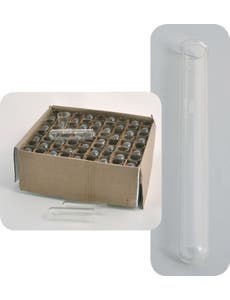
Plain Disposable Culture Tubes: Single use 5.1 expansion borosilicate tubes, from 0.75 mL up, so you skip the washing.
Screw Cap Finish Culture Tubes: Disposable tubes with an 18/415 thread finish. Caps are sold separately.
Round Bottom Culture Tubes with Caps: Borosilicate 3.3 tubes that come with an autoclavable screw cap, for incubation and transport.
Test Tubes and Caps: Test tubes sold with their caps, handy for holding small samples.
Clear Fused Quartz Tubing: For furnace and high temperature work. Standard 4 foot lengths, with custom lengths on request.
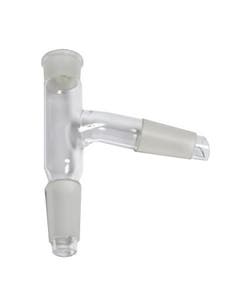
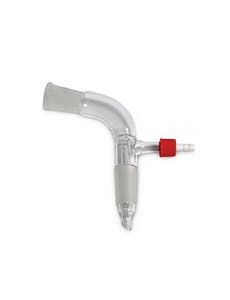
Joint Adapters: Connect standard taper glassware for distillation and vacuum setups.
Joint Adapters: Connect standard taper glassware for distillation and vacuum setups.
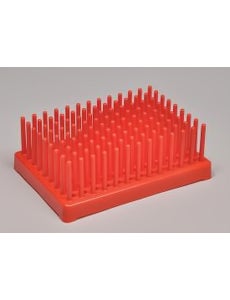
Drying Racks: Polypropylene racks that hold wet tubes while they drain.
WHY BUY FROM LAB ALLEY
256,000+ customers already order their tubes and tubing from Lab Alley. 99.5% of orders ship within 1 to 2 business days, and 98.9% inventory accuracy means the size and style you see in stock is the size and style that ships. Product names and descriptions list the material, and measuring glassware lists its accuracy class, so you know what you're getting before you order.
Related: Browse the full Glassware collection, which also includes Flasks and Graduated Cylinders.
Frequently Asked Questions
What's the difference between a test tube and a culture tube?
A test tube is a general purpose tube for mixing, heating and holding small volumes, and it usually has a rim for pouring. A culture tube is made for biological work. It often comes with a cap or a finish that takes one, and many are disposable. If you're growing or moving samples, start with culture tubes. For quick reactions and demos, test tubes do the job.
What do sizes like 12 x 75 mm mean?
The first number is the outside diameter and the second is the length, both in millimeters. A 12 x 75 mm tube is 12 mm wide and 75 mm long, and the plain culture tube in that size holds about 5 mL. Match the diameter to your rack or centrifuge adapter first, then pick the length. Quartz tubing is the exception, listed as inner diameter by outer diameter.
Do I need a permit or special paperwork to buy tubes?
Nothing on the tubes and tubing pages calls for a permit. The permit and verification notices on the site apply to specific chemicals such as SDA, mercury and dichloromethane, not to glassware. If your lab buys on a purchase order or a credit account, you can submit a P.O. or apply for credit online.
Are any of these tubes Kosher, Halal or ISO certified?
None of the tube, tubing or accessory listings in this collection carry a Kosher, Halal, USDA Organic or RSPO certification. Those apply to select chemicals, and the Certifications page shows which ones. For glass, the details worth checking are the glass type and the ASTM class named in the listing and on the spec sheet.
Can I ship these to a home address?
The business, school and laboratory address rules on Lab Alley's site belong to specific chemicals, and none of the tubes and tubing pages show that restriction. If you're ordering to a home address, check the Shipping and Returns page or ask Customer Care before you check out. 99.5% of orders ship within 1 to 2 business days.
Which tube should I use for heating, culturing or storing samples?
For heating, choose borosilicate. The round bottom culture tubes use 3.3 glass, which handles temperature swings best. For culture and sample work where you'd rather not wash glass, choose the disposable culture tubes. For long incubations or transport, pick a screw cap tube so the cap limits evaporation. For furnace temperatures, step up to fused quartz.
How is a glass test tube different from a plastic one?
Glass takes heat and resists most solvents, and you can wash and reuse it. Plastic tubes won't shatter if you drop them or spin them hard, and you can toss them after one use. If you need heat or solvent resistance, buy glass. If you're spinning samples, browse the plastic Test Tubes and Centrifuge Tubes.
Can I buy test tubes by the case?
Yes. The rimmed borosilicate test tubes come in packs of 72, and many sizes also come in cases of 720. Culture tubes and other items list their pack counts on each product page. For bigger volumes or a custom quartz length, request a quote and Customer Care will price it with you.
When do I need quartz tubing instead of borosilicate?
Choose quartz when your process runs hotter than borosilicate can handle, such as tube furnace work, or when a tube has to survive hard thermal shock. Lab Alley's clear fused quartz tubing comes in 4 foot lengths, and the sizes are listed as inner diameter by outer diameter. Ask Customer Care if you need a custom length.
What does 24/40 mean on the joint adapters?
It's a standard taper ground glass joint size. The 24 is the diameter in millimeters at the wide end of the ground zone, and the 40 is the length of the ground surface in millimeters. Any 24/40 joint mates with any other 24/40 joint, so the adapters connect to flasks, condensers and other glassware you already own.
Industries That Use Tubes & Tubing
R&D/Laboratory
Explore ACS, HPLC and LC/MS grade chemicals for R&D and laboratory use including solvents, acids, bases, buffers and standardized solutions for research and QC.
Learn more →Education
Explore chemicals for K–12 and university labs including dilute acids, bases, ACS solvents, biology reagents and indicators for classroom and research use.
Learn more →Life Sciences & Biotech
Explore high-purity chemicals for life sciences and biotech research including solvents, reagents, acids, bases, enzymes, buffers and molecular biology grade solutions.
Learn more →Pharmaceuticals & Nutraceuticals
Explore USP and NF grade chemicals for pharma and nutraceuticals including solvents, excipients, propylene glycol, glycerin and HPLC reagents.
Learn more → If you are purchasing SDA in 5 gallons or more, you are required to provide a TTB permit showing how much of the product you are allowed to purchase per year. Please email your TTB permit to
customercare@laballey and include your Order Number.