
• On Budget, On Time, Every Time : Essential Chemicals for a Better World• WOMAN-OWNED SMALL BUSINESS (WOSB)• OVER 256K+ HAPPY CUSTOMERS• TRUSTED BY NASA, TESLA, SPACEX, BOEING & MORE• HIGH PURITY, NATURAL AND ESSENTIAL CHEMICALS• SERVING 16 INDUSTRIES• PROUDLY PARTNERED WITH ECODRIVE• COA & SDS AVAILABLE ONLINE• QUALITY LAB SUPPLIES & EQUIPMENT• CERTIFIED QUALITY: ISO 9001, KOSHER, ORGANIC & MORE• GSA CONTRACT HOLDER | GOVERNMENT APPROVED• FAST NATIONWIDE DELIVERY• On Budget, On Time, Every Time : Essential Chemicals for a Better World• WOMAN-OWNED SMALL BUSINESS (WOSB)• TRUSTED BY NASA, TESLA, SPACEX, BOEING & MORE• OVER 256K+ HAPPY CUSTOMERS• HIGH PURITY, NATURAL AND ESSENTIAL CHEMICALS• SERVING 16 INDUSTRIES• PROUDLY PARTNERED WITH ECODRIVE• COA & SDS AVAILABLE• QUALITY LAB SUPPLIES & EQUIPMENT• CERTIFIED QUALITY: ISO 9001, KOSHER, ORGANIC & MORE• GSA CONTRACT HOLDER | GOVERNMENT APPROVED• FAST NATIONWIDE DELIVERY

We are now ISO 9001 Certified

Get 5% OFF on your first order |  Use Code: WELCOME5

Buy NF Grade Chemicals Online: USP/NF and FCC | Lab Alley

NF Grade

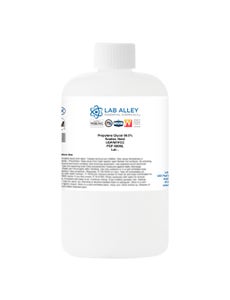
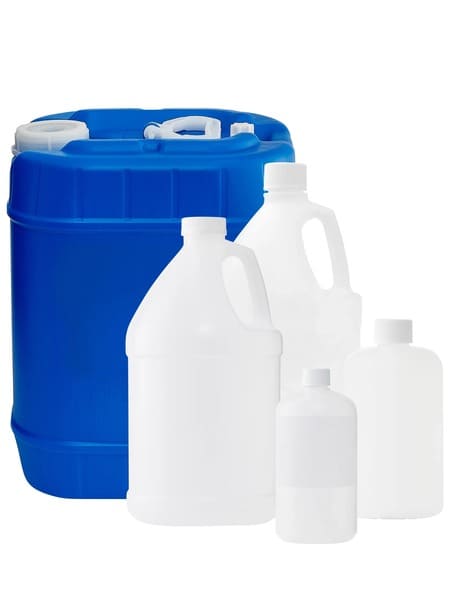
Buy National Formulary grade glycerin, propylene glycol, polysorbates, stearates and more online, in NF, USP/NF, NF/FCC and ACS/NF/FCC grades, from small bottles to 270 gallon totes.

You know the grade your formula calls for, and you'd rather not wait on a rep to quote it. This page lists more than 35 NF Grade chemicals from Lab Alley, each with its price, its sizes and its paperwork in plain view before you check out. NF stands for National Formulary, the standard that covers excipients. Those are the supporting ingredients in a finished product, the ones that carry, bind, thicken, preserve or stabilize the active part. Glycerin, propylene glycol, polysorbates, stearic acid, lactose, beeswax and cream of tartar all live here. So do process chemicals like methanol, ethyl acetate, tetrahydrofuran, sodium hydroxide, potassium hydroxide and peracetic acid. Some listings are NF only. Many name two or three standards at once, such as USP/NF, NF/FCC or USP/NF/FCC, so a single product can answer to more than one requirement. That can save you from stocking two versions of the same ingredient. It also keeps your purchasing list short when your products cross from the lab into the pharmacy or the kitchen.

Chasing documents is the part most buyers dread, especially when an auditor is waiting on a certificate and the supplier has gone quiet. Here, Safety Data Sheets and Certificates of Analysis are available online, so your quality team can pull them without a phone call or a wait. Sizes run from small bottles to 55 gallon drums and 270 gallon totes, and many listings can go on Autoship if you reorder on a schedule. Kosher, Halal and RSPO certifications apply to select listings only, and the product name tells you which ones. The filters on this page let you narrow by grade, certification, size and concentration, so you can get from a spec sheet to a cart in a few minutes. If you need a volume, a package or a price you don't see, request a quote and we'll build it around your order. No gatekeeping. No guessing.

256,000+ customers served
99.5% of orders ship in 1–2 business days
98.9% inventory accuracy
SDS + COA available online, every product
Set Descending Direction
Page
per page

About NF Grade

NF Grade covers a lot of ground, from sugars and waxes to strong bases and disinfectants. Knowing how the grade works, and what each product actually is, keeps your order simple.

What NF means. NF Grade means the material meets a monograph in the National Formulary, which the United States Pharmacopeia publishes alongside its own standards in one joint compendium. NF monographs mostly describe excipients and set tests for identity, strength, quality and purity. As our chemical grades guide explains, NF is typically comparable to USP in purity, though the exact requirements vary by compound. If your method depends on a number, check the current compendium.

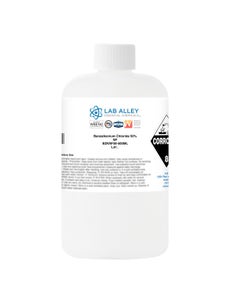
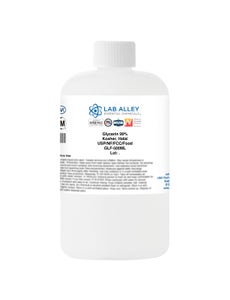
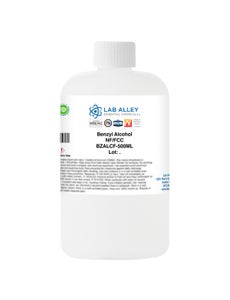
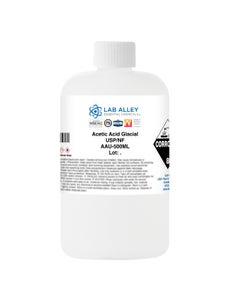
Liquids and solutions. Glycerin, propylene glycol, polysorbates, benzyl alcohol and glacial acetic acid are liquids you can measure by volume. Benzalkonium chloride comes as a 50% solution, and peracetic acid as 5% and 15% solutions. Methanol, ethyl acetate and tetrahydrofuran are flammable, so keep them away from heat and ignition sources.

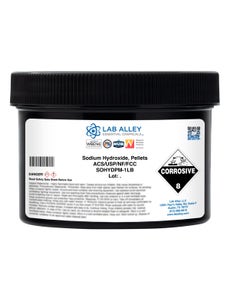
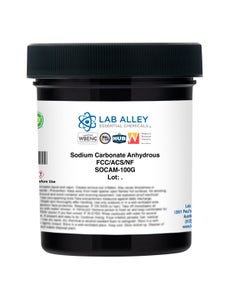
Powders, crystals and pellets. Lactose, maltose, cream of tartar, tartaric acid, tannic acid, thymol and the sodium carbonate listings are dry solids. Sodium hydroxide and potassium hydroxide come as pellets. They're strongly corrosive and they pull moisture from the air, so wear gloves and eye protection and keep the container tightly closed.

Waxes, fats and gums. Beeswax, stearic acid, the stearates, tragacanth gum and balsam of Peru are natural materials that work as thickeners, stabilizers and bases.

One more thing. NF Grade describes the quality of the ingredient. It doesn't make a finished product sterile or approved, and it doesn't replace your own testing. Read the Safety Data Sheet before you open anything new.


COMMON APPLICATIONS

Pharmaceutical and compounding. Lactose monohydrate and magnesium stearate are everyday tablet and capsule excipients. Glycerin, propylene glycol and polysorbates help dissolve, blend and stabilize liquid formulas.

Personal care and cosmetics. Beeswax, stearic acid, isopropyl palmitate, polysorbate 60 and polysorbate 80 thicken, soften and emulsify creams, lotions and balms.

Food and beverage. The listings that pair NF with FCC are the ones to look at, including tartaric acid, cream of tartar, glycerin, propylene glycol and sodium carbonate. Check the full grade in the product name first.

Disinfection and sanitizing. Benzalkonium chloride 50% and peracetic acid at 5% and 15% go into disinfectant and sanitizer formulas. Both are hazardous, so follow the Safety Data Sheet and your own protocol for dilution and contact time.

Laboratories and manufacturing. Methanol, ethyl acetate, tetrahydrofuran, glacial acetic acid, sodium hydroxide, potassium hydroxide and sodium carbonate serve as solvents, reagents and pH adjusters.

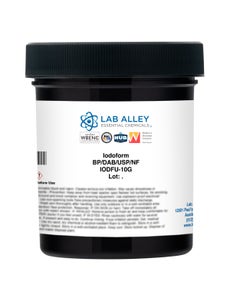
Topical and antiseptic ingredients. Thymol, thymol iodide, iodoform, tannic acid and balsam of Peru have a long history in topical preparations. The balsam of Peru listing is marked as approved for topical use.


GRADES EXPLAINED

NF Grade. Meets National Formulary standards. These are mostly excipients and supporting ingredients.

USP/NF. Meets both the United States Pharmacopeia and National Formulary requirements, so it covers either name on your spec.

NF/FCC and USP/NF/FCC. These add the Food Chemicals Codex, the reference for substances added to food and for chemicals that touch food surfaces. They're the NF listings to consider for food and beverage work.

ACS/NF/FCC, ACS/USP/NF and ACS/USP/NF/FCC. ACS Reagent specifications come from the American Chemical Society, and the supplier certifies each lot against them. That makes the Certificate of Analysis your proof.

Two listings of the same chemical can carry different grade strings. Compare the COA and not only the price. And if your method names USP or NF, buy the grade it names, because an NF only listing doesn't automatically meet a USP requirement.


TYPES & GRADES AT A GLANCE

NF only listings.
Meets both compendia.
Adds the Food Chemicals Codex.
NF with food grade standards.
Reagent specifications plus NF.
Select listings only. Check the product name.
Palm derived listings only.
For production runs and bulk buyers.
For the largest orders.
For steady, higher volume use.

WHY BUY FROM LAB ALLEY

  • Trusted by 256,000+ customers. Labs, schools and production teams keep coming back for Grade chemicals, so you're ordering from a supplier that knows how to get this done.

  • 99.5% of orders ship in 1 to 2 business days. Your production schedule shouldn't wait on a truck.

  • 98.9% inventory accuracy. The size you see is the size you get, with no backorder surprise after checkout.

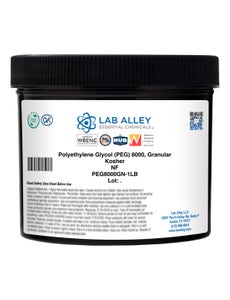
Certified quality. Lab Alley is ISO 9001 certified for quality management. In this category, Kosher and Halal certification applies only to select products, including Glycerin 99% USP/NF/FCC/Food Grade, Kosher, Halal, Propylene Glycol 99.5% USP/NF/FCC/Food Grade, Kosher, Halal, Tartaric Acid Crystals, NF/FCC Grade, Kosher, Halal and Methyl Salicylate 99% USP/NF/FCC Grade, Kosher, Halal (all Kosher and Halal), and Polyethylene Glycol (PEG) 8000, Granular, NF Grade, Kosher and Ethyl Acetate 99.0% NF/FCC, Kosher (Kosher only). RSPO certification applies only to the palm derived listings, such as Polysorbate 80, Derived from Palm, NF/FCC Grade, RSPO, Kosher, Halal, Magnesium Stearate, Derived from Palm Oil, RSPO MB, Kosher, Halal and Isopropyl Palmitate (IPP), Derived from Palm, RSPO MB, Kosher, Halal. Check the product name before you order.

Frequently Asked Questions

What's the difference between NF Grade and USP Grade?
Both come from the same book. The joint USP and NF compendium holds United States Pharmacopeia monographs, which mostly cover drug substances, and National Formulary monographs, which mostly cover excipients. NF Grade is typically comparable to USP in purity, but the tests differ by compound. If your spec names one, buy that one. A listing marked USP/NF meets both.
What do labels like 99.5% USP/NF/FCC mean?
The percentage is the assay, or how much of the named chemical is in the product. The propylene glycol listing, for example, is a minimum of 99.5%, and the rest is mostly water and trace material. The letters name the standards it meets, here the United States Pharmacopeia, the National Formulary and the Food Chemicals Codex. On solutions like benzalkonium chloride 50%, the number is the strength.
Do I need a permit to buy NF Grade chemicals?
Lab Alley doesn't ask for a permit on the NF Grade listings on this page. Your own rules may be different, though. A state agency, a regulated industry or a company policy can require records for chemicals like methanol, peracetic acid or sodium hydroxide. If you aren't sure, check with your compliance team first, or call customer care at 512.668.9918 before you order.
Which NF Grade products are Kosher, Halal or RSPO certified?
Only select listings, and the product name says so. Kosher appears on 13 listings and Halal on 11, including glycerin, propylene glycol, tartaric acid, methyl salicylate and the polysorbates. RSPO applies to five palm derived listings. None of the products on this page is USDA Organic. Use the certification filter to see them all, and ask customer care if your auditor needs a certificate.
Can NF Grade chemicals ship to a home address?
It depends on the chemical. Hazardous items like peracetic acid, methanol and the hydroxides can carry extra shipping rules, and some chemicals ship only to businesses, schools and labs. Check the Safety and Shipping section on each listing before you add it to your cart. If you're ordering for a home business or a shared address, call 512.668.9918 first so checkout holds no surprises.
Which grade should I choose for pharmaceutical, food or lab work?
Start with the standard your spec or auditor names. For compounding and drug formulas, look for NF or USP/NF. For food and beverage, choose listings that add FCC, such as NF/FCC or USP/NF/FCC. For routine lab work, an ACS/NF listing gives you reagent specifications backed by a certificate of analysis. When a method names a grade, follow it and not the price.
Can I use ACS Reagent Grade in place of NF Grade?
Not automatically. ACS targets analytical reagent purity and NF targets excipient quality, so a chemical can meet one and miss the other. A few listings here carry both, like Methanol ACS Reagent/USP/NF and Sodium Carbonate FCC/ACS/NF, and those are the easy swaps. For anything going into a drug or regulated process, buy the grade your spec names and check the COA.
Can I buy NF Grade chemicals in drums or totes?
Yes. Many listings come in 55 gallon drums, and a few come in 270, 275 or 300 gallon totes, including glycerin. Five gallon pails and 4 liter bottles are common too. Use the size filter to see what each chemical offers. For a larger volume, repeat shipments or custom packaging, request a quote or visit Bulk & Custom Chemicals.
Where do I find the COA and SDS for an NF Grade product?
Both are online. On a product page, the Safety Data Sheet sits under Product Manuals and Certificates of Analysis are listed by lot number. Some listings also post certification and allergen statements. Pull the COA for your lot before you sign off, and send it to your auditor. If something you need isn't there, email customercare@laballey.com.

Guides & Resources

Chemical Grades
Explore the various chemical grades and their applications in different industries. Understand the significance of purity standards, including ACS, USP, Lab Grade and more.
Read article →
Types of Glycerin
What are the different types of glycerin? Learn the differences between food, cosmetic, and pharmaceutical grades, plus their key applications.
Read article →
Glycerin Overview
Discover the key properties and uses of glycerin. Understand how this organic solvent supports food, cosmetic, and pharmaceutical production with safe handling practices.
Read article →

Industries That Use NF Grade

Food & Beverage
Explore FCC and USP grade chemicals for food and beverage including citric acid, sodium benzoate, peracetic acid, emulsifiers and food safe sanitizers.
Learn more →
Pharmaceuticals & Nutraceuticals
Explore USP and NF grade chemicals for pharma and nutraceuticals including solvents, excipients, propylene glycol, glycerin and HPLC reagents.
Learn more →
Healthcare
Explore high-purity chemicals for the healthcare industry including USP alcohols, buffered formalin, histological solvents, hydrogen peroxide and disinfectants.
Learn more →
Personal Care & Cosmetics
Explore high-purity chemicals for personal care and cosmetics including USP glycerin, SDA alcohols, witch hazel, emulsifiers and NF grade humectants.
Learn more →
R&D/Laboratory
Explore ACS, HPLC and LC/MS grade chemicals for R&D and laboratory use including solvents, acids, bases, buffers and standardized solutions for research and QC.
Learn more →