






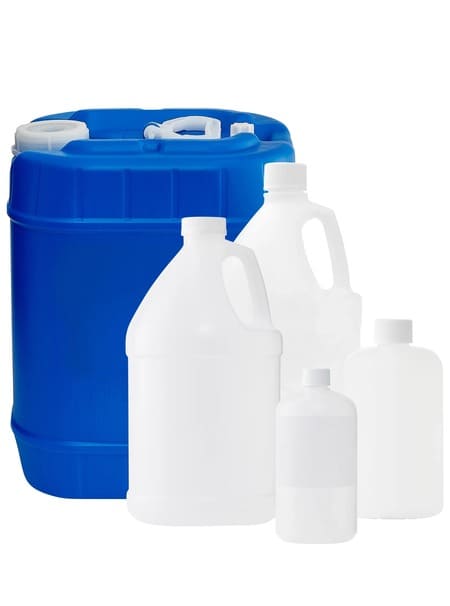
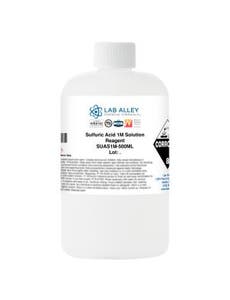
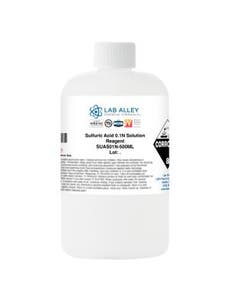
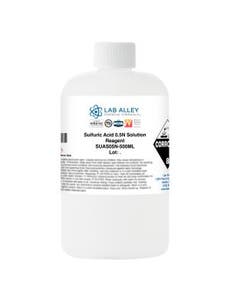
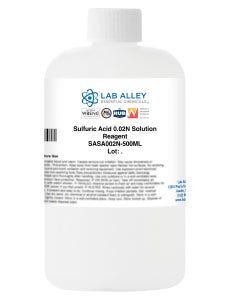
The sulfuric acid formula is H2SO4. Old texts call it oil of vitriol, and people outside the lab mostly know it as battery acid. Pure, it's a clear, oily, odorless liquid, and at 96% it's heavy, roughly 1.84 g/mL, close to twice the weight of water.
It's one of the strong acids, and it gives up its first proton completely in water. Concentrated sulfuric acid also has a real thirst for water. It will pull moisture out of sugar, paper, wood or skin, which is why it chars organic material and why burns from it are so serious.
That same thirst makes dilution dangerous if it's done wrong. Mixing releases a lot of heat, enough to boil the water and spit acid back out. So the rule is non negotiable: pour acid slowly into water, never water into acid.
A few numbers help with planning. Concentrated 96% acid is about 18 molar, or 36 normal. It boils far above water, somewhere near 300 °C, so it doesn't evaporate off like hydrochloric acid does. And the freezing point swings a lot with concentration, so drums of concentrated acid left in an unheated warehouse over winter are worth watching.