






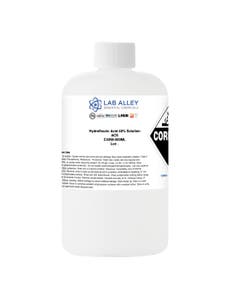
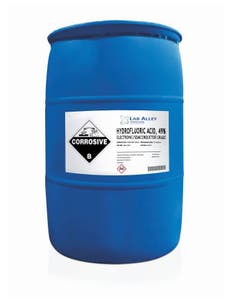

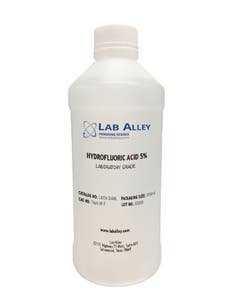

Hydrofluoric acid is hydrogen fluoride (HF) dissolved in water, with a molecular weight of 20.01. Fluorine is the only halogen that doesn't form a strong acid, because its small size and high electronegativity hold on to the hydrogen tightly. So HF only partly dissociates in water. Don't let that label relax you. Concentrated or dilute, it's highly corrosive and poisonous, and weak solutions are hard to tell from plain water.
The strengths on this page run from 0.5% to 49% hydrogen fluoride in water. Lower strengths such as 0.5% and 5% let you start near your working concentration instead of diluting a 49% stock yourself, which means less handling of the concentrated acid. HF attacks glass, so it belongs in plastic, and it should be kept apart from bases. Our 5% and 0.5% product pages recommend an emergency department assessment after skin contact when calcium gluconate gel wasn't used as first aid, after contact with any solution above 6% even if gel was used, and after any pain or swelling later on. Read the SDS first, and check the Chemical Storage Compatibility Chart before you shelve it.