





How to Store Acetone
Acetone is a highly flammable, volatile organic solvent used extensively in laboratory research, pharmaceutical manufacturing, electronics fabrication, and industrial cleaning applications. Its widespread use across multiple industries makes proper storage a foundational safety requirement rather than an incidental consideration. Stored incorrectly, acetone presents serious fire and inhalation hazards that compound quickly in enclosed environments.
What distinguishes acetone from many common solvents is its extreme flammability profile. With a flashpoint of approximately -20°C (-4°F), acetone can ignite well below ambient room temperature, and its vapors form explosive mixtures with air at concentrations between 2.5% and 13%. This combination of low flashpoint, high volatility, and wide explosive range classifies acetone as a Class IB flammable liquid under OSHA standards and demands storage controls that go well beyond basic chemical housekeeping.
Facilities storing acetone in multiple grades, including technical, ACS reagent, HPLC, and electronic grades, must also account for purity maintenance in addition to fire safety. High-purity grades are sensitive to cross-contamination and moisture uptake, requiring dedicated containers and stricter environmental controls than lower-grade materials.


In this article, we’ll review:
-
Recommended Storage Conditions
-
Container & Packaging Requirements
-
Segregation & Compatibility
-
Safe Handling in Storage Areas
-
Regulatory Compliance & Labeling
-
Environmental & Safety Considerations
-
Special Considerations
Recommended Storage Conditions
Temperature
Store acetone at controlled temperatures between 15-25°C (59-77°F) to minimize vapor generation and maintain product stability. Temperatures above 30°C significantly increase vapor pressure, accelerate evaporation, and elevate fire risk in storage areas.
Humidity Control
Acetone is hygroscopic and will absorb moisture directly from ambient air if containers are left open or improperly sealed. Water uptake degrades purity and affects solvent performance, which is a particular concern for HPLC-grade and electronic-grade acetone, where moisture contamination can compromise analytical results or manufacturing processes.
Light Exposure
Store acetone away from direct sunlight to prevent localized heating and excessive vapor generation. Temperature control is the primary safety consideration, and avoiding sun exposure is one of the more straightforward ways to maintain it.
Ventilation
Store acetone only in well-ventilated areas designed to prevent vapor accumulation. Acetone volatilizes rapidly at room temperature, and enclosed or poorly ventilated spaces can reach hazardous vapor concentrations even from small quantities.
Storage Duration
Acetone stored in properly sealed containers away from heat and moisture remains stable indefinitely. Containers should be inspected regularly for evaporative loss, degraded seals, and any signs of moisture contamination or discoloration.
Container & Packaging Requirements
Compatible Materials
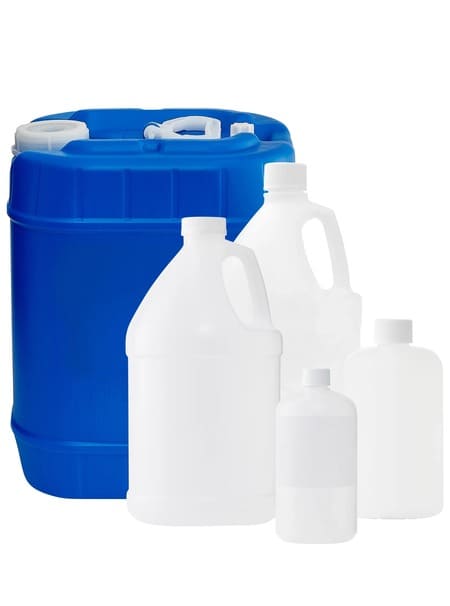
Acceptable container materials for acetone storage include stainless steel, aluminum, glass, carbon steel, and high-density polyethylene (HDPE). Each of these materials provides reliable chemical resistance to acetone under normal storage conditions.
Incompatible Materials
Avoid prolonged contact between acetone and polystyrene, PVC, and many common rubbers, which can swell, soften, or dissolve on exposure. Compatibility should be verified for every material that will contact acetone, including gaskets, transfer tubing, and secondary containment trays.
Sealing Requirements
Containers must be tightly sealed at all times to prevent evaporation and vapor release. For laboratory-scale storage, safety cans with spring-closing lids, integrated flame arresters, and pressure relief capabilities are the appropriate container type.
Labeling Requirements
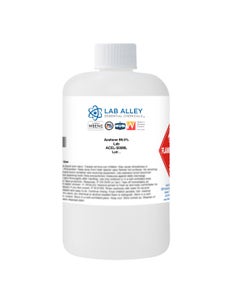
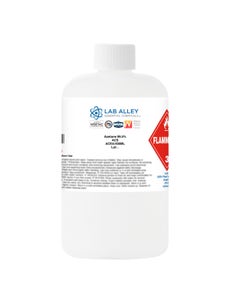
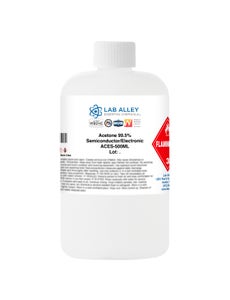
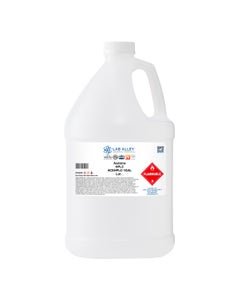
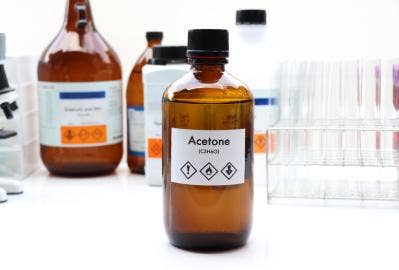
All acetone containers must be clearly labeled with the chemical name, grade, purity level, GHS-compliant hazard symbols, and relevant handling precautions. Different grades must be stored in separate, dedicated containers and kept physically segregated to prevent cross-contamination.
Bulk Storage
Quantities exceeding standard laboratory amounts must be stored in flammable liquid safety cabinets compliant with OSHA 29 CFR 1910.106 and NFPA 30. OSHA limits storage to no more than 60 gallons per cabinet and no more than three cabinets per fire area.
Segregation & Compatibility
Incompatible Substances
Acetone reacts violently with strong oxidizing agents and must never be stored in proximity to them. Incompatible substances include:
-
Concentrated nitric acid
-
Concentrated sulfuric acid
-
Hydrogen peroxide
-
Chromic acid
Storage Grouping
Different grades of acetone must be stored in dedicated, clearly labeled containers and kept physically separated from one another. Electronic-grade and HPLC-grade acetone require contamination-free storage conditions and must be fully isolated from technical-grade materials.
Flammability & Reactivity Precautions
Acetone's flashpoint of approximately -20°C (-4°F) and explosive vapor range of 2.5% to 13% in air require that all storage areas maintain strict separation from ignition sources at all times. Open flames, sparks, hot surfaces, and electrical equipment that does not meet flammable vapor service ratings all present active ignition risks. OSHA storage quantity limits under CFR 1910.106 must be observed.
Safe Handling in Storage Areas
PPE Requirements
Personnel handling acetone must wear chemical-resistant gloves (nitrile or neoprene), safety goggles, and protective clothing. Respiratory protection should be considered in areas with limited ventilation or where large quantities are being dispensed.
Transfer & Dispensing
All dispensing and transfer operations must take place under adequate ventilation or within a fume hood to prevent inhalation exposure and vapor accumulation. Bonding and grounding procedures are required during any transfer between containers to prevent static charge accumulation.
Spill Containment
Spills must be addressed immediately using absorbent materials rated for organic solvents. Used rags, wipes, and contaminated absorbents must be stored in metal containers with self-closing lids rather than left in open waste receptacles.
Emergency Equipment
Class B fire extinguishers must be readily accessible throughout all acetone storage and handling areas. Emergency eyewash stations and safety showers must be installed in any area where acetone is stored or regularly dispensed.
Regulatory Compliance & Labeling
OSHA Regulations
OSHA 29 CFR 1910.106 governs flammable liquid storage and sets the primary requirements for cabinet specifications, ventilation systems, quantity limits, and fire protection measures. Facilities must ensure that storage arrangements conform to these requirements and that storage limits per cabinet and per fire area are not exceeded.
NFPA & DOT
NFPA 30, the Flammable and Combustible Liquids Code, provides the design and operational standards for storage facilities handling flammable liquids, including acetone. NFPA 30 and OSHA 29 CFR 1910.106 are complementary frameworks and should be applied together.
GHS Requirements
All acetone containers must carry GHS-compliant labels that include flame and health hazard pictograms along with the required hazard and precautionary statements. Labels must remain legible throughout the container's use.
Industry-Specific Compliance
Facilities working with ACS reagent, HPLC, or electronic-grade acetone must follow applicable purity standards and contamination prevention protocols in addition to safety regulations. These quality requirements govern container selection, storage segregation, and handling procedures.
SDS Requirements
Current Safety Data Sheets for all acetone grades on site must be maintained and kept immediately accessible to all personnel who work with or near storage areas. SDS documents must reflect the specific grade and supplier, as hazard information can vary between product specifications.
Environmental & Safety Considerations
Fire Suppression
Storage areas must be equipped with automatic suppression systems designed for flammable liquid fires, such as sprinkler systems using appropriate suppression agents or dedicated foam systems. Standard water-only suppression is not sufficient for acetone fires.
Secondary Containment
Bulk acetone storage installations must incorporate secondary containment structures capable of capturing the full volume of a container failure or significant spill before it reaches floor drains or adjacent areas.
Wastewater & Environmental Impact
Acetone is a volatile organic compound regulated under federal and state air quality rules, and its use and storage may trigger reporting or permitting obligations depending on facility emission levels. Acetone waste is classified as hazardous and must be collected and disposed of through licensed hazardous waste handlers.
Electrical Equipment Standards
All electrical equipment installed in or adjacent to acetone storage areas must meet the appropriate classification for locations where flammable vapors may accumulate. This includes lighting fixtures, fans, switches, and any other powered equipment in the storage environment.
Special Considerations
Extreme Flammability
Acetone's flashpoint of approximately -20°C (-4°F) means that ignition risk exists at virtually every ambient temperature encountered in storage and production environments. Storage area design, equipment selection, and personnel procedures must all be developed with this flammability profile as the governing parameter.
Static Electricity Sensitivity
Acetone has low electrical conductivity, which allows static charge to accumulate on liquid and container surfaces during pouring, pumping, or transfer operations. Bonding all metal containers and grounding transfer equipment before every operation is mandatory, and this requirement applies equally to small-scale laboratory transfers and large-volume bulk operations.
Hygroscopic Nature
Acetone absorbs water vapor directly from the surrounding air whenever containers are open or improperly sealed. High-purity grades may require storage under inert atmosphere conditions or with integrated desiccant systems to maintain specification between uses.
Plastics Compatibility
Acetone dissolves or severely degrades many plastics that are otherwise suitable for general chemical storage and handling. Compatibility must be confirmed for every material that will contact acetone, and assumptions based on general solvent resistance ratings should not substitute for acetone-specific compatibility data.
Key Takeaways
Safe acetone storage depends on consistent application of fire safety controls, chemical segregation, and material compatibility practices across every aspect of how the chemical is housed, handled, and monitored. The combination of an extremely low flashpoint, wide explosive vapor range, and high volatility makes acetone one of the more demanding common solvents to manage in a storage environment.
Facilities storing acetone in multiple grades must layer purity protection requirements on top of the baseline fire safety framework, using dedicated containers and strict segregation to preserve product specifications alongside personnel safety. Reviewing storage setups against OSHA 29 CFR 1910.106 and NFPA 30 requirements on a regular basis ensures that controls remain current and compliant.
For more detailed guidance, explore our Resource Library.
Our Customer Care team is also available for more information and documentation, including chemical Safety Data Sheets.
Need Acetone You Can Trust?
If you are looking for high-quality acetone for your lab, product line, or research facility, be sure to visit our store to explore our trusted selection and request a quote.
As your trusted partner in chemical supply, Lab Alley is always striving to meet the growing demands of our customers. We want you to be able to access all of your chemical needs in one place, along with streamlined online ordering and fast shipping.
Due to popular demand from our valued clientele, Lab Alley's acetone is available in a range of purities and packaging options to suit various commercial, laboratory, and personal needs.