





How to Store Nitric Acid: Best Practices for Safety and Quality
Nitric acid is a highly corrosive, strong oxidizing acid that requires strict storage practices to maintain quality, prevent dangerous reactions, and ensure safe handling. This potent chemical finds essential use in metal processing, fertilizer production, explosives manufacturing, semiconductor fabrication, and countless other industrial processes.
Available in various concentrations, nitric acid presents hazards that intensify dramatically as strength increases. Commercial grades typically range from 50-70% concentration. Concentrated formulations reach 90% or higher. Fuming nitric acid grades above 86% release visible nitrogen dioxide fumes continuously.
The dual nature of nitric acid as both a corrosive and an oxidizer distinguishes it from many acids. This oxidizing power creates violent reactions with organic compounds, potentially triggering fires or explosions. Decomposition represents an ongoing concern, with light and heat breaking down the acid to produce toxic nitrogen dioxide gas visible as brown or yellow coloration.


In this article, we'll examine:
-
Recommended Storage Conditions
-
Container & Packaging Requirements
-
Segregation & Compatibility
-
Safe Handling in Storage Areas
-
Regulatory Compliance & Labeling
-
Special Considerations for Nitric Acid
-
Environmental and Safety Considerations
Recommended Storage Conditions
Environmental controls balance stability preservation with vapor management for this aggressive oxidizing acid.
Temperature Control
Maintain storage at controlled room temperatures between 15-25°C (59-77°F). Avoid temperature extremes that can increase vapor pressure and accelerate container degradation. Concentrated nitric acid may require slightly cooler storage to minimize decomposition.
Elevated temperatures drive decomposition reactions faster, generating nitrogen dioxide while weakening acid strength. Select locations buffered from temperature extremes. Interior rooms stay cooler than perimeter spaces receiving direct sun.
Humidity Control
Standard humidity control is adequate for most nitric acid storage. Ensure containers are tightly sealed to prevent moisture absorption in fuming grades and to minimize vapor release from all concentrations. Environmental humidity affects fuming grades most significantly.
Light Exposure
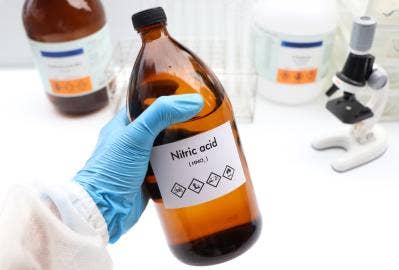
Protect solutions from direct sunlight using amber or opaque containers. Light exposure accelerates decomposition, particularly in concentrated grades, leading to the formation of nitrogen dioxide (brown fumes). Amber glass bottles provide excellent UV protection while allowing visual inspection.
Dark storage rooms solve light exposure problems regardless of container type. Artificial lighting rarely creates problems as standard fixtures lack the UV intensity found in sunlight.
Ventilation
Ensure excellent ventilation in storage areas to manage corrosive vapors and nitrogen oxides released from decomposition. Concentrated and fuming grades release significant vapors continuously. Nitrogen dioxide fumes are heavier than air, settling toward floor levels.
Mechanical ventilation provides more consistent vapor control than natural air movement. Fuming grades demand enhanced ventilation beyond requirements for dilute acids.
Storage Duration
When properly stored in appropriate containers away from light and heat, nitric acid maintains quality for extended periods. However, concentrated grades may show decomposition (yellowing, brown fumes) over time and should be monitored regularly.
Dilute acids remain stable almost indefinitely. Monitor concentrated acids for color changes signaling decomposition. Fresh concentrated nitric acid appears colorless or very pale yellow.
Container & Packaging Requirements
Material selection proves critical for containing this corrosive oxidizing acid safely across different concentrations.
Material Compatibility
Use containers made from glass, HDPE, polypropylene, or stainless steel (grades 304, 316, or higher). Container material selection depends on acid concentration and temperature.
Glass provides universal compatibility across all concentrations. HDPE and polypropylene plastics resist dilute to moderate concentrations of nitric acid effectively. For concentrations below 70%, these plastics provide economical containment.
Higher concentrations and fuming grades may attack plastics over time. Stainless steel types 304 and 316 resist nitric acid corrosion across most concentrations when properly passivated. Concentrated nitric acid above 68% passivates stainless steel, forming protective oxide films.
Incompatible Materials
Avoid containers made from metals incompatible with nitric acid, including carbon steel, aluminum (except for concentrated grades >98%), copper, brass, and bronze. Carbon steel corrodes vigorously. Copper, brass, and bronze dissolve readily, generating toxic nitrogen oxide fumes.
Closure Requirements
Containers must be compatible with oxidizing acids and have corrosion-resistant closures. Ensure venting capability for concentrated grades that may release nitrogen oxides. Polypropylene or PTFE closures resist acid attack better than standard materials.
Check closures regularly for corrosion or degradation. Replace questionable closures before failures create leaks.
Storage Cabinets
Use approved corrosive liquid storage cabinets meeting applicable regulations. Separate from flammable liquid storage cabinets. Never store nitric acid in flammable liquid cabinets, as the oxidizing nature creates fire hazards.
Labeling
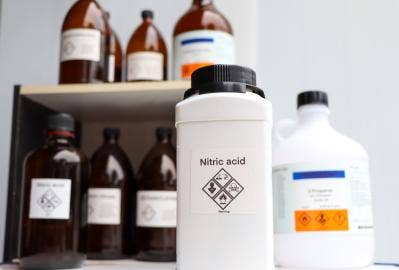
Clearly label containers with concentration, grade, hazard symbols (corrosive, oxidizer), and handling precautions. GHS pictograms communicate both corrosive and oxidizing hazards. Concentration marking proves essential because hazards escalate dramatically with strength.
Segregation & Compatibility
Nitric acid's extensive incompatibility profile demands rigorous separation from most chemical classes.
Organic Material Separation
Store away from ALL organic materials, flammable substances, combustible materials, alcohols, and solvents. Nitric acid is a powerful oxidizer that can ignite or explode when in contact with these materials. Organic compounds react violently, often igniting spontaneously.
Never store nitric acid on wooden shelving or in areas with significant organic materials. Common solvents like acetone, alcohols, and aniline react particularly violently.
Base Separation
Keep strictly separated from bases (sodium hydroxide, potassium hydroxide, ammonium hydroxide), which react violently and exothermically with acids. Ammonium hydroxide proves especially dangerous, generating ammonium nitrate, a powerful explosive.
Reducing Agent Separation
Avoid storage near reducing agents, metals (especially metal powders), and metal hydrides, which can react violently with nitric acid. Metal powders present extreme hazards due to their high surface area, allowing rapid, potentially explosive reactions.
Specific Incompatibilities
NEVER store near or mix with incompatible materials such as acetic acid, acetone, alcohols, aniline, sulfuric acid, or combustible materials. Acetic acid mixes with nitric acid to form explosive compounds. Sulfuric acid mixed with nitric acid creates powerful nitrating mixtures.
Dedicated Storage Areas
Maintain dedicated storage areas for oxidizing acids, physically separated from flammable materials, bases, and reducing agents. Follow segregation tables and chemical compatibility charts. Designate specific zones for oxidizing acid storage containing only compatible materials.
Safe Handling in Storage Areas
Protective equipment and procedures prevent injuries from this corrosive oxidizing acid.
Personal Protective Equipment (PPE)
Personnel must wear appropriate PPE, including acid-resistant gloves (neoprene, butyl rubber, or Viton), chemical splash goggles or face shields, and acid-resistant aprons or protective clothing. Choose gloves rated specifically for the nitric acid at the concentrations being handled.
Face shields provide essential protection during pouring or transfer operations. Using both goggles and shields together offers maximum protection.
Ventilation During Handling
Use proper ventilation, including fume hoods, when dispensing or transferring to prevent inhalation of corrosive vapors and nitrogen oxide fumes. Nitrogen oxide fumes cause severe respiratory damage. Fuming grades generate copious fumes during any handling.
Emergency Equipment
Provide emergency eyewash stations and safety showers immediately accessible in all areas where nitric acid is stored or handled. Immediate flushing is critical for exposure. Position eyewash within 10 seconds of travel time from any handling location.
Spill Response Materials
Maintain spill cleanup materials, including neutralizing agents (sodium bicarbonate, soda ash, or commercial acid neutralizers) and acid-compatible absorbents. Sodium bicarbonate effectively neutralizes nitric acid spills. Add more neutralizer until fizzing stops.
Transfer Equipment
Use acid-compatible transfer equipment made from glass, HDPE, polypropylene, or appropriate stainless steel. Avoid metal equipment that may corrode or react. Never use brass, copper, or carbon steel equipment.
Static Electricity Control
Implement bonding and grounding procedures for large transfers to prevent static electricity. Ground metal equipment and containers electrically before transfers.
Regulatory Compliance & Labeling
Multiple regulatory frameworks govern nitric acid due to its corrosive, oxidizing, and toxic properties.
OSHA Requirements
Follow OSHA 29 CFR 1910.1200 Hazard Communication Standard requirements for corrosive materials with proper labeling and SDS availability. Keep SDS readily accessible wherever nitric acid is stored or used.
DOT Regulations
Comply with DOT regulations for transportation and storage. Nitric acid is classified as a corrosive material and oxidizer with specific packaging and labeling requirements. Proper shipping names vary by concentration.
EPA Reporting
Adhere to EPA reporting requirements under CERCLA/SARA Title III for facilities storing reportable quantities (1,000 lbs for concentrations ≥80%). Facilities exceeding thresholds must report inventories and releases.
GHS Labeling
Follow GHS hazard communication standards with appropriate pictograms (corrosive, oxidizer, health hazard) and hazard statements reflecting concentration-specific hazards.
Specialty Grades
For electronic-grade and semiconductor-grade nitric acid, follow industry-specific purity and handling standards. Ultra-high purity grades demand contamination-free storage.
Documentation
Maintain current Safety Data Sheets readily accessible to all personnel. Different concentrations may require different SDS reflecting varying hazard profiles.
Special Considerations for Nitric Acid
Concentration-Specific Hazards
Dilute nitric acid (<70%) is primarily corrosive. Concentrated nitric acid (>70%) is both highly corrosive and a powerful oxidizer. Fuming nitric acid (>86%) releases nitrogen dioxide fumes continuously and is extremely hazardous.
Decomposition Products
Nitric acid decomposes upon exposure to light and heat, producing nitrogen dioxide (NO₂, brown/yellow gas) and water. This decomposition is visible as yellowing or brown coloration. Nitrogen dioxide proves highly toxic, causing severe respiratory injury.
Passivation Properties
Concentrated nitric acid (>68%) passivates certain metals, including aluminum, forming a protective oxide layer. However, dilute nitric acid attacks most metals vigorously. This concentration-dependent metal reactivity affects both container selection and process applications.
Contact with Organics
Nitric acid mixed with organic materials can cause spontaneous combustion, violent reactions, or explosions. Never allow organics to contact nitric acid. Dispose of organic-contaminated nitric acid through specialized hazardous waste handlers.
Fuming Nitric Acid
Red fuming nitric acid (RFNA) and white fuming nitric acid (WFNA) require specialized storage with nitrogen blanketing and enhanced ventilation. Nitrogen blanketing prevents moisture absorption and oxidation.
Dilution Procedures
When diluting nitric acid, ALWAYS add acid to water slowly while stirring (never add water to concentrated acid). The dilution process is highly exothermic and generates significant heat. Adding water to concentrated acid creates localized boiling and violent spattering.
Environmental and Safety Considerations
Comprehensive facility systems protect workers and environment from this hazardous oxidizing acid.
Secondary Containment
Implement robust secondary containment for all nitric acid storage with acid-resistant materials. Containment capacity should be at least 110% of the largest container. Construct containment from acid-resistant materials, including HDPE, polypropylene, or FRP.
Ventilation and Detection Systems
Install appropriate ventilation and vapor control systems. Consider nitrogen oxide gas detection systems for areas storing concentrated or fuming grades. Fixed gas detectors trigger alarms when nitrogen oxide levels exceed safe thresholds.
Spill Neutralization
Follow proper neutralization procedures for spills. Neutralize with sodium bicarbonate, soda ash, or lime while monitoring temperature and gas evolution. Add neutralizer gradually while observing reactions.
Wastewater Compliance
Comply with local wastewater discharge regulations. Nitric acid must be neutralized before discharge and may require special permits for industrial quantities.
Emergency Response Equipment
Maintain emergency response equipment, including appropriate respiratory protection (NIOSH-approved acid gas cartridges or SCBA for major releases). Self-contained breathing apparatus handles high-concentration atmospheres during major releases.
Disposal Protocols
Follow proper disposal protocols for degraded or contaminated nitric acid through licensed hazardous waste handlers. Never dispose of it down drains without proper neutralization and authorization.
Environmental Impact
Address environmental concerns regarding nitrogen oxide emissions from decomposition or spills. Implement emergency response procedures for vapor releases, including evacuation protocols and vapor suppression using water spray.
Key Takeaways
Store nitric acid in compatible containers (glass, HDPE, polypropylene, or stainless steel based on concentration) at controlled room temperatures (15-25°C) in well-ventilated areas away from direct sunlight and strictly separated from all organic materials, flammable substances, bases, and reducing agents.
Recognize that nitric acid is BOTH highly corrosive AND a powerful oxidizer requiring isolation from most other chemical classes. Use appropriate acid-resistant PPE and ensure emergency eyewash stations and safety showers are immediately accessible.
Monitor for decomposition signs, including yellowing or brown fumes, particularly in concentrated grades. Implement comprehensive secondary containment and ventilation for vapor control. Always add acid to water when diluting, never the reverse.
Lab Alley supplies various grades and concentrations of nitric acid with expert guidance on proper storage and handling practices, ensuring optimal safety and product performance.
For more detailed guidance, explore our Resource Library.
Our Customer Care team is also available for more information and documentation, including chemical Safety Data Sheets.
Need Nitric Acid You Can Trust?
If you are looking for high-quality nitric acid for your lab, product line, or research facility, be sure to visit our store to explore our trusted selection and request a quote.
As your trusted partner in chemical supply, Lab Alley is always striving to meet the growing demands of our customers. We want you to be able to access all of your chemical needs in one place, along with streamlined online ordering and fast shipping.
Due to popular demand from our valued clientele, Lab Alley's nitric acid is available in a range of purities and packaging options to suit various commercial, laboratory, and personal needs.