





Shelf Life & Expiration of MCT Oil
MCT Oil (Medium-Chain Triglyceride Oil) is a refined lipid composed primarily of caprylic acid (C8) and capric acid (C10), saturated medium-chain fatty acids derived from coconut oil or palm kernel oil. This fatty acid profile makes MCT Oil substantially more resistant to oxidative degradation than oils containing polyunsaturated or monounsaturated fats, giving it a favorable stability profile among food-grade and industrial oils.
Three factors most directly determine how long MCT Oil remains suitable for use: oxidative stability, which is governed by fatty acid composition and exposure to air; storage conditions, particularly temperature and light; and whether the container has been opened. A sealed product stored correctly retains quality for up to two years from the manufacturing date. Once opened, air exposure accelerates rancidity and shortens usable life considerably.
MCT Oil is used across a range of applications with different quality thresholds. Pharmaceutical compounding and nutraceutical manufacturing require strict specification compliance throughout the product's labeled shelf life, while food-grade supplement use allows more flexibility if no signs of rancidity are present. The grade and intended application should guide how conservatively expiration timelines are observed.
This article covers:
-
How Long Does MCT Oil Last?
-
Signs That MCT Oil Has Expired or Degraded
-
What to Do If MCT Oil Is Expired
-
Proper Storage Extends Shelf Life
How Long Does MCT Oil Last?
Chemical Stability
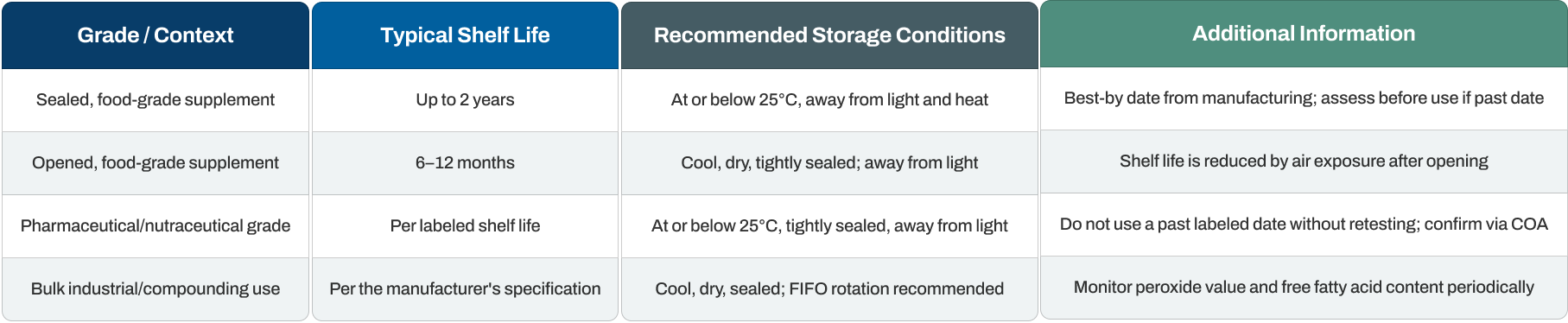
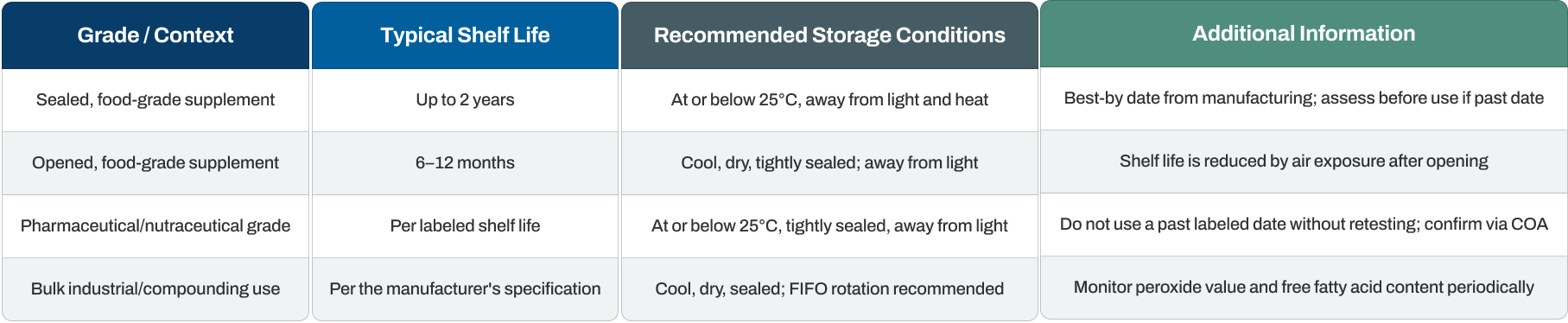
MCT Oil's high degree of saturation at the C8 and C10 positions makes it far less prone to oxidation than vegetable oils rich in linoleic or linolenic acid. Oxidation does occur over time, however, and is accelerated by exposure to air, heat, and light. The degradation process produces off-flavors, off-odors, and chemical byproducts that compromise product quality and suitability for sensitive applications. Manufacturers typically assign best-by dates of two years from the manufacturing date for sealed, undiluted products.
Purity & Packaging
Pharmaceutical compounding and nutraceutical manufacturing grades are held to tighter quality specifications than food-use grades and should be used within the labeled shelf life window to ensure ongoing specification compliance. Food-grade MCT Oil used as a dietary supplement may remain acceptable beyond the best-by date if no signs of rancidity are present, provided it has been stored correctly. Once opened, shelf life decreases significantly due to air exposure; opened containers should be used within 6 to 12 months.
Storage Conditions
Optimal storage temperature is at or below 25°C (77°F) in a cool, dry location away from heat sources. Refrigeration is not required and will not cause MCT Oil to solidify, but it can extend shelf life in warm climates or when extended storage is anticipated. Direct light exposure, particularly UV light, accelerates oxidative degradation; air exposure after opening initiates and sustains rancidity and should be minimized by resealing tightly after each use.
Signs That MCT Oil Has Expired or Degraded
-
Rancid or Off Odor: Fresh MCT Oil is nearly odorless; a sour, musty, or metallic smell is the most reliable indicator of oxidative rancidity and warrants immediate discard regardless of the printed date.
-
Off or Bitter Taste: Fresh MCT Oil is smooth, mild, and essentially tasteless; a bitter or sour taste confirms rancidity and serves as a reliable secondary check after odor evaluation.
-
Color Changes: Fresh MCT Oil is clear and colorless; a yellow or amber tint, cloudiness, or visible sediment or dark spots indicates degradation or contamination.
-
Texture Changes: Fresh MCT Oil has a thin, smooth consistency at room temperature; unusual thickening, lumpiness, or a change in viscosity indicates the product has degraded.
-
Exceeded Best-By Date: Oil significantly past its manufacturer-assigned best-by date should be assessed for rancidity before use, particularly for ingested supplements or pharmaceutical applications where quality assurance matters.
What to Do If MCT Oil Is Expired
Assess Before Discarding
Inspect for off odors, off taste, discoloration, cloudiness, and texture changes before discarding. MCT Oil stored correctly in a sealed container may remain acceptable beyond the printed date, and product showing no signs of rancidity may still be usable for non-critical applications. When any sign of degradation is present, or when doubt exists, discard the product.
Do Not Consume Rancid Oil
Rancid MCT Oil should not be ingested; oxidized fats cause gastrointestinal discomfort and provide no nutritional benefit. For pharmaceutical compounding or nutraceutical manufacturing, oil that has exceeded its labeled shelf life should not be used regardless of appearance, as specification compliance cannot be confirmed without analytical testing.
Dispose Appropriately
MCT Oil is not a regulated hazardous material and does not require hazardous waste disposal procedures. Small quantities can be sealed in the original container and discarded with solid waste; larger quantities should be directed to a local cooking oil recycler or waste cooking oil collection service. Do not pour MCT Oil down drains in large quantities, as accumulated oil contributes to drain blockages.
Replace with Fresh Stock
Replace degraded MCT Oil with fresh product from a reputable supplier. Verify the manufacturing or bottling date and review the certificate of analysis to confirm quality and specification compliance before putting new stock into use.
Proper Storage Extends Shelf Life
-
Temperature Control: Store at or below 25°C (77°F) away from ovens, stoves, and other heat sources. Refrigeration is optional, will not cause solidification, and is particularly useful in warm climates or when long-term storage is anticipated.
-
Light Protection: Store in opaque or dark-colored containers in a closed cupboard or pantry, away from sunlight and artificial UV sources. Do not transfer to clear glass or clear plastic containers unless they will be kept in fully dark storage.
-
Container Requirements: Use original manufacturer containers or clean, food-grade, BPA-free vessels; compatible materials include HDPE, PET, and glass. Containers must be clean and completely dry before use, as moisture accelerates oxidative degradation and can promote microbial activity.
-
Seal Integrity: Keep containers tightly sealed after every use, as air exposure is the primary driver of rancidity in opened product. When a large container is purchased but used infrequently, transfer a working quantity into a smaller container to reduce headspace and slow oxidation of the remaining bulk supply.
-
Prevent Contamination: Use only clean, dry utensils or dispensing equipment when handling MCT Oil. Never introduce food particles, water, or other substances into the container, as contamination accelerates rancidity and can introduce microbial activity.
-
Segregation & Separation: Store away from strong oxidizing agents, reactive chemicals, and odor-producing materials, as MCT Oil can absorb off-odors from surrounding substances. Keep separate from cleaning chemicals and solvents; in industrial or compounding settings, store per facility SOPs for oils and lipid-based raw materials.
-
Proper Labeling & Inventory Management: Label all containers with product name, grade, date received, date opened, and best-by date. Use first-in, first-out (FIFO) inventory rotation to ensure older stock is used first. In pharmaceutical or nutraceutical manufacturing, maintain full lot traceability records as required by applicable regulations.
Conclusion
MCT Oil's saturated medium-chain fatty acid composition gives it a stronger oxidative stability profile than most plant-derived oils, but it is not immune to rancidity over time. Proper storage, including temperature control, light protection, and airtight sealing after opening, is the most effective way to preserve product quality through the full labeled shelf life. For pharmaceutical, nutraceutical, and dietary supplement applications, adherence to best-by dates and routine quality checks is essential to ensuring the product performs as intended.
For more detailed guidance, explore our Resource Library for comprehensive storage and handling information.
Our Customer Care team is also available for more information and documentation, including chemical Safety Data Sheets.
Need MCT Oil You Can Trust?
If you are looking for high-quality MCT oil for your lab, product line, or research facility, be sure to visit our store to explore our trusted selection and request a quote.
As your trusted partner in chemical supply, Lab Alley is always striving to meet the growing demands of our customers. We want you to be able to access all of your chemical needs in one place, along with streamlined online ordering and fast shipping.
Due to popular demand from our valued clientele, Lab Alley's MCT oil is available in a range of purities and packaging options to suit various commercial, laboratory, and personal needs.