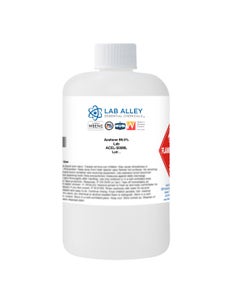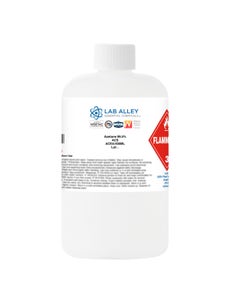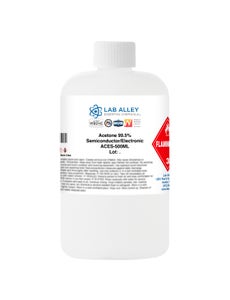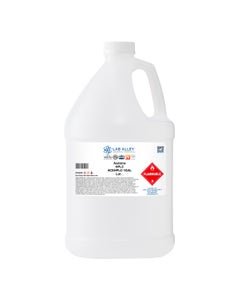






Shelf Life & Expiration of Acetone
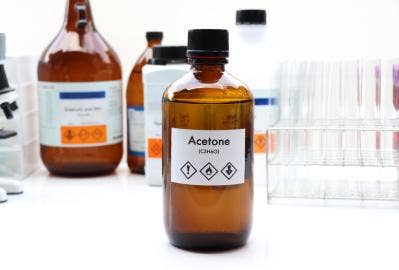
Acetone (CH₃COCH₃) is a highly volatile ketone solvent used across laboratory cleaning, pharmaceutical manufacturing, electronics degreasing, coatings and adhesives production, and chemical synthesis. Unlike many chemical products, acetone does not present significant stability concerns under normal storage conditions; its shelf life limitations are almost entirely practical rather than chemical.
The two factors that govern acetone's usable lifespan are evaporative loss and moisture absorption. Acetone is highly volatile, with a boiling point of 56°C (133°F), and will evaporate steadily from any container that is not tightly sealed. It is also hygroscopic, meaning it absorbs water vapor from the atmosphere each time a container is opened, gradually diluting the product and reducing its effectiveness in water-sensitive applications.
Grade selection matters significantly for shelf life management. ACS reagent and HPLC grades are held to strict water content and non-volatile residue limits that are sensitive to handling practices, while technical and industrial grades are formulated to tolerances that accommodate more variation. Understanding which grade is in use determines how aggressively storage and rotation protocols need to be applied.


This article covers:
-
How Long Does Acetone Last?
-
Signs That Acetone Has Expired or Degraded
-
What to Do If Acetone Is Expired
-
Proper Storage Extends Shelf Life
How Long Does Acetone Last?
Chemical Stability
Pure acetone is chemically stable and does not degrade, polymerize, or form peroxides under normal storage conditions. It is not subject to the auto-oxidation pathways that limit the shelf life of ethers or other reactive solvents, and it does not react with common container materials such as carbon steel, stainless steel, or HDPE under ambient conditions.
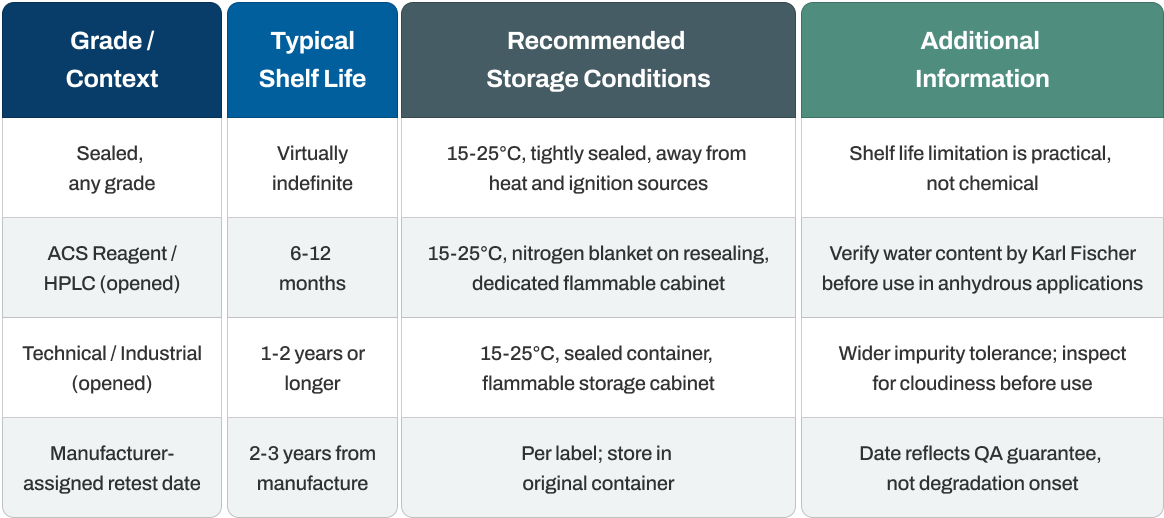
In a properly sealed container, acetone has a virtually indefinite chemical shelf life. Manufacturers assign 2 to 3-year expiration or retest dates as quality assurance guarantees covering the entire storage and handling period, not as indicators of chemical breakdown.
Purity & Packaging
Grade determines how sensitive the product is to contamination rather than how quickly it degrades. ACS reagent and HPLC grades specify tight limits on water content, non-volatile residue, and trace metals; once opened, these grades should be used within 6 to 12 months with strict reclosure practices to maintain specification compliance.
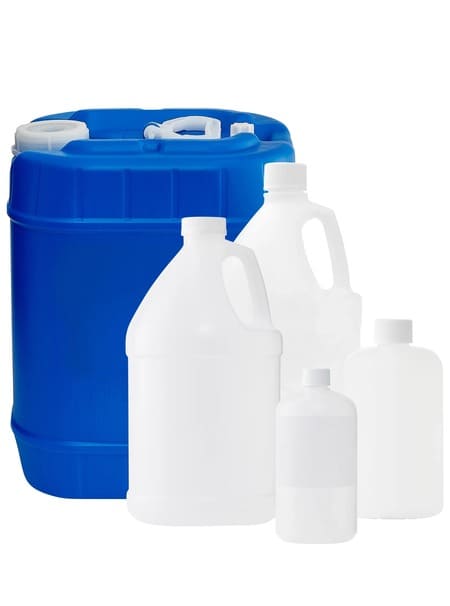
Technical and industrial grades tolerate broader impurity ranges and remain serviceable for 1 to 2 years or longer after opening, provided containers are kept sealed when not in use. Original manufacturer containers in carbon steel, stainless steel, HDPE, or borosilicate glass provide the best protection; polystyrene, ABS plastic, and soft rubbers are incompatible and must not be used for storage or transfer.
Storage Conditions
The optimal storage temperature for acetone is between 15 and 25°C (59 to 77°F), away from heat sources and direct sunlight. Elevated temperatures increase vapor pressure and accelerate evaporative loss through even minor seal imperfections.
Because acetone has a flash point of -20°C (-4°F), temperature management also carries direct fire safety implications; storage in dedicated flammable materials cabinets with exhaust ventilation is required. For high-purity grades, nitrogen blanketing during dispensing prevents moisture ingress and extends the period of specification compliance.
Each time a container is opened in a humid environment, water vapor is introduced; this effect is cumulative over the container's in-use life.
Quick Reference: Acetone Shelf Life by Grade and Storage Context
Signs That Acetone Has Expired or Degraded
-
Cloudiness or turbidity. Pure acetone is a clear, colorless liquid. Any cloudiness or haze indicates water contamination or particulate matter introduced through repeated opening or contaminated dispensing equipment; do not use for precision cleaning, analytical procedures, or optical applications.
-
Off odor. Pure acetone has a sharp, characteristic ketone odor. A sour, vinegar-like, or otherwise atypical smell indicates introduced impurities or contamination from incompatible contact materials; discard for any application where purity is critical.
-
Elevated water content. For ACS, HPLC, and pharmaceutical-grade acetone, Karl Fischer titration is the most reliable method for detecting specification failure. Acetone exceeding its specified water content limit is not suitable for anhydrous reaction systems, chromatography, or other moisture-sensitive applications.
-
Significant volume loss without visible leakage. Unexplained volume reduction indicates evaporation through a compromised seal, which concentrates dissolved impurities and increases water content if the container was previously exposed to humid air.
-
Exceeded retest or expiration date. The manufacturer's labeled date marks the boundary of the quality guarantee for reagent and HPLC grades. Acetone stored beyond this date should be evaluated visually and, for critical applications, verified by Karl Fischer titration or GC purity analysis before use.
What to Do If Acetone Is Expired
Check Manufacturer Guidelines
Begin with a visual inspection for clarity and an odor check. If both pass, perform Karl Fischer water content analysis for any ACS, HPLC, or pharmaceutical-grade product before use in precision applications. A product that is clear, odor-characteristic, and within water content limits may remain serviceable for non-critical industrial or cleaning applications even after its retest date; a certificate of analysis from the manufacturer can confirm original specification values for comparison.
Follow Proper Disposal Procedures
Acetone is classified as a flammable hazardous material under DOT regulations (UN 1090, Hazard Class 3, Packing Group II) and is designated as a listed hazardous waste under RCRA (U002) when discarded. Do not pour acetone down drains or into regular waste containers.
Collect expired or contaminated stock in approved, labeled solvent waste containers and arrange for disposal through a licensed hazardous waste contractor. Solvent recycling and redistillation are preferred options where facility permits and equipment allow; empty containers retain flammable residues and must be managed as hazardous waste.
Replace with Fresh Stock
For any application with purity, water content, or residue requirements, replace with a new container from a verified supplier. Request a current certificate of analysis confirming water content, non-volatile residue, and assay values before committing the product to sensitive manufacturing or analytical work.
Proper Storage Extends Shelf Life
-
Container requirements. Store in original manufacturer containers or approved solvent-rated containers (carbon steel, stainless steel, HDPE, or borosilicate glass for small laboratory quantities) with tight-fitting, solvent-resistant closures. Do not use polystyrene, ABS plastic, or soft rubber containers; acetone dissolves or swells these materials. Use grounded metal containers for bulk quantities to prevent static charge buildup.
-
Temperature control. Maintain storage temperatures between 15 and 25°C (59 and 77°F) in a dedicated flammable materials storage cabinet, away from all heat sources and direct sunlight. Elevated temperatures accelerate evaporation and increase the risk of vapor accumulation in the storage area.
-
Humidity control. Acetone absorbs water vapor from the air through each opening. For ACS reagent and HPLC grades, blanket-open containers with dry nitrogen before resealing to maintain anhydrous conditions and preserve specification compliance.
-
Evaporation prevention. Keep all containers tightly sealed when not in active use to minimize vapor loss and moisture ingress. Never return unused acetone to the original container, as this introduces contamination that degrades the remaining stock.
-
Fire safety. Store in a dedicated flammable materials cabinet with exhaust ventilation, away from all heat sources, open flames, and electrical equipment not rated for flammable atmospheres. Acetone vapor is heavier than air, accumulates in low-lying spaces, and has flammable limits of 2.5 to 12.8% by volume; bond and ground all metal containers during transfer operations and use non-sparking tools throughout.
-
Regular inspection and rotation. Inspect containers at least quarterly for seal degradation, volume loss, or visible contamination. Label all containers with chemical name, grade, date received, date opened, and retest or expiration date, and apply first-in, first-out inventory rotation to ensure older stock is used before newer stock.
Conclusion
Acetone is one of the most chemically stable common solvents in industrial and laboratory use: it does not degrade, polymerize, or form hazardous decomposition products under normal storage conditions, and a sealed container retains chemical integrity well beyond any manufacturer-assigned date.
In practice, shelf life management is a question of controlling two physical processes, evaporation and moisture absorption, both of which are preventable through proper sealing, compatible containers, and disciplined handling. For ACS reagent and HPLC grades, the 6 to 12 month post-opening window and Karl Fischer verification before critical use are the two most important operational parameters.
When acetone shows signs of contamination or has exceeded its retest date, replacement with verified fresh stock and disposal as RCRA-listed flammable hazardous waste are the correct responses.
For more detailed guidance, explore our Resource Library for comprehensive storage and handling information.
Our Customer Care team is also available for more information and documentation, including chemical Safety Data Sheets.
Need Acetone You Can Trust?
If you are looking for high-quality acetone for your lab, product line, or research facility, be sure to visit our store to explore our trusted selection and request a quote.
As your trusted partner in chemical supply, Lab Alley is always striving to meet the growing demands of our customers. We want you to be able to access all of your chemical needs in one place, along with streamlined online ordering and fast shipping.
Due to popular demand from our valued clientele, Lab Alley's acetone is available in a range of purities and packaging options to suit various commercial, laboratory, and personal needs.