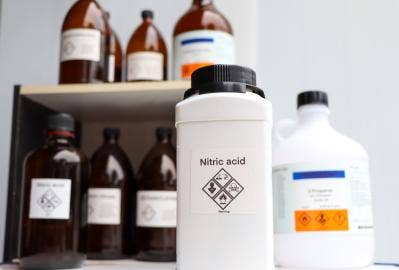






Nitric Acid Overview
Nitric acid (HNO₃) is a highly corrosive, strong mineral acid and powerful oxidizing agent. In concentrated form, this chemical appears as a colorless to pale yellow fuming liquid with a characteristic sharp, suffocating odor.
Fertilizer manufacturers consume nitric acid, producing ammonium nitrate that feeds crops worldwide. Electronics fabrication facilities etch silicon wafers with ultra-pure nitric acid, creating microprocessors and memory chips. Metal finishing shops pickle stainless steel in nitric acid baths, removing oxide scale while creating protective passivation layers. Analytical laboratories digest soil samples with heated nitric acid, liberating trace metals for measurement. Explosives plants nitrate organic compounds with nitric acid, synthesizing commercial blasting agents for mining operations.
Nitric acid ranks among the most industrially important inorganic acids globally, serving as a critical raw material across fertilizer production, explosives manufacturing, plastics synthesis, and pharmaceutical development. Metal processing, semiconductor fabrication, analytical chemistry, and surface treatment applications all depend on nitric acid's unique chemistry. Agricultural demand alone drives production volumes exceeding 60 million metric tons annually.
The dual nature as a strong acid and powerful oxidizer creates both utility and hazard. Nitric acid doesn't just corrode through chemical burns like other acids. The oxidizing power ignites organic materials on contact, turning clothing, wood, and paper into flames or explosions. Decomposition releases nitrogen dioxide, a toxic reddish-brown gas causing delayed pulmonary edema that kills hours after exposure ends. Mixing with common solvents like acetone creates detonation risks. Understanding reactivity patterns, proper dilution techniques, and emergency response protocols separates professional nitric acid use from catastrophic incidents.
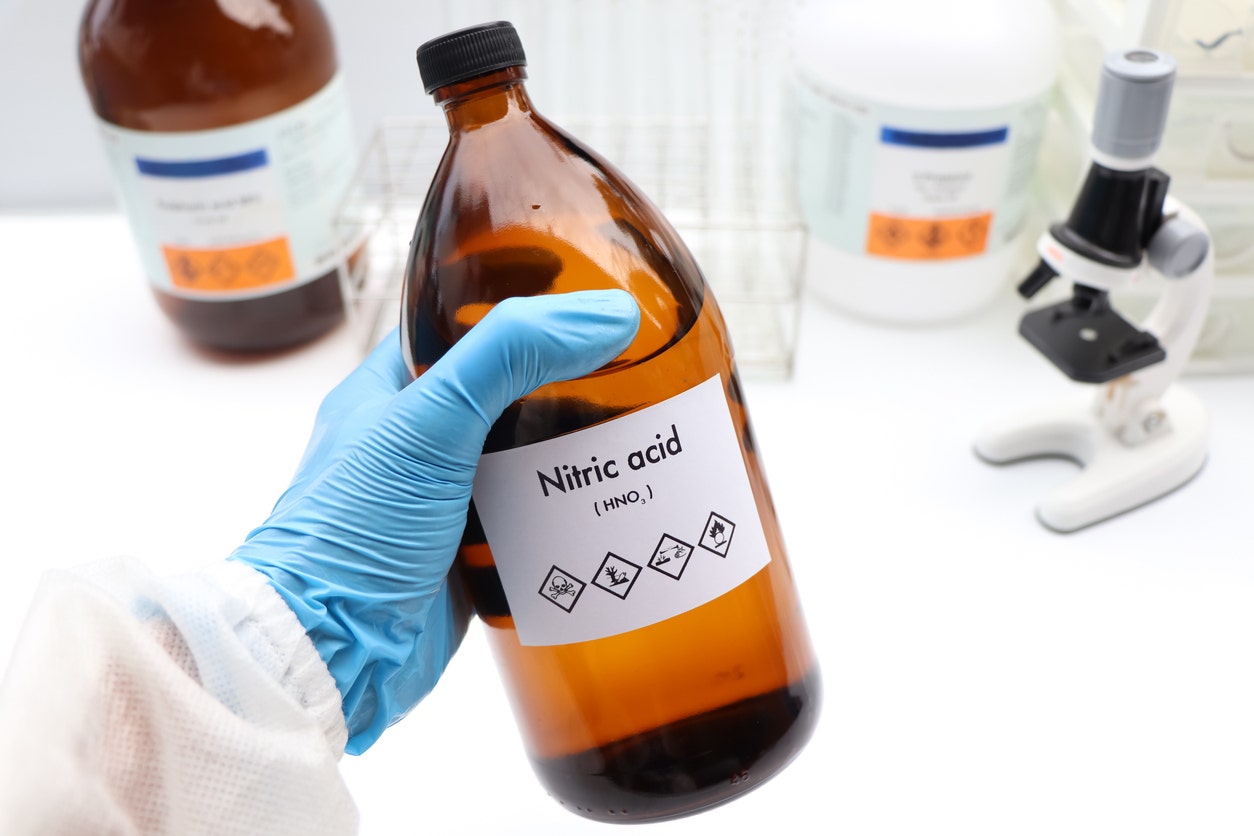
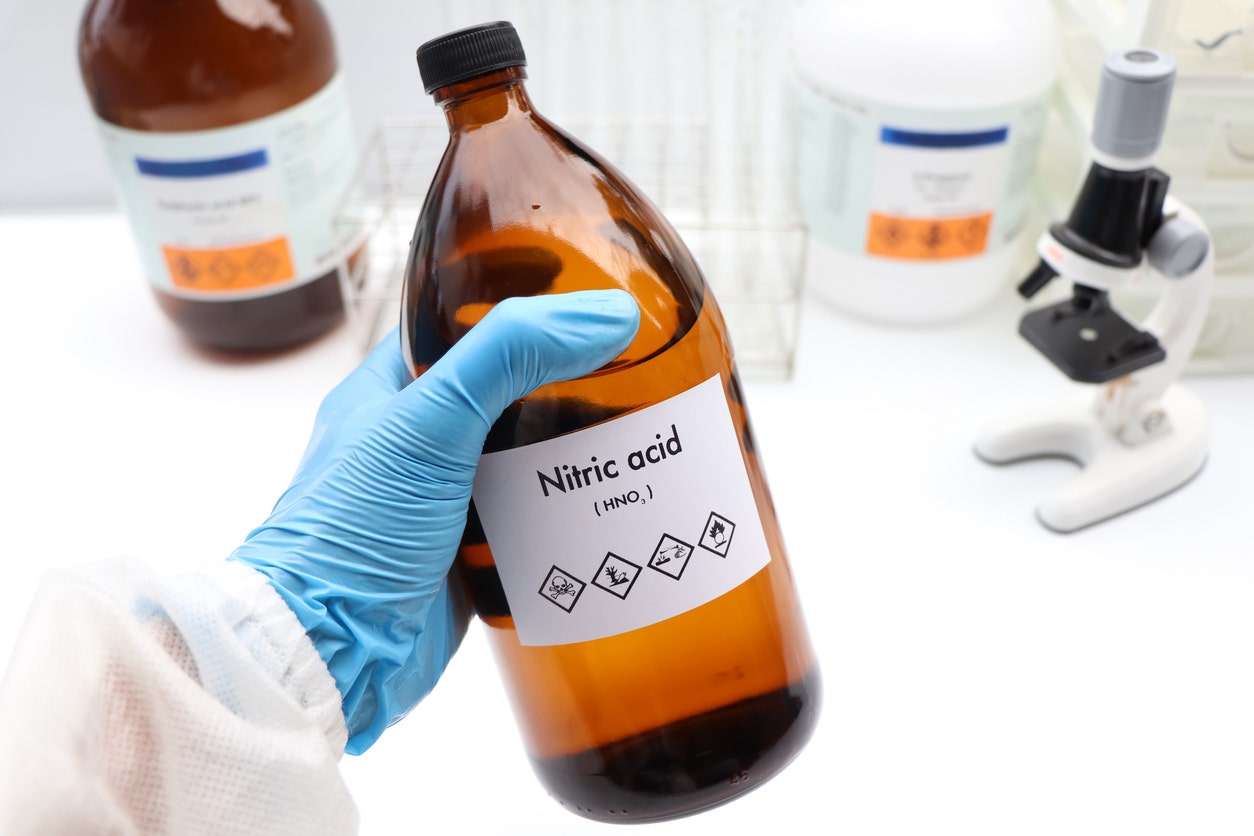
Properties of Nitric Acid
Key Facts About Nitric Acid
-
Compound Name: Nitric Acid
-
Synonyms: Aqua Fortis, Hydrogen Nitrate, Azotic Acid, White Fuming Nitric Acid (WFNA), Red Fuming Nitric Acid (RFNA)
-
Chemical Formula: HNO₃
-
CAS Number: 7697-37-2
-
RTECS Number: QU5775000
-
Molecular Weight: 63.01 g/mol
-
Appearance: Colorless to pale yellow fuming liquid in concentrated form; colorless in dilute solution; characteristic sharp, pungent odor; may appear reddish-brown due to dissolved nitrogen dioxide (NO₂) in fuming grades
Physical Characteristics
Nitric acid is completely miscible with water in all proportions, but dilution releases intense heat. Adding water to concentrated acid can cause violent boiling and dangerous spattering. The rule is absolute: always add acid to water, never water to acid.
The azeotropic composition at approximately 68% by weight boils at 120.5°C and cannot be further concentrated by simple distillation. Fuming grades exhibit significant vapor pressure at ambient temperature, continuously releasing corrosive vapors even from sealed containers.
Nitric acid is a highly corrosive mineral acid widely used in chemical manufacturing, metal processing, laboratory research, fertilizer production, and industrial cleaning applications. The compound is valued for its strong oxidizing properties and role in the production of nitrates, explosives, dyes, pharmaceuticals, and specialty chemicals across commercial, industrial, and laboratory environments. U.S. laboratories and manufacturers sourcing nitric acid by grade, concentration, and purity can contact Lab Alley at 512-668-9918 for product selection and ordering support.
Reactivity and Chemical Behavior
Nitric acid reacts vigorously with most metals, organic materials, and reducing agents. Unlike non-oxidizing acids such as hydrochloric or sulfuric acid, it produces toxic nitrogen oxide gases (NOx) rather than hydrogen gas when dissolving metals. These reddish-brown fumes cause severe respiratory damage and can be lethal.
Contact with organic materials, including wood, paper, solvents, and clothing creates immediate fire or explosion risk without any external ignition source. Nitric acid is incompatible with strong bases, reducing agents, flammable materials, carbides, cyanides, sulfides, and essentially all organic compounds. Mixing with acetic anhydride, acetone, or alcohols can cause spontaneous detonation.
Conversely, controlled exposure passivates certain metals such as aluminum, chromium, and stainless steel by forming protective oxide layers, a property that is deliberately exploited in metal finishing operations.
Grades and Types
ACS Reagent Grade (70%): Meets American Chemical Society specifications for analytical chemistry, trace metal digestion, quantitative analysis, and reagent solution preparation. Supplied with a certificate of analysis documenting verified low chloride, sulfate, and heavy metal content.
Semiconductor/Electronic Grade (70%): Ultra-high purity formulation with parts-per-billion metal content for semiconductor wafer cleaning and etching, electronics manufacturing, and microelectronics fabrication. Meets SEMI standards with ion chromatography-verified purity.
Lab/Technical Grade (50%, 67%): General-purpose grade for industrial chemical synthesis, metal cleaning and pickling, and laboratory applications where ACS-grade purity exceeds what the process requires. The most economical option for non-critical work.
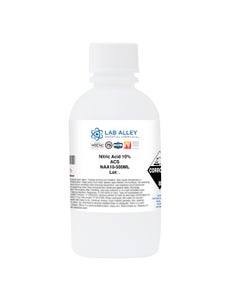
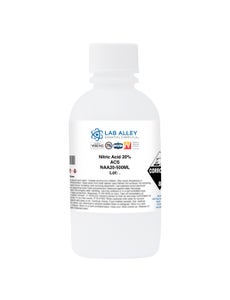
Reagent Grade Solutions (10%, 20%, 50%): Pre-diluted solutions for specific analytical procedures including titrations, sample preparation, and digestion. Ready-to-use concentrations eliminate on-site dilution and the associated exothermic mixing hazards.
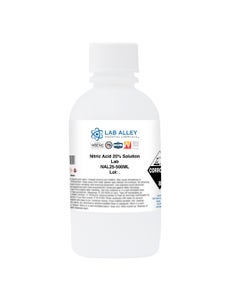
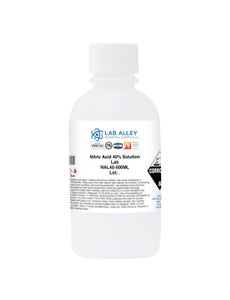
Lab Grade Solutions: Available across a wide concentration range: 0.1N, 1.0N, 1.0M, 2%, 10%, 15%, 20%, 25%, 40%, 45%, and 50%. Pre-standardized normalities and molarities enable direct analytical use without titration verification.
Specialty Mixtures: Nitric acid 3% in methanol and 5% in denatured ethanol serve as ready-to-use Nital solutions for metallographic etching of iron and steel. Nitric acid 15% with hydrofluoric acid 1.5% enables specialized etching of stainless steel, titanium, and refractory metals.
Nitric acid from Lab Alley is available in multiple grades, concentrations, and purity levels, with packaging options ranging from small laboratory containers to bulk drums and totes for laboratory, industrial, manufacturing, and chemical processing applications.
Common Uses & Applications
Fertilizer and Agricultural Chemical Production
Primary feedstock for ammonium nitrate production, the world's most widely used nitrogen fertilizer. Also drives production of calcium ammonium nitrate (CAN) and urea-ammonium nitrate (UAN) solutions. This sector accounts for the majority of global nitric acid consumption, with production volumes exceeding 60 million metric tons annually.
Explosives and Propellants
Used as a nitrating agent in the production of nitroglycerin, TNT, RDX, nitrocellulose, and ammonium nitrate-based blasting agents for mining and construction. Fuming grades serve as oxidizers in liquid-fueled rocket propellant systems.
Metal Processing and Surface Treatment
Pickling and passivation of stainless steel, aluminum, and other alloys removes oxide scale while creating corrosion-resistant surfaces. Used for electropolishing, bright dipping, and precious metal refining through selective dissolution (parting acid). Also strips tin, zinc, and other platings from substrates.
Semiconductor and Electronics Manufacturing
Silicon wafer cleaning removes organic and metallic contamination. Etching of metal films and oxide layers to pattern circuitry with sub-micron precision. PCB manufacturing and photoresist removal both rely on the oxidizing power of high-purity formulations.
Analytical Chemistry and Laboratory
Digestion of soil, sediment, tissue, and food samples for trace metal analysis. Metallographic etching with Nital solutions reveals microstructure in metallurgical specimens. Acid washing removes trace metal contamination from laboratory glassware. Also used in Kjeldahl nitrogen determination, titrations, and ion chromatography.
Chemical Synthesis and Pharmaceuticals
Nitration of aromatic compounds produces pharmaceuticals, dyes, and polymer intermediates. Production of isocyanates, polyurethanes, and nylon intermediates (adipic acid) depends on nitric acid oxidation chemistry. Nitroglycerin synthesis provides the active ingredient in cardiovascular vasodilation medications.
Specialty Applications
Aqua regia (1:3 HNO3:HCl) dissolves noble metals, including gold and platinum, for analysis or recovery. Nuclear fuel reprocessing via the PUREX process separates uranium and plutonium using nitric acid as the dissolution medium.
Fight Your Kidney Stone with This Natural Product Hack
Fight kidney stones. Discover how citric acid naturally prevents stone formation.

Is Lactic Acid Bad? A Look at the Health Science
Is lactic acid bad for you? Debunking myths and revealing its vital role in your body & beyond.
Hospitality Without Hitchhikers: Boric Acid’s Role in Bed Bug Prevention
Protect your hospitality business. Boric acid is key to preventing bed bug infestations.
Harnessing Silica Sulfuric Acid to Enhance Concrete Durability
Enhance concrete longevity. Silica sulfuric acid improves strength and chemical resistance.
Safety Information
Health Hazards
Nitric acid is severely corrosive to all body tissues. Key health effects by exposure route:
-
Inhalation: Nitrogen dioxide vapors cause immediate respiratory irritation. High concentrations trigger pulmonary edema with a delay of up to 24–48 hours after exposure. IDLH for HNO3 is 25 ppm; IDLH for NO2 is 13 ppm.
-
Skin contact: Causes immediate, severe chemical burns with characteristic yellow staining (xanthoprotein reaction) indicating protein destruction. Tissue damage progresses rapidly without immediate decontamination.
-
Eye contact: Causes severe corrosive damage and may result in permanent vision loss or blindness.
-
Ingestion: Causes severe chemical burns to the mouth, throat, esophagus, and stomach with perforation risk. Do not induce vomiting.
Personal Protective Equipment (PPE)
Chemical splash goggles and a full face shield are both required for concentrated acid work. Use heavy-duty chemical-resistant gloves (butyl rubber preferred, neoprene acceptable) and inspect for integrity before each use.
A chemical-resistant apron and protective clothing are required at all times. When working with fuming or heated nitric acid, a supplied-air respirator or NIOSH-approved full-face respirator with acid gas/NOx cartridges is necessary. Eyewash stations and emergency safety showers must be immediately accessible.
Storage Guidelines
Store below 25°C in a dark, well-ventilated area in original UN-approved containers. Compatible materials include glass, HDPE, and fluoropolymer (PTFE/PFA). Never use metal containers. Segregate strictly from organic materials, flammables, combustibles, bases, and reducing agents.
Never store with acetic acid, acetone, alcohols, or other reactive organics. Use secondary containment. Shelf life is typically 12–24 months when stored properly; discard if significant yellowing or fuming occurs.
Emergency Procedures
-
Spill: Evacuate immediately. Wear full PPE before re-entry. Neutralize carefully with sodium bicarbonate, sodium carbonate, or lime. Do not use sawdust or organic absorbents. Ventilate thoroughly.
-
Eye exposure: Flush immediately with large amounts of water for at least 15–20 minutes while holding eyelids open. Seek emergency medical attention.
-
Skin exposure: Remove contaminated clothing immediately. Flush with plenty of water for 15–20 minutes. Seek medical attention for any burn.
-
Inhalation: Remove to fresh air immediately. Administer oxygen if available. Seek emergency medical attention and monitor for delayed pulmonary edema for up to 48 hours.
-
Ingestion: Do not induce vomiting. Rinse mouth and give water or milk if conscious. Seek emergency medical attention immediately.
Regulatory & Classification
Nitric acid faces comprehensive regulation as a corrosive, oxidizer, and toxic substance with threshold reporting requirements.
OSHA Classification
Classified as corrosive (Skin Corrosion Category 1) and oxidizing liquid (Category 1) under OSHA HazCom Standard (29 CFR 1910.1200). OSHA PEL: 2 ppm ceiling for nitric acid vapor. Process Safety Management (PSM) threshold quantity: 500 lbs (29 CFR 1910.119).
NIOSH and ACGIH Recommendations
REL: 2 ppm ceiling (15-minute short-term exposure limit). IDLH: 25 ppm. Nitrogen dioxide: REL 1 ppm ceiling; IDLH 13 ppm. ACGIH TLV-C (Ceiling): 2 ppm for nitric acid. Not classified as carcinogen (A4).
FDA and DOT Status
Not approved for direct food use. No GRAS status. Used indirectly in food-contact surface cleaning. Used in pharmaceutical synthesis under cGMP conditions. UN 2031: Nitric acid with more than 70% - Class 8 (Corrosive), Subsidiary risk 5.1 (Oxidizer), Packing Group I. UN 2031: Nitric acid with not more than 70% - Class 8, Subsidiary risk 5.1, Packing Group II. UN 2032: Red fuming nitric acid - Class 8, Subsidiary risks 5.1 and 6.1, Packing Group I.Approved as a sanitizing agent for food contact surfaces (21 CFR 178.1010) at specified use concentrations.
EPA and International Regulations
CERCLA Reportable Quantity (RQ): 1,000 lbs. SARA Title III Section 313: Listed toxic chemical. TSCA listed. Clean Air Act: Listed under Risk Management Program (RMP) at concentrations ≥80% and quantities ≥500 lbs. EU classifies as corrosive (H314) and oxidizing liquid (H272). REACH registered.
Environmental Considerations
Not readily biodegradable as inorganic acid. Dissociates in water, forming nitrate ions. Elevated nitrate levels in waterways contribute to eutrophication. CERCLA reporting required for releases above RQ. Neutralize with appropriate base before disposal.

How to Safely Dispose of Sulfuric Acid
Sulfuric acid is one of the most common acidifying reagents and sulfur sources, essential across multiple industries. At the same time, it is also a toxic and highly hazardous chemical reagent, requiring safe handling and disposal by trained personnel.
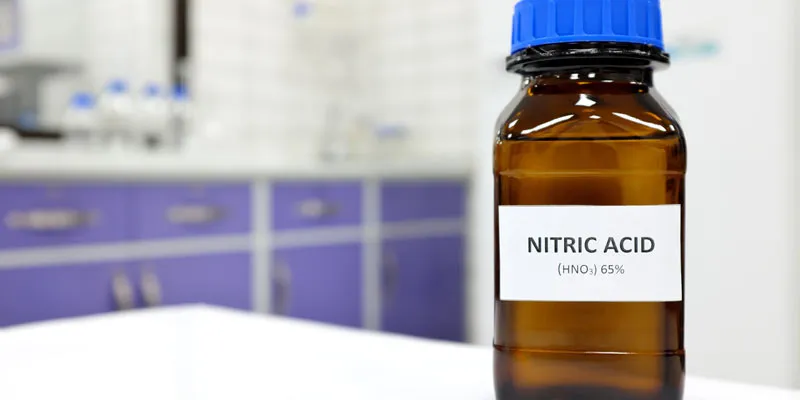
How To Use Nitric Acid Safely
Nitric acid is a corrosive chemical and harmful to humans. Its contact with skin and eyes can cause serious burns. Affected skin will require flushing with soap and lukewarm water for at least 30 minutes.

Acetone Safety: Proper Storage and Disposal Methods
Acetone is a staple chemical solvent in most laboratories. It is also perhaps one of the most recognizable chemicals to the layperson, best known as the pungent solvent comprising nail polish remover.

How to Use Potassium Iodide Safely and Where to Buy it Online
Potassium Iodide Powder, also known as Potassium Salt of Hydriodic Acid, Iodic Acid Potassium Salt, Potassium Monoiodide, and Knollide, has the chemical formula KI. It appears as a white crystalline powder, odorless, and is soluble in water at ambient conditions.
Medicinal Oils Derived From Plants
You can order food-grade ethanol, extraction-grade ethanol, ACS-grade ethanol, FCC-grade ethanol, USP grade ethanol, HPLC-grade ethanol and kosher ethanol from Lab Alley. Perform ethanol (EtOH) extraction at ultra-low temperatures for the best yields.
Ethanol extraction is a cost-effective way to use ethanol as an industrial solvent to produce high-quality botanical extracts from large volumes of medicinal herbs or plants.
Nitric Acid Grades and Pack Sizes
Lab Alley provides nitric acid from ultra-pure semiconductor grades through economical technical concentrations, with specialty formulations for metallography and materials analysis.
Available Grades & Concentrations
Lab Alley offers Nitric Acid in ACS Reagent Grade (70%), Semiconductor/Electronic Grade (70%), Lab/Technical Grade (50%, 67%), Reagent Grade solutions (10%, 20%, 50%), and Lab Grade solutions in wide concentration range (0.1N, 1.0N, 1.0M, 2%, 10%, 15%, 20%, 25%, 40%, 45%, 50%).
Specialty mixtures available including Nitric Acid 3% in Methanol, Nitric Acid 5% in Denatured Ethanol, and Nitric Acid 15% & Hydrofluoric Acid 1.5% Mixture. All grades supplied with safety data sheets and certificates of analysis.
Pack Sizes & Bulk Availability
Laboratory Bottles: 500 mL and 2.5 L across all grades and formulations serve research and analytical applications.
Commercial Containers: 5-gallon pails, 15-gallon carboys, 55-gallon drums accommodate industrial operations.
Bulk Quantities: 275-gallon totes and tanker deliveries available for high-volume users.
All containers are UN-approved and DOT-compliant with proper corrosive and oxidizer labeling.
Regulatory Requirements
All shipments classify under DOT as corrosive oxidizer (UN 2031 or UN 2032 depending on concentration) requiring UN-approved packaging and compliant labeling. CERCLA reportable quantity of 1,000 lbs applies. SARA 313 reporting obligations apply at threshold quantities. Semiconductor and ACS reagent grades include certificates of analysis with full impurity specifications.
FAQs
What makes nitric acid different from other mineral acids?
Why does nitric acid turn yellow during storage?
Can nitric acid be safely diluted with water?
What emergency response is required for nitric acid exposure?
What are the main safety concerns in laboratory use?
Three hazards require constant attention: corrosive burns from direct contact, toxic nitrogen dioxide from decomposition or metal reactions, and fire or explosion from contact with organics. All three are controllable through consistent PPE use, fume hood operation, and strict segregation from organic materials. Additional concerns include violent reactions with acetone, acetic anhydride, and alcohols; pressure buildup in sealed containers from decomposition gases; and neutralization requirements before drain disposal.