





Nitric Acid Safety & Hazards: Essential Handling Guidelines
Nitric acid is a strong oxidizing agent and highly corrosive inorganic acid used in fertilizer manufacturing, explosives production, metal processing, and chemical synthesis. Commonly available in concentrations ranging from 50–70%, this colorless to pale yellow liquid releases toxic nitrogen oxide fumes and can spontaneously ignite combustible materials. The primary hazards include severe corrosive burns to all body tissues, toxic vapor inhalation causing delayed pulmonary edema, and violent reactions with organic materials and reducing agents.
Understanding nitric acid's safety profile is essential for professionals across fertilizer production, metal finishing, chemical synthesis, semiconductor fabrication, and explosives manufacturing. What sets this acid apart from other mineral acids is its dual nature: it corrodes tissue on contact while simultaneously acting as a powerful oxidizer that can ignite combustibles without any external flame or spark.
Since nitric acid causes severe burns, releases toxic vapors with delayed effects, and intensifies fires, proper protective equipment and strict handling procedures are non-negotiable. This guide covers everything you need to know, from recognizing exposure symptoms to implementing emergency response procedures.
In this article, we'll review:
-
Chemical Hazards Overview
-
Exposure Risks & Health Effects
-
First Aid Measures
-
Handling & Storage Precautions
-
Spill & Leak Procedures
-
Fire & Explosion Hazards
-
Regulatory & Compliance Information
-
Technical Documents & References
Chemical Hazards & Classification
Nitric acid combines powerful oxidizing action with extreme corrosivity, creating a hazard profile that requires specialized safety protocols and strict segregation from incompatible materials.
Hazard Classification
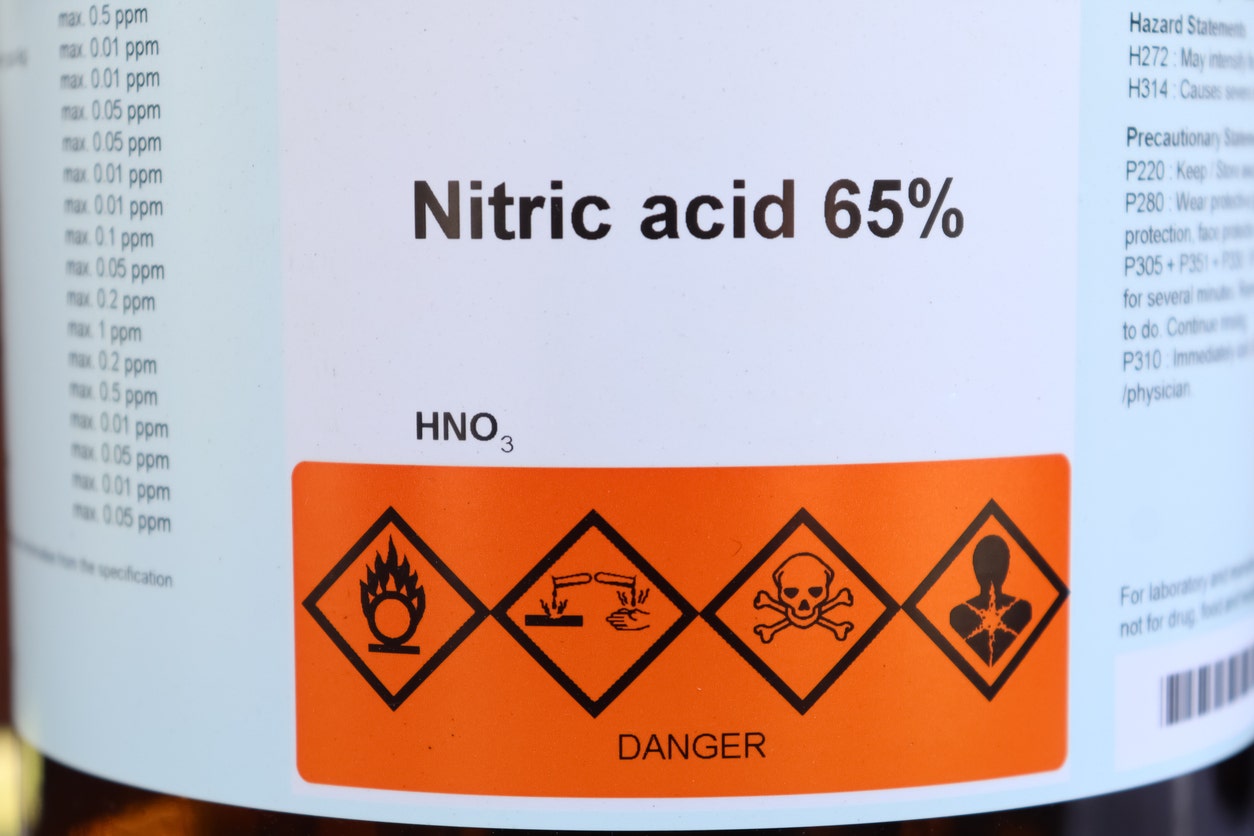
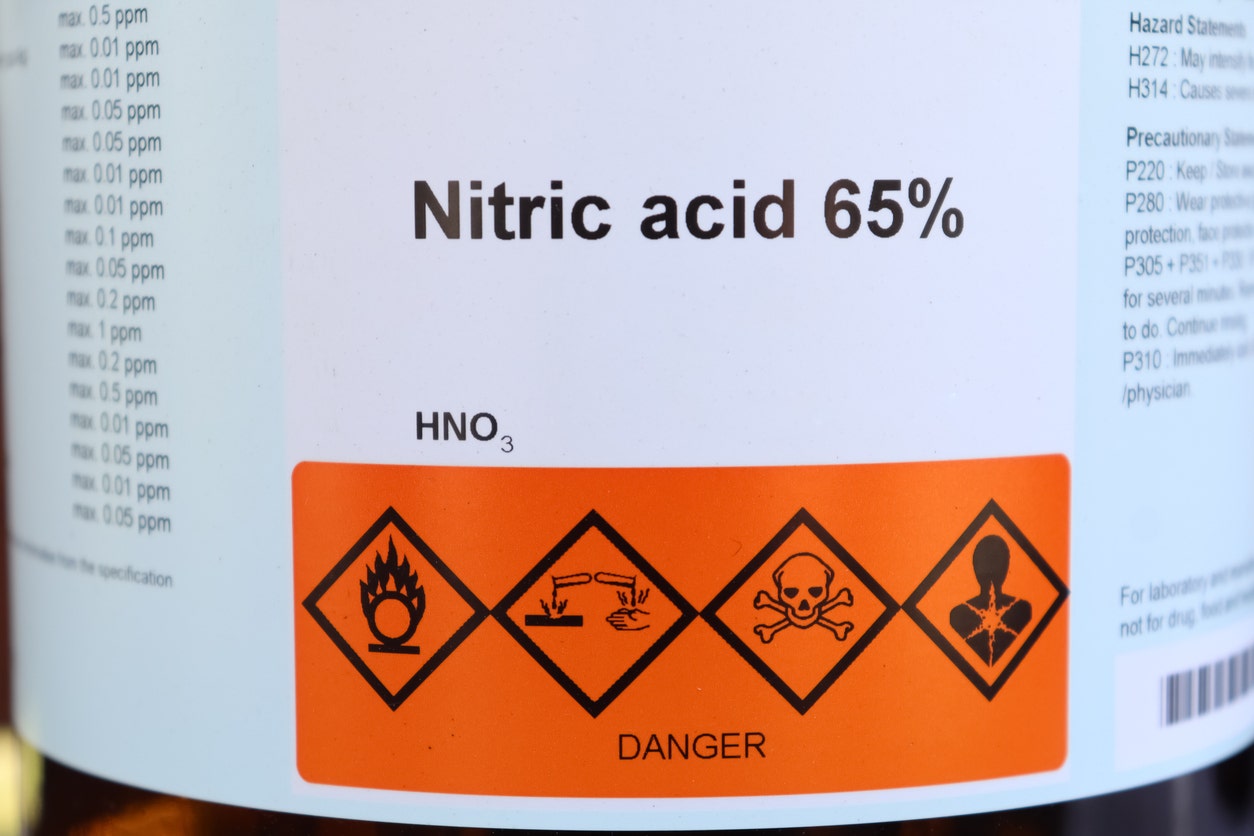
Under the Globally Harmonized System (GHS), nitric acid carries three pictograms. The corrosion symbol (GHS05) indicates severe corrosive effects on skin, eyes, and metals. The flame over circle (GHS03) signals strong oxidizing properties. The skull and crossbones (GHS06) reflects acute toxicity from vapor inhalation.
The NFPA hazard rating assigns nitric acid: Health 3 (serious hazard), Flammability 0 (will not burn), and Reactivity 0 (stable), with a special Oxidizer designation.
Primary Risks
The main dangers from nitric acid exposure include:
-
Inhalation: Toxic nitrogen oxide vapors cause severe respiratory irritation and potentially fatal pulmonary edema, with symptoms that may be delayed 24–48 hours after exposure.
-
Skin contact: Severely corrosive; causes deep chemical burns with characteristic yellow to brownish discoloration. Large-area exposures may be fatal through skin absorption.
-
Eye contact: Causes permanent damage to the cornea, iris, and conjunctiva, including potential blindness. Immediate irrigation is essential.
-
Ingestion: Toxic and potentially fatal; causes severe burns throughout the digestive tract. Vomiting must never be induced due to perforation risk.
Exposure Risks & Health Effects
Understanding how nitric acid affects the body helps identify dangerous situations and explains why all exposures require prompt medical attention, even when initial symptoms seem mild.
Acute inhalation effects include burning pain in the nose and throat, persistent coughing, chest tightness, and shortness of breath. The most dangerous aspect is delayed pulmonary edema, where fluid accumulates in lung tissue 24–48 hours after exposure. Physical exertion after exposure aggravates this response, making rest and medical observation mandatory.
Skin contact rapidly progresses from irritation to deep penetrating ulcers with the yellow-brown discoloration characteristic of nitric acid burns. Eye contact is a medical emergency, capable of producing corneal clouding, ulceration, and permanent blindness even when irrigation begins promptly. Ingestion causes severe burns from mouth to stomach, with perforation risk making gastric lavage contraindicated.
Chronic exposure causes skin ulcerations, respiratory damage, and tooth erosion from vapor contact. Animal studies suggest adverse reproductive effects. The decomposition product nitrous oxide is listed under California Proposition 65 for developmental and female reproductive toxicity.
First Aid Procedures
Speed is essential with nitric acid exposures. Every second of continued contact or vapor breathing increases injury severity.
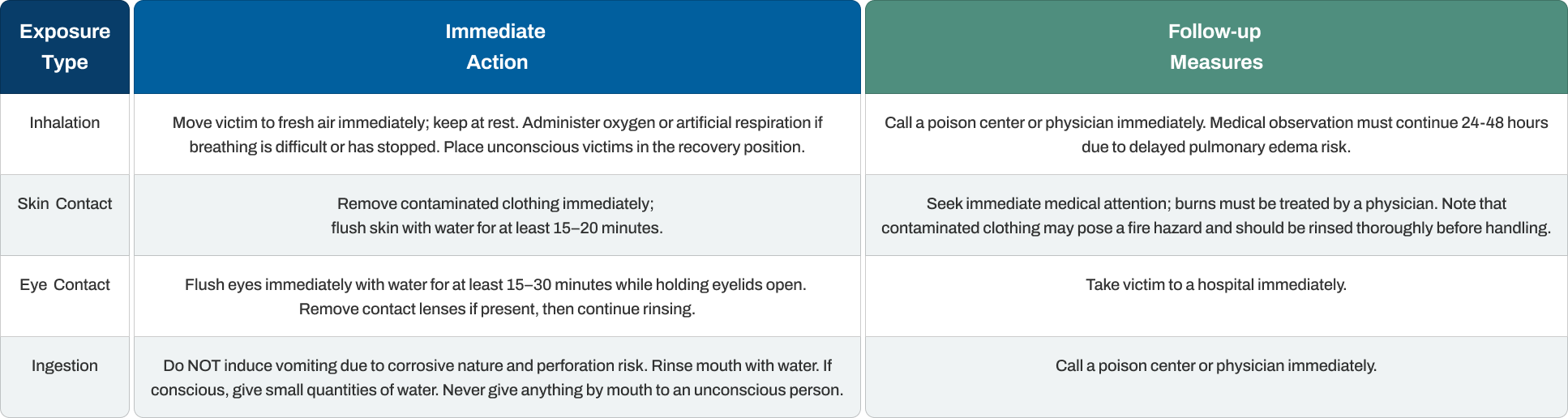
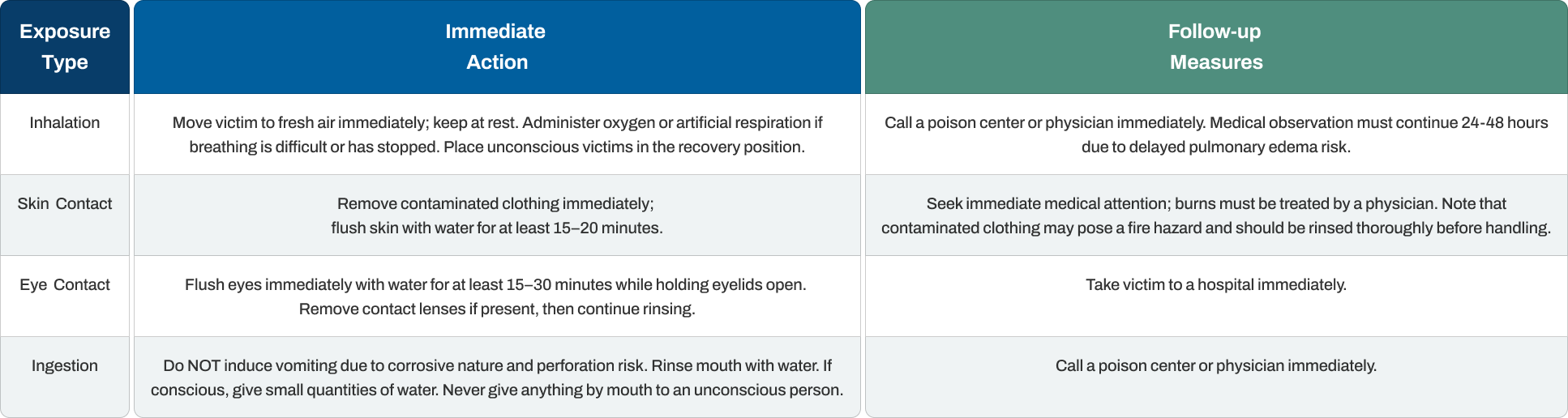
Medical personnel should monitor all inhalation victims for delayed pulmonary edema for 24–48 hours after exposure, even when initial symptoms appear mild. Symptoms may be significantly delayed, particularly respiratory effects.
Handling & Storage Precautions
Safe nitric acid handling requires eliminating contact with incompatible materials while controlling vapor exposure and preventing skin or eye contact at all times.
Safe Handling Procedures
Work only in spaces with adequate local exhaust ventilation that captures vapors at the source. Wear full chemical-resistant PPE including gloves, goggles, and protective clothing. Never breathe fumes, mists, or vapors. Wash thoroughly after every handling session and avoid eating, drinking, or smoking in areas where the acid is present.
Take specific precautions to prevent contact with combustibles. Even minor contamination of organic materials can cause spontaneous ignition. The critical rule: never pour water into nitric acid. Always add acid slowly to water to control heat generation and prevent violent spattering of corrosive liquid
Storage Requirements
Store in cool, dry, well-ventilated areas using corrosion-resistant containers with resistant inner liners. Keep containers tightly closed and secured from unauthorized access. Protect from light, heat, and air to minimize decomposition and nitrogen oxide formation. Maintain strict separation from combustibles, organic materials, reducing agents, and reactive metals.
Incompatible Substances
Combustible and organic materials, including wood, paper, cotton, oils, and alcohols, face spontaneous ignition risk from nitric acid contact without any external spark or flame. Metals and metal powders react to generate flammable hydrogen gas. Strong bases, reducing agents, acetic acid, and acetone all produce violent or explosive reactions. Water generates substantial heat when mixed with concentrated acid.
Spill & Leak Procedures
Nitric acid spills combine corrosive contact hazards with toxic vapor release and potential fires from contact with combustibles.
Emergency Response Steps
Evacuate the area immediately and restrict access to trained personnel wearing full PPE, including respiratory protection. Establish adequate ventilation to disperse nitrogen oxide vapors. Remove or isolate all flammable and combustible materials. Consider evacuation for larger spills in enclosed spaces.
Containment Methods
For small spills, wipe up with absorbent materials compatible with corrosives and oxidizers. Clean surfaces thoroughly with water, then neutralize with a dilute alkaline solution such as soda ash, lime, or sodium bicarbonate.
For large spills, dike the liquid using non-combustible materials to prevent spreading, reduce vapors with water spray, and absorb with inert non-combustible material such as vermiculite, sand, or earth. Never use sawdust or other combustibles. Prevent material from entering sewers or waterways.
Proper Disposal
Dilute with water before neutralization or disposal. Dispose at approved waste facilities per local, state, and federal regulations. US CERCLA regulations require reporting spills exceeding 1,000 lbs to the National Response Center.
Fire & Explosion Hazards
Nitric acid does not burn, but its powerful oxidizing action creates serious fire and explosion hazards through spontaneous ignition of combustibles and intensification of existing fires.
Flammability
The acid itself will not combust, yet it can cause spontaneous ignition of combustibles and accelerate burning once a fire starts. Reactions with metals generate flammable hydrogen gas. Under fire conditions, the acid decomposes, releasing toxic nitrogen oxides, and containers can rupture violently, spreading corrosive liquid and gases across wide areas.
Extinguishing Media
Use flooding quantities of water spray or fog for fires involving nitric acid. Do NOT use dry chemical powders containing carbonates or ammonium compounds, as the acid may react violently with these agents. Carbon dioxide, dry sand, or alcohol-resistant foam are appropriate for surrounding fires that do not directly involve the acid.
Firefighting Precautions
Firefighters must wear self-contained breathing apparatus and full protective chemical clothing. Standard bunker gear does not provide adequate protection.
Fight fires from maximum distance, cool containers with flooding quantities of water, and evacuate the entire area if containers are involved. Hazardous combustion products include nitrogen oxides and corrosive vapors.
Regulatory Information & Compliance
Extensive regulations govern nitric acid due to its classification as both a corrosive and an extremely hazardous substance.
OSHA Regulations
OSHA classifies nitric acid as hazardous under 29 CFR 1910.1200 with a Permissible Exposure Limit (PEL) of 2 ppm TWA (5 mg/m³). It appears on the Highly Hazardous Chemical list with a Threshold Quantity of 500 lbs, triggering Process Safety Management requirements for facilities exceeding this amount.
Emergency eyewash stations and safety showers must be immediately accessible wherever nitric acid is handled. Medical surveillance is recommended for regularly exposed workers.
EPA & Environmental Impact
CERCLA designates nitric acid as a Hazardous Substance with a Reportable Quantity (RQ) of 1,000 lbs for concentrations up to 70%. The Clean Water Act lists it as a Hazardous Substance with the same RQ. SARA 302/304 classifies it as an Extremely Hazardous Substance, and SARA 313 requires Toxic Release Inventory reporting for facilities using threshold quantities.
DOT Transportation Regulations
Nitric acid is assigned UN2031, Hazard Class 8 (Corrosive), Packing Group II. Both Corrosive and Oxidizer labels are required for concentrations above 65%.
State Right-to-Know
Massachusetts, New Jersey, Pennsylvania, Illinois, and Rhode Island all list nitric acid on their Right-to-Know inventories. California Proposition 65 applies to the decomposition product of nitrous oxide for developmental and female reproductive toxicity.
Technical Documents & Resources
Accurate documentation supports safe handling, emergency response, and regulatory compliance across different concentrations and applications.
Safety Data Sheets (SDS)
Obtain the current SDS from your supplier for the specific concentration in use. Safety information varies significantly by concentration (50%, 65%, 70%, fuming). Concentration also determines DOT classification and UN number assignments, making concentration-specific documentation essential.
Reference Documents
The NIOSH Pocket Guide to Chemical Hazards provides exposure guidance and protection recommendations. CAMEO Chemicals (NOAA) offers detailed emergency response information for spills. EPA CERCLA/SARA regulations detail release reporting requirements. Certificates of Analysis (COA) verify product purity and compliance with applicable concentration and grade standards.
Emergency Contacts
-
CHEMTREC: 1-800-424-9300 (24-hour emergency chemical information)
-
National Response Center: 1-800-424-8802 (CERCLA release reporting)
-
National Poison Control: 1-800-222-1222
Final Note
Nitric acid serves essential functions across industrial sectors, yet its combination of strong corrosivity and powerful oxidizing action demands a level of care that goes beyond standard acid handling. Standard acid precautions alone are insufficient. The oxidizing properties add fire and explosion dimensions that require strict material segregation, immediate access to emergency washing facilities, and extended medical observation after any vapor exposure.
For businesses requiring high-quality nitric acid, Lab Alley supplies solutions across industrial, analytical, and manufacturing applications. Combining proper handling procedures with appropriate PPE and strict incompatible material controls ensures safe operations across all application sectors.
Explore our Resource Library for more information.
Our Customer Care team is also available for more information and documentation, including chemical Safety Data Sheets.
Need Nitric Acid You Can Trust?
If you are looking for high-quality nitric acid for your lab, product line, or research facility, be sure to visit our store to explore our trusted selection and request a quote.
As your trusted partner in chemical supply, Lab Alley is always striving to meet the growing demands of our customers. We want you to be able to access all of your chemical needs in one place, along with streamlined online ordering and fast shipping.
Due to popular demand from our valued clientele, Lab Alley's nitric acid is available in a range of purities and packaging options to suit various commercial, laboratory, and personal needs.