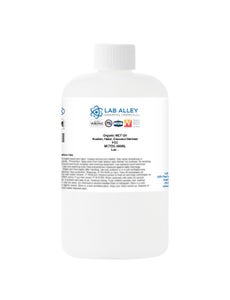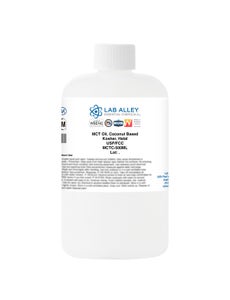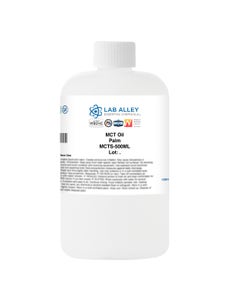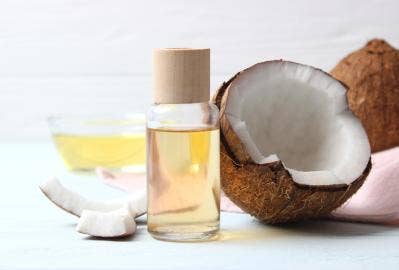






Types of MCT Oil
MCT oil is a refined triglyceride oil composed almost exclusively of two medium-chain fatty acids: caprylic acid (C8) and capric acid (C10). Produced by fractionating coconut or palm kernel oil to remove longer-chain fatty acids, the finished product is a clear, odorless, water-white liquid that remains fluid at room temperature. MCT oil is available in several distinct types differentiated by feedstock source, C8/C10 fatty acid ratio, grade specification, and USDA Organic certification status.
Grade selection determines where and how MCT oil can be used across regulated industries. USP/FCC/Food Grade confirms compliance with pharmacopeial purity standards required for pharmaceutical excipient and food manufacturing use; USDA Certified Organic is required for finished products carrying an organic label; and conventional palm-derived MCT oil suits general food and cosmetic applications where pharmacopeial documentation is not required. Feedstock source, C8/C10 ratio, and certification requirements are the primary factors that narrow the field to the right product for a given application.
In this article, we'll explore:
-
Common Grades & Purities
-
Certifications & Standards
-
Chemical Forms & Variants
-
Applications Based on Type
-
How to Choose the Right Type
Common Grades & Purities
USP/FCC/Food Grade
USP/FCC/Food Grade MCT oil meets purity standards established by the United States Pharmacopeia and Food Chemicals Codex, with testing covering relative density, acid value, iodine value, peroxide value, hydroxyl value, viscosity, moisture, ash, and heavy metals including lead, cadmium, arsenic, and mercury. This grade is suitable for pharmaceutical excipient use, dietary supplement manufacturing, and food applications and is available in both coconut-derived and USDA Certified Organic variants.
USDA Certified Organic
USDA Certified Organic MCT oil carries an additional certification layer on top of USP/FCC/Food Grade compliance, produced from certified organic coconut oil under USDA National Organic Program regulations throughout the supply chain. This designation is required for any finished product marketed with a USDA Organic label.
Conventional (Regular) Grade
Conventional grade MCT oil is a general food-grade product sourced from palm kernel oil, without USP/FCC pharmacopeial certification. It is appropriate for food, cosmetic, and supplement applications where pharmacopeial documentation is not a regulatory or commercial requirement.
Certifications & Standards
-
GRAS Certification: Medium-chain triglycerides are generally recognized as safe (GRAS) for use as a direct food ingredient and dietary supplement component, with caprylic/capric triglycerides listed in 21 CFR as permitted food additives.
-
Kosher & Halal: All three MCT oil products carried by Lab Alley hold Kosher certification. Halal certification applies to the coconut-based USP/FCC and Organic variants; the palm-derived product carries Kosher certification only.
-
Organic Certification: Organic MCT oil is produced in compliance with USDA National Organic Program requirements from feedstock sourcing through finished product, and is required for any formulation carrying a USDA Organic label.
-
USP/FCC Compliance: Coconut-based and organic grades meet USP and FCC purity and identity standards for caprylic/capric triglyceride, with specifications covering density, acid value, iodine value, peroxide value, hydroxyl value, viscosity, moisture, ash, and heavy metals.
-
Certificate of Analysis (COA): Each lot is documented by a Certificate of Analysis covering fatty acid composition, density, acid value, peroxide value, iodine value, moisture, and lot-specific compliance with applicable grade specifications.
-
ISO 9001 Certification: Lab Alley operates under ISO 9001 quality management standards.
-
TSCA: Caprylic/capric triglyceride is listed on the EPA TSCA inventory.
Chemical Forms & Variants
MCT oil is commercially available in several distinct formulations that differ by fatty acid composition, feedstock origin, and intended application. Understanding these variants is particularly relevant for nutritional and pharmaceutical buyers, where the C8/C10 ratio directly affects product performance.
Liquid Form
MCT oil is a clear, colorless to water-white mobile liquid at room temperature, odorless and essentially tasteless, with a light, non-greasy texture. It does not solidify at typical ambient temperatures, unlike whole coconut oil, which solidifies below approximately 24°C; relative density is approximately 0.93 to 0.96 at 20°C, viscosity approximately 25 to 33 mPas at 20°C, insoluble in water and miscible with most organic solvents and lipophilic carrier oils.
Caprylic/Capric Triglyceride (C8/C10 MCT, Standard)
Caprylic/capric triglyceride is the most common commercial MCT oil form, a mixture of triglycerides esterified with C8 and C10 fatty acids in ratios that vary by feedstock source. CAS number 73398-61-5; INCI name: Caprylic/Capric Triglyceride.
C8-Dominant MCT Oil
MCT oils with a higher proportion of caprylic acid (C8) are more rapidly absorbed and more efficiently converted to ketones in the liver, making them the preferred choice for ketogenic diet and sports nutrition formulations. The coconut-based product carries a higher C8 proportion relative to the palm-derived product.
C10-Dominant MCT Oil
MCT oils with a higher proportion of capric acid (C10) metabolize slightly more slowly than C8-dominant variants and are used in applications where a broader fatty acid profile is preferred over maximum ketone conversion rate.
Fractionated Coconut Oil
Fractionated coconut oil is functionally equivalent to coconut-derived MCT oil, produced by isolating only the C8 and C10 fractions from coconut oil, and is often used interchangeably with MCT oil in cosmetic and personal care formulations.
Applications Based on Type
Food & Beverage
Food-grade and organic MCT oils are used as food ingredients, cooking oil additives, and fat components in product formulations, including dietary supplements added to coffee, smoothies, and salad dressings. The saturated nature of MCFAs provides good oxidative stability relative to polyunsaturated oils.
Pharmaceutical & Healthcare
USP/FCC grade MCT oil is used as a lipophilic excipient and solubilizer in oral and topical pharmaceutical formulations, as a vehicle for fat-soluble active pharmaceutical ingredients, and as a fill medium in softgel capsule manufacturing.
Cosmetics & Personal Care
MCT oil functions as an emollient, skin conditioner, and carrier oil in creams, lotions, serums, and hair care products, providing light-textured moisturization without the occlusive feel associated with longer-chain oils. It is also used in cold-process and melt-and-pour soap formulations for a light-lathering, non-greasy result.
Laboratory & Analytical
COA-documented USP/FCC grades provide traceable, lot-specific fatty acid profiles, peroxide values, and heavy metal limits for use in research and quality control applications.
Agriculture & Botanical
MCT oil is used as a carrier for botanical tinctures and herbal extracts; the body's preferential metabolism of medium-chain triglycerides supports absorption and distribution of lipophilic botanical compounds suspended in the oil.
How to Choose the Right Type
Selecting the correct MCT oil type requires matching grade, feedstock, and certification to the regulatory and performance requirements of the intended application. Missteps at the selection stage often result in compliance gaps or reformulation costs downstream.
Match Grade to Application
USP/FCC/Food Grade is required for pharmaceutical excipient, dietary supplement, and food manufacturing applications where pharmacopeial documentation is a compliance requirement; conventional palm-derived grade is appropriate for general food and cosmetic use where that documentation is not required.
Verify Required Certifications
Confirm that the required certifications, including Kosher, Halal, and USDA Organic, are in place before selecting a product, and verify that the supplier provides a lot-specific COA documenting fatty acid profile, peroxide value, and heavy metal limits.
Select Appropriate Concentration or Form
Coconut-derived MCT oil is the correct choice where coconut sourcing is specified or preferred by formulation or market requirements; palm-derived MCT oil is an appropriate alternative where coconut sourcing is not required.
Consider C8/C10 Ratio
Higher C8 content supports faster ketone conversion and is preferred for ketogenic and sports nutrition applications; a balanced C8/C10 ratio is better suited to formulations requiring broader fatty acid coverage.
Common Mistakes
Common selection errors include choosing conventional-grade MCT oil for pharmaceutical or supplement applications without verifying USP/FCC compliance documentation; assuming all coconut-derived MCT oil is organically certified without confirming USDA NOP status; overlooking C8/C10 ratio differences when formulating for ketogenic applications; and failing to confirm whether coconut-derived sourcing is required before defaulting to a palm-derived product.
Key Takeaways
Choosing the right MCT oil comes down to four intersecting criteria: feedstock source, grade specification, C8/C10 fatty acid ratio, and certification requirements. USP/FCC/Food Grade coconut-derived and organic variants cover pharmaceutical, supplement, and food manufacturing needs; conventional palm-derived MCT oil is suited to applications where pharmacopeial compliance is not required. For ketogenic and sports nutrition applications, C8/C10 ratio is a primary performance variable that warrants close attention at the specification stage.
For more detailed guidance, explore our Resource Library.
Our Customer Care team is also available for more information and documentation, including chemical Safety Data Sheets.
Find MCT Oil You Can Trust
If you are looking for high-quality MCT oil for your lab, product line, or research facility, be sure to visit our store to explore our trusted selection and request a quote.
As your trusted partner in chemical supply, Lab Alley is always striving to meet the growing demands of our customers. We want you to be able to access all of your chemical needs in one place, along with streamlined online ordering and fast shipping.
Due to popular demand from our valued clientele, Lab Alley's MCT oil is available in a range of purities and packaging options to suit various commercial, laboratory, and personal needs.