





How to Safely Dispose of Polysorbate 80
Polysorbate 80 is a nonionic surfactant widely used across food production, pharmaceutical manufacturing, and laboratory settings, valued for its emulsifying and solubilizing properties. Because it carries a relatively low acute toxicity profile and is not federally listed as a hazardous waste, it's tempting to assume disposal is straightforward. That assumption can lead to compliance gaps, particularly around wastewater discharge and generator recordkeeping obligations.
What makes Polysorbate 80 require deliberate handling at the disposal stage isn't acute danger, but its behavior as a surfactant and its tendency to degrade over time. Its water solubility and foaming characteristics can affect wastewater treatment systems if discharged in bulk, and aged or improperly stored product can undergo oxidative degradation that changes its chemical profile before disposal even begins. Facilities handling this chemical in laboratory, institutional, or industrial quantities need a disposal approach that accounts for both factors.


In this article:
-
Why Proper Disposal Matters
-
How to Dispose of Polysorbate 80
-
Managing Oxidative Degradation Products
-
Special Considerations
Why Proper Disposal Matters
Environmental Protection
Polysorbate 80 is fully water-soluble, which means it disperses readily rather than settling out or evaporating. That same property makes it a concern for wastewater systems: as a surfactant, it can increase foaming and raise the organic load at treatment facilities if discharged in any meaningful volume without pretreatment consideration. This is less about acute aquatic toxicity and more about the operational strain surfactants place on downstream treatment processes.
Health & Safety
Polysorbate 80 has a low acute oral toxicity profile, and it isn't classified as an acute health hazard under most safety data sheets. That said, concentrated or bulk quantities can still cause skin and eye irritation on direct contact, particularly during transfer, container handling, or cleanup of spills. Standard precautions remain necessary even though the material itself is comparatively benign.
Legal Compliance
Polysorbate 80 is not named on RCRA's hazardous waste lists, but that doesn't exempt generators from evaluating it. Every facility is responsible for determining hazardous waste status based on how the material was used and whether it has become contaminated. Separately, local sewer authorities often impose pretreatment limits on surfactants and organic load, which can restrict or prohibit drain disposal regardless of the material's federal hazardous waste status.
How to Dispose of Polysorbate 80
Check Regulations
Polysorbate 80 is not regulated for transport under DOT, IATA, or IMDG rules, and it does not appear by name on RCRA's hazardous waste lists. That absence of a listing doesn't mean automatic clearance for disposal. Generators still carry the responsibility of determining hazardous waste status themselves, based on factors like contamination, mixture with other materials, and the specific waste stream it came from.
Use Designated Waste Disposal Methods
Disposal methods differ depending on the condition and volume of the waste, and each pathway carries its own documentation and handling expectations.
Non-Hazardous Disposal
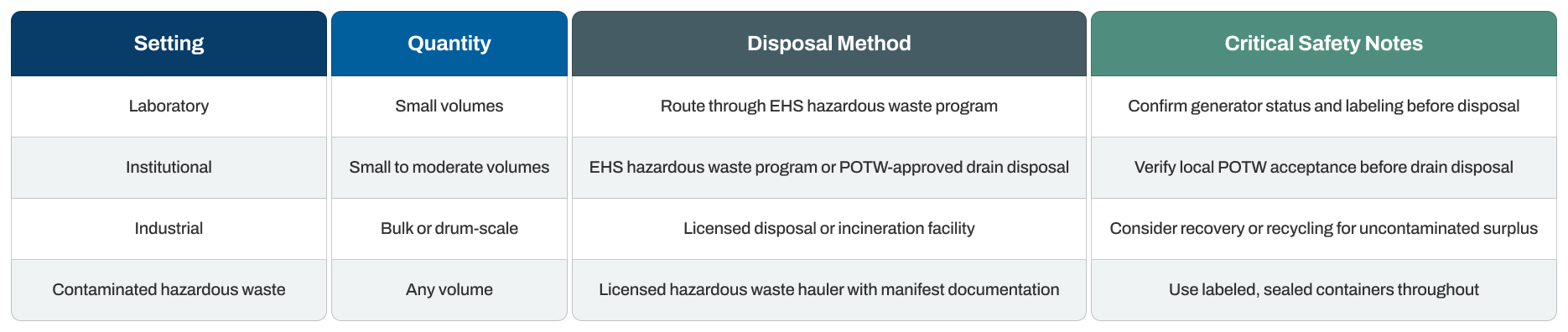
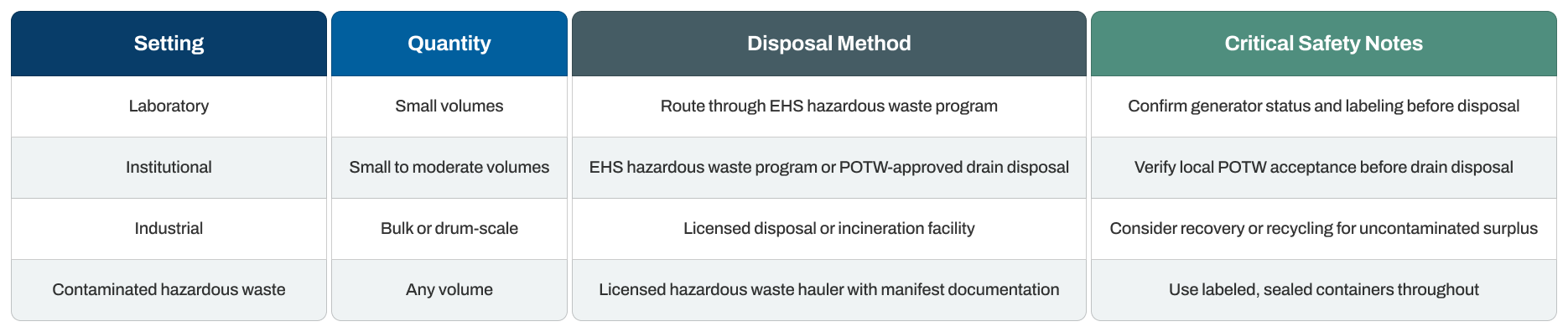
Small volumes of dilute, uncontaminated Polysorbate 80 may be acceptable for drain disposal, but only where the local publicly owned treatment works (POTW) permits it. Facilities should confirm local guidelines before assuming drain disposal is allowed, and any material going this route should be diluted well to minimize foaming at the treatment plant.
Hazardous Waste Disposal
If Polysorbate 80 has been contaminated during use, or if a state agency classifies it as hazardous under stricter local rules, it needs to be handled as hazardous waste. That means labeled, sealed containers, transport through a licensed hazardous waste hauler, and manifest documentation that tracks the waste from generation through final disposal.
Industrial Quantities
Bulk or drum-scale quantities call for a licensed waste disposal or incineration facility rather than ad hoc handling. Where the material remains uncontaminated and unused, it may also be a candidate for recovery or recycling, which can reduce both disposal cost and volume sent to landfill or incineration.
Laboratory & Institutional Waste
Laboratory and institutional generators should route Polysorbate 80 waste through their facility's environmental health and safety (EHS) hazardous waste program rather than handling it independently. Labeling should reflect the facility's generator status and follow whatever local or state requirements apply to that classification.
Never Mix Chemicals
Polysorbate 80 should be kept separate from strong oxidizers and strong acids during storage and disposal staging. Both are incompatible with the material and can accelerate degradation reactions, increasing the risk of unwanted byproducts forming before the waste even reaches a disposal facility.
Follow PPE Guidelines
Handling Polysorbate 80 waste calls for chemical-resistant gloves, safety glasses or goggles, and protective clothing when working with bulk quantities. Adequate ventilation should be maintained during transfer or cleanup, and facilities should ensure an eyewash station or safety shower is accessible in areas where disposal handling takes place.
Special Considerations
Aged or Degraded Stock
Polysorbate 80 is prone to oxidative degradation over time, particularly when exposed to heat, light, or trace iron contamination. This degradation process can generate peroxides, aldehydes, and free fatty acids, none of which are present in fresh material. Facilities disposing of long-stored or expired stock should treat it as potentially altered from its original composition rather than assuming it retains the same handling profile as new product.
Combustible Liquid Precautions
Polysorbate 80 should be kept away from heat, sparks, and open flame throughout handling and disposal. Waste staging areas should be well ventilated and located away from ignition sources, consistent with standard precautions for combustible liquids, even where the material isn't classified as highly flammable.
Special Considerations
Food & Pharmaceutical Grade Waste
Polysorbate 80 used in food or drug manufacturing is often FCC, NF, or USP grade, and waste generated from these processes may fall under additional facility-specific protocols or FDA-related waste handling expectations beyond standard chemical disposal. Facilities operating under these grades should check whether their quality or regulatory teams have separate documentation requirements for this waste stream.
Bulk Container Residue
Empty totes and drums that held Polysorbate 80 often retain a viscous residue due to the material's thickness. These containers should be triple-rinsed or processed through the facility's hazardous waste program before being considered for disposal or recycling, since residue left behind can affect how the container itself is classified.
Conclusion
Disposing of Polysorbate 80 safely comes down to recognizing that its low acute toxicity doesn't eliminate the need for careful handling. Generators still need to confirm hazardous waste status on their own, respect local wastewater discharge limits, and account for the ways this surfactant can change chemically as it ages.
Matching disposal method to quantity and condition, whether that means POTW-approved drain disposal for small dilute volumes or licensed hazardous waste handling for contaminated material, keeps facilities compliant and reduces unnecessary risk. Attention to container residue and grade-specific waste protocols rounds out a disposal process that's straightforward once the right steps are in place.
For more detailed guidance, explore our Resource Library
Our Customer Care team is also available for more information and documentation, including chemical Safety Data Sheets.
Need Polysorbate 80 You Can Trust?
If you are looking for high-quality polysorbate 80 for your lab, product line, or research facility, be sure to visit our store to explore our trusted selection and request a quote.
As your trusted partner in chemical supply, Lab Alley is always striving to meet the growing demands of our customers. We want you to be able to access all of your chemical needs in one place, along with streamlined online ordering and fast shipping.
Due to popular demand from our valued clientele, Lab Alley's polysorbate 80 is available in a range of purities and packaging options to suit various commercial, laboratory, and personal needs.