



Types of Nitric Acid: Concentrations, Grades, and Applications
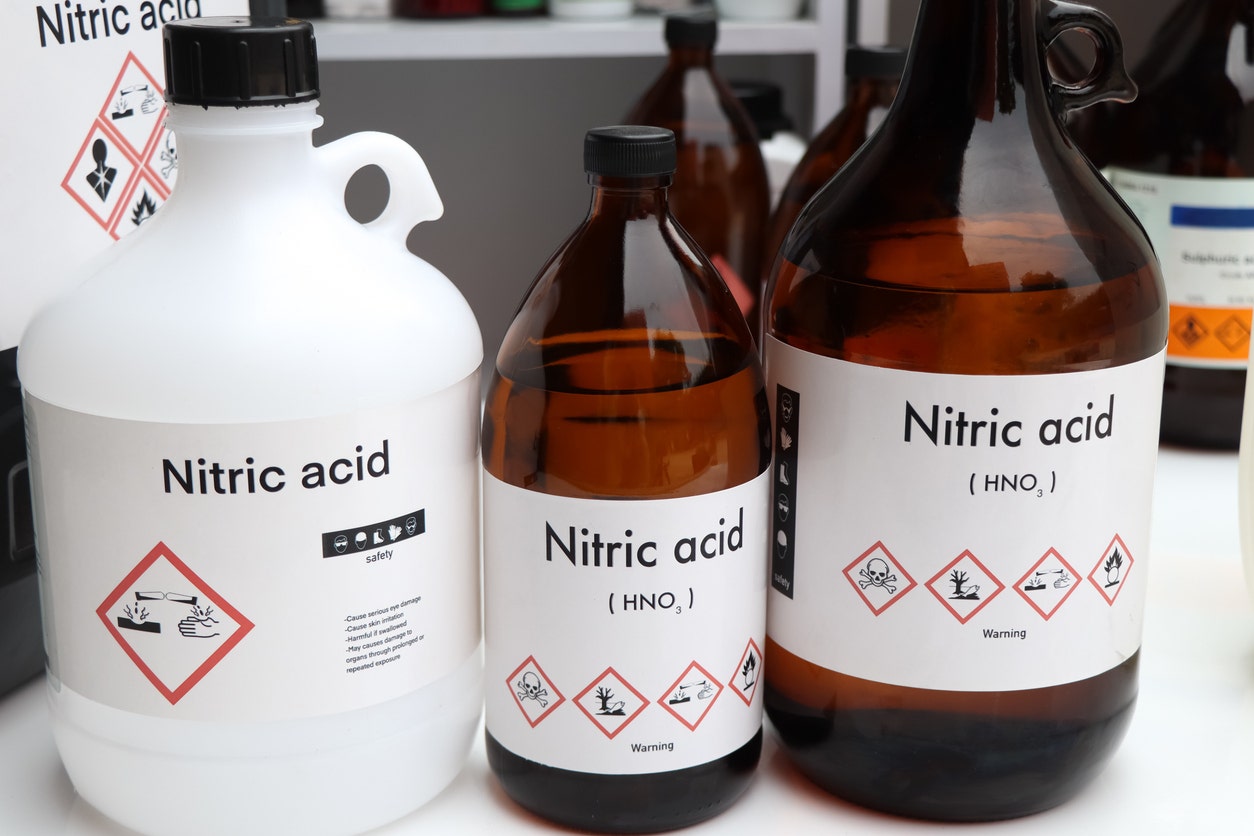
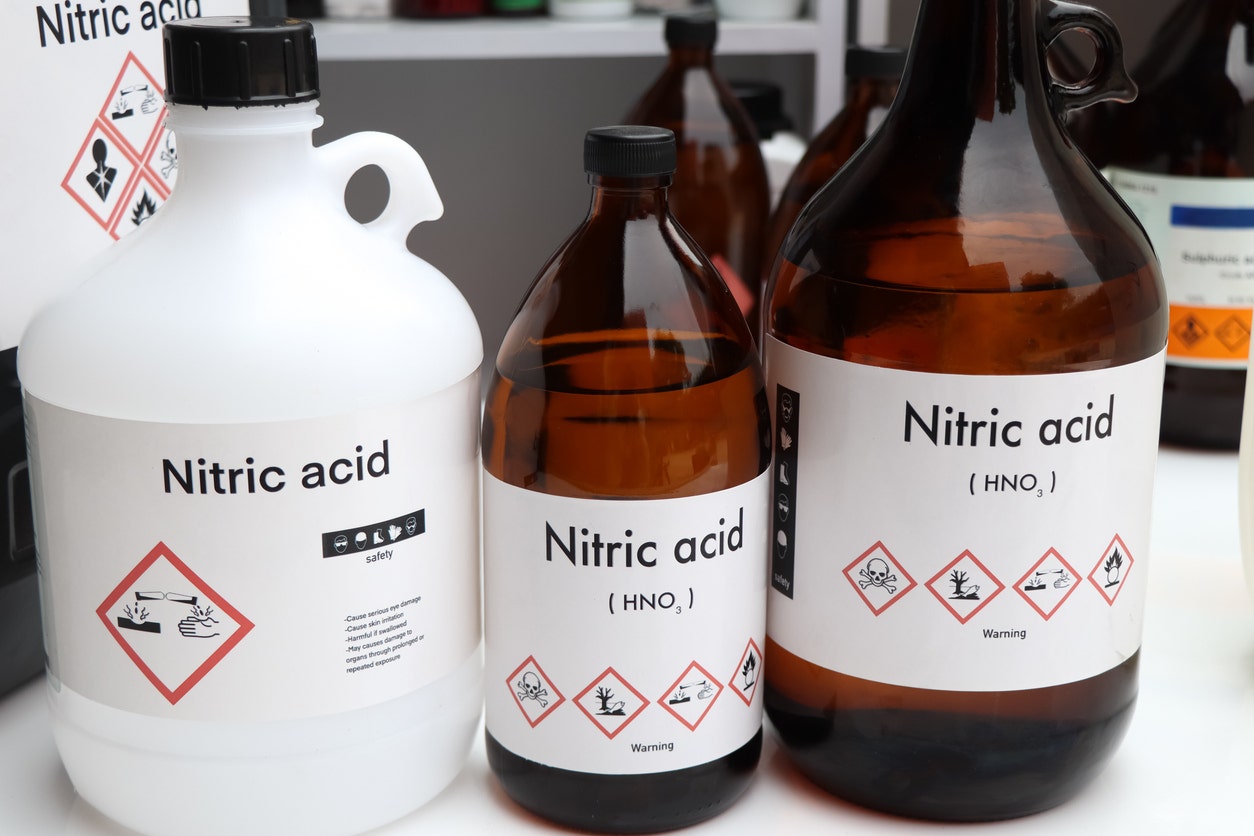
Nitric acid (HNO3) is a highly corrosive, strongly oxidizing inorganic mineral acid with a molecular weight of 63.01 g/mol, known historically as aqua fortis. Pure nitric acid is colorless, but samples typically acquire a yellow cast over time as the compound decomposes into nitrogen oxides. It is commercially available across a wide concentration range, from dilute solutions below 10% to concentrated forms at 67–70%, and is further distinguished by grade specification depending on purity and intended use.
Choosing the right type is not simply a matter of concentration. Grade specification, application requirements, regulatory obligations, and compatibility with downstream processes all factor into the decision. This article breaks down the available options so you can match the right product to your specific use case.
In this article, we'll examine:
-
Common Concentrations
-
Grades and Purity Levels
-
Chemical Variants
-
Applications Based on Type
-
Certifications and Standards
-
How to Choose the Right Type
Common Concentrations
Concentration determines reactivity, handling requirements, and suitability for different applications. The range spans from gentle cleaning solutions to highly aggressive industrial acids.
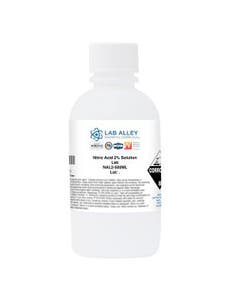
2% Solution, Lab Grade: Used for trace metal rinsing, laboratory glassware cleaning, and general equipment decontamination in analytical workflows; minimal corrosion risk while maintaining effective cleaning action.
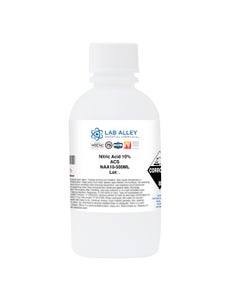
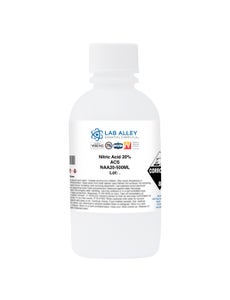
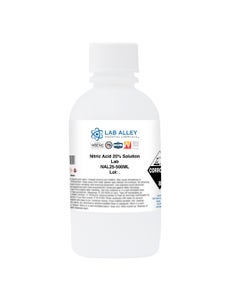
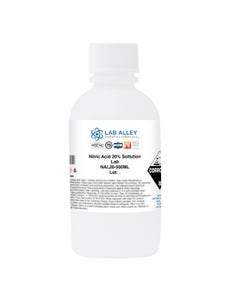
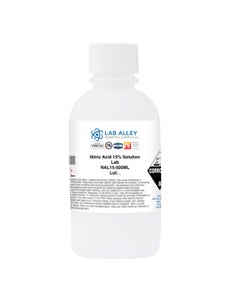
10–20% Solution, Reagent and Lab Grade: Dilute solutions for metal pickling, surface preparation, and analytical titrations. A 10% solution produces a characteristic gray-gold finish on pine and maple for wood aging applications. Available in both Lab and Reagent grades.
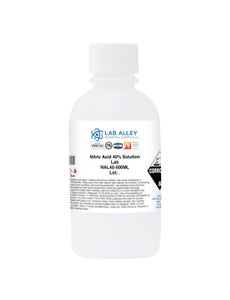
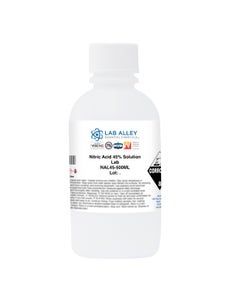
25–45% Solution, Lab Grade: Mid-strength solutions with increased oxidizing capacity for metal cleaning, industrial preparation, and chemical processing where moderate acid strength is required.
50% Solution, Lab and Reagent Grade: Strong aqueous formulation for preparative chemistry and industrial processing. Available in both Lab/Technical and ACS Reagent grades depending on purity requirements.
67% Solution, Lab/Technical Grade: A clear to pale yellow liquid for general industrial and laboratory applications where ACS certification is not required. Cost advantages over reagent grades benefit high-volume users.
70% Solution, ACS Reagent and Semiconductor/Electronic Grade: The standard concentrated commercial form. Colorless to pale yellow liquid with a sharp, suffocating odor and a specific gravity of approximately 1.42. The most widely used concentration for chemical synthesis, metal refining, fertilizer production, and high-precision laboratory work. Available in ACS Reagent grade for analytical applications and Semiconductor/Electronic grade for wafer etching and electronics manufacturing, where ultra-low trace metal impurities are critical.
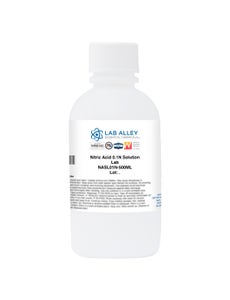
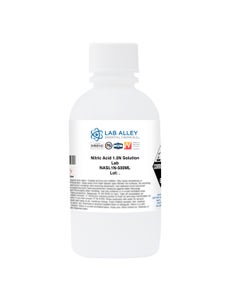
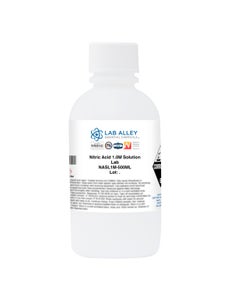
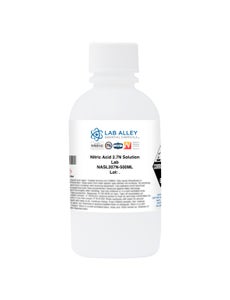
Normality and Molarity Solutions (0.1N, 1.0N, 2.7N, 1.0M), Lab Grade: Pre-standardized solutions for direct use in titrations, analytical procedures, and research protocols requiring defined concentrations without on-site preparation.
3% in Methanol and 5% in Denatured Ethanol (Specialty Mixtures): Nitric acid dissolved in organic solvent matrices, used as etching reagents (nital) in metallography to reveal the microstructure of metals such as steel, copper, and zinc. Supplied as ready-to-use formulations.
Grades and Purity Levels
Lab/Technical Grade
The most economical option for industrial manufacturing and general laboratory use where the highest analytical purity is not required. Meets general specifications for identity and concentration, with no extensive impurity limits.
ACS Reagent Grade
Meets specifications established by the American Chemical Society, with strict limits on chloride, sulfate, arsenic, heavy metals, and iron. Required for analytical chemistry, standardized testing, pharmaceutical manufacturing support, and any application where trace impurities could affect results. Certificates of Analysis document compliance with all monograph parameters.
Semiconductor/Electronic Grade
Ultra-high-purity nitric acid meeting the stringent requirements of the semiconductor and microelectronics industries. Trace metal content is controlled at parts-per-billion levels to prevent contamination of silicon wafers and electronic components during etching, cleaning, and surface preparation. Specifications typically exceed ACS Reagent Grade in critical purity parameters.
Chemical Variants
Standard aqueous nitric acid is the most common commercial form, an aqueous solution of HNO3 ranging from dilute to approximately 70%. It decomposes slowly on light exposure, forming nitrogen dioxide and water. Amber or opaque containers minimize photodecomposition during storage.
Concentrated nitric acid (67–70%) approaches the azeotropic composition of nitric acid in water at approximately 68% by weight. It functions as both a strong acid and a powerful oxidizing agent, capable of dissolving most common metals, including copper, silver, zinc, and iron, but not gold, platinum, rhodium, or iridium.
Aqua regia is a mixture of concentrated nitric acid and hydrochloric acid in a 1:3 volumetric ratio. It dissolves gold and platinum through chloride complexation of oxidized metal ions. Prepared as needed; not a shelf-stable product.
Nital is a solution of 1–5% nitric acid in ethanol or methanol, used as a standard metallographic etchant to reveal the microstructure of iron-based alloys and steel per ISO 14104.
Nitric acid and hydrofluoric acid mixture combines both acids for cleaning and etching silicon wafers and specialty metal surfaces in semiconductor manufacturing, attacking silicon dioxide layers that resist either acid individually.
Fuming nitric acid (WFNA/RFNA) contains above 86% HNO3. White fuming nitric acid (WFNA, above 95% HNO3) contains minimal dissolved nitrogen dioxide and approaches anhydrous composition. Red fuming nitric acid (RFNA, above 86% HNO3) contains approximately 13–14% dissolved nitrogen dioxide, giving it its characteristic reddish-brown color. Both grades serve as rocket oxidizers and in specialty high-reactivity synthesis.
Applications by Type
Fertilizer production: Approximately 80% of global nitric acid consumption goes toward producing ammonium nitrate (NH4NO3) by reaction with ammonia, the most widely used nitrogen-based fertilizer.
Explosives and propellants: Used in the synthesis of TNT and nitroglycerin through nitration of organic compounds. Fuming grades serve as oxidizers in liquid-fueled rocket propellant systems.
Metal processing and refining: Metal etching, pickling, cleaning, and surface preparation across a range of concentrations. Dissolves copper, silver, zinc, and iron for separation and purification. Used in precious metal refining to separate gold from silver and base metals through the parting process.
Semiconductor and electronics manufacturing: Semiconductor/Electronic grade 70% solutions clean and etch silicon wafers, remove surface oxides, and prepare substrates during microchip fabrication. Purity specifications prevent trace metal contamination affecting device performance.
Analytical chemistry and laboratory use: ACS reagent-grade solutions serve digestions, titrations, and trace metal analysis. Normality and molarity solutions are deployed directly in standardized analytical procedures without on-site preparation.
Metallography: Nital solutions (1–5% nitric acid in alcohol) etch metal specimens for microscopic examination of grain structure and microstructure per ISO 14104.
Organic synthesis: Used in nitration reactions, typically combined with sulfuric acid, to introduce nitro groups into aromatic compounds for the production of dyes, pharmaceuticals, and polymer intermediates such as adipic acid and toluene diisocyanate (TDI).
Food and dairy equipment cleaning: Dilute solutions (5–30%) blended with phosphoric acid serve as clean-in-place (CIP) acid cleaners in food and dairy processing, removing mineral scale from equipment surfaces.
Wood aging: A 10% solution artificially ages pine and maple in woodworking, producing a gray-gold finish that resembles old wax or oil-finished wood.
Certifications and Standards
- ACS Reagent Grade Monograph Compliance: Products must meet all specifications in the ACS Reagent Chemicals monograph for nitric acid, including assay, color (APHA), residue after ignition, chloride, sulfate, arsenic, heavy metals, and iron limits.
- Semiconductor/Electronic Grade Specification: Must satisfy ultra-low trace metal requirements defined by SEMI standards or customer-specific purity specifications for the microelectronics industry.
- Certificate of Analysis (COA): Documents assay, appearance, specific gravity, and lot-specific compliance with applicable grade specifications. Batch documentation supports quality assurance programs.
- ISO 9001 Certification: Lab Alley operates under ISO 9001 quality management standards, ensuring consistent product quality.
- GMP Compliance: Applicable to production facilities supplying nitric acid for pharmaceutical or high-purity analytical applications.
How to Choose the Right Type
Match concentration to application: Use dilute solutions (2–25%) for analytical titrations, wood aging, and general laboratory work; mid-strength solutions (40–50%) for metal cleaning and preparative chemistry; concentrated 67–70% solutions for synthesis, refining, and industrial processing.
Select the appropriate grade: ACS Reagent Grade for analytical chemistry and standardized testing; Semiconductor/Electronic Grade for silicon wafer and electronics manufacturing; Lab/Technical Grade for general industrial and non-critical laboratory applications.
Use pre-standardized solutions when precision matters: Normality and molarity solutions (0.1 N, 1.0 N, 2.7 N, 1.0 M) eliminate on-site preparation and standardization steps for titrations and analytical procedures.
Choose specialty mixtures for specific etching needs: Nital for metallographic etching; the nitric and hydrofluoric acid mixture for silicon wafer and specialty metal surface cleaning.
Review regulatory requirements: Verify that the selected concentration and grade comply with DOT shipping requirements, OSHA hazard communication standards, and any export control regulations applicable to the intended use. Concentrated nitric acid faces U.S. export controls reflecting its potential role as a precursor in explosives and rocket propellant manufacturing.
Verify supplier documentation: Confirm the supplier provides a Certificate of Analysis and Safety Data Sheet for each lot, and that the product meets the applicable grade specification.
Key Takeaways
Nitric acid is available from dilute solutions below 10% through concentrated forms at 67–70%. Dilute solutions (2–25%) suit analytical and general laboratory work; mid-strength solutions (40–50%) serve metal cleaning and preparative chemistry; concentrated solutions (67–70%) dominate synthesis, refining, and industrial processing. Lab/Technical grade covers general industrial use, ACS Reagent grade meets analytical chemistry requirements, and Semiconductor/Electronic grade satisfies ultra-high purity demands for wafer etching and electronics manufacturing.
Full PPE is mandatory: acid-resistant gloves, safety goggles, face shield, and apron. The strong oxidizing properties create violent reactions with organic materials, and toxic nitrogen oxide fumes require respiratory protection and adequate ventilation. DOT classifies concentrated forms as oxidizing and corrosive hazardous materials, and the EPA establishes a 1,000-pound reportable quantity for spills.
For more detailed guidance, explore our Resource Library.
Our Customer Care team is also available for more information and documentation, including chemical Safety Data Sheets.
Find Nitric Acid You Can Trust
If you are looking for high-quality nitric acid for your lab, product line, or research facility, be sure to visit our store to explore our trusted selection and request a quote.
As your trusted partner in chemical supply, Lab Alley is always striving to meet the growing demands of our customers. We want you to be able to access all of your chemical needs in one place, along with streamlined online ordering and fast shipping.
Due to popular demand from our valued clientele, Lab Alley's nitric acid is available in a range of purities and packaging options to suit various commercial, laboratory, and personal needs.