





Silver Nitrate Uses & Applications
Silver nitrate (AgNO₃) is an inorganic salt formed from silver and nitric acid, appearing as colorless to white crystals with high solubility in water. Its chemistry is defined by the reactivity of the silver ion, which readily forms insoluble precipitates with halide ions, exhibits broad antimicrobial activity against bacteria and other microorganisms, and undergoes light-induced reduction to metallic silver. These three properties, reactivity, antimicrobial strength, and light sensitivity, are the foundation for nearly every application the compound supports.
Silver nitrate is available in ACS Grade, Lab Grade, and Reagent Grade formulations, each suited to different levels of purity and procedural rigor. Because of its versatility, the compound serves an unusually broad set of industries, including pharmaceutical manufacturing, analytical chemistry, photography, electronics, and metal finishing. Few single compounds bridge clinical, industrial, and research settings as directly as silver nitrate does.
In this article, we'll explore:
-
Industrial Applications
-
Scientific & Laboratory Uses
-
Medical & Pharmaceutical Uses
-
Photography & Imaging
-
Electronics & Conductive Materials
-
Silver Nitrate Grades and Pack Sizes
Industrial Applications
Manufacturing & Processing
Silver nitrate plays a central role in producing mirrors and silver-coated glass. When silver nitrate solution is applied to a glass surface and chemically reduced, it deposits a thin, uniform layer of metallic silver that forms the reflective backing characteristic of traditional mirrors.
This silvering process depends on precise control of the reduction reaction to achieve an even, defect-free coating. The technique has been refined over more than a century but still relies on the same fundamental chemistry: the controlled deposition of silver from its nitrate salt onto a substrate.
Chemical Synthesis
Beyond its direct applications, silver nitrate functions as a primary precursor for manufacturing other silver compounds. Reacting it with various halide sources produces silver chloride, silver bromide, and silver iodide, each of which serves distinct downstream purposes in photographic emulsions, catalytic processes, and specialty chemical production.
This precursor role makes silver nitrate a foundational input rather than an end product in many supply chains. Manufacturers rely on its high purity and predictable reactivity to ensure consistent yields when synthesizing these secondary compounds.
Metallurgy & Mining
In metallurgy, silver nitrate is used in assay testing and hallmarking to verify the presence and purity of precious metals. When applied to a metal sample, characteristic precipitate reactions reveal the presence of silver and help confirm authenticity or fineness, a process long used by jewelers, refiners, and regulatory assay offices.
Silver nitrate is also applied in electroplating operations, where it provides the silver ions needed to deposit a thin metallic silver coating onto another metal substrate. This electroplating function supports both decorative finishing and functional coatings where silver's conductivity or corrosion resistance is required.
Scientific & Laboratory Uses
Analytical Reagent
Silver nitrate is a cornerstone reagent in volumetric analysis, particularly in argentometric titration methods used to determine halide ion concentrations in solution. The Mohr method and the Volhard method are two established titration approaches that rely on silver nitrate's predictable reaction with chloride, bromide, and iodide ions to produce a measurable endpoint.
These methods remain standard procedures in analytical laboratories for determining halide content in water samples, industrial process streams, and other solutions. The precision of these titrations depends on using a reagent-grade silver nitrate solution with a verified concentration.
Specialized Research Applications
In histology and microscopy, silver nitrate is used as a staining agent to visualize proteins and nucleic acids, a technique commonly applied in gel electrophoresis and tissue section analysis. Silver-staining methods offer high sensitivity, making them useful for detecting low-abundance biomolecules that other stains might miss.
The same staining chemistry extends to certain DNA and RNA detection techniques, where silver's affinity for binding to nucleic acid structures allows researchers to visualize bands or patterns that would otherwise be invisible. These applications make silver nitrate a recurring tool in molecular biology and diagnostic research settings.
Medical & Pharmaceutical Uses
Active Pharmaceutical Ingredient (API)
Silver nitrate is formulated into topical treatments for burns, wounds, and skin ulcers, where its antimicrobial action helps reduce infection risk during healing. Silver nitrate sticks, sometimes referred to as caustic pencils, are a standard clinical instrument used for chemical cauterization of minor wounds and removal of excess granulation tissue.
Clinicians favor this tool for its precision and ease of application in outpatient and bedside settings. The compound's dual function, cauterizing tissue while providing antimicrobial benefit, makes it a practical choice for minor procedural interventions.
Disinfectant / Antiseptic
Applied topically, silver nitrate acts as a broad-spectrum antimicrobial agent effective against a range of bacteria. It has a long history in newborn eye prophylaxis, where dilute solutions were used to prevent ophthalmia neonatorum, an eye infection that can occur during birth.
While this specific historical use has been largely supplanted by other agents in many regions, silver nitrate continues to serve in wound care and in the treatment of conditions like warts and umbilical granulomas, where its antiseptic and tissue-reducing properties are clinically useful. Healthcare providers value its consistent antimicrobial performance across these varied applications.
Photography & Imaging
Photographic Emulsions
Silver nitrate is the foundational compound behind traditional photographic emulsions. When combined with halide salts, it forms silver halides such as silver chloride, silver bromide, and silver iodide, compounds that are inherently light-sensitive and form the basis of conventional film and photographic paper.
This light sensitivity is what allows an image to be captured: exposure to light triggers a chemical change in the silver halide crystals, which is later developed into a visible photograph. The entire chemistry of analog photography traces back to this reaction between silver nitrate and halide ions.
Archival and Fine Art Photography
Despite the dominance of digital imaging, silver nitrate remains relevant among photographers and artists who work with historical processes such as silver gelatin and albumen printing. These darkroom techniques rely on the same fundamental silver halide chemistry that defined photography for over a century, and practitioners seeking authentic tonal range and archival permanence continue to source silver nitrate for this purpose. Fine art photographers and conservators value these methods not just for their aesthetic qualities but for the long-term stability of properly processed silver-based prints.
Electronics & Conductive Materials
Conductive Inks & Pastes
Silver nitrate serves as a key precursor in producing silver-based conductive inks used throughout printed electronics. These inks enable the fabrication of RFID antennas, flexible circuits, and other components where a conductive trace needs to be printed onto a flexible or non-traditional substrate.
The conductivity of silver makes it a preferred material for these applications, and silver nitrate provides a controllable source of silver ions for ink formulation. As printed electronics continue to expand into packaging, wearables, and sensor technology, this application has grown in commercial relevance.
Semiconductor & Solar Cell Manufacturing
In photovoltaic and semiconductor manufacturing, silver nitrate contributes to the fabrication of electronic components that require high-conductivity silver contacts. Solar cells, in particular, depend on silver-based conductive pathways to efficiently collect and transport the electrical current generated by the photovoltaic effect. The reliability of these contacts directly affects the performance and efficiency of the finished solar cell, making the purity and consistency of the silver source a meaningful manufacturing consideration.
Silver Nitrate Grades and Pack Sizes
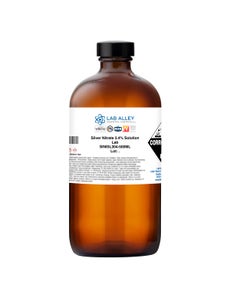
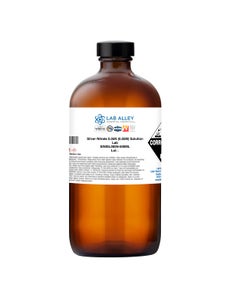
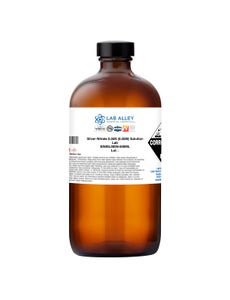
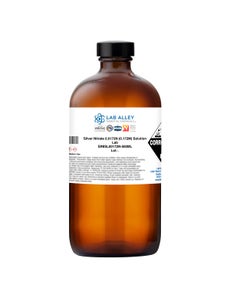
Lab Alley offers silver nitrate in multiple grades and pack sizes to support laboratory, industrial, and procedural needs.
Available Grades & Formulations
-
ACS Grade for analytical chemistry and applications requiring high-purity standards
-
Lab Grade for general laboratory use, research, and educational applications
-
Reagent Grade for precise laboratory procedures requiring consistent quality and composition
Pack Sizes & Industrial Availability
-
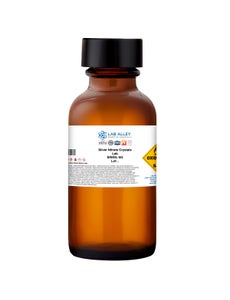
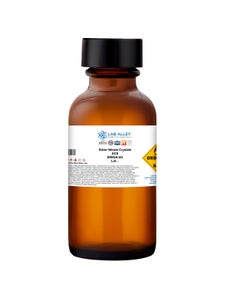
Laboratory bottles: 5G, 25G, 100G, 250G, 500G for lab-scale use (crystalline/solid)
-
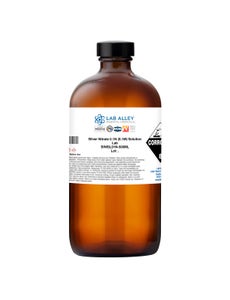
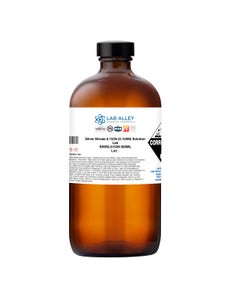
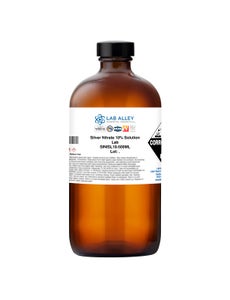
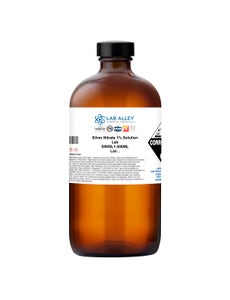
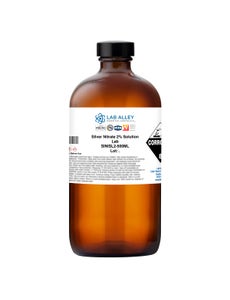
Solution bottles: 500ML, 1L, 2.5L, 4L for standard operations
-
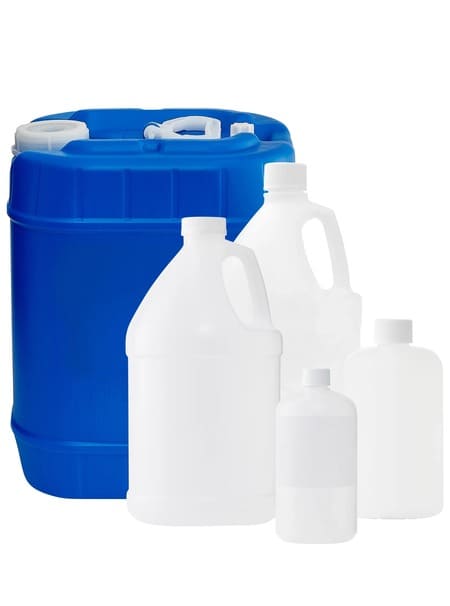
Industrial containers: Case quantities available on select SKUs for high-volume applications
-
All containers are UN-approved and DOT-compliant with proper oxidizer/corrosive hazard labeling
Lab Alley provides Certificates of Analysis (COAs) and Safety Data Sheets (SDSs) with its silver nitrate products, giving customers the documentation needed for quality verification and regulatory compliance. Whether you need a small laboratory bottle for research or a larger solution volume for industrial processing, Lab Alley's range of grades and pack sizes supports the full spectrum of silver nitrate applications.
Final Note
Silver nitrate's combination of reactivity, antimicrobial potency, and light sensitivity has kept it relevant across industries from medicine and laboratory science to photography and electronics. Few inorganic compounds serve such a broad range of critical functions, from wound cauterization and analytical titration to the synthesis of conductive inks and photographic emulsions. Its continued use across such varied fields reflects both the strength of its underlying chemistry and the consistent demand for a reliable, well-characterized silver source.
For more detailed guidance, explore our Resource Library.
Our Customer Care team is also available for more information and documentation, including chemical Safety Data Sheets.
Need Silver Nitrate You Can Trust?
If you are looking for high-quality silver nitrate for your lab, product line, or research facility, be sure to visit our store to explore our trusted selection and request a quote.
As your trusted partner in chemical supply, Lab Alley is always striving to meet the growing demands of our customers. We want you to be able to access all of your chemical needs in one place, along with streamlined online ordering and fast shipping.
Due to popular demand from our valued clientele, Lab Alley's silver nitrate is available in a range of purities and packaging options to suit various commercial, laboratory, and personal needs.