


Boric acid, more precisely orthoboric acid (H3BO3, CAS 10043-35-3), is an odorless, water-soluble white solid built from a boron atom bonded to three hydroxyl groups. It occurs in nature as the mineral sassolite and has been used for cleaning and preservation since ancient times. Today it's produced industrially by reacting borax with hydrochloric acid. Boric acid is a weak acid, but its cytotoxic effect on microorganisms and insects makes it useful as an antiseptic, antifungal agent, and insecticide, even though the exact mechanism behind that activity is still not fully understood.
Boric Acid vs. Borax
The two are related but not interchangeable, and mixing them up leads to real formulation mistakes. Borax (sodium tetraborate decahydrate, Na2B4O7 times 10H2O) is a mineral salt with a notably higher pH, roughly 9 to 11, which makes it a strong grease cutter and water softener but also a skin irritant at that alkalinity. Boric acid is produced by reacting borax with an acid, and it behaves as a mild, nearly neutral weak acid instead. That's why boric acid shows up in eye washes, foot powders, and other skin contact products where borax would be too harsh, while borax stays in the laundry aisle and heavy duty cleaning products.

In this article, we’ll explain:
1. Industrial Applications
2. Scientific & Laboratory Uses
3. Medical & Pharmaceutical Uses
4. Food & Beverage Industry Applications
5. Agriculture & Pesticides
6. Consumer and Household Uses
7. Environmental & Water Treatment
Industrial Applications
In industrial settings, boric acid is a foundational chemical known for enhancing product performance, improving chemical resistance, and maintaining stability in extreme environments. Its ability to function as a flame retardant, corrosion inhibitor, catalyst, and flux makes it particularly valuable in manufacturing and processing operations where consistency and durability are paramount.
The table below breaks down how boric acid is used across key industries:

Industrial professionals rely on boric acid not only for its performance-enhancing qualities but also for its cost-effectiveness, chemical stability, and compatibility with high-heat and chemically reactive processes.
Scientific & Laboratory Uses
In scientific and laboratory environments, boric acid is highly valued for its consistency, purity, and predictable behavior. These properties make it a staple across analytical chemistry, experimental design, and material testing. Its ability to act as a pH buffer, mild antiseptic, and solvent support ensures precise outcomes and clean experimental conditions.
Let’s take a look at how boric acid supports a variety of laboratory and research applications:
- Analytical Reagent
- Use Case: pH control in titration and spectroscopy
- Application Area: Analytical chemistry, pharmaceutical testing
- Buffering Agent
- Use Case: Stabilizes solution pH in complex systems
- Application Area: Biochemical research, molecular biology
- Process Aid
- Use Case: Aids in dilution, separation, and purification
- Application Area: Lab preparation, pharmaceutical formulation
- Specialized Research
- Use Case: Supports synthesis and formulation of advanced materials
- Application Area: Nanotechnology, materials science, drug delivery
Whether you're developing new compounds or performing sensitive analyses, boric acid’s reliable performance makes it an essential component of laboratory protocols.
Medical & Pharmaceutical Uses
In the medical and pharmaceutical world, boric acid plays two roles: as an active ingredient and a formulation stabilizer. Its mild antiseptic and antifungal qualities make it useful in topical treatments, while its buffering action helps maintain pH balance in various pharmaceutical products.
Explore its primary functions below:
- Pharmaceutical API
- Function: Antiseptic, antifungal agent
- Common Products: Eye drops, suppositories, medicated powders
- Drug Excipient
- Function: Buffering, stabilizing ingredient
- Common Products: Creams, ointments, compounded medications
- Wound & Surface Care
- Function: Mild disinfectant
- Common Products: First aid kits, clinical disinfectants
- Device Cleaning
- Function: Antimicrobial cleaner
- Common Products: Hospitals, surgical prep stations
These uses underscore boric acid’s versatility and continued relevance in both over-the-counter and prescription medications. When handled correctly, it supports safe and effective healthcare outcomes..
Food & Beverage Industry Applications
While boric acid was once commonly used as a preservative and pH adjuster in food processing, modern regulations have significantly limited its use due to safety concerns. In the United States, European Union, and many other regions, boric acid is now heavily restricted or outright banned for direct food applications. However, a few niche and highly regulated uses still exist, primarily in processing environments where the compound is not directly consumed.
Nutritional Supplements
Although boric acid itself is not recommended for human consumption, its elemental component -boron- is recognized as a trace nutrient essential for plant health and potentially beneficial in small quantities for humans. That said, boron supplements use safer, approved forms such as boron citrate or boron glycinate.
Important: Always consult local regulatory agencies like the FDA, EFSA, or Codex Alimentarius before using boric acid in any food-related environment.
Agriculture & Pesticides
In agriculture, boric acid plays a dual role: it supplies boron (an essential micronutrient for plant development) and serves as a low-toxicity insecticide. Its effectiveness in both fertilizer and pest control applications has made it a go-to solution for sustainable farming practices and integrated pest management (IPM) systems.
The bullet points below summarizes boric acid’s primary agricultural uses:
- Fertilizer Micronutrient
- Function: Provides boron for plant growth
- Typical Applications: Soil and foliar fertilizers for fruits, vegetables, grains
- Notes: Must be precisely dosed to avoid boron toxicity
- Insecticide / Pesticide
- Function: Controls crawling pests
- Typical Applications: Ant and cockroach baits, termite dusts, garden treatments
- Notes: Approved for use in both residential and commercial settings
- Animal Feed Additive
- Function: Supplies trace amounts of boron
- Typical Applications: Regional use in fortified livestock feed
- Notes: Highly regulated and not approved in all countries
When used responsibly, boric acid offers farmers and agronomists a cost-effective, multipurpose solution that improves crop health and reduces reliance on synthetic pesticides whilst helping meet sustainability goals while maintaining high yields.
Consumer & Household Products
Beyond industrial and scientific settings, boric acid is a trusted staple in household and personal care products. Valued for its mild antimicrobial properties, chemical stability, and affordability, it serves as an effective ingredient in cleaning solutions, skincare products, and textile treatments. Its versatility allows it to perform without harsh chemicals, making it ideal for eco-conscious formulations.
The bullet points below outlines its common domestic uses:
- Cleaning & Disinfection
- Function: Antimicrobial, antifungal, odor control
- Common Products / Applications: Multi-surface cleaners, mold removers, toilet tablets
- Key Benefits: Gentle, non-bleach sanitization
- Personal Care & Cosmetics
- Function: Preservative, pH adjuster, antimicrobial
- Common Products / Applications: Eye wash, acne creams, foot powders, lotions
- Key Benefits: Stabilizes products and extends shelf life
- Textile & Leather Treatment
- Function: Process stabilizer, mildew inhibitor
- Common Products / Applications: Fabric dyes, leather softeners, mildew treatments
- Key Benefits: Prevents microbial damage, improves material longevity
Boric acid’s reliability in day-to-day applications reflects its balanced profile: gentle enough for skin-contact products, yet powerful enough to sanitize and preserve. This makes it a preferred ingredient in non-toxic cleaning and cosmetic formulations.
Environmental & Water Treatment Applications
In environmental and industrial water systems, boric acid plays a valuable role in pollution control, water treatment, and emission reduction. Its low toxicity, biodegradable nature, and ability to stabilize pH levels make it a preferred choice in sustainability-focused operations. Whether used in air scrubbers or effluent systems, boric acid helps mitigate environmental risks without introducing harmful byproducts.
See the highlights of its environmental applications:
- Water Treatment
- Function: pH control, boron supplementation
- Typical Uses: Cooling towers, industrial wastewater
- Environmental Benefit: Maintains chemical stability, prevents imbalances
- Heavy Metal Removal
- Function: Complexation, coagulation aid
- Typical Uses: Municipal and industrial water treatment plants
- Environmental Benefit: Enhances pollutant capture without added toxicity
- Air Pollution Control
- Function: Neutralizes emissions, suppresses dust
- Typical Uses: Flue gas scrubbers, particulate suppression systems
- Environmental Benefit: Reduces SO₂ emissions, improves air quality
Thanks to its biodegradability and low environmental persistence, boric acid is often selected for eco-conscious systems because it poses minimal risk to aquatic life at low concentrations and does not accumulate in the food chain, making it suitable for long-term environmental stewardship.
Where to Buy Boric Acid
Whether you're sourcing boric acid for industrial manufacturing, laboratory research, agricultural use, or household applications, selecting the right grade, purity, and packaging is essential. These factors directly affect performance, regulatory compliance, and product safety. Boric acid is available in multiple specifications tailored to different use cases, so it's important to match your purchase with your intended application.
Available Grades & Purities
These are some of the most common boric acid grades and their appropriate uses:
- USP (Pharmaceutical) Grade: Used for medical applications and personal care, with a purity of ≥99.5%.
- ACS (Reagent Grade): Used for analytical chemistry and lab research, meeting high purity ACS standards.
- Industrial Grade: Used in manufacturing, pest control, and textiles, with approximately 99% purity.
- Laboratory Grade: Suitable for general lab use and educational purposes, with high purity for experiments.
Note: Boric acid is no longer approved as a food additive in the U.S. and most of the EU. Always verify regional regulations before any use related to consumables.
Packaging Sizes & Bulk Availability
Lab Alley offers boric acid in a variety of packaging formats to meet your volume and regulatory requirements. Whether you're handling small-scale lab work or large-volume industrial processes, we have the right solution for you:
- Small lab containers (100g – 1 kg) for precision use
- Mid-size tubs and bags (5 – 25 kg) for light commercial or research use
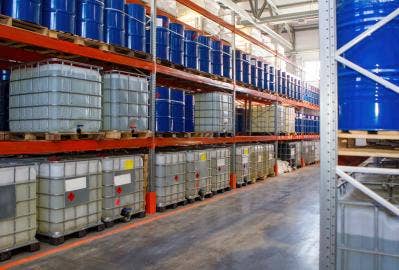
- Bulk drums and supersacks (50+ kg) for industrial-scale operations
Customized packaging is available with Lab Alley to meet shipping, safety, or regulatory requirements.
Conclusion
When sourcing Boric Acid for laboratory, industrial, or commercial applications, it’s essential to choose a supplier that guarantees high purity, consistent quality, and flexible purchasing options. Lab Alley offers premium Boric Acid in a range of grades and packaging sizes, from small lab-scale bottles to bulk industrial quantities, with custom quotes and dedicated expert support available. Every order is backed by comprehensive Safety Data Sheets (SDS), Certificates of Analysis (COA), and technical resources to ensure compliance, performance, and reliability. Whether you require Boric Acid for pharmaceutical formulations, industrial manufacturing, research, or specialty projects, Lab Alley delivers trusted solutions tailored to your exact specifications.
For more detailed guidance, explore our Resource Library for more information.
Our Customer Care team is also available for more information and documentation, including chemical Safety Data Sheets.
Where to Buy Boric Acid
As your trusted partner in chemical supply, Lab Alley is always striving to meet the growing demands of our customers. We want you to be able to access all of your chemical needs in one place, along with streamlined online ordering and fast shipping.
Lab Alley offers multiple sizes, grades, and strengths of Boric Acid to meet your needs. We make it easy to order online, and if you have any questions or would like to request a quote, our team is available to help. Just visit https://quoterequest.laballey.com/ or call 512-668-9918 today!


What Is Boric Acid?
Boric acid, more precisely orthoboric acid (H3BO3, CAS 10043-35-3), is an odorless, water-soluble white solid built from a boron atom bonded to three hydroxyl groups. It occurs in nature as the mineral sassolite and has been used for cleaning and preservation since ancient times. Today it's produced industrially by reacting borax with hydrochloric acid. Boric acid is a weak acid, but its cytotoxic effect on microorganisms and insects makes it useful as an antiseptic, antifungal agent, and insecticide, even though the exact mechanism behind that activity is still not fully understood.
Boric Acid vs. Borax
The two are related but not interchangeable, and mixing them up leads to real formulation mistakes. Borax (sodium tetraborate decahydrate, Na2B4O7 times 10H2O) is a mineral salt with a notably higher pH, roughly 9 to 11, which makes it a strong grease cutter and water softener but also a skin irritant at that alkalinity. Boric acid is produced by reacting borax with an acid, and it behaves as a mild, nearly neutral weak acid instead. That's why boric acid shows up in eye washes, foot powders, and other skin contact products where borax would be too harsh, while borax stays in the laundry aisle and heavy duty cleaning products.

In this article, we’ll explain:
1. Industrial Applications
2. Scientific & Laboratory Uses
3. Medical & Pharmaceutical Uses
4. Food & Beverage Industry Applications
5. Agriculture & Pesticides
6. Consumer and Household Uses
7. Environmental & Water Treatment
Industrial Applications
In industrial settings, boric acid is a foundational chemical known for enhancing product performance, improving chemical resistance, and maintaining stability in extreme environments. Its ability to function as a flame retardant, corrosion inhibitor, catalyst, and flux makes it valuable in manufacturing and processing operations where consistency and durability matter.

Industrial professionals rely on boric acid not only for its performance enhancing qualities but also for its cost effectiveness and compatibility with high heat, chemically reactive processes.
Scientific & Laboratory Uses
In laboratory environments, boric acid is valued for its consistency, purity, and predictable behavior as a pH buffer, mild antiseptic, and solvent support. That reliability is why it shows up across analytical chemistry, experimental design, and material testing.
-
Analytical Reagent, used for pH control in titration and spectroscopy, in analytical chemistry and pharmaceutical testing.
-
Buffering Agent, stabilizes solution pH in complex systems, used in biochemical research and molecular biology.
-
Process Aid, assists dilution, separation, and purification during lab preparation and pharmaceutical formulation.
-
Specialized Research, supports synthesis of advanced materials in nanotechnology, materials science, and drug delivery work.
Whether the goal is developing new compounds or running sensitive analyses, boric acid's reliable behavior makes it a routine part of laboratory protocols, and reagent grade purity matters more here than in almost any other use case on this list.
Medical & Pharmaceutical Uses
In medical and pharmaceutical formulations, boric acid plays two roles: active ingredient and formulation stabilizer. Its mild antiseptic and antifungal qualities make it useful in topical treatments, while its buffering action helps maintain pH in finished products.
-
Pharmaceutical API, functioning as an antiseptic or antifungal agent in eye drops, suppositories, and medicated powders.
-
Drug excipient, providing buffering and stabilization in creams, ointments, and compounded medications.
-
Wound & Surface Care, acting as a mild disinfectant in first aid products and clinical disinfectants.
-
Device Cleaning, serving as an antimicrobial cleaner in hospital and surgical prep settings.
These uses reflect boric acid's long-standing role in both over-the-counter and prescription products, and they're precisely the applications where grade and purity verification matter most (see Safety & Handling below).
Food & Beverage: A Legacy Use That's Now Restricted
Boric acid was once used as a preservative and pH adjuster in food processing, but that use has been sharply curtailed. In the United States, the European Union, and most other regions, boric acid is now restricted or banned in direct food applications. A few narrow, tightly regulated processing uses remain where the compound doesn't end up in the finished, consumed product, but this is not a category to experiment in without checking current FDA, EFSA, or Codex Alimentarius guidance first. If a boron supplement is the actual goal, approved forms like boron citrate or boron glycinate are the appropriate choice, not boric acid itself.
Agriculture & Pest Control
In agriculture, boric acid does double duty: it supplies boron, an essential plant micronutrient, and it works as a low toxicity insecticide. The U.S. EPA registers boric acid as a pesticide active ingredient for exactly this reason, and it has held that registration since a 1993 reregistration decision.
-
Fertilizer Micronutrient, providing boron for plant growth in soil and foliar fertilizers for fruits, vegetables, and grains. Dosing has to be precise, since too much boron is toxic to plants.
-
Insecticide, controlling crawling pests through ant and cockroach baits, termite dusts, and garden treatments, approved for both residential and commercial use.
-
Animal Feed Additive, supplying trace boron in fortified livestock feed in some regions, though this use is tightly regulated and not approved everywhere.
Used at labeled rates, boric acid gives growers and pest control operators a genuinely low toxicity option, EPA's own acute toxicity studies put its oral LD50 around 3450 to 4080 mg/kg in rats, which is why it remains one of the more common actives in ant and roach baits.
Consumer & Household Products
Beyond industrial and scientific settings, boric acid is a familiar staple in household and personal care products, prized for mild antimicrobial action, chemical stability, and low cost.
-
Cleaning & Disinfection, used in multi-surface cleaners, mold removers, and toilet tablets for gentle, non-bleach sanitizing.
-
Personal Care & Cosmetics, used as a preservative, pH adjuster, and antimicrobial in eye washes, acne treatments, and foot powders.
-
Textile & Leather Treatment, used as a process stabilizer and mildew inhibitor in fabric dyes and leather softeners.
Boric acid's balance, gentle enough for skin contact products, strong enough to sanitize and preserve, is exactly why it keeps showing up in non-toxic cleaning and cosmetic formulations.
Environmental & Water Treatment Applications
In environmental and industrial water systems, boric acid supports pollution control, water treatment, and emission reduction. Its low toxicity and biodegradability make it a common choice in sustainability-minded operations.
-
Water Treatment, providing pH control and boron supplementation in cooling towers and industrial wastewater systems.
-
Heavy Metal Removal, aiding complexation and coagulation in municipal and industrial water treatment.
-
Air Pollution Control, neutralizing emissions and suppressing dust in flue gas scrubbers and particulate control systems.
Safety & Handling
Boric acid is genuinely low in acute toxicity by EPA's own numbers, but "low acute toxicity" isn't the same as "no restrictions," and treating it that way is where people run into trouble. Under the EU's CLP regulation, boric acid and sodium borates are classified as reproductive toxicants (Category 1B, H360FD) based on animal studies showing testicular effects at high, sustained exposure levels, which is why the EU caps how much can go into cosmetics and consumer products. The EPA has reached a different conclusion for U.S. pesticide use, classifying boric acid as a Group E carcinogen (evidence of noncarcinogenicity) and approving it for residential insecticide use at labeled concentrations.
Practically, that means: keep boric acid products away from children and pets regardless of the low acute toxicity numbers, always check the current Safety Data Sheet for the specific grade and concentration you're using, and don't assume a formulation approved for pest control is automatically appropriate for a cosmetic or food contact application; the regulatory thresholds are different for each use case. A Certificate of Analysis and SDS are available for every Lab Alley boric acid product and are worth pulling before finalizing a regulated formulation, not after.
Boric Acid Grades We Carry
Not every application calls for the same purity level, and this is where a lot of buyers overpay or underspec. Lab Alley currently stocks boric acid in two purity tiers:
|
Grade |
Purity |
Typical Use |
|
ACS Grade (Crystal or Granular) |
99.8% |
Analytical chemistry, research requiring official ACS purity standards |
|
Lab Grade (Powder, Mesh 100) |
99% |
General lab work, educational use, and formulation work without a strict purity standard requirement |
Solutions are also available preformulated: a 1 molar solution, a saturated solution, and a 4% lab grade solution, useful for applications that call for a ready-to-use dilution rather than powder to be measured and dissolved in-house.
Here's where the grade choice actually matters: a lab running quantitative analytical work that specifies ACS-grade reagents and substitutes Lab-grade boric acid to save a little money introduces exactly the kind of purity variability the ACS standard exists to rule out, since lab-grade doesn't carry that same guarantee. The result shows up as inconsistent results between batches, not as an obvious failure, which makes it a hard problem to trace back to the reagent. The fix is straightforward: spec ACS Grade for anything analytical or reproducibility dependent, and reserve Lab Grade for general-purpose or educational work where that tighter tolerance isn't required.
Looking to order? Browse Boric Acid grades and sizes, or request a custom quote for bulk volumes. Every order ships with SDS and COA available on request.