





Polysorbate 80 Uses & Applications
Polysorbate 80, also known as Tween 80 or polyoxyethylene (20) sorbitan monooleate (CAS 9005-65-6), is a viscous, water-soluble, pale yellow to amber nonionic surfactant derived from ethoxylated sorbitan and oleic acid. Its molecular structure pairs a hydrophilic polyoxyethylene head with a lipophilic oleate tail, giving it strong oil-in-water emulsifying power, effective wetting behavior, and broad compatibility with both aqueous and oil-based systems. These properties, combined with a well-established low-toxicity profile, are why formulators across so many different industries reach for it.
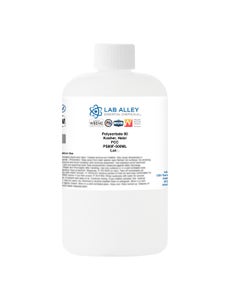
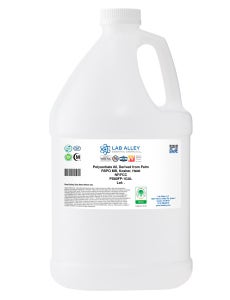
Lab Alley offers Polysorbate 80 in a food-grade suited for food, beverage, and general industrial applications, along with a palm-derived NF/FCC grade built for pharmaceutical, personal care, and sustainably sourced formulations. Between these two grades, Polysorbate 80 finds regular use in pharmaceutical manufacturing, biologics and vaccine production, medical device assembly, food and beverage processing, agriculture, and household and personal care goods.


In this article:
-
Industrial Applications
-
Scientific & Laboratory Uses
-
Medical & Pharmaceutical Uses
-
Biologics & Vaccine Formulation
-
Medical Device Manufacturing
-
Food & Beverage Industry
-
Agriculture & Pesticides
-
Consumer & Household Uses
-
Polysorbate 80 Grades and Pack Sizes
Industrial Applications
Manufacturing & Processing
Paint and coatings manufacturers use Polysorbate 80 as a wetting and dispersing agent to keep pigments evenly suspended throughout a formulation, preventing the clumping and settling that undermine finish quality. In textile processing, it promotes even dye uptake across fibers and reduces static buildup during spinning and weaving, which helps produce more consistent coloration and smoother handling on the production line. It also functions as a stabilizer and foaming agent in polyurethane foam manufacturing, where controlling bubble structure directly affects the density and performance of the finished foam.
Petroleum & Energy
Within oilfield operations, Polysorbate 80 serves as an emulsifying component in certain drilling fluid formulations, helping maintain a stable dispersion of oil and water phases under downhole conditions. It also appears in select oilfield cleaning and dispersant blends, where its surfactant action helps break up and disperse hydrocarbon residues. These uses take advantage of the same emulsifying chemistry that makes Polysorbate 80 valuable in food and pharmaceutical systems, just applied at industrial scale.
Scientific & Laboratory Uses
Analytical Reagent
Polysorbate 80 plays a defined role in the classic Tween hydrolysis test used to identify lipase-producing mycobacterial species. When combined with phenol red, species that produce lipase hydrolyze the Polysorbate 80, triggering a visible colorimetric shift that distinguishes them from non-lipase-producing organisms. This test remains a recognized tool in clinical and research microbiology labs working with mycobacterial cultures.
Solvent in Laboratory Processes
Though not a true solvent in the traditional sense, Polysorbate 80 is widely used as a surfactant aid to help disperse poorly water-soluble reagents and cell culture components into aqueous laboratory media. It is a component of Middlebrook 7H9 broth and similar culture media, where it assists in evenly distributing lipid-rich compounds that would otherwise clump or float on the surface. This makes it a practical tool wherever a lab needs to bring oil-soluble materials into an aqueous working solution.
Specialized Research Applications
In microbiological environmental monitoring, Polysorbate 80 is used to neutralize residual disinfectant activity on RODAC contact plates before sampling. Without this neutralization step, leftover disinfectant on a tested surface can suppress microbial growth on the plate and produce a falsely clean result. By inactivating that residual disinfectant, Polysorbate 80 helps labs recover an accurate picture of the microbial population actually present on a surface.
Medical & Pharmaceutical Uses
Excipient in Drug Formulations
As an excipient, Polysorbate 80 functions as a solubilizer and stabilizer across oral, topical, and parenteral drug products, helping active ingredients with limited water solubility disperse evenly and remain stable over a product's shelf life. It is used as an emulsifier in specific formulations, including certain antiarrhythmic and hormone-therapy products, where consistent emulsion behavior is central to how the drug performs. Its compatibility with a broad range of active pharmaceutical ingredients has made it a standard choice in formulation development.
Biologics & Vaccine Formulation
Protein Stabilization
In biologic drug products, including monoclonal antibody therapies, Polysorbate 80 helps prevent protein aggregation during the mechanical and thermal stresses of manufacturing, shipping, and storage. Proteins are prone to clumping when exposed to agitation or temperature swings, and aggregation can compromise both the safety and efficacy of a biologic. By reducing surface tension at the air-liquid interface, Polysorbate 80 limits the conditions that drive this aggregation, making it a standard stabilizing excipient in biologics manufacturing.
Vaccine Excipient
Polysorbate 80 is used at microgram-per-dose levels in a range of vaccines, including influenza, hepatitis B, HPV, and pneumococcal conjugate vaccines. In these formulations, it supports antigen solubility and helps maintain formulation stability from manufacturing through storage and administration. Its long track record in vaccine production reflects both its functional reliability and its well-documented safety profile at these low use levels.
Medical Device Manufacturing
Coating & Lubricity Agent
During the manufacturing of certain medical devices and diagnostics, Polysorbate 80 is applied as a coating agent to reduce surface tension and improve lubricity. This makes devices easier to insert and handle while also supporting biocompatibility at the point of contact with tissue or fluids. Its use in this context draws on the same surfactant properties that make it effective in liquid pharmaceutical formulations, adapted to a solid-surface application.
Food & Beverage Industry
Food Additive
Polysorbate 80 is an FDA GRAS-listed emulsifier under 21 CFR 172.840, approved for use in a range of food products. It improves texture and slows fat separation in items like ice cream, baked goods, and sauces, helping these products maintain a consistent, appealing mouthfeel over their shelf life. Its emulsifying strength allows formulators to achieve stable oil-in-water mixtures without relying on higher use levels of other additives.
Beverage Processing
In beverage manufacturing, Polysorbate 80 disperses flavor oils that would otherwise separate out of solution, and it helps stabilize the cloud and flavor emulsions found in many soft drinks and flavored beverages. This keeps flavor distributed evenly throughout the product from the first pour to the last. Beverage formulators rely on this function to maintain consistent taste and appearance across a production run.
Nutritional Supplements
Polysorbate 80 solubilizes fat-soluble vitamins and other oil-based active ingredients in liquid dietary supplement formulations. Many fat-soluble vitamins resist even dispersion in water-based products, and Polysorbate 80's emulsifying action allows these actives to remain uniformly suspended. This supports both consistent dosing and a more stable finished product.
Agriculture & Pesticides
Pesticide/Herbicide Formulation
Polysorbate 80 functions as a nonionic adjuvant in pesticide and herbicide formulations, improving how spray solutions spread and adhere to plant surfaces. Better spreading and adherence translate directly into more consistent coverage of the active ingredient, which supports more reliable pest and weed control. This role places Polysorbate 80 among the broader family of nonionic surfactants used to optimize agricultural spray performance.
Animal Feed Additive
In veterinary and animal feed applications, Polysorbate 80 is used as an emulsifier in certain feed premix formulations. It helps evenly distribute fat-soluble components throughout a premix, supporting more consistent nutrient delivery. Its inclusion in these formulations reflects the same solubilizing function it performs in human nutritional products, scaled for feed manufacturing.
Consumer & Household Uses
Cleaning & Disinfecting
Household and industrial cleaning products use Polysorbate 80 as a solubilizing agent to help lift and disperse oils, greases, and stains from surfaces. Its nonionic surfactant chemistry allows it to work alongside other cleaning agents without introducing charge-related compatibility issues. This makes it a flexible addition to a wide range of cleaning formulations.
Personal Care & Cosmetics
In personal care products, Polysorbate 80 acts as an emulsifier in lotions, creams, and shampoos, helping oil and water phases blend into a stable, uniform product. It also functions as a solubilizer in mouthwash formulations and as a lubricant component in eye drop products. Its versatility across such different product types stems from the same core ability to bridge oil and water that defines its use throughout the industries covered above.
Polysorbate 80 Grades and Pack Sizes
Lab Alley supplies Polysorbate 80 in two grades to match the compliance and application needs of different industries. Every order ships with access to Certificates of Analysis (COAs) and Safety Data Sheets (SDSs), giving your team the documentation needed for quality control and regulatory records.
Available Grades & Formulations
-
Food Grade, Kosher, Halal (FCC/NF, GRAS) for food, beverage, nutraceutical, and general industrial use
-
Derived from Palm, NF/FCC Grade, RSPO, Kosher, Halal for pharmaceutical, personal care, and sustainably sourced palm-derivative formulations
Pack Sizes & Industrial Availability
-
Laboratory bottles: 500 mL, 1 L for lab-scale use
-
Commercial containers: 1 gallon, 4 L for standard operations
-
Industrial drums: 5-gallon, 50-gallon, 55-gallon for high-volume applications
-
Case quantities available for bulk purchasing
Whether you need lab-scale volumes for R&D work or drum quantities for full production runs, Lab Alley's team can help you select the right grade and pack size for your application. Contact Lab Alley for a custom quote or to request COA and SDS documentation ahead of your order.
Final Note
Polysorbate 80's combination of emulsifying strength, wetting ability, and low toxicity has earned it a place in an unusually wide range of industries, from pharmaceutical and biologics manufacturing to food processing, agriculture, and personal care. Whether stabilizing a monoclonal antibody formulation, dispersing pigment in a coating, or emulsifying flavor oils in a beverage, its core surfactant chemistry adapts reliably across very different use cases.
For procurement teams and formulators, that versatility comes with a practical upside: sourcing a single, well-documented ingredient that performs consistently across R&D, production, and quality assurance needs. Lab Alley's food-grade and palm-derived NF/FCC grade Polysorbate 80 options are built to support exactly that range of applications, backed by the documentation your team needs to move forward with confidence.
For more detailed guidance, explore our Resource Library.
Our Customer Care team is also available for more information and documentation, including chemical Safety Data Sheets.
Need Polysorbate 80 You Can Trust?
If you are looking for high-quality polysorbate 80 for your lab, product line, or research facility, be sure to visit our store to explore our trusted selection and request a quote.
As your trusted partner in chemical supply, Lab Alley is always striving to meet the growing demands of our customers. We want you to be able to access all of your chemical needs in one place, along with streamlined online ordering and fast shipping.
Due to popular demand from our valued clientele, Lab Alley's polysorbate 80 is available in a range of purities and packaging options to suit various commercial, laboratory, and personal needs.