
• On Budget, On Time, Every Time : Essential Chemicals for a Better World• WOMAN-OWNED SMALL BUSINESS (WOSB)• OVER 256K+ HAPPY CUSTOMERS• TRUSTED BY NASA, TESLA, SPACEX, BOEING & MORE• HIGH PURITY, NATURAL AND ESSENTIAL CHEMICALS• SERVING 16 INDUSTRIES• PROUDLY PARTNERED WITH ECODRIVE• COA & SDS AVAILABLE ONLINE• QUALITY LAB SUPPLIES & EQUIPMENT• CERTIFIED QUALITY: ISO 9001, KOSHER, ORGANIC & MORE• GSA CONTRACT HOLDER | GOVERNMENT APPROVED• FAST NATIONWIDE DELIVERY• On Budget, On Time, Every Time : Essential Chemicals for a Better World• WOMAN-OWNED SMALL BUSINESS (WOSB)• TRUSTED BY NASA, TESLA, SPACEX, BOEING & MORE• OVER 256K+ HAPPY CUSTOMERS• HIGH PURITY, NATURAL AND ESSENTIAL CHEMICALS• SERVING 16 INDUSTRIES• PROUDLY PARTNERED WITH ECODRIVE• COA & SDS AVAILABLE• QUALITY LAB SUPPLIES & EQUIPMENT• CERTIFIED QUALITY: ISO 9001, KOSHER, ORGANIC & MORE• GSA CONTRACT HOLDER | GOVERNMENT APPROVED• FAST NATIONWIDE DELIVERY

We are now ISO 9001 Certified

Get 5% OFF on your first order |  Use Code: WELCOME5

Certified Organic Pure Ethanol, 190 & 200 Proof | Lab Alley

Certified Organic Pure Ethanol

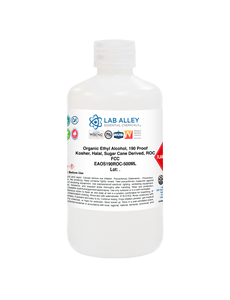
USDA Organic, FCC food grade ethanol in 190 and 200 proof, with the SDS, COA, and organic certificate on every product page.

Buy certified organic pure ethanol and get the paperwork to back it up, all from one page. If you've ever waited two days on a quote for a few gallons of alcohol, or chased a supplier for an organic certificate the week an auditor showed up, you know how much time that eats. Here you can see the price, the size, and the certifications on each product before anything goes in your cart. No sales call. No guessing at what's in stock. You choose the proof and the crop, check the documents, and order. Every product on this page is FCC food grade ethyl alcohol made from organic crops. Right now that gives you four choices: sugar cane at 190 proof, corn at 190 proof, corn at 200 proof, and wheat at 190 proof. A 190 proof product is about 95% ethanol with the rest mostly water, and a 200 proof product has the water taken out.

All four are certified USDA Organic and Kosher. The corn and sugar cane products are Halal certified too, and the wheat product is not. Each product page posts the Safety Data Sheet, the Technical Data Sheet, lot Certificates of Analysis, and the organic certificate, so your quality team can pull what it needs before you order. Sizes start at 500 mL bottles and run up to 55 gallon drums, and the corn and sugar cane products also come in 270 or 275 gallon totes and by the pallet. Ethanol is a flammable liquid that ships as hazmat, so give the Safety and Shipping tab a quick read before checkout. Extractors, tincture makers, perfumers, flavor makers, and formulators choose these products because the solvent has to stand up next to an organic label claim. Not sure which one fits your process? The sections below explain proof, source crop, and certification in plain terms. Still have a question after that? Customer Care is a phone call away.

256,000+ customers served
99.5% of orders ship in 1–2 business days
98.9% inventory accuracy
SDS + COA available online, every product
Set Descending Direction
per page

About Certified Organic Pure Ethanol

Organic ethanol is the same molecule as any other ethyl alcohol. What sets it apart is where it comes from and the paperwork that follows it. As Lab Alley's Types of Ethanol guide explains, USDA organic certification requires ethanol made from certified organic feedstocks such as organic corn or sugarcane, and organic food makers need to source organic ethanol to keep their own products organic.

Certified Organic Pure Ethanol is a clear, colorless liquid with a typical ethanol odor. It mixes fully with water and boils at about 78 to 80 °C. It also lights easily, with a flash point listed around 13 to 17 °C (55 to 63 °F). That's why it ships as a regulated flammable liquid, DOT UN1170, Class 3, Packing Group II. Keep it in a tightly closed container, somewhere cool and away from heat and sparks, and follow the storage section of the SDS.

Proof tells you strength. Proof is twice the alcohol percent by volume, so 190 proof is about 95% ethanol and 200 proof is absolute ethanol with the water removed. The sugar cane 190 listing, for example, shows 94.98 to 95.02% ethanol, with methanol, acetone, and esters each capped at 10 mg/L. The lot Certificates of Analysis on every product page show the tested numbers for the batch you're buying.


COMMON APPLICATIONS

Most buyers choose organic ethanol because the finished product has to carry an organic or clean label claim, and the solvent can't be the weak link.

Botanical extractors use it to pull flavor, aroma, and plant compounds out of organic material, and all four product pages list botanical extraction. The corn and wheat pages also list tinctures. Perfumers and natural fragrance makers use it because ethanol dissolves aroma molecules that water won't, and it evaporates quickly, which Lab Alley covers in its guide on ethanol in the perfume industry.

Food and flavor makers use these products in flavor extracts and food manufacturing. Personal care formulators use them as a carrier solvent in organic skincare and cosmetics. Labs use them as a solvent and reagent, and the wheat product page also lists sanitizing food contact surfaces. Check the product page for the uses listed on the exact product you're buying.


GRADES EXPLAINED

Two labels show up on every product here, and they answer different questions. Organic describes how the crop was grown and handled, and the organic certificate on each product page is your proof. FCC describes purity. FCC stands for Food Chemicals Codex, a standard for food ingredients, and all four products are FCC food grade. The corn and sugar cane products also list GRAS status, the FDA's Generally Recognized as Safe designation for ethanol under 21 CFR 184.1293.

Kosher and Halal are separate certifications about how a product was made, not how pure it is. Proof is the third thing to match. A 190 proof product suits most tincture, flavor, and fragrance work, and 200 proof is the pick when your process needs the water out, since it pulls fewer water soluble compounds into an extract. This category covers FCC food grade only. If your method calls for USP or ACS grade ethanol, see our Undenatured Alcohol page.


TYPES & GRADES AT A GLANCE

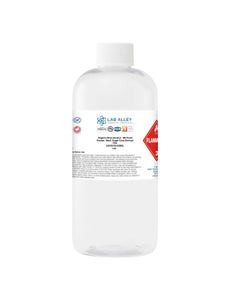
About 95% ethanol from sugar cane. USDA Organic, Kosher, and Halal. The product page calls it undenatured and lists natural fragrance, organic personal care, and flavor extract uses.
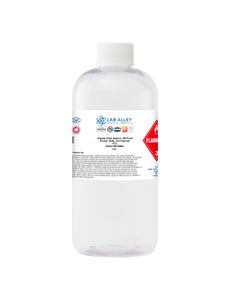
About 95% ethanol from American corn. USDA Organic, Kosher, and Halal. Listed for botanical extraction, tinctures, perfume, and personal care.
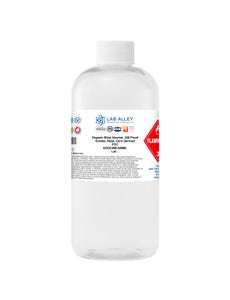
Absolute ethanol from U.S. grown corn. USDA Organic, Kosher, and Halal. The pick when you want the water out.
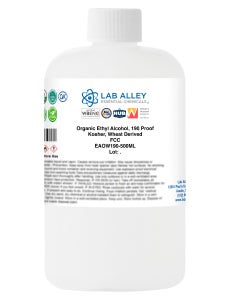
About 95% ethanol from organic wheat. USDA Organic and Kosher, but not Halal. Listed for food and flavor manufacturing, botanical extraction, cosmetic carrier use, and food contact sanitizing.

WHY BUY FROM LAB ALLEY

256,000+ customers already order their Certified Organic Pure Ethanol from Lab Alley. 99.5% of orders ship within 1 to 2 business days, and 98.9% inventory accuracy means the grade and size you see in stock is the grade and size that ships. SDS and COA are available online for every Certified Organic Pure Ethanol product, and select products carry Kosher, Halal, USDA Organic, or ISO 9001 certification, so check each product page for which applies.

Related: Browse the full Organic Grade category, which also includes organic MCT oil, castor oil, and witch hazel.

Frequently Asked Questions

What's the difference between organic ethanol and regular food grade ethanol?
Both can be FCC food grade ethyl alcohol, so the difference is the crop and the paperwork. Organic ethanol is made from certified organic corn, sugar cane, or wheat, and each product page posts an organic certificate. Regular food grade ethanol isn't made from certified organic crops. If your finished product carries an organic claim, you'll want the organic version in your recipe and the certificate in your file for audits.
What does 190 proof mean compared to 200 proof?
Proof is double the alcohol percent by volume. So 190 proof is about 95% ethanol with the balance mostly water, and 200 proof is absolute ethanol with the water removed. The sugar cane 190 listing shows 94.98 to 95.02% ethanol. For most tincture, flavor, and fragrance work, 190 proof does the job. Choose 200 proof when your process needs the water out. Lot COAs show the tested numbers.
Do I need a TTB permit to buy certified organic ethanol?
Lab Alley asks for a TTB permit on specially denatured alcohol (SDA) orders of 5 gallons or more. The products on this page are organic food grade ethanol, not SDA, so that requirement doesn't apply to them. Making beverage alcohol is a separate matter under federal TTB rules and your own permits, so check with your compliance team. Customer Care can answer questions about your order.
Which of these products are Kosher, Halal, or USDA Organic?
All four are USDA Organic and Kosher certified. The two corn products and the sugar cane product are also Halal certified, and the wheat product is not. Certifications appear in each product name. The certificates themselves, including Organic and Kosher, and Halal where it applies, are posted in the Product Manuals tab on each product page.
Can I ship certified organic ethanol to a home address?
Lab Alley's shipping notice says some chemicals ship only to businesses, schools, and laboratories, and that residential orders for those items are removed before shipping. Ethanol also ships as a regulated flammable liquid, so hazmat handling and fees can apply. If you're ordering to a home address, call Customer Care at 512 668 9918 first so nothing gets pulled from your order.
Which one should I pick for extraction, tinctures, or perfume?
For tinctures, flavor extracts, natural fragrance, and most botanical extraction, 190 proof from corn, sugar cane, or wheat does the work. Pick 200 proof corn when your process needs the water out. Source crop matters too. The corn and sugar cane pages post allergen statements. The wheat page doesn't list one, so ask Customer Care if allergens matter to your label.
How is organic ethanol different from isopropyl alcohol for cleaning?
Isopropyl alcohol is a different chemical, and it isn't safe to consume or use as a food ingredient. Organic ethanol is FCC food grade, so it fits products people eat, apply to skin, or label organic. If you're only wiping down tools, glassware, and equipment, isopropyl alcohol is usually the simpler fit. If the alcohol ends up in your product, use ethanol. Our Isopropyl Alcohol page lists concentrations.
Can I buy certified organic ethanol in drums or totes?
Yes. The corn, sugar cane, and wheat products all come in 55 gallon drums. The corn and sugar cane products also come in 270 or 275 gallon totes and in pallets of 1 gallon cases, 5 gallon pails, or 4 liter cases. For drum, tote, and pallet volumes, request a quote or call 512 668 9918. Our Bulk & Custom Chemicals page covers packaging options.
Where do I find the SDS, COA, and organic certificate?
Open any product page and go to the Product Manuals tab. It holds the Safety Data Sheet, the Technical Data Sheet, the Organic and Kosher certificates, Halal certificates where they apply, and the lot Certificates of Analysis. No request is needed, so your quality team can download them before you order.

Guides & Resources

Types of Ethanol
What are the different types of ethanol? Learn the differences between food, cosmetic, and pharmaceutical grades, plus their key applications.
Read article →
How to Use Food Grade Ethanol For CBD & Hemp Extraction
Ethanol Extraction Uses Ethanol As A Solvent To Soak The Hemp Plant In cannabis, hemp and CBD extraction, 190 proof and 200 proof fo...
Read article →
The Use of Ethanol in the Perfume Industry
Perfumes – just a big chemistry experiment Every aspect of our experience with perfumes is grounded in chemistry. At the center of that exper...
Read article →

Industries That Use Certified Organic Pure Ethanol

Food & Beverage
Explore FCC and USP grade chemicals for food and beverage including citric acid, sodium benzoate, peracetic acid, emulsifiers and food safe sanitizers.
Learn more →
Cannabis & Hemp
Explore high-purity chemicals for cannabis and hemp including USP ethanol, HPLC solvents, activated carbon, carrier oils and hydrocarbon solvents for extraction.
Learn more →
Personal Care & Cosmetics
Explore high-purity chemicals for personal care and cosmetics including USP glycerin, SDA alcohols, witch hazel, emulsifiers and NF grade humectants.
Learn more →
Manufacturing & Industrial
Explore chemicals for manufacturing and industrial use including ACS grade solvents, acids, alkalis, glycols and water treatment chemicals available in bulk sizes.
Learn more →