





Magnesium Chloride Shelf Life & Expiration
Magnesium chloride is a versatile compound used in industrial, laboratory, and manufacturing applications. Its performance depends on maintaining chemical stability and purity throughout storage. Like many hygroscopic salts, magnesium chloride can degrade when exposed to air or moisture, which affects its effectiveness and safety.
Does magnesium chloride expire? Yes, especially if stored in unsealed containers or humid environments. Even high-purity grades can lose stability if exposed to moisture or contaminants. This article explains the typical shelf life of magnesium chloride, the signs of expiration, and best practices for storage and handling to maximize shelf life.


In this article, we’ll review:
-
How Long Does Magnesium Chloride Last?
-
Signs That Magnesium Chloride Has Expired
-
What to Do If Magnesium Chloride Is Expired
How Long Does Magnesium Chloride Last?
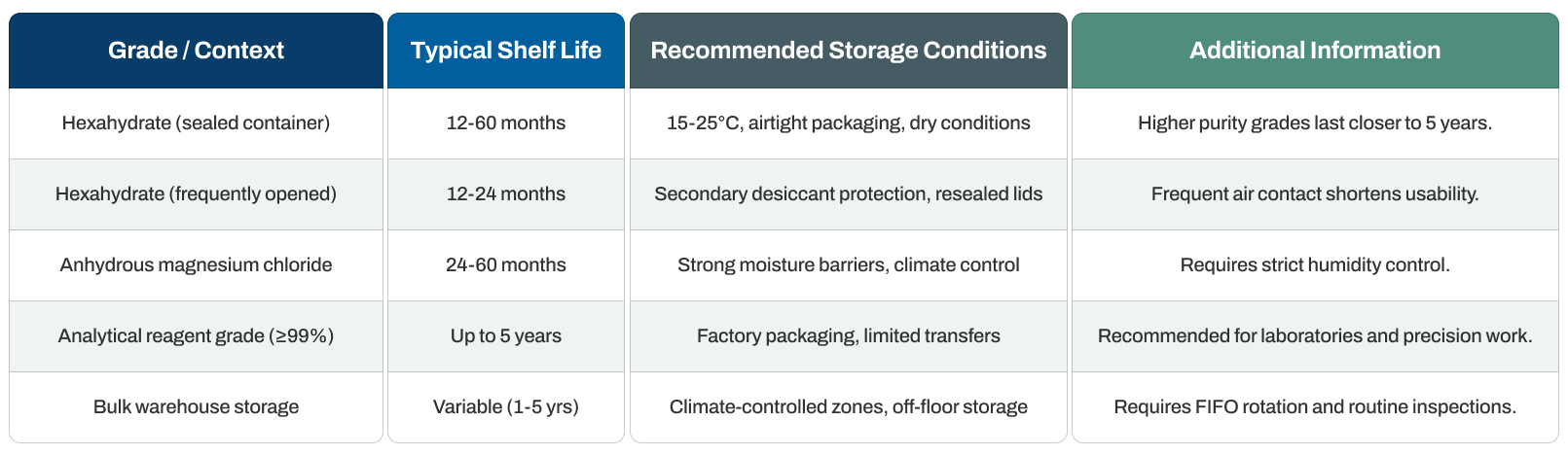
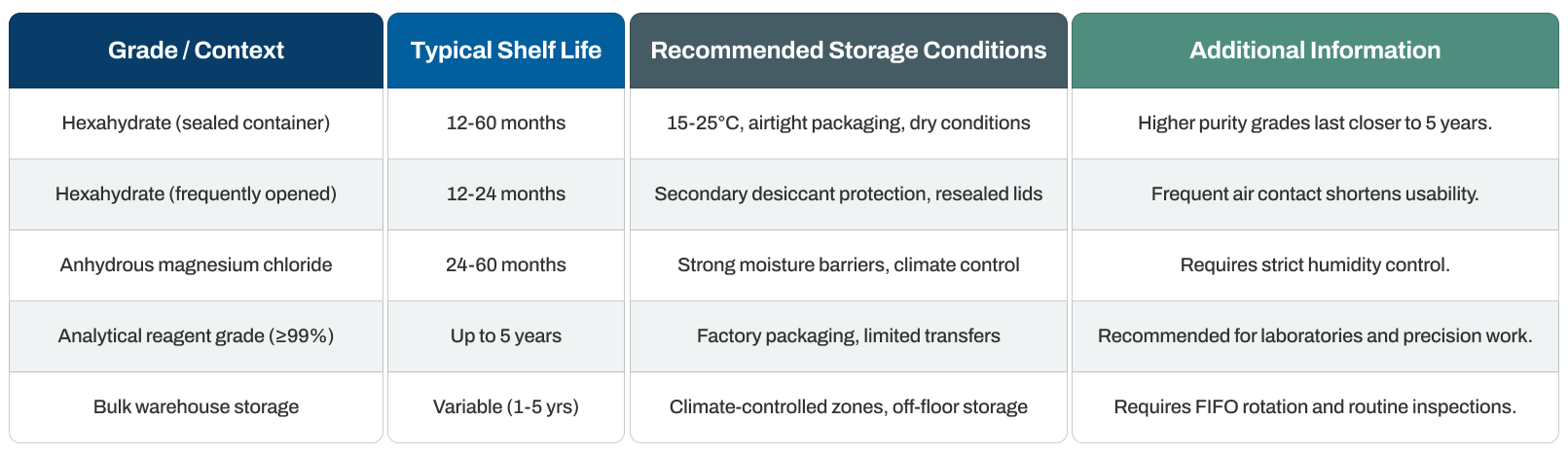
Magnesium chloride can have a shelf life ranging from 12 months to 5 years, depending on its form, purity, and storage conditions. For example, magnesium chloride hexahydrate typically lasts between 12 and 60 months when stored in a sealed container and protected from moisture.
Several factors influence its longevity, and understanding them helps maintain quality over time.
Chemical Stability
The chemical stability of magnesium chloride depends on how it is stored and protected from environmental factors:
-
It is hygroscopic, meaning it readily absorbs water from the air. This causes clumping, texture changes, and reduced usability.
-
If stored in a dry environment and kept free of contaminants, magnesium chloride remains chemically stable for years.
-
Once exposed to humidity, degradation accelerates and shelf life shortens significantly.
Purity & Packaging
Purity and packaging materials play a critical role in preserving shelf life:
-
High-purity forms, such as analytical reagent grade (≥99%), remain stable for longer periods when stored correctly.
-
Exposure to air and moisture accelerates breakdown, especially in lower-purity grades.
-
Packaging that includes airtight seals, tamper-proof lids, and moisture barriers ensures greater stability.
-
Loose-fitting or permeable packaging allows humidity to compromise the material.
Storage Conditions
The storage environment is one of the most influential factors on shelf life:
-
Keep magnesium chloride in a cool, dry location with stable temperatures between 15-25°C (59-77°F).
-
Avoid humid areas, as exposure to moisture causes clumping and loss of integrity.
-
Store away from heat sources or direct sunlight, which can accelerate degradation.
Quick Reference: Shelf Life and Storage
Signs That Magnesium Chloride Has Expired
Magnesium chloride shows visible and functional changes as it deteriorates. Recognizing these indicators early prevents performance and safety issues.
-
Color Change: May signal contamination or oxidation, particularly in lower-purity or mixed samples.
-
Precipitation or Crystallization: Solid clumps or changes in texture are signs of moisture damage:
-
Gas Formation or Pressure Build-up: While rare, this could indicate chemical degradation and unsafe storage conditions.
-
Reduced Effectiveness: In laboratory or manufacturing use, expired magnesium chloride can produce inaccurate or unreliable results.
What to Do If Magnesium Chloride Is Expired
If your magnesium chloride shows signs of expiration, follow safe disposal and replacement steps to avoid risks and maintain performance.
Check Manufacturer Guidelines
Always start by reviewing supplier recommendations. Many suppliers include retesting or disposal instructions on the Certificate of Analysis or Safety Data Sheet.
Follow Proper Disposal Procedures
Disposal must comply with safety and environmental standards. Make sure to dispose of it in accordance with local hazardous waste regulations. For large volumes, consult environmental health and safety protocols.
Replace with Fresh Stock
Using new material ensures reliability and safety. It’s important to source magnesium chloride from reputable suppliers. Likewise, store in airtight containers in a cool, dry place to maintain stability.
Conclusion
Magnesium chloride typically lasts between 1 and 5 years, depending on its form and storage conditions. Moisture absorption and physical changes are the most common signs of expiration. With proper handling, you can extend its shelf life and keep it effective for its intended use.
For more detailed guidance, explore our Resource Library for comprehensive storage and handling information.
Our Customer Care team is also available for more information and documentation, including chemical Safety Data Sheets.
Need Magnesium Chloride You Can Trust?
If you are looking for high-quality magnesium chloride for your lab, product line, or research facility, be sure to visit our store to explore our trusted selection and request a quote.
As your trusted partner in chemical supply, Lab Alley is always striving to meet the growing demands of our customers. We want you to be able to access all of your chemical needs in one place, along with streamlined online ordering and fast shipping.
Due to popular demand from our valued clientele, Lab Alley's magnesium chloride is available in a range of purities and packaging options to suit various commercial, laboratory, and personal needs.